Practical reading for freshwater aquariums and the animals within them. Start with a question, explore an arrangement, or follow a guide from preparation to observation.
A useful place to begin
Featured guides
Prepare thoughtfully. Choose suitable companions. Give the habitat room to work.
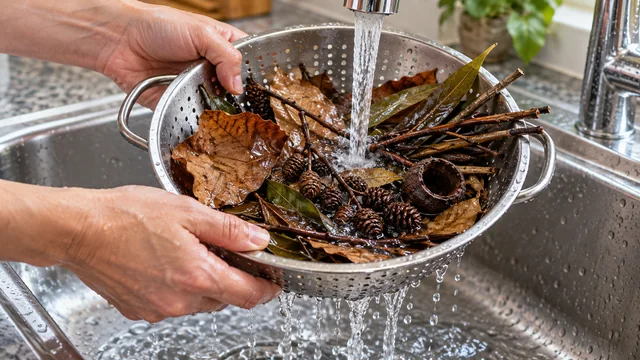
Safe aquarium botanical preparation starts with correct identification, clean material, product-specific directions, gradual introduction and observation - not one universal treatment or dose.
Botanicals and live plants can share an aquarium when water tint, physical litter cover and each plant's actual growing position are judged separately.
Safe aquarium botanical preparation starts with correct identification, clean material, product-specific directions, gradual introduction and observation - not one universal treatment or dose.
Amazonian plant life must be read through water type, season and growth form. Blackwater can support plants without implying a permanent dense underwater garden.
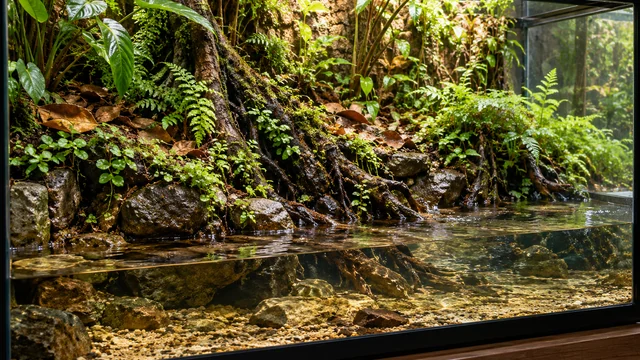
A paludarium works as a connected transition: maintainable water, usable shorelines, drained land, secure vertical routes and refuge choices - not an aquarium with decoration above it.
Naturalistic terrarium design begins with the named animal. Every leaf, branch, pod, rock and substrate must then pass a material safety assessment for that species and function.
A botanical opening is not automatically a suitable hide. Assess the complete route in and out against the mature animal, its body shape, fins and normal movement before treating a pod, shell or woody cavity as enclosed shelter.
Botanicals and live plants can share an aquarium when water tint, physical litter cover and each plant's actual growing position are judged separately.
The same botanical can behave differently underwater, at a wet paludarium edge and on land. Choose each piece by its material, moisture zone and intended function.
Leaves, pods and woody botanicals can provide cover, surface detail and structure in a naturalistic terrarium when species, moisture, access and changing material condition are considered together.
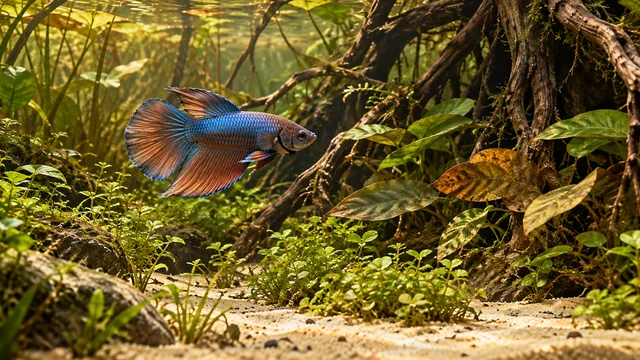
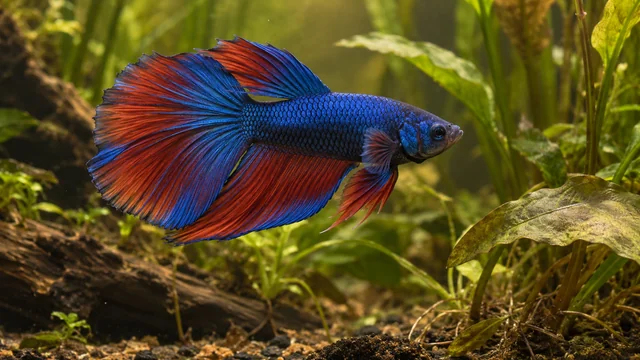
A warm-water labyrinth fish needs a usable surface, sheltered resting places and room to explore. Build around the individual fish, rather than treating air breathing as permission to use a bare bowl.
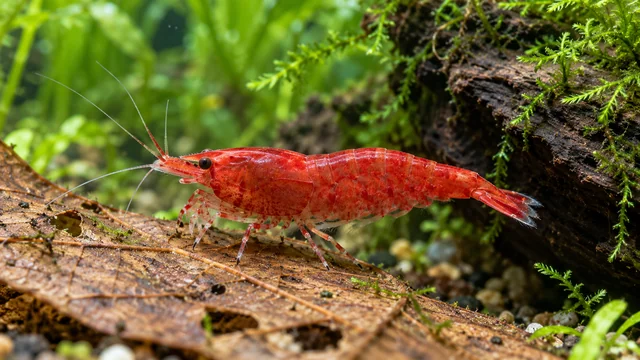
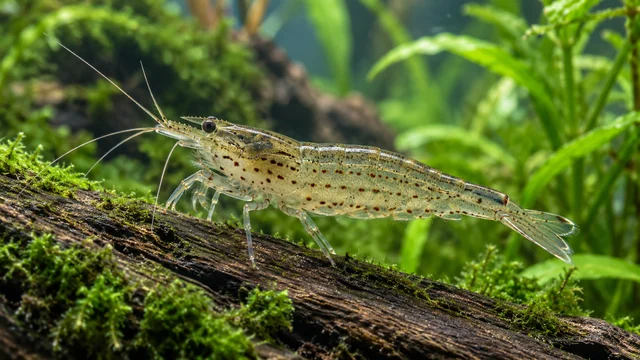
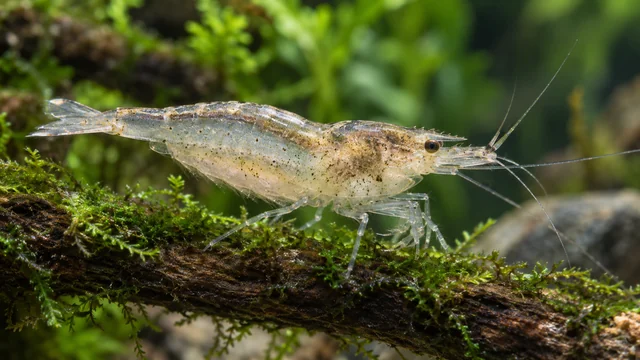
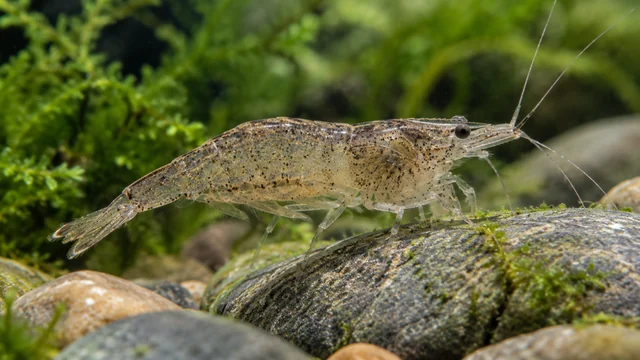
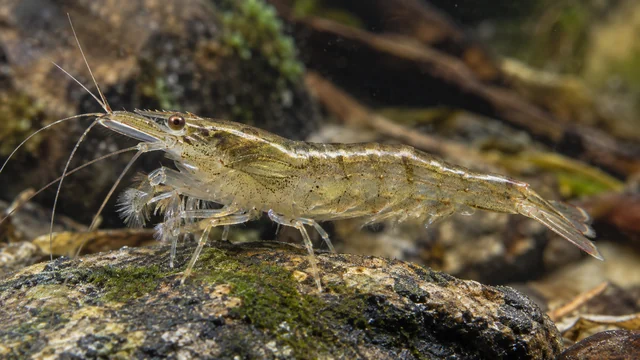
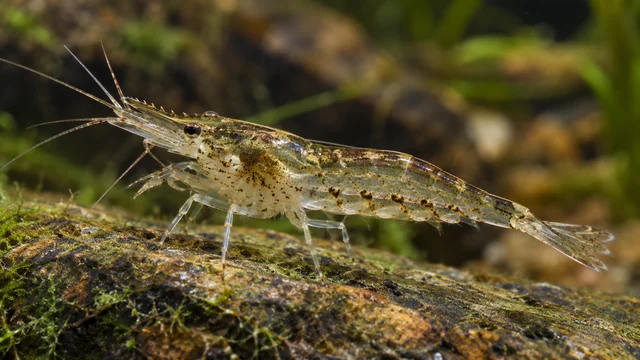
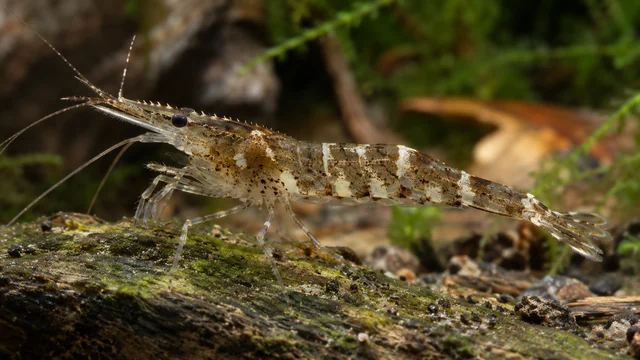
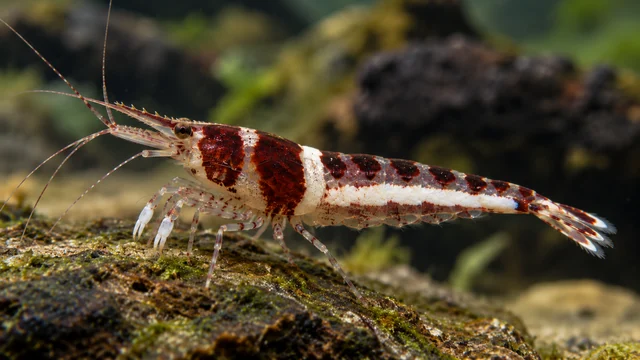
A small freshwater grazer whose success depends on stable water, mature surfaces and food management. A leaf-rich shrimp aquarium can remain clear and mineral-appropriate; it need not imitate an acidic blackwater stream.
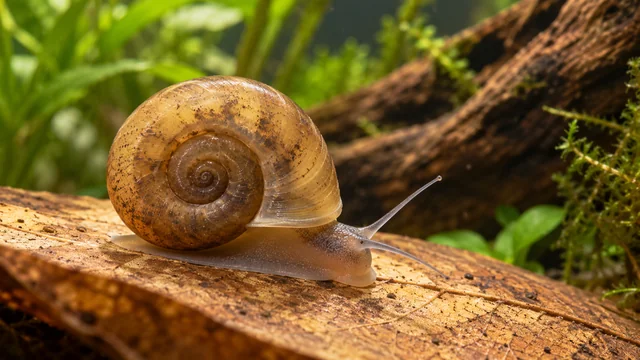
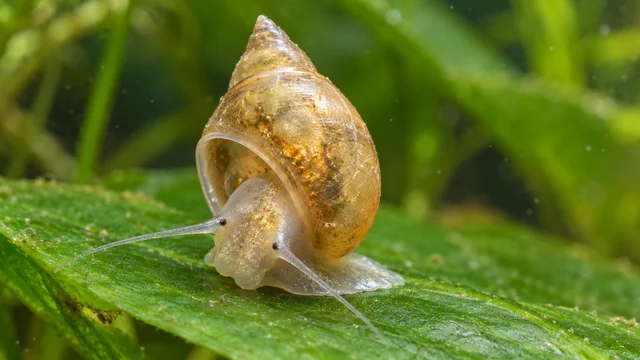
A small air-breathing freshwater snail associated with planted surfaces and detritus. Identify the animal first: a ramshorn-shaped shell is not enough to transfer one species’ care to every aquarium snail.
A busy freshwater grazer needs more than algae to eat. Plan stable, oxygenated water, planted shelter and a varied diet — and understand why keeping adults is very different from raising their larvae.
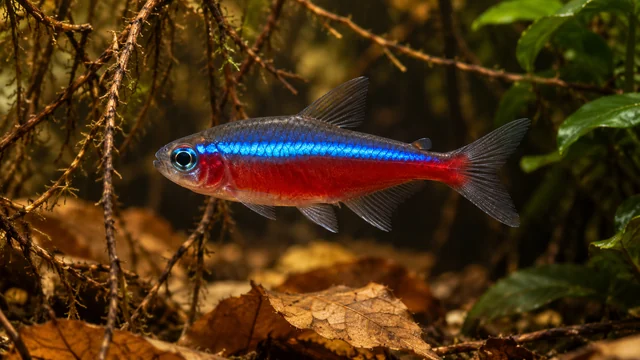
A warm-water shoaling tetra with a full red lower flank. Give the group shaded edges, a clear swimming lane and small varied meals; a brown tint alone does not recreate its river habitat.
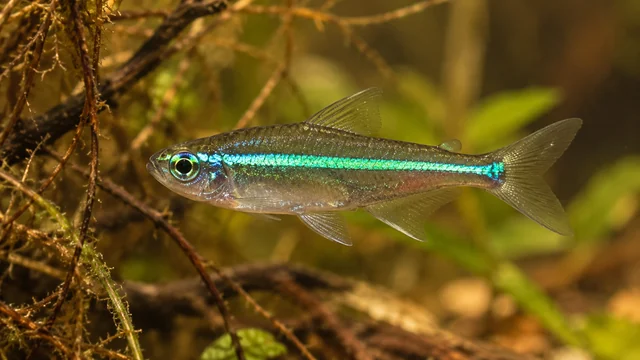
A tiny blackwater-associated fish with a long turquoise stripe and a small mouth. Build a quiet mature aquarium around soft-water preparation, secure group cover and food that every fish can reach.
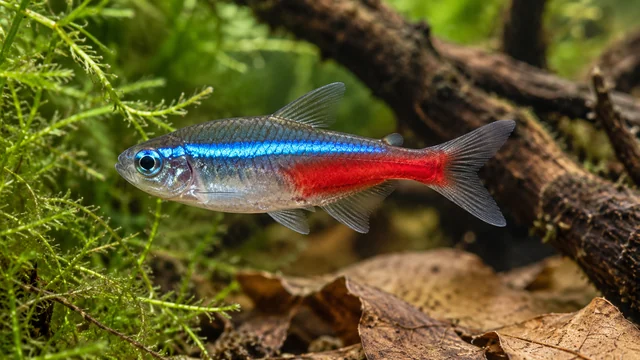
The familiar blue-striped tetra deserves its own cooler-water care plan. Provide a settled group, fine food and planted swimming space rather than treating it as a small warm-water cardinal.
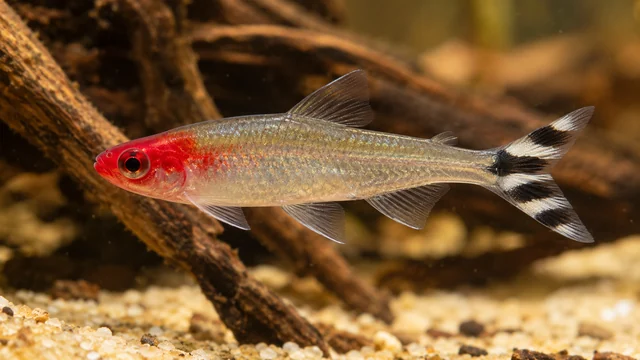
A silvery, red-headed shoaling fish whose active swimming needs a longer aquarium. Identify the actual rummy-nose species, retain open water and keep maintenance steady instead of using head colour as a water test.
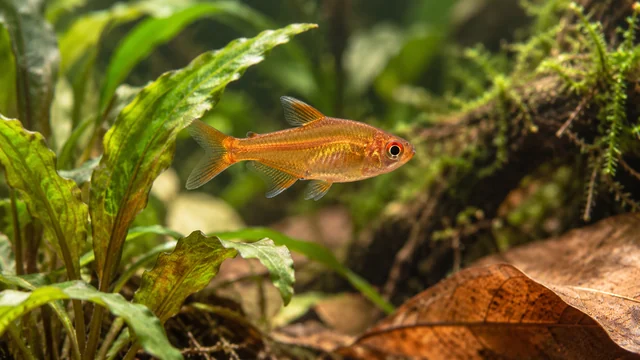
A tiny copper-orange tetra for a calm planted aquarium. Its small size calls for a proper group, gentle circulation and fine food — not a tiny bare container or a promise that it is safe with every other small animal.
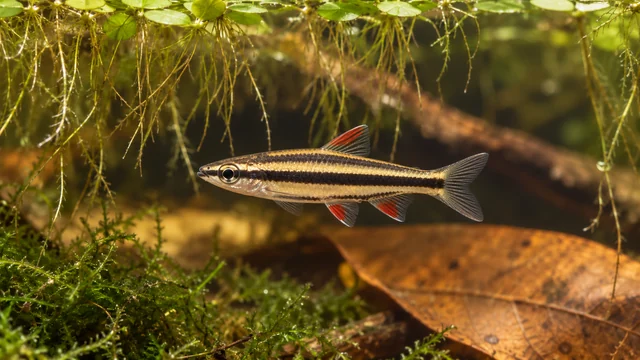
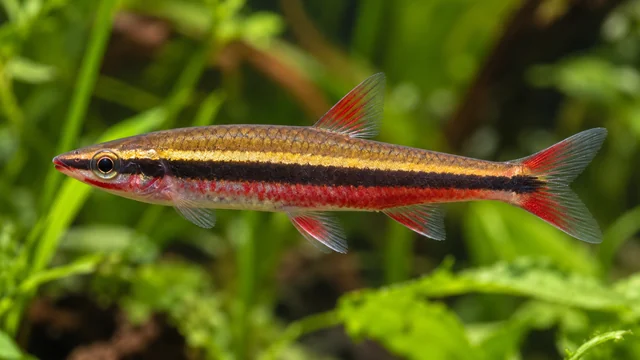
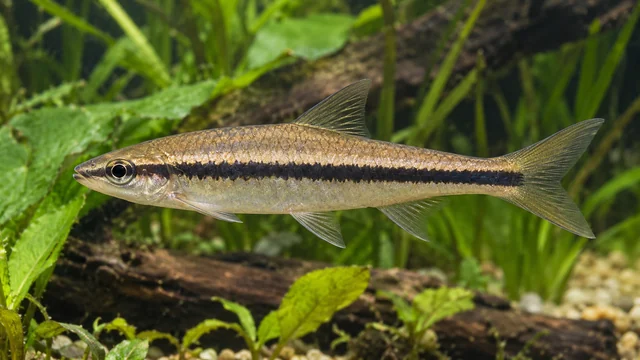
A tiny striped lebiasinid that picks fine food around quiet planted margins. Plan for a group, calm neighbours and food within reach; it is neither a bottom cleaner nor a miniature version of every other pencilfish.
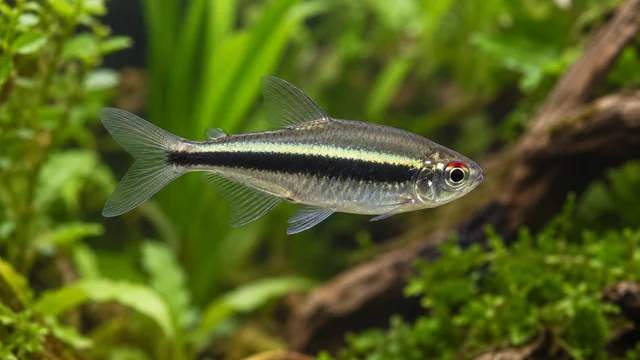
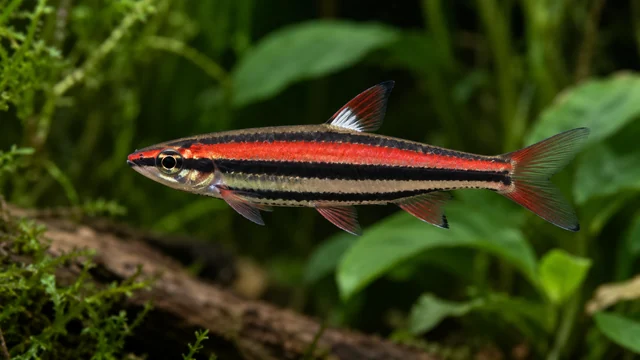
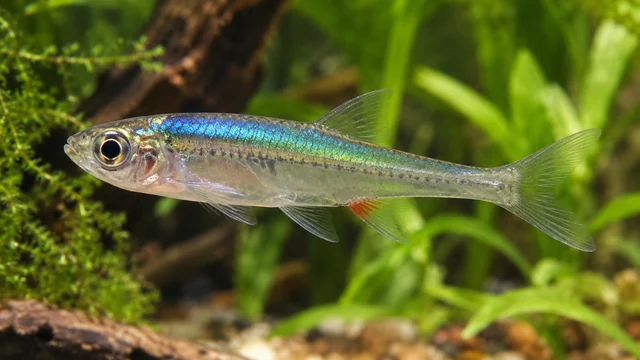
A bright pale stripe above a dark band gives this active shoaling fish its understated appeal. Plan a planted aquarium with a real swimming lane, rather than treating it as a differently coloured neon tetra.
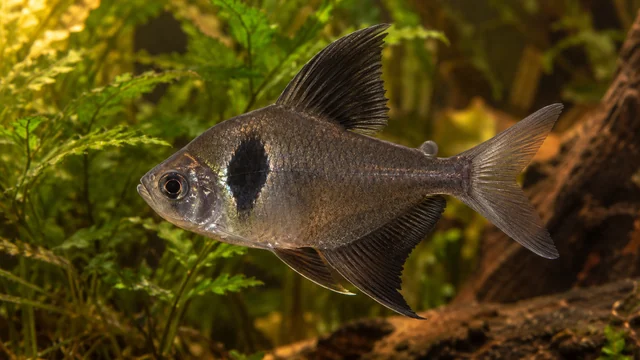
Smoky bodies, contrasting shoulder markings and the male’s tall dark fins make the black phantom a rewarding group fish. Provide display space and broken sightlines without confusing it with the red phantom.
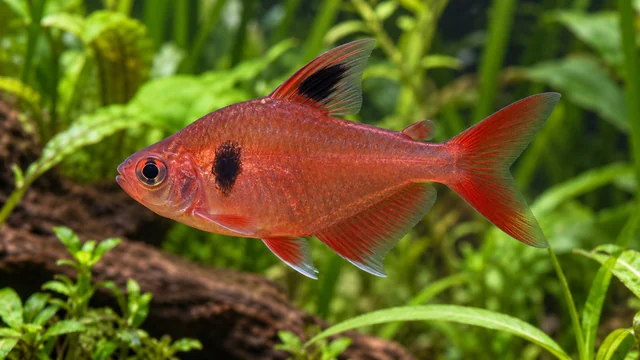
A small red tetra with a dark shoulder patch and expressive fin displays. Give it its own cooler-centred care plan and planted retreats instead of borrowing the black phantom’s settings.
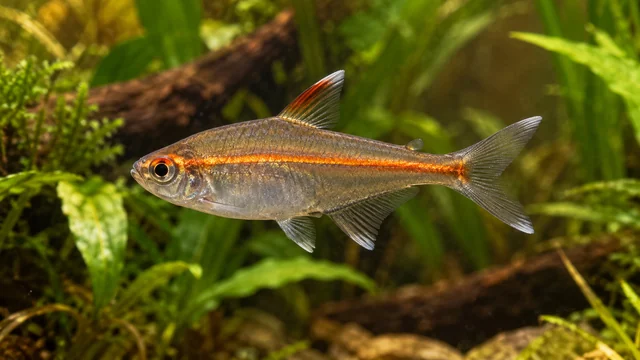
A fine copper-red line glows through a translucent body. This is the Guyanan tetra, not the similarly named rasbora; give the group warm stable water, shaded edges and room to feed.
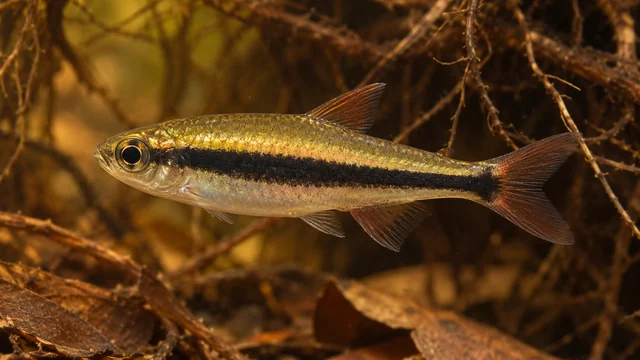
A miniature blackwater specialist whose tiny size makes feeding, water preparation and companion choice more demanding, not less. Plan a mature species-focused aquarium with fine foods and shaded structure.
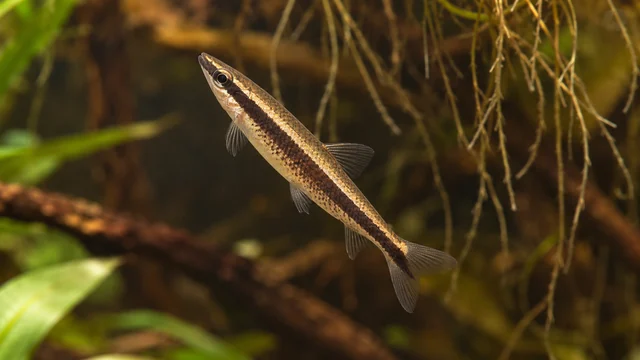
The familiar head-up posture is normal for this slender pencilfish. A quiet upper-water feeding zone, a proper group and tiny mouthfuls matter more than making the aquarium densely brown.
A larger, adaptable pencilfish for a quiet planted aquarium. Its horizontal swimming and male displays call for a proper group, visible feeding space and broken sightlines rather than a tiny generic pencilfish setup.
A vivid small pencilfish with serious social-space requirements. Strong male hierarchies, fine feeding and stable soft water make its care different from a peaceful miniature schooling-fish template.
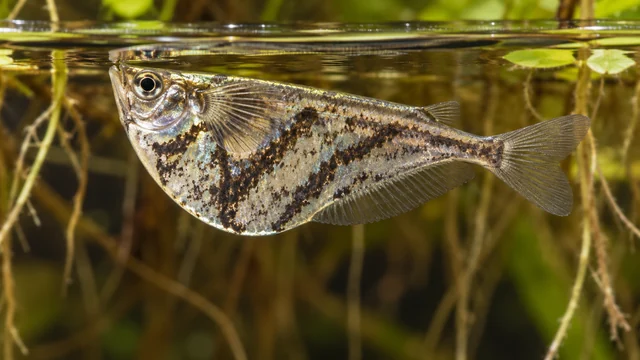
A striking surface fish whose deep silver keel carries dark marbling. A secure cover, usable surface area and food that stays within reach are central to care, not optional accessories to the aquascape.
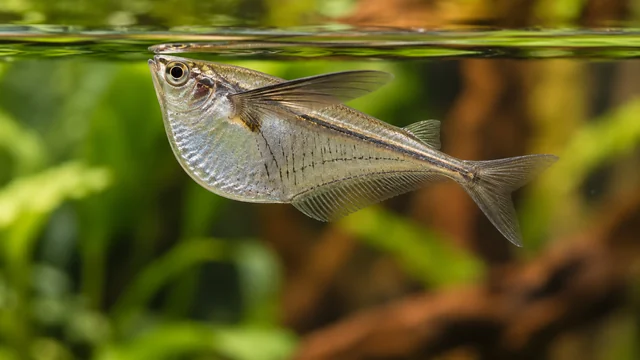
A smaller, subtly marked hatchetfish for a calm, carefully covered aquarium. Protect its upper-water feeding space and identify it separately from marbled hatchets and the spotted-bellied Carnegiella schereri.
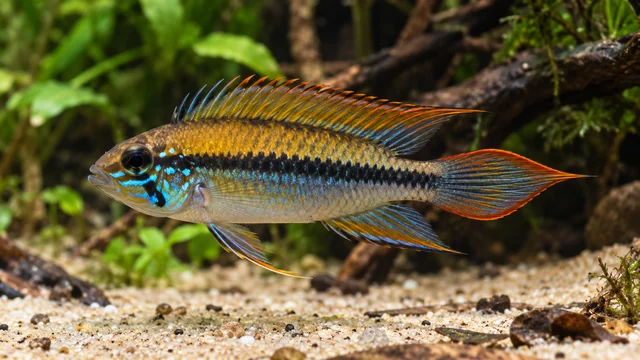
A slender territorial dwarf cichlid with striking males and attentive maternal care. Choose stock with known background, build separated floor-level refuges and distinguish everyday keeping from specialist wild-population breeding.
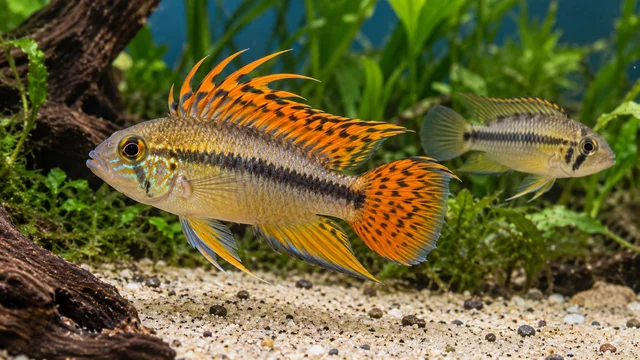
The male’s raised dorsal crest gives this dwarf cichlid its name. Domestic colour forms can be adaptable, but territories, female brood defence and separate feeding access still need deliberate planning.
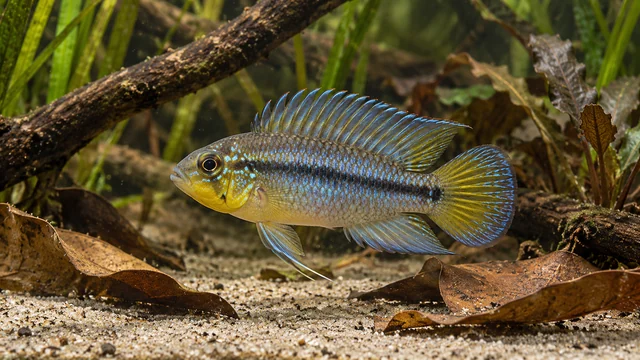
A yellow-faced, blue-flanked dwarf cichlid from southern South America. Give it a cooler-centred care plan, usable bottom territories and small meals; it is not a miniature ram that needs permanent tropical heat.
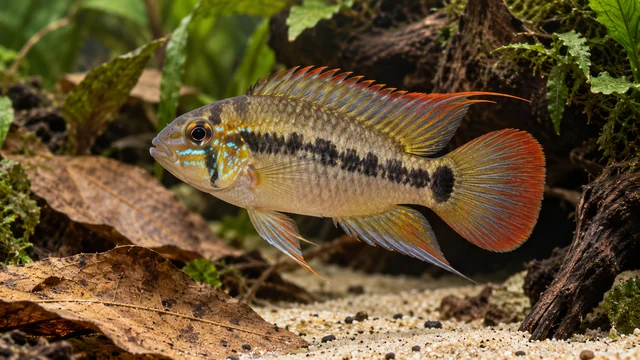
A robust, colourful Colombian dwarf cichlid whose name is often confused in trade. Start with a reliable identity, separate bottom territories and food access, not a promise that a red fish or a purchased trio will behave as expected.
The panda name comes into focus in the boldly marked female. This Peruvian soft-water cichlid needs carefully planned territories, a genuinely compatible partner if breeding, and close attention to food and water rather than a generic apisto recipe.
A blue-bodied Peruvian dwarf cichlid with a distinctive tail-base marking and a reputation for selective pairing. Give it a soft-water, territory-led aquarium and a safe separation plan rather than treating it as another colour of nijsseni.
A slender checker-marked cichlid that investigates the lower aquarium in loose company. Give it a long accessible floor, small foods and clean soft water; its open-surface spawning and social life are not an Apistogramma cave routine.
The familiar blue ram is a warm-water cichlid for a mature, carefully maintained aquarium. Give a compatible pair defined floor space, oxygenation and small foods; neither its colour nor its small size makes it a general-purpose community fish.
A sand-sifting South American dwarf cichlid with a cooler care plan than the blue ram, open spawning surfaces and a need for accessible feeding territory.
Plan for the adult fish’s height, group dynamics and predatory mouth, distinguishing established domestic scalare from true altum and uncertain trade labels.
True altum needs verified identity, exceptional usable height, a calm adult group plan and careful distinction between wild-stock, established-stock and breeding water.
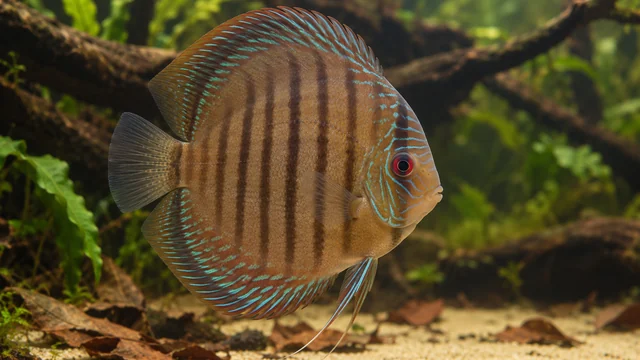
A specialist warm, very soft-water discus profile, separating the natural Heckel identity from domestic strains and planning adult groups, oxygenation and feeding access.
A deliberately scoped guide to natural brown discus of the eastern Amazon, with clear naming limits, adult-group care and no automatic assignment of domestic colour strains.
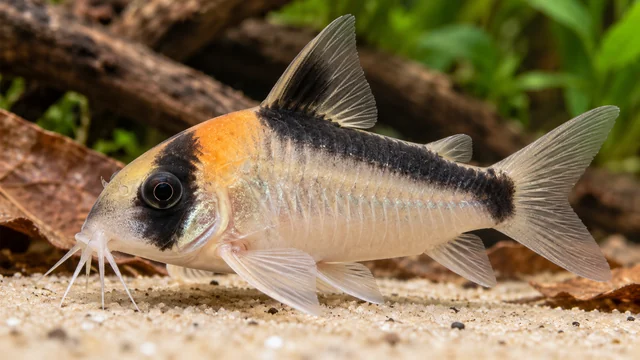
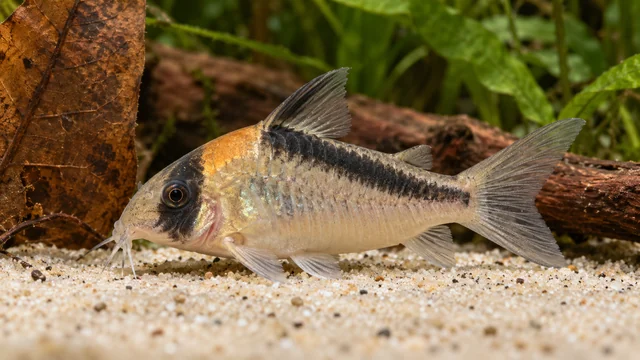
A social sand-foraging catfish with a gold nape, dedicated feeding needs and a modern scientific name; colour alone cannot reliably separate it from duplicareum.
A gold-naped, broad-striped Rio Negro catfish requiring its own social group and meals; compare Adolfo’s cory without treating band width as a definitive identification test.
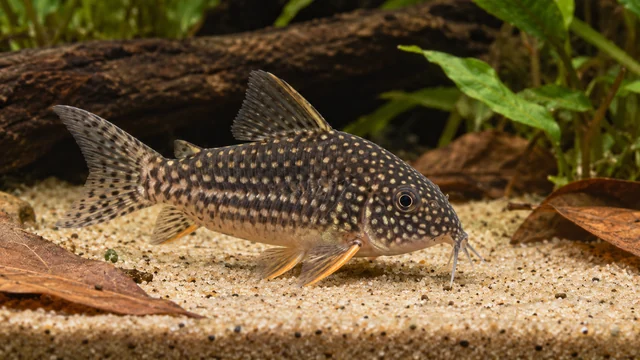
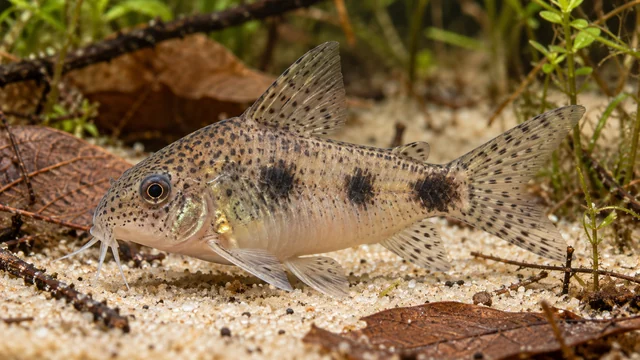
A warmer-water cory with cream spots on a dark head and orange fin rays; give its group clean sand, oxygenated water and food that actually reaches the floor.
A small, stocky sand-forager from the upper Orinoco region, distinct from the striped pygmy and tail-spot dwarf corys that spend more time in midwater.
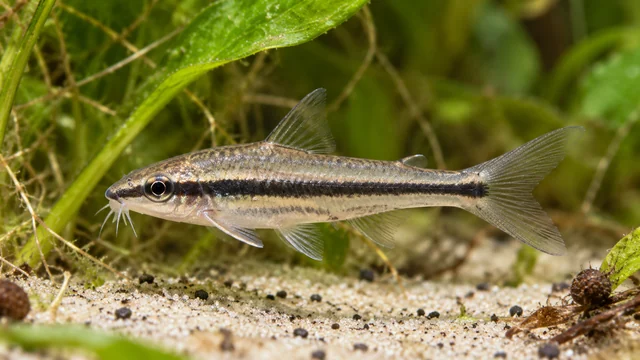
A tiny striped catfish that uses planted midwater as well as the floor. Build a quiet group aquarium with leaf resting sites, fine food and protected filtration.
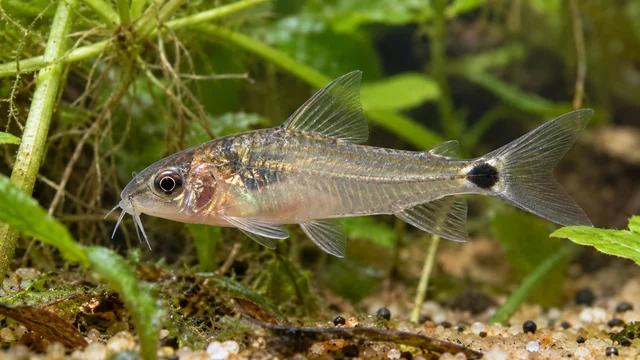
The tail-spot dwarf cory is a tiny midwater shoaler with a distinct feeding strategy. Preserve open water, close planting and a reliable supply of appropriately small food.
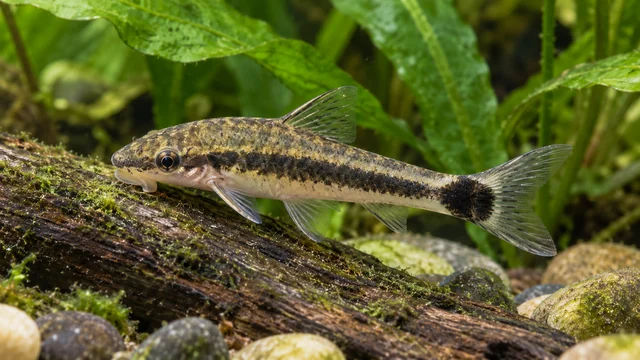
A small social grazer for a mature planted aquarium, with careful tail-pattern identification, accessible feeding surfaces and a nutrition plan beyond whatever algae happens to be present.
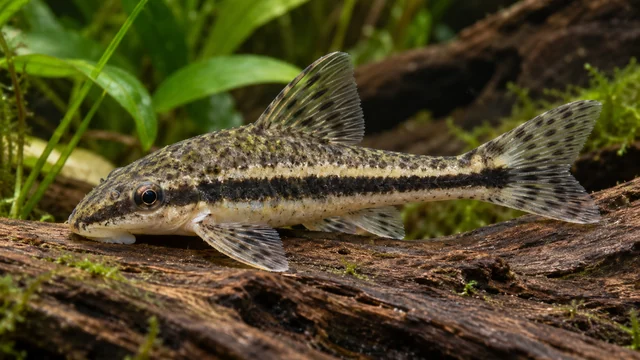
A small armoured grazer with a pale band above its dark flank stripe. Plan mature planted surfaces, a social group and observed supplementary feeding rather than an algae-cleaning assignment.
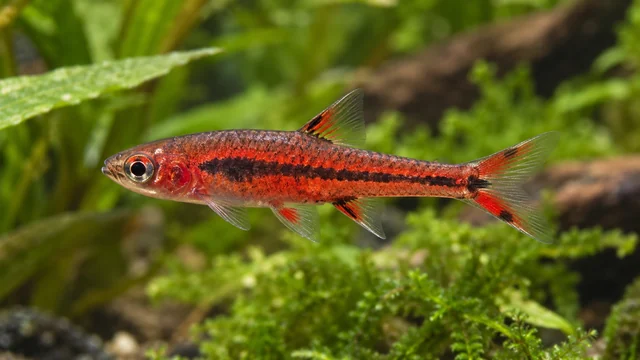
A tiny red Bornean shoaling fish whose small mouth and forest-water background shape the whole aquarium. Give it a settled group, shaded swimming routes and fine meals it can intercept.
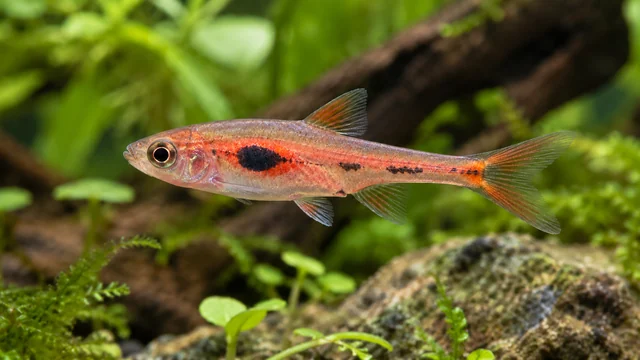
A delicate Bornean miniature with an oval flank blotch and a fine trailing line. A quiet soft-water group aquarium makes its markings and small social displays easier to appreciate.
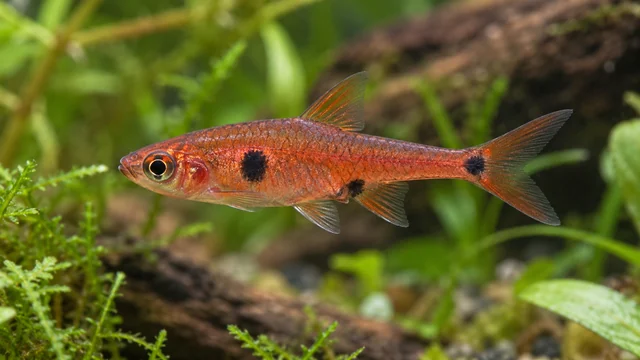
A spotted miniature from South-East Asian forest waters. Plan a calm planted group with soft-water preparation, fine food and useful room between the leaves rather than treating its spots as interchangeable with other Boraras.
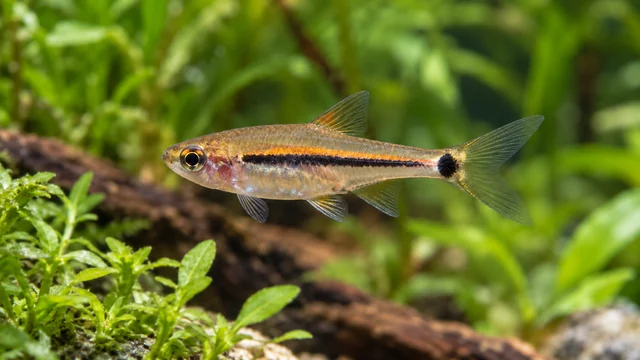
A very small mainland Asian fish with a dark stripe and separate tail-base dot. Its clear, densely vegetated wetland habitats call for a distinct planted care plan, not an automatic copy of Bornean peat-swamp conditions.
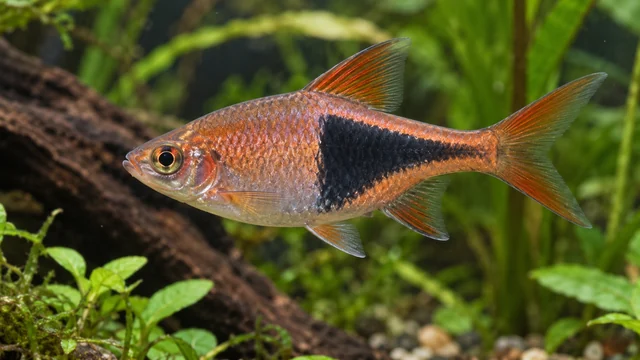
A deeper-bodied, copper-pink shoaling fish with a broad black wedge. Give the adult group open midwater and broad-leaved planting, and distinguish its leaf-underside spawning from the egg-scattering Boraras.
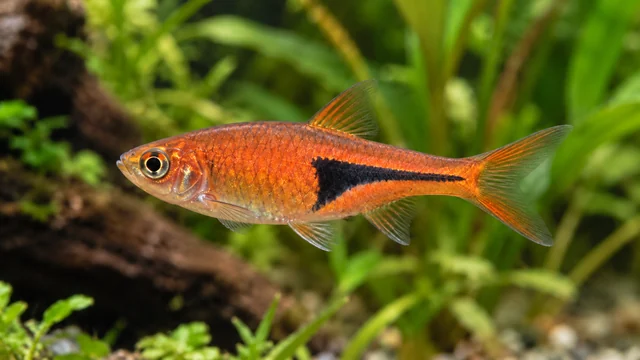
A copper-orange shoaling fish with a narrow lambchop-shaped mark. Planted margins and open midwater let the group feed, turn and display without confusing it with the deeper harlequin or paler hengeli.
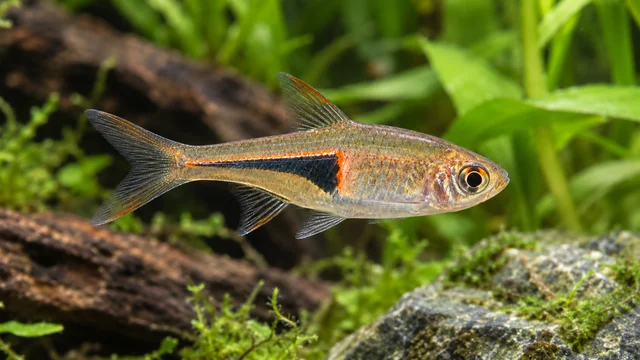
A pale-bodied rasbora lit by orange edging around a slim black mark. Preserve a proper group and planted swimming space; do not confuse it with an orange espei or the unrelated Glowlight Tetra.
A long, active, striped rasbora reaching a very different adult scale from Boraras. Plan a genuine swimming lane, a secure cover and a social group before choosing the surrounding forest-style planting.
A specialist miniature whose real identity matters before care advice is transferred. The Bintan species has a blue-green upper sheen and needs a stable, carefully fed group aquarium; old colour-form names can conceal different Sundadanio.
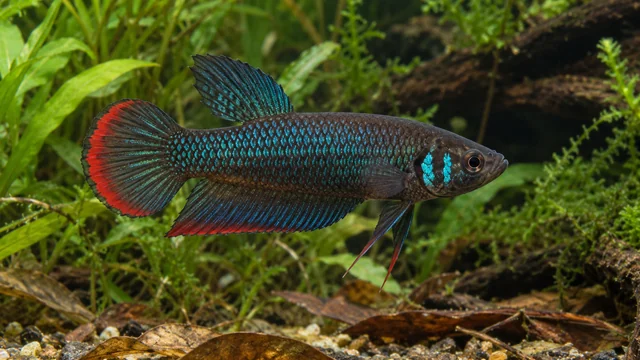
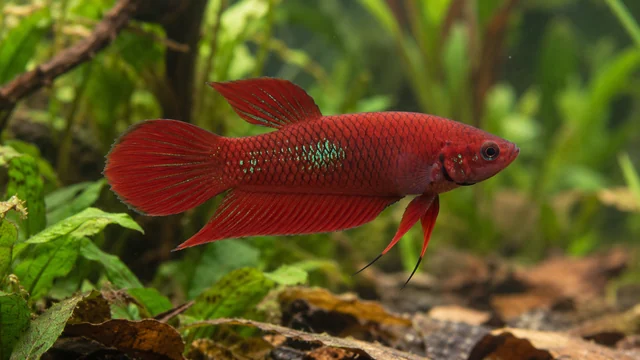
A natural short-finned bubble-nester with a red caudal crescent. The name Peaceful Betta does not remove territorial behaviour: plan sheltered surface access, proper food and a workable separation option.
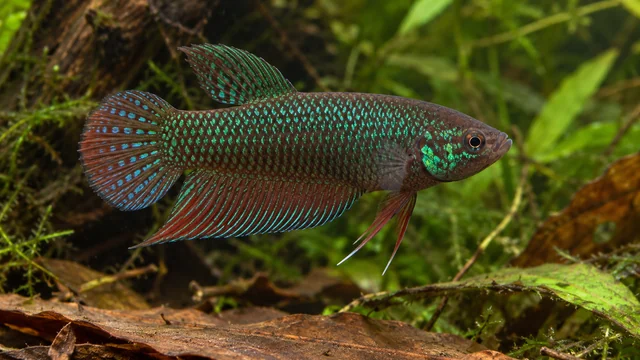
An emerald-scaled bubble-nester from the north-eastern Thai–Mekong region. Preserve locality information and manage territorial space, surface access and breeding separately from the idea of a peaceful community fish.
A wine-red forest specialist whose identity, food and soft-water routine deserve attention before purchase. Plan sheltered territory and a protected nest site rather than a miniature community centrepiece.
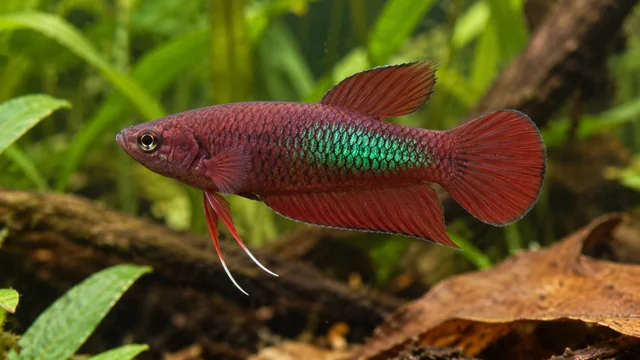
A tiny magenta-red Bornean peat-swamp Betta with a prominent green side patch. Soft-water preparation, small food and a workable territorial layout are central to its care.
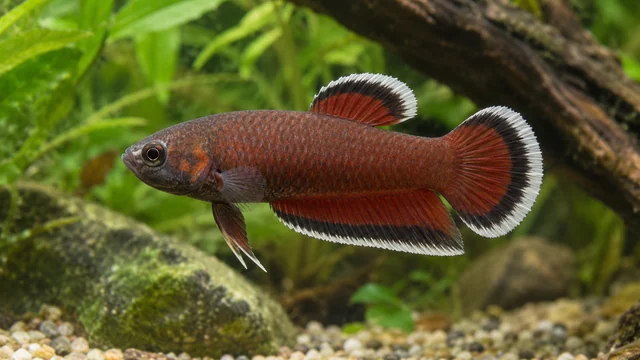
A small Bornean paternal mouthbrooder with a brick-red male and layered white-and-black fin borders. Keep its identity, sheltered stream-edge arrangement and brooding routine separate from bubble-nesting bettas.
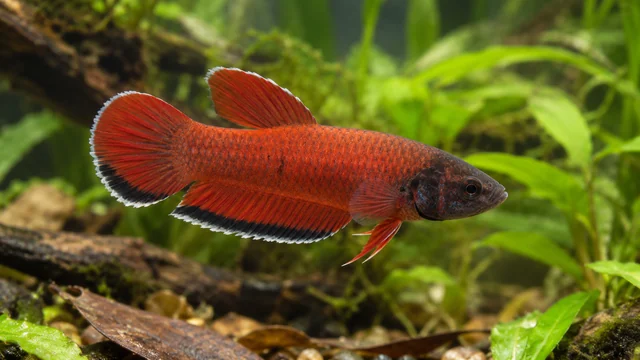
A scarlet male mouthbrooder from the Mahakam basin, with a broad head and predominantly red dorsal fin. A quiet, well-observed pair or group needs fine food, sheltered edges and an undisturbed brooding plan.
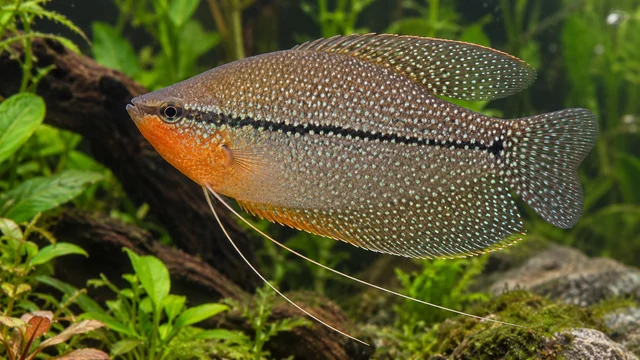
A substantial pearl-spotted gourami for a spacious planted aquarium, with tactile pelvic feelers, calm surface routes and room around breeding territories. Its adult scale calls for a different plan from the small specialist bettas.
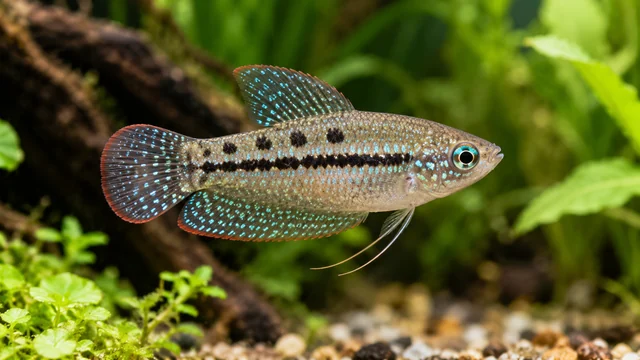
A tiny, blue-spangled labyrinth fish with audible social signals and a taste for small invertebrates. Calm planted territories and food access matter more than turning it into a miniature Pearl Gourami.
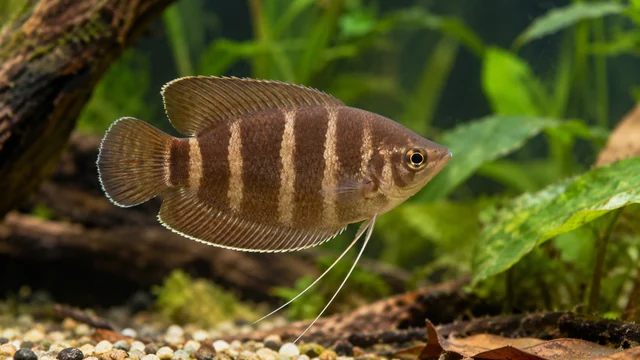
A deliberate feeder from soft forest waters, with cream bars on a chocolate body. Prepare stable water, a social group and reliable small foods; recent research also changes the familiar account of which parent mouthbroods.
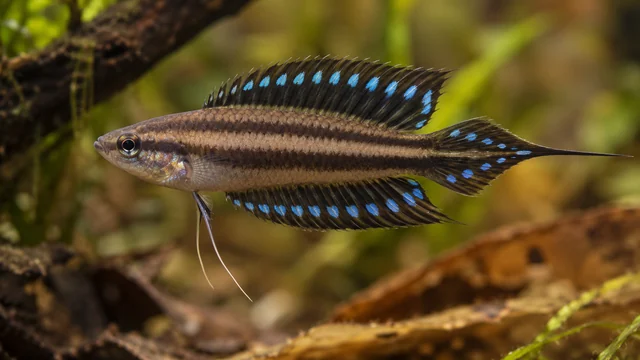
The true Bangka licorice gourami, distinguished from decades of mislabelled trade fish. Identity records, a diagnostic male tail, very soft acidic water and live-food provision come before a breeding project.
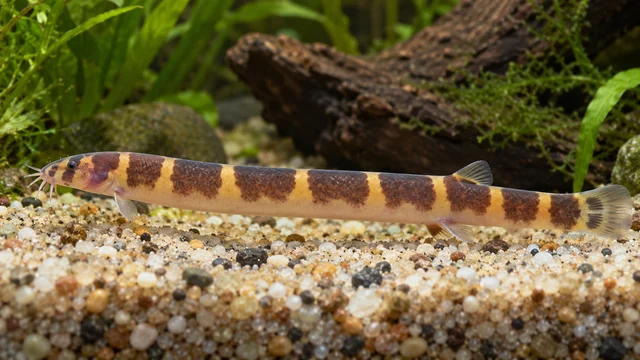
A social, banded bottom explorer that needs smooth sand, connected shelter and food delivered deliberately to its level. The familiar trade name kuhli is not a precise species identification.
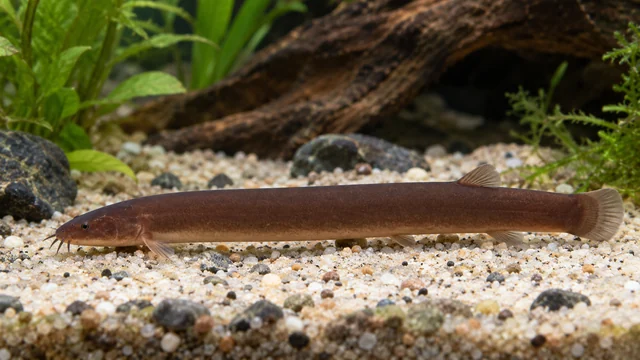
A plain cinnamon-brown social loach for a shaded, sandy aquarium floor. Give the group intentional food, secure equipment and several accessible refuges; the dark body does not make it a banded kuhli with the colour removed.
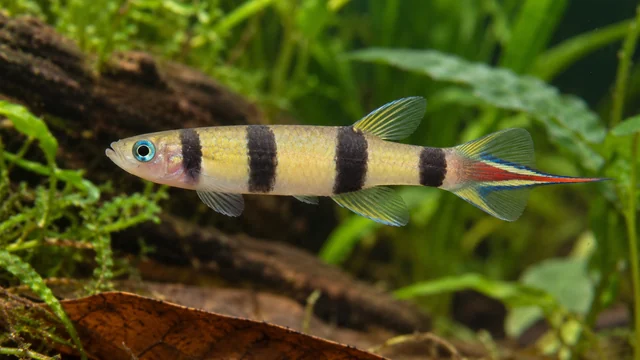
A tiny surface hunter with dark body bands and a colourful rocket-shaped male tail. Calm planted margins, genuinely small food and a secure cover matter more than a dramatic blackwater tint.
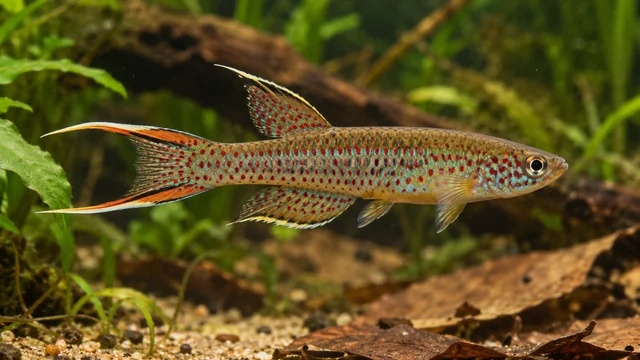
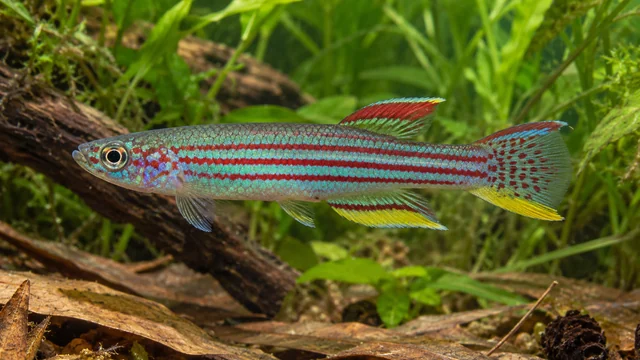
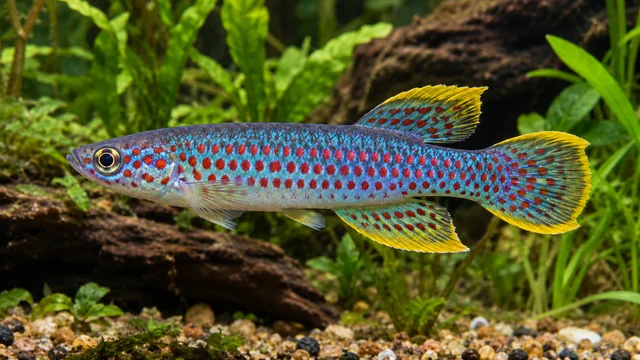
A small forest-water killifish whose males carry red spotting and a lyre-shaped tail. Stable moderate warmth, sheltered planting and deliberate breeding arrangements suit it better than a hot, busy community.
A small forest-water killifish with lengthwise red markings, a secure-cover requirement and a preference for quiet feeding. Its planted spawning sites and water-incubated eggs suit a carefully prepared non-annual breeding project.
A robust spotted killifish whose vivid colour should not hide its territorial behaviour. Keep stock identities clear, close every escape gap and plan planting and feeding around the actual adults.
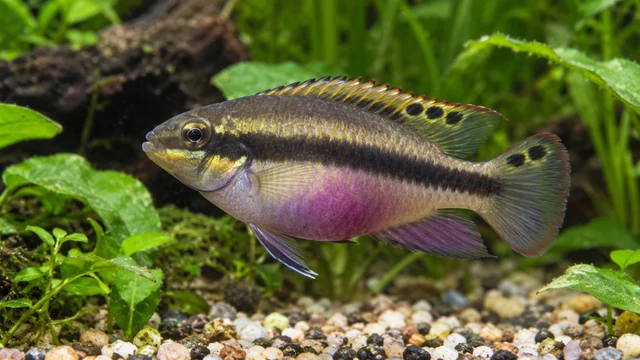
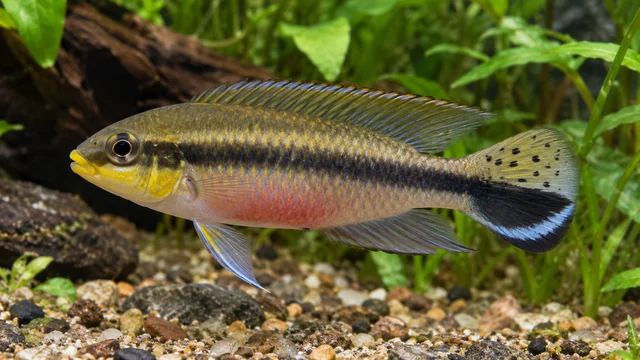
The familiar purple-bellied cave-spawning cichlid needs a compatible pair, a usable bottom territory and room for neighbours to withdraw. A common aquarium name must not be confused with the separate scientific species Pelvicachromis kribensis.
A patterned cave-spawning dwarf cichlid whose modern identity is narrower than many older aquarium lists suggest. Preserve population records and build a calm, serviceable pair territory instead of treating every former taeniatus form as the same fish.
A small specialist from Lake Mai-Ndombe, with the female carrying the vivid red abdomen and contrasting tail bands. Very soft prepared water, safe lower structure and careful pair management are central to its care.
A small soft-water cichlid that searches the bottom and needs a diet containing more than rich animal food. Its current genus, interrupted flank marking and pair care distinguish it from fish still sold under older Nanochromis labels.
Brown, Super Red, yellow albino and white bristlenoses are best compared through body colour, eyes, fins and reliable breeding records. This is one guide to domestic varieties, not a claim that each colour is a species.
A small, striped Rio Xingu catfish for a warm, well-oxygenated rock-and-cave aquarium. It needs deliberate feeding and legal traceable sourcing, not a job as an algae cleaner in a stagnant blackwater display.
The 2025 description places L236 within Hypancistrus seideli. Learn what this establishes, what a Super White trade name cannot prove, and how to provide warm, clean water, separate caves and a complete sinking diet.
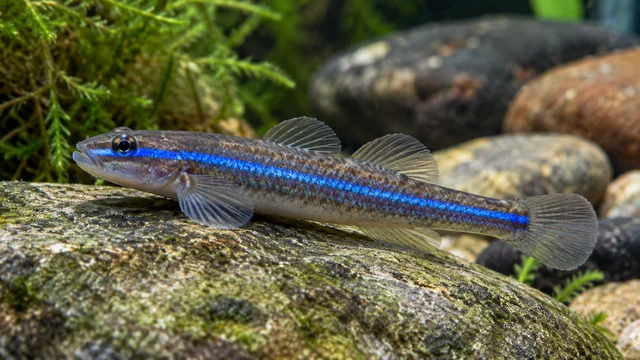
A small stream goby whose brilliant male stripe belongs with mature grazing stones and well-oxygenated water. Transparent dorsal fins help distinguish it from the similar Blue Neon Goby; colour alone is not a reliable stock identity.
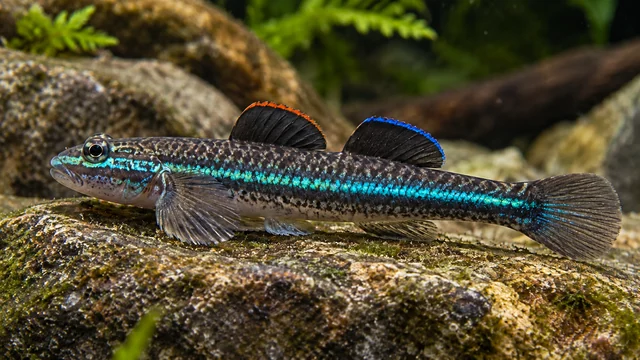
An iridescent stream grazer with dark dorsal fins and a contrasting first-dorsal edge. Identify it carefully, build a mature feeding floor, and separate ordinary freshwater adult care from specialist larval rearing.
A small, specialised upper-Rio-Negro cichlid for a carefully prepared soft-water aquarium. Understand identification, separate retreats, female brood care and the difference between useful leaf structure and uncontrolled organic accumulation.
A stream-dwelling fan feeder needs a dependable food-carrying current and several usable perches. Learn to distinguish feeding from mere filtering, support a vulnerable moult and interpret freshwater juvenile observations alongside published larval research.
A large armoured fan feeder whose impressive legs are for holding position, not hunting fish. Provide roomy cover, clean oxygenated water and fine food that actually reaches its fans; reproduction is a separate larval-rearing project.
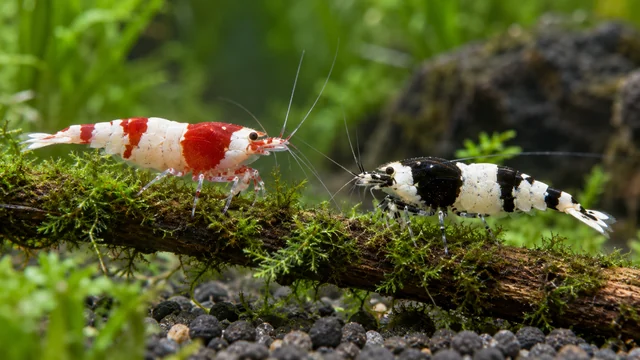
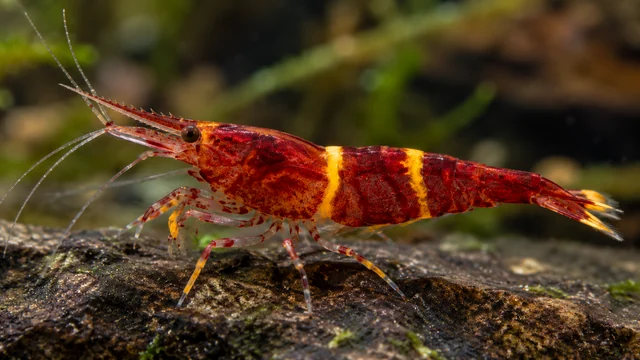
One species profile for the familiar red-and-white and black-and-white selections. Build a stable soft-water colony around mature grazing surfaces, measured mineral preparation and a feeding routine that supports both adults and tiny juveniles.
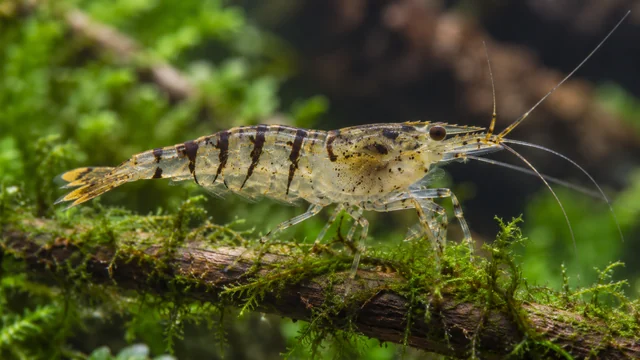
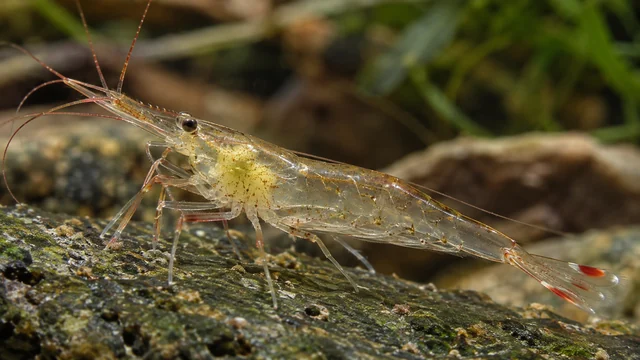
The natural tiger pattern is a translucent body crossed by narrow dark bars. Keep species identity separate from blue, orange-eyed and hybrid trade names, and build a stable freshwater colony with mature surfaces and complete supplementary food.
A tiny red, white-spotted rock grazer from Lake Matano needs warm, stable, mineral-balanced alkaline water. Its care differs fundamentally from a soft acidic bee-shrimp aquarium, and current field reports matter when discussing conservation.
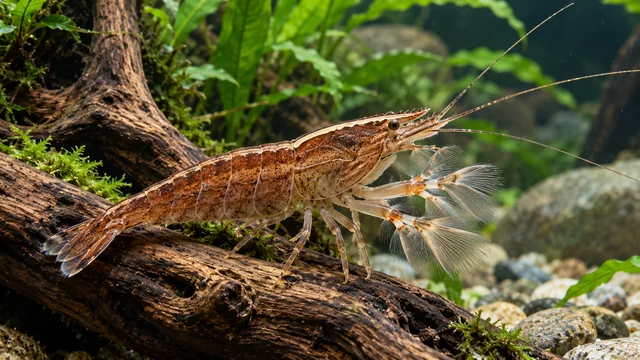
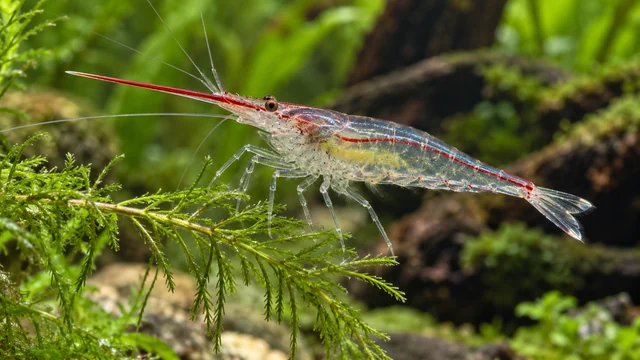
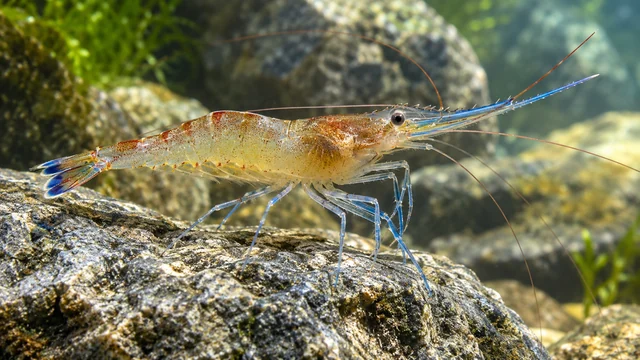
A slender transparent shrimp with a remarkably long red rostrum. Examine the adult salinity question honestly, provide open space and suitable food, and separate that maintenance plan from the published brackish larviculture experiment.
A small island-stream shrimp with different feeding-hand forms: plan current, surface food and a separate saline larval stage rather than copying a large fan-shrimp recipe.
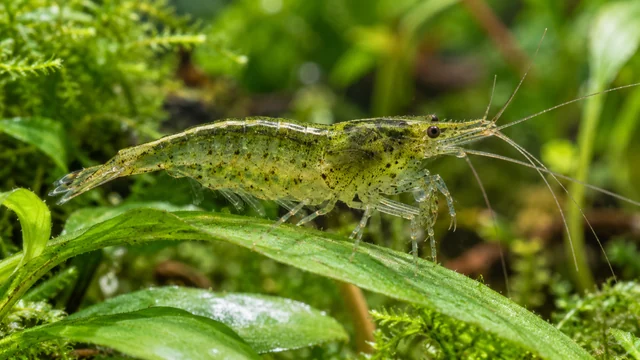
A practical guide to green Babaulti-type shrimp that keeps a valid scientific species separate from uncertain commercial identifications and colour forms.
Pearl and Blue Pearl trade lines need careful naming. Build a stable freshwater colony while distinguishing selected appearance from a verified Neocaridina identity.
A freshwater adult grazer with saline larval development. Separate practical adult care from the controlled nursery studies and avoid identifying it by grey colour alone.
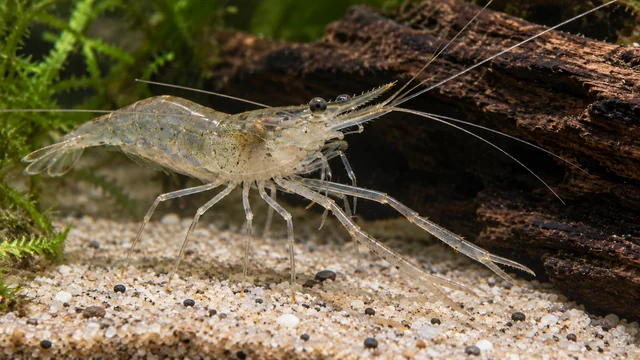
A transparent long-armed prawn needs a verified identity and a realistic feeding and predation assessment. A dedicated aquarium is often easier to manage than a dwarf-shrimp community.
A south-eastern Australian stream fan feeder needs usable feeding stations, oxygen-rich current and fine food. Modern identity matters when interpreting older northern records.
A transparent surface collector, not a miniature fan feeder. Modern Paratya taxonomy changes how older wide-range and breeding accounts should be interpreted.
The former Caridina serratirostris has a new generic placement. Variable colours do not remove the need for identification, and its larvae require a separate saline environment.
A tiny red-brown and white Lake Towuti rock dweller. Keep it distinct from sponge-associated Caridina spongicola and build warm stable water around accessible mature surfaces.
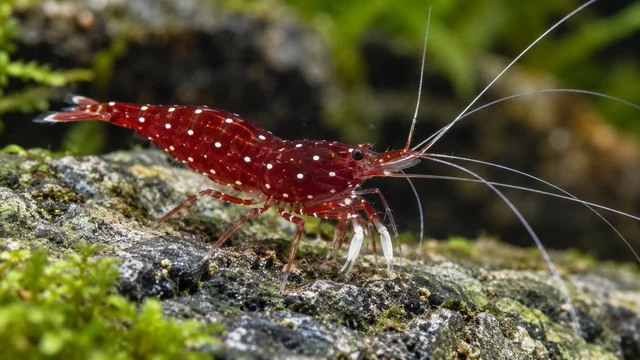
Crimson and yellow-orange, rather than Cardinal white dots: this Lake Towuti rock shrimp needs warm alkaline stability, complete supplementary food and separate colony records.
A translucent Lake Poso shrimp with red tail-fan spots, surface grazing and open-water movement. Keep it separate from Blue Leg Poso and White Orchid identities.
A low dark shell belongs to a specialist surface grazer, not an animal that can live on a spotless aquarium. Plan mature stones, suitable minerals and a food supply; freshwater egg capsules do not promise freshwater breeding.
A tiny horned surface grazer needs mature food-bearing surfaces and shell-friendly water. Distinguish a useful trade description from an exact species identification, and separate adult freshwater keeping from veliger development.
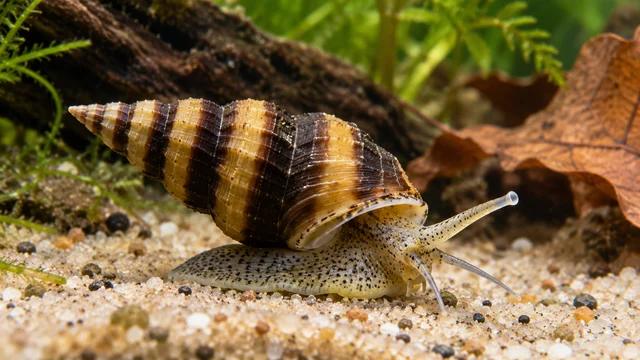
A handsome predatory snail needs a deliberate feeding and compatibility plan. Use Anentome, retain Clea as a historical alias, and recognise that commercial assassin snails are not all securely identified as the Java species.
A small burrowing grazer can become a large population when food is abundant. Understand brood-pouch reproduction, look beyond the cleaning-crew label and keep the substrate accessible rather than expecting snails to remove waste.
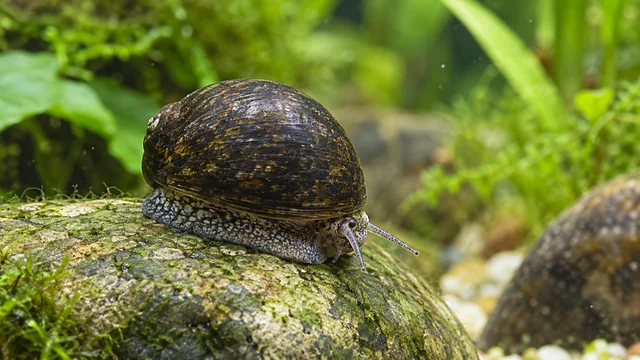
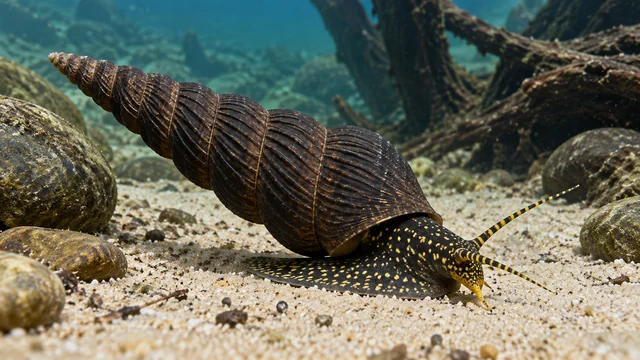
A Lake Matano soft-bottom snail needs warm, stable, mineral-balanced water and space for its long shell. Its dark yellow-spotted body and ribbed shell should not be replaced by a generic orange rabbit-snail identity.
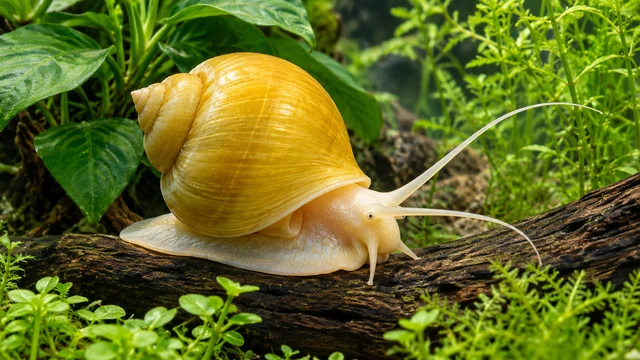
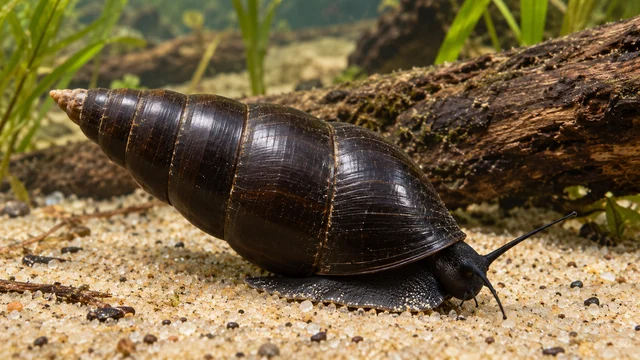
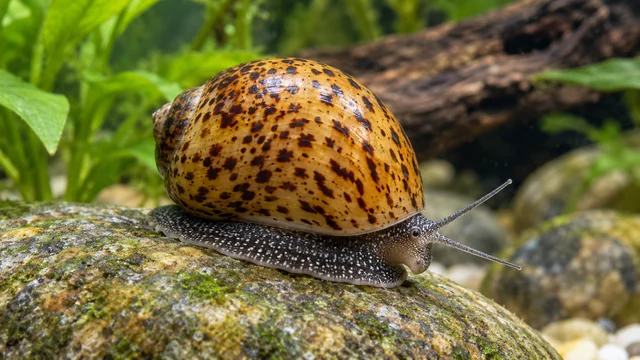
A large, active apple snail needs deliberate feeding, sound shell growth and a safe route to air. Distinguish diffusa from bridgesii and plant-eating apple snails, and understand why UK guidance differs between Great Britain and Northern Ireland.
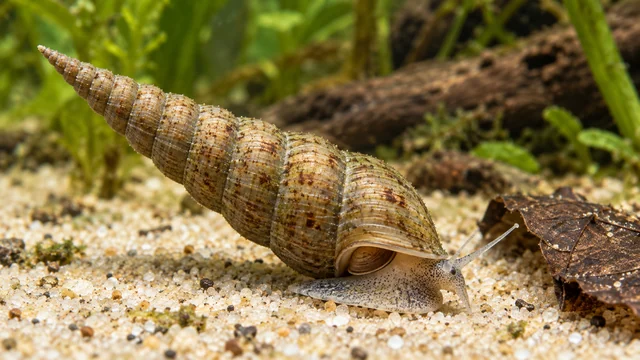
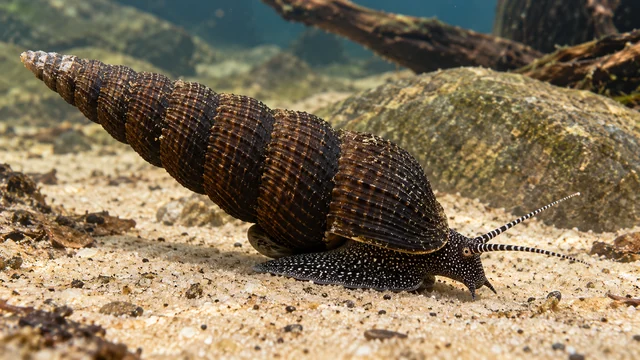
A smooth dark tower shell belongs to a large grazer from coastal river systems. Separate the adult freshwater or brackish keeping decision from the much less certain marine-associated larval phase, and provide real food rather than a cleaning-crew label.
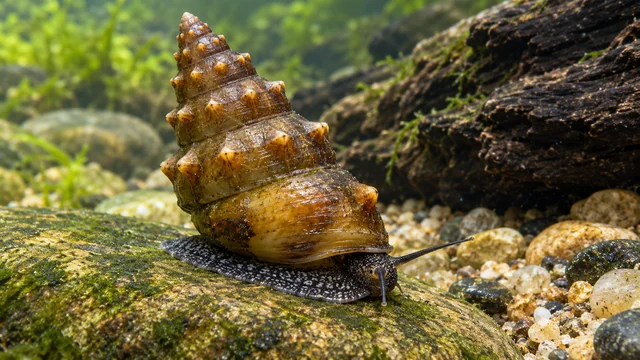
A sculptured river snail needs mature feeding surfaces, clean oxygenated water and food that reaches it. A pagoda-shaped trade shell deserves identification care, while livebearing biology should not become a promise of easy, prolific breeding.
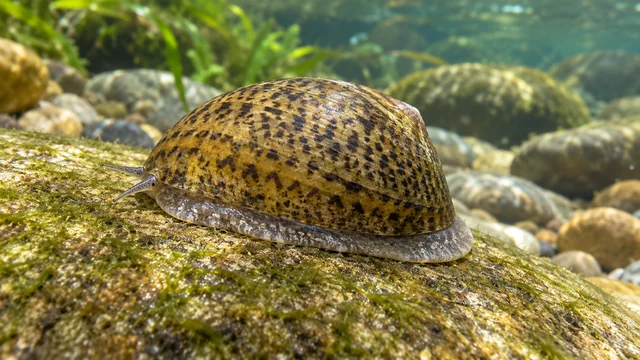
A cap-shaped neritid holds closely to mature stones and needs an established food supply. Its embedded operculum is not a closing door, and its veliger biology should not be confused with the reproduction of tiny hitchhiking freshwater limpets.
An East African neritid name is often applied loosely to patterned aquarium snails. Keep its identity separate from zebra-style trade labels, provide mature grazing surfaces and shell-friendly water, and avoid treating egg capsules as successful freshwater breeding.
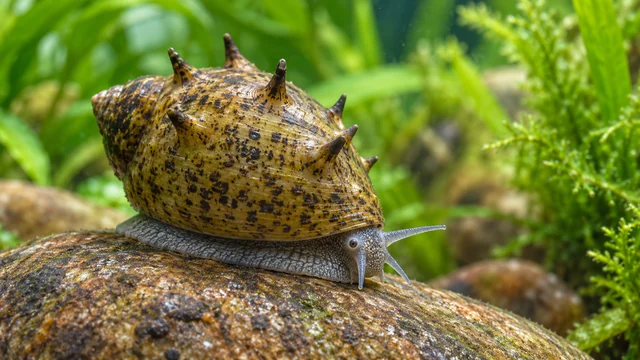
A large white-speckled Lake Matano snail needs warm stable water, deliberate feeding and open soft-bottom space. Compare it with the yellow-marked gemmifera without assuming that a rabbit-snail sales label confirms either species.
A small air-breathing grazer with a left-opening shell can become an interesting aquarium resident rather than an automatic disaster. Understand submerged egg masses, self-compatible reproduction and how available food affects a growing population.
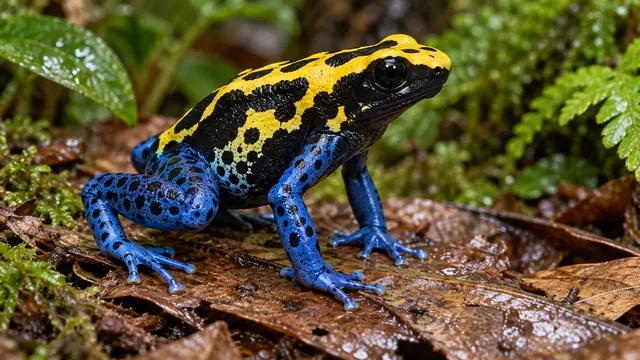
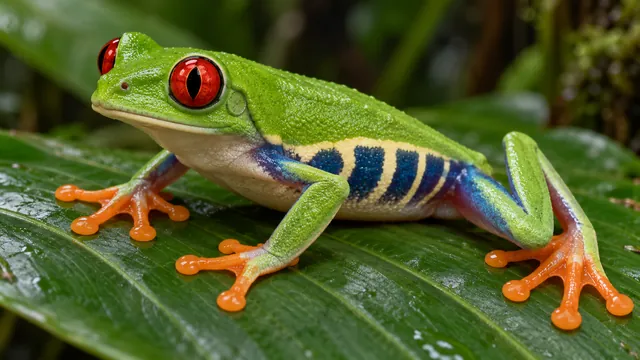
A bold daytime forest-floor frog whose colour forms share a need for usable leaf litter, small live prey and carefully managed social space. Build a drained vivarium, not a miniature swimming pool.
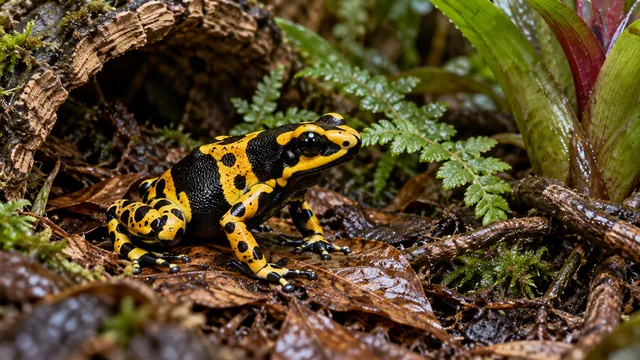
Yellow bands, an audible call and active use of low climbing structure distinguish this dart frog. Give a monitored group or pair a humid, ventilated forest floor with several feeding and shelter routes.
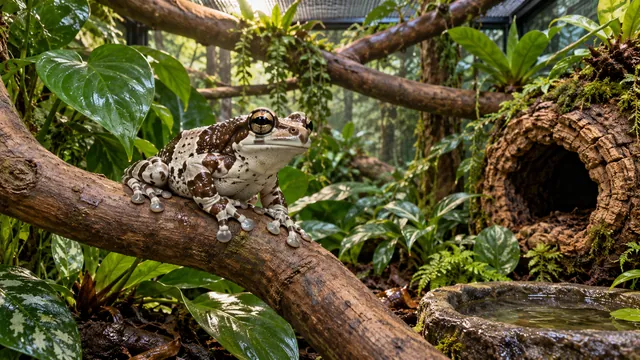
A nocturnal leaf frog needs connected climbing routes, broad daytime retreats and fresh accessible water. A tall planted enclosure must breathe between mistings, rather than remain a sealed wet box.
A substantial canopy frog needs strong branches, generous height and easily maintained water. Build for an adult female’s weight and reach, rather than scaling up a dart-frog display by appearance alone.
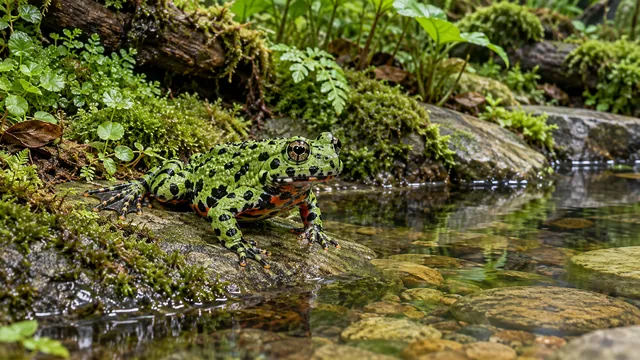
This small semi-aquatic toad needs a cool, clean water-and-land system with effortless exits. Design the bank and filtration first; a warm tropical waterfall is not an interchangeable habitat.
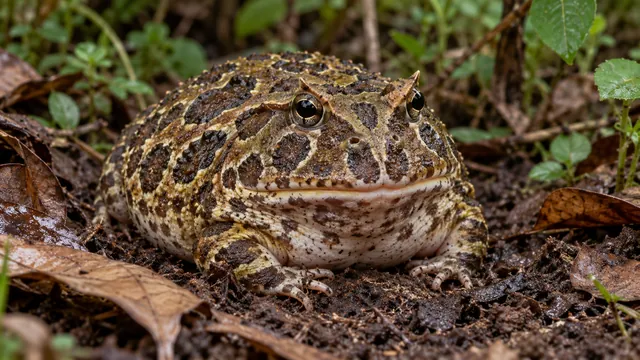
A solitary ambush predator needs a deep moist burrowing floor, accessible shallow water and controlled feeding. Its Chaco origin does not make a dry desert enclosure appropriate.
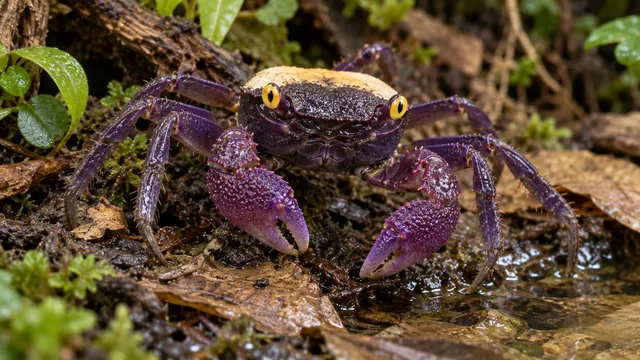
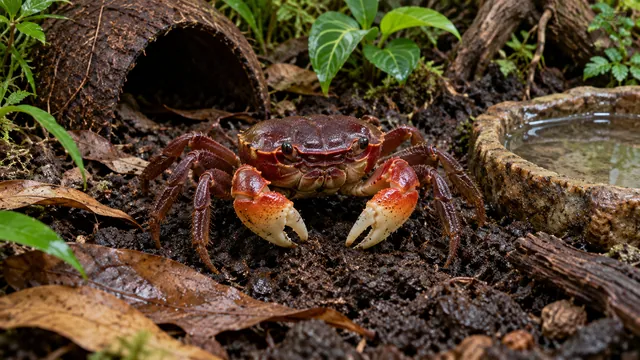
Purple claws and yellow eyes belong above a moist forest floor, not in a deep aquarium with a token island. Build generous land, shallow freshwater access and several independent shelters for this small Javan crab.
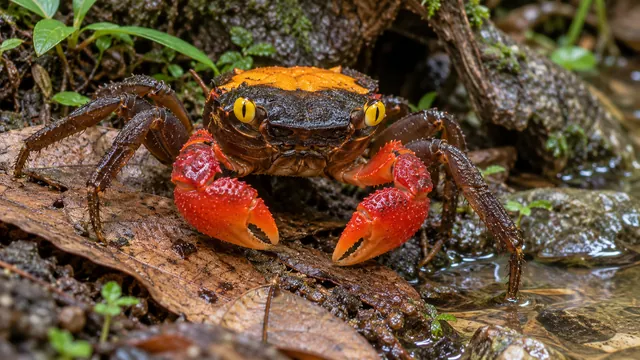
A distinct Javan vampire crab with orange-red claws and an orange-backed shell. Its enclosure should give burrowing adults moist land, protected freshwater edges and territory breaks rather than a deep display pool.
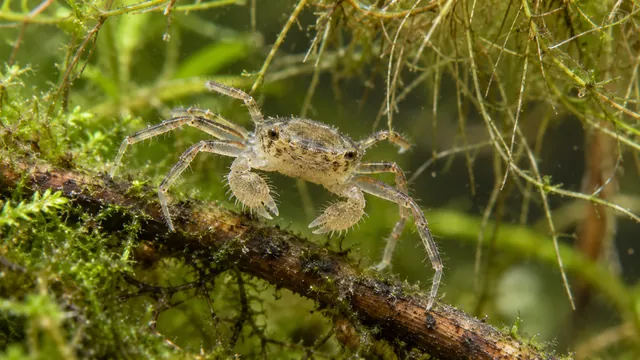
A tiny fully aquatic freshwater crab for a mature planted system with fine roots, gentle circulation and reliable small food. It needs underwater grazing structure, not a terrestrial crab island.
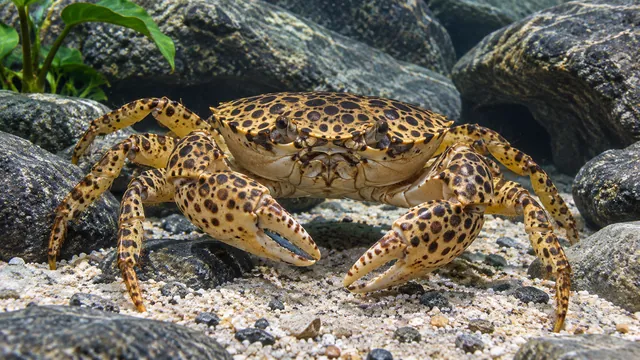
A striking spotted freshwater predator from the Lake Matano system needs a warm, stable, secure aquatic territory. Choose its origin responsibly and build a clean rocky refuge, not an acidic leaf-packed community tank.
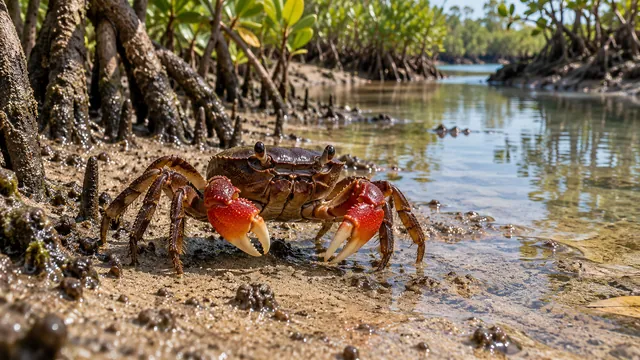
An intertidal mangrove crab needs a planned brackish water-and-land enclosure. Red claws do not make it a freshwater community animal, and an exposed branch alone is not a complete terrestrial zone.
A predominantly terrestrial coastal-forest crab needs deep moist shelter and accessible clean water. Its marine-linked larval history must not be confused with a requirement to flood the adult enclosure with seawater.
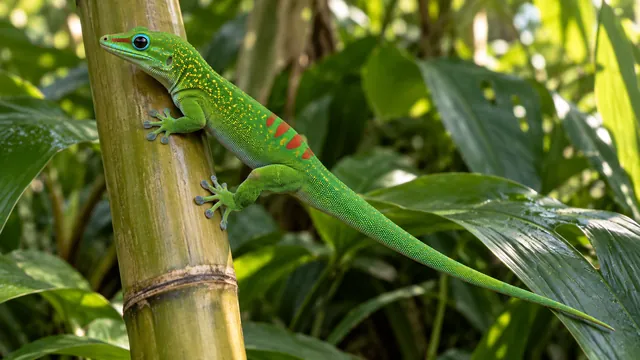
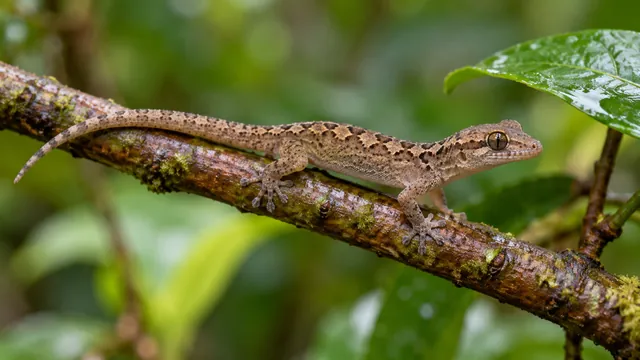
Build a leafy climbing network with accessible food, gentle thermal choices and daytime shelter. This New Caledonian gecko needs usable height and ventilation rather than a hot, permanently wet glass box.
A bright, delicate day-active gecko needs measured UVB, accessible basking branches and real leafy refuge. Build a well-ventilated climbing enclosure and enjoy observation rather than routine handling.
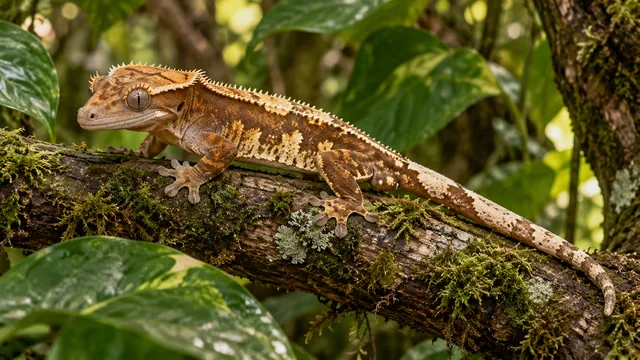
Tiny climbing geckos bring substantial enclosure-management responsibilities: fine escape barriers, multiple feeding points and a plan for offspring produced without a male. Humidity must cycle while perches and food remain accessible.
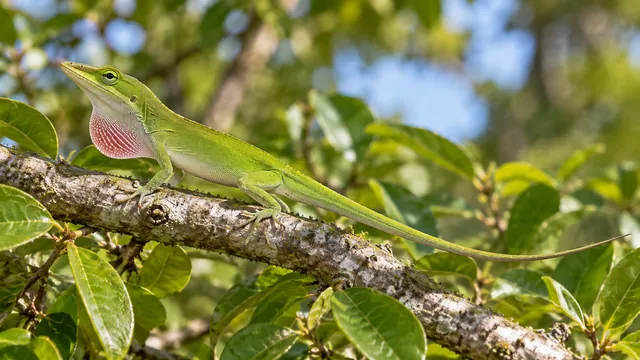
Design a bright woodland-edge climbing enclosure with basking choice and leafy cover. This southeastern North American lizard needs insects, measured UVB and personal space, not permanent tropical saturation.
Create a dry rocky ground-level habitat with a secure warm retreat, a cool refuge and a separate humid hide. Usable floor space and a properly nourished insectivore matter more than lush planting.
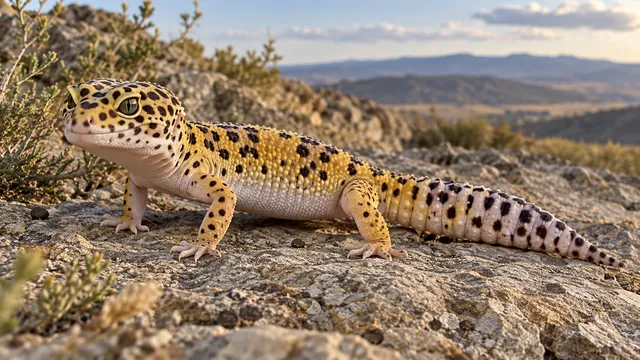
Start with the scale of a full-sized adult, then build the bright basking zone, broad floor and secure cool refuge around it. A dry naturalistic enclosure must provide real heat, UVB and dietary variety, not just desert-looking decoration.
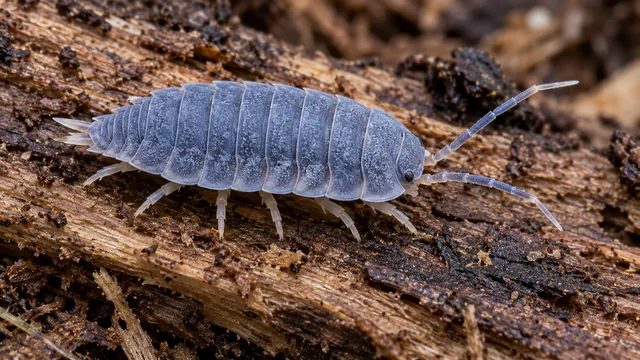
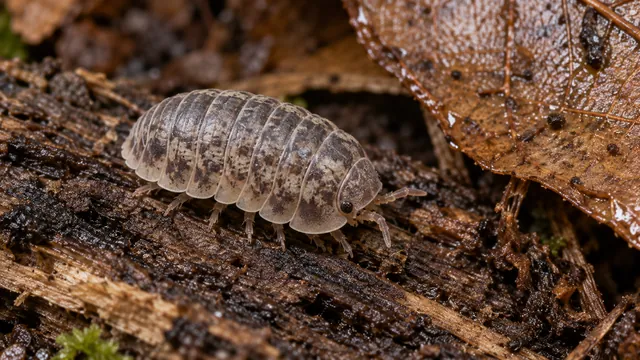
A Mediterranean woodlouse needs a dependable damp refuge and a ventilated, less-wet floor. Build a colony around decomposing leaves and usable substrate rather than keeping the whole enclosure permanently tropical and saturated.
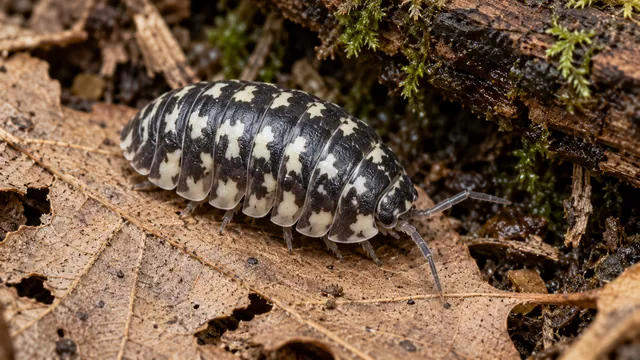
An active, fast-breeding woodlouse needs food reserves, breathable cover and a persistent damp refuge. Manage the colony’s population and identify the parent species instead of treating Powder Blue and Powder Orange as different animals.
A small rounded tropical woodlouse needs warm stable shelter, nutritious litter and a damp refuge with air exchange. Keep verified Cubaris murina separate from unrelated animals sold under colourful Cubaris trade names.
An adult can approach 30 cm, so start with real floor space and a deep edible substrate. Moist leaf mould and soft decayed hardwood support burrowing and moulting; a shallow decorative terrarium and occasional cucumber do not.
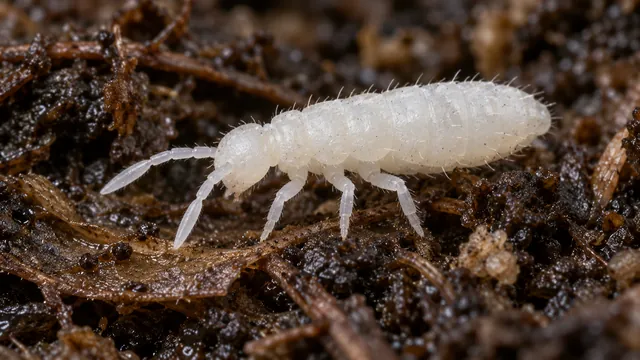
A tiny soil hexapod can graze microbial growth and help process organic matter, but it does not remove the need for ventilation, portion control or cleaning. Keep a moist, airy culture with restrained feeding and a known identity.
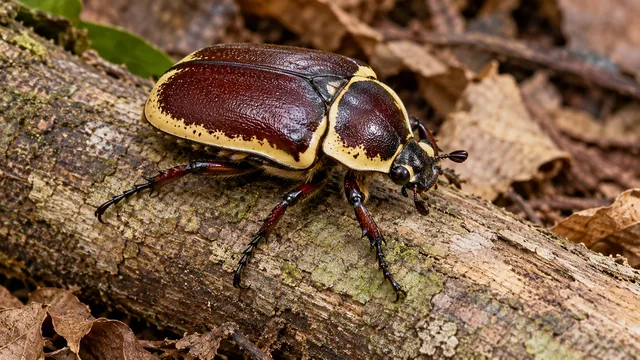
Adults need secure flight space, climbing purchase and fresh food; larvae need deep nutritious decomposing substrate. Plan both lives together, and retain the actual colony identity instead of assigning every commercial form to one subspecies.
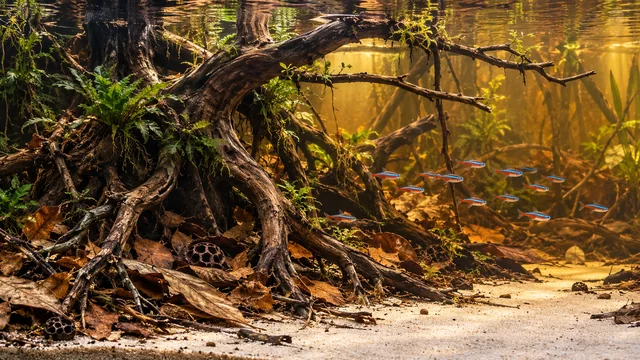
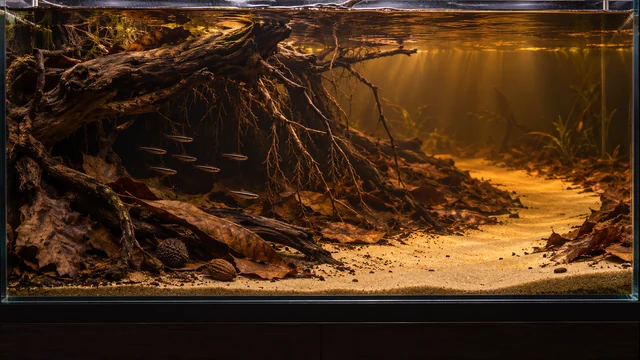
Make shade, fine root cover and carefully managed leaf pockets the structure, with a deliberate soft-water plan rather than a generic Amazonian recipe.
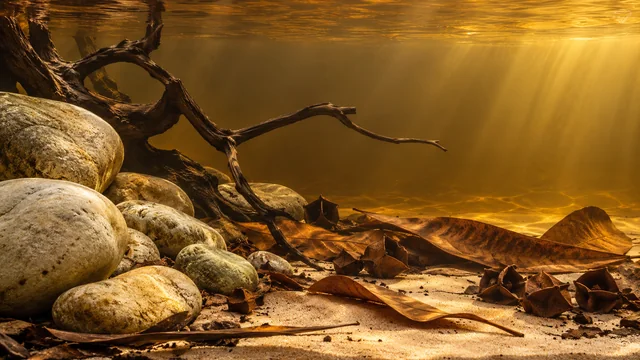
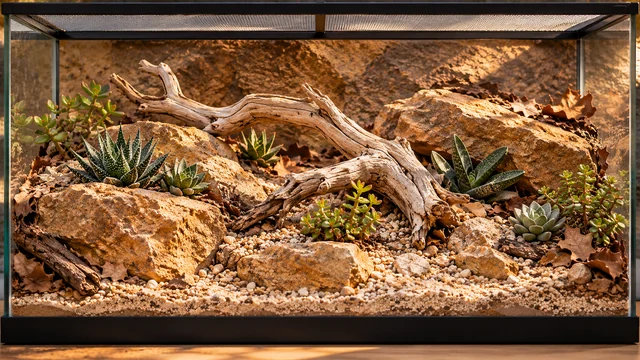
Create a clear-water mineral channel with secure rockwork, shaded crevices and deliberate oxygenation; leaves are optional and never the main substrate.
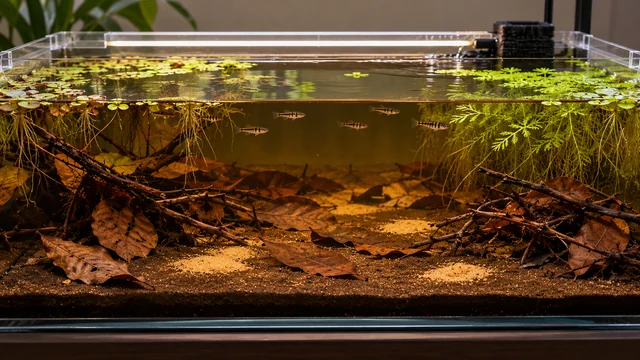
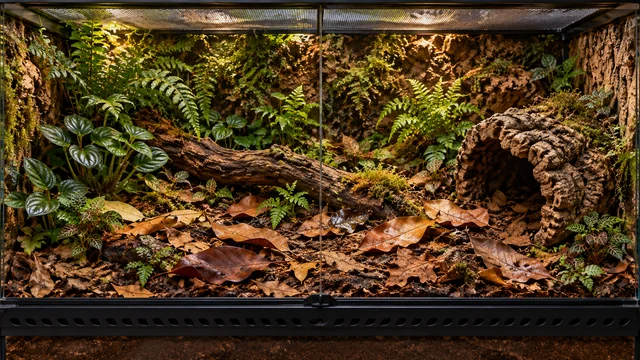
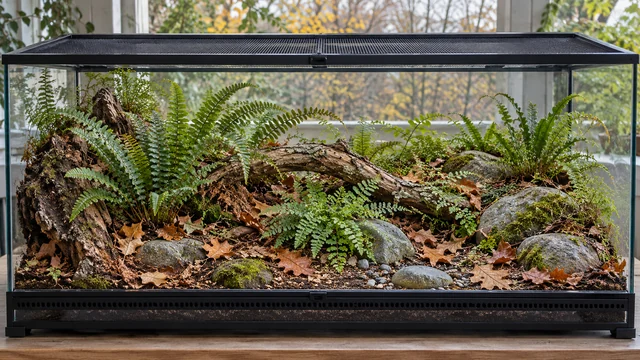
Create a cool, ventilated woodland plant display with small cultivated ferns, restrained leaf cover and a moisture regime that follows the selected plants.
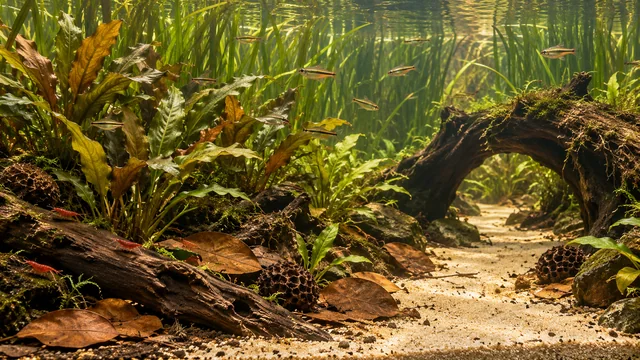
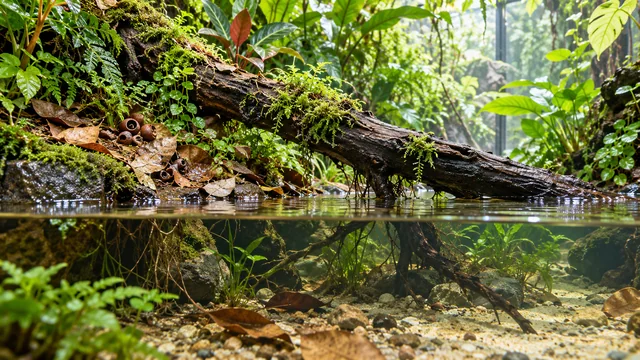
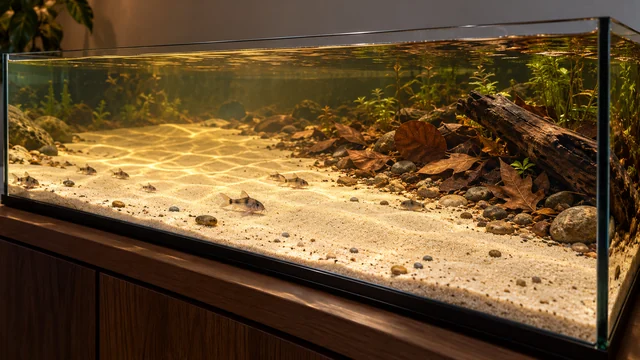
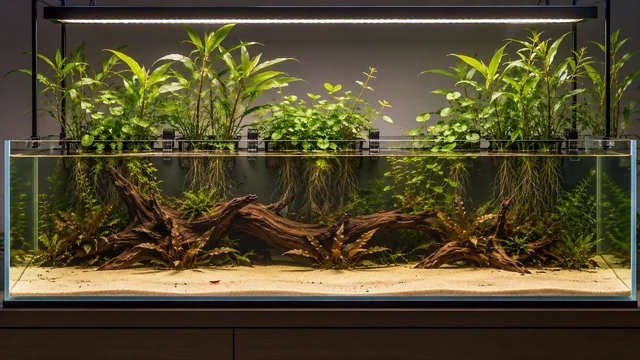
Group plants around the wood rather than filling every gap. The open corridor keeps the arrangement readable and preserves room for swimming and maintenance.
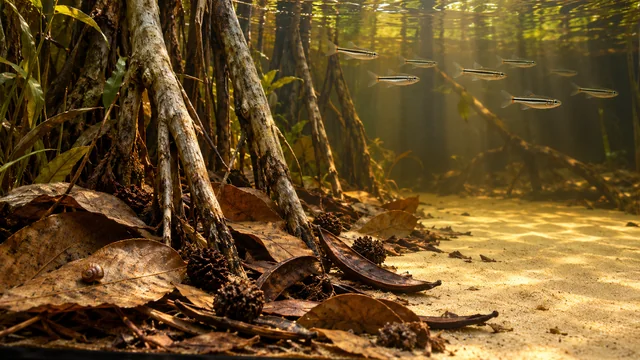
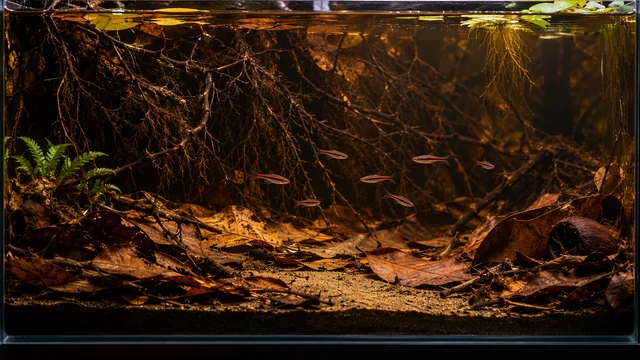
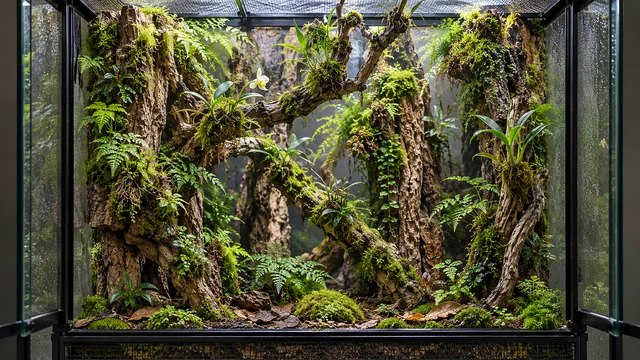
Upright roots establish rhythm; scattered leaves soften their bases. Open sand balances the darker material without turning the whole aquarium into a dense thicket.