Naturalistic Terrariums · The Tropical Leaf-Litter Vivarium
The Tropical Leaf-Litter Vivarium
Build an airy rooted forest floor with controlled drainage, varied leaf cover and deliberately managed springtail and isopod microhabitats.
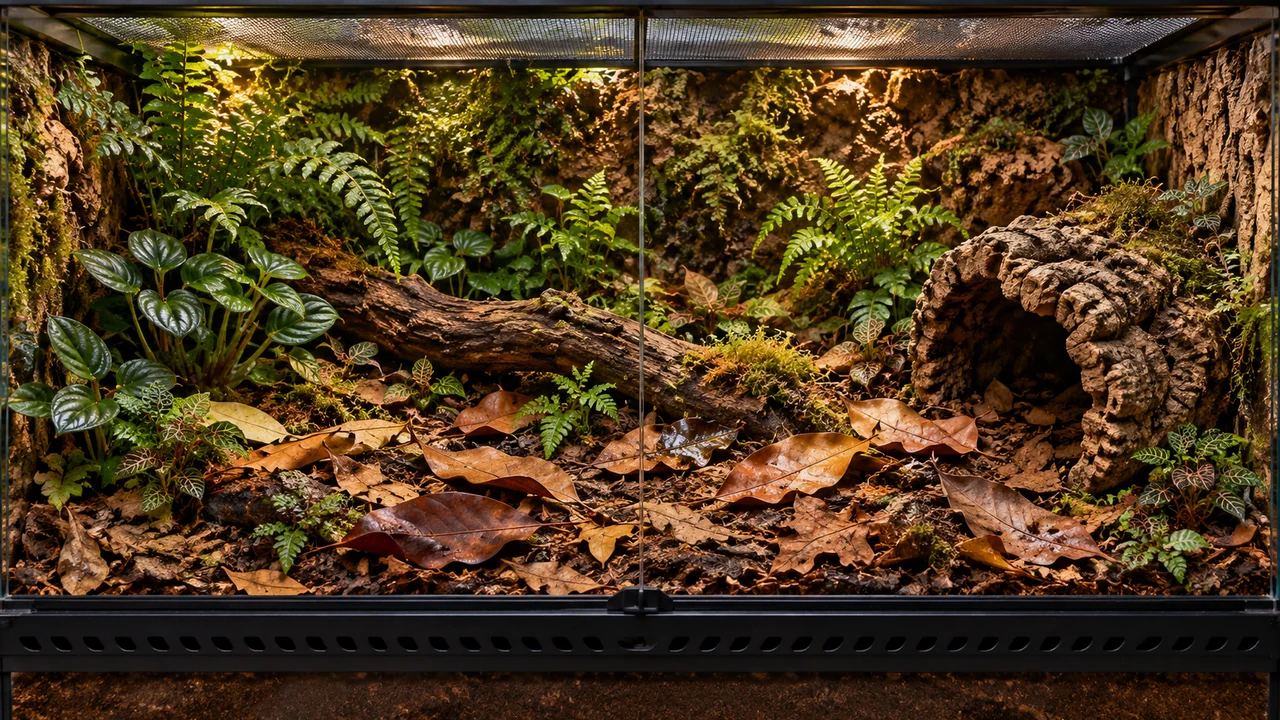
- Suggested enclosure
- 90 × 45 × 60 cm, prioritising floor access and front-to-top ventilation.
- Floor structure
- Serviceable drainage, suitable separator, airy root zone and a loose leaf surface.
- Biological direction
- Plants plus separately assessed small decomposers; no vertebrate stocking is implied.
- Maintenance
- Drain, feed, inspect and renew materials as needed; bioactive is not maintenance-free.
Build the living floor, not just a green background
The ground is the main subject: loose leaves overlap around a low bark refuge, while ferns and compact broad-leaved plants frame an accessible clearing. Different moisture levels can exist over a short distance, from a protected damp underside to an upper leaf edge that dries after watering. This differs from the paludariums because there is no permanent open pool or recirculating waterfall.
Bioactive describes a managed living substrate with plants and small organisms participating in decomposition. It does not guarantee balanced waste processing, eliminate pathogens or make an enclosure ready for any animal. Begin with a planted system and a deliberately selected decomposer community. A reptile or amphibian requires its own space, climate, lighting, escape and dietary assessment beyond this floor-building guide.
1. Keep the whole floor reachable
Use a proposed 90 × 45 × 60 cm front-opening enclosure with a practical lower vent and upper ventilation route. Check the substrate-retaining lip before deciding layer depths. Draw a service opening for the drainage reservoir, an inspection patch near the front and a path to remove the largest bark refuge. Avoid building a permanent background that prevents reaching the rear corners.
Choose lighting for the actual cultivated plants, not for a decorative background photograph. Plan sensor positions at leaf level and within the cooler floor zone, away from direct mist or lamp heat. Use any heating only where a measured plant or animal requirement justifies it, with suitable control. A floor that stays warm and soaked can behave very differently from a ventilated enclosure at the same room temperature.
2. Make a drainable base and an airy root zone
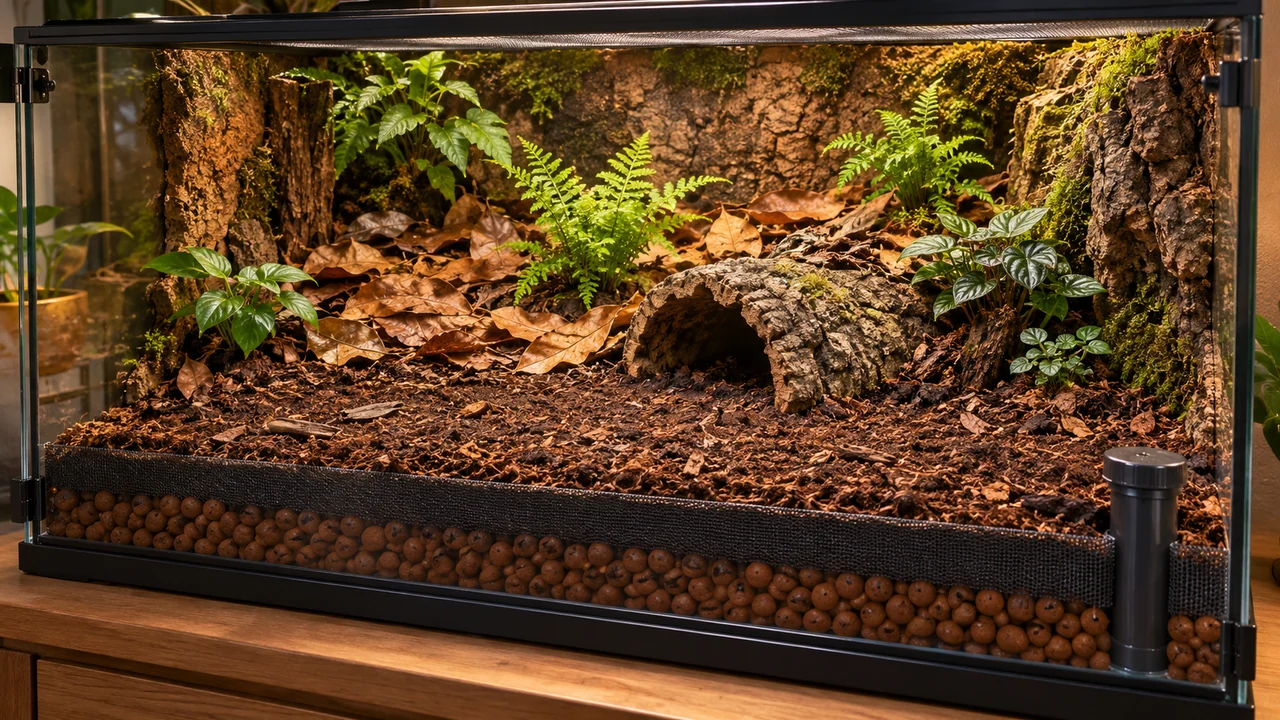
A drainage space of roughly four to five centimetres and a rooting layer of about six to eight centimetres can be a practical construction starting point for this shell. Adapt to plant roots, the retaining lip and access rather than treating those depths as universal. Use appropriate clean drainage media or a properly supported false bottom, with a separator that retains fine substrate without blocking drainage.
Include a capped siphon tube or fitted drain reaching the lowest collection area. Make it inspectable and protect openings from small inhabitants. Keep accumulated water below the root zone; a reservoir is storage, not automatic drainage out of a closed box. Add a suitable airy vivarium substrate rather than pure fine coir or compact garden soil. Test watering and removal of excess before hiding the layers.
3. Install low structure and plant in groups
Seat the bark refuge and any heavier wood on secure supports before dressing the floor. Use gaps that remain inspectable rather than burying sharp pod openings beneath leaves. A horizontal piece gives useful shaded underside space without consuming the whole footprint. Keep the main cleaning route clear and arrange materials so an inspection does not require uprooting every plant.
Small cultivated ferns, suitable compact Peperomia and a restrained Fittonia group can provide varied foliage where their requirements overlap. Fittonia appreciates humid conditions but not waterlogged compost; Peperomia may need a less constantly wet pocket. Give each crown room and leave some substrate visible while roots establish. Check mature dimensions and provenance rather than buying plants solely because they are sold beside terrarium equipment.
For a different low form beside the bark refuge, compare Coconut Nut Pod – Natural Three-Quarter Coconut Hide with individual pieces from the Blackwater Botanical Box – Pods, Bark Tubes & Shelters. Assess the real opening and edges for any intended inhabitants, position the chosen piece securely and keep it removable; a named shelter is not automatically suitable for every animal.
4. Introduce leaves by function
Use clean, suitably sourced leaf litter with varied shapes and rates of breakdown. Broad leaves can hold a loose roof over a damp refuge, while smaller curled pieces make a broken edge. Start with an open layer that can be lifted for inspection. Keep plant crowns and vents uncovered. Some sound material should remain while softened portions become part of the managed decomposing layer.
BBA leaves, cork and selected woody botanicals can supply cover and surfaces where their properties fit the enclosure. They do not make all substrate ingredients interchangeable. Review treatment, sharp edges, resin, decay and the intended inhabitants through the material safety guide. Aquarium preparation is not a blanket sterilisation or animal-safety certificate, and decorative seed pods should not become inaccessible food or waste traps.
For a varied loose roof over the floor, compare Dried Magnolia Leaves – Natural Aquarium Leaf Litter with Dried Oak Leaves – Natural Aquarium Leaf Litter, or sort selected pieces from BBA Leaf Litter & Substrate Variety Mix – 1 L Seasonal Botanical Blend. Leave lifting points and a visible inspection patch rather than compacting the whole supply into a deep layer. The mix is a botanical dressing, not a complete planted vivarium substrate.
5. Select and establish the decomposers deliberately
Cultured springtails can help process suitable fungal and decomposing material, but verify the culture's identity and conditions with the supplier. Folsomia candida is a commonly cultured option, not a universal choice for every tropical climate. Introduce a modest culture to established moist refuge areas and retain a separate backup culture where practical. Avoid transferring unknown outdoor soil communities into an enclosure intended for animals.
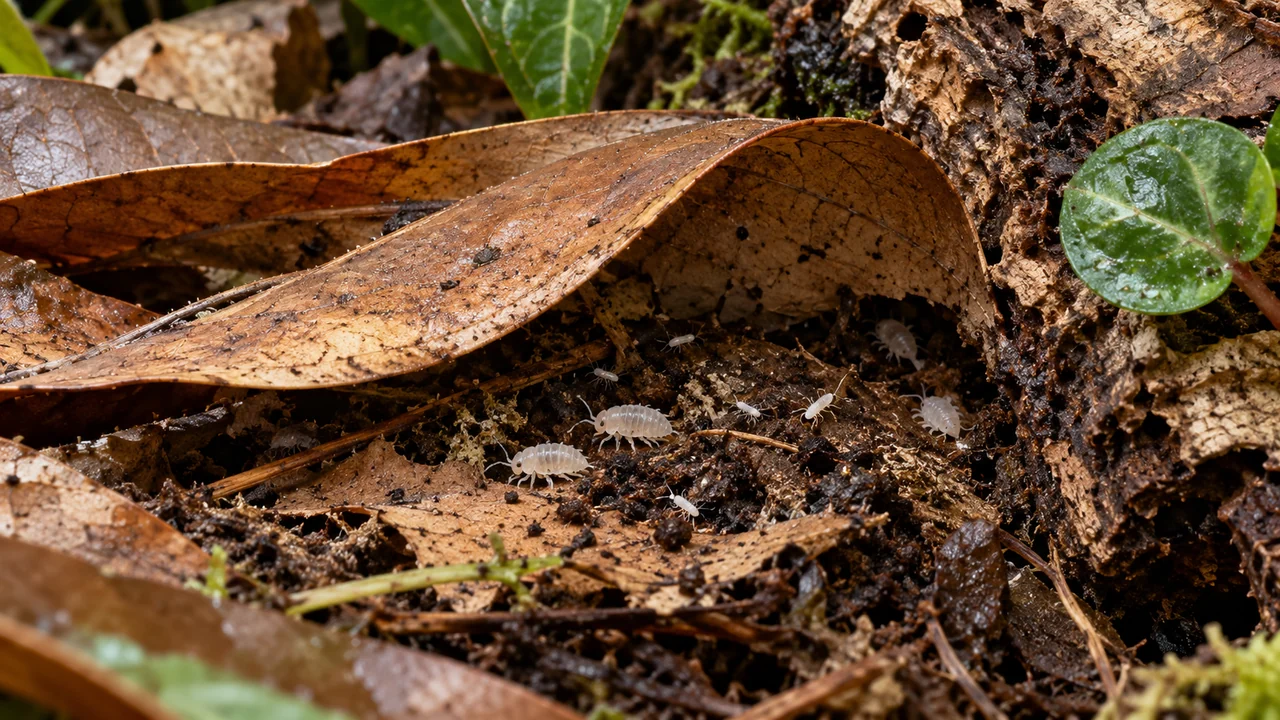
Small captive-cultured Trichorhina tomentosa, commonly called dwarf white isopods, are one possible warm humid soil-dwelling option. Assess their moisture, food, mineral and containment needs before introduction. Provide a protected moist refuge and appropriate supplementary food rather than assuming every leaf and every waste product is suitable. Large or highly protein-seeking isopods are not automatic substitutes, particularly around vulnerable animals or their eggs.
6. Tune water and air as separate controls
A warm planted display around 20–24°C can be a practical initial design direction if the selected plants and cultures fit it. Do not convert that into a universal animal temperature. Measure the daily cycle and the shaded floor separately from the canopy. Use bright indirect-style light with a timer, and adjust to plant condition rather than adding heat just to maintain a tropical appearance.
Water rooting areas as needed and mist selectively. Check the substrate beneath the leaves with direct inspection; a high humidity reading can coexist with dry soil, while a wet reservoir can coexist with unhealthy air. Keep ventilation functioning and allow upper surfaces to lose excess moisture. Do not seal every vent to retain a spray reading, or blast a fan at the floor until decomposer refuges dry out.
7. Establish before adding an animal load
Watch for rooted new growth, predictable drainage and stable decomposer refuges before considering larger inhabitants. There is no fixed waiting period that proves all systems are ready. Record the actual temperatures, humidity cycle, usable floor and cover. If an animal species is proposed, check its complete housing requirements and whether the planting, decomposers and material openings fit them.
Introduce clean-up cultures as animals with their own needs, not disposable equipment. Avoid excess starter food that produces an uncontrolled bloom. If the culture is repeatedly disappearing, inspect moisture, temperature, predation and food availability rather than continually adding more. A successful planted and invertebrate system is already a complete project; it need not become a mixed collection of reptiles or frogs.
8. Maintain the litter and reservoir
Lift part of the bark refuge during inspections and compare moist and drier positions. Remove uneaten supplementary food, dead plant material that overwhelms the floor and any excessive decomposing accumulations. Renew leaves in small areas as they break down. Keep useful mature surfaces elsewhere instead of replacing the whole substrate whenever the top layer stops looking new.
Drain collected water before it touches the rooting layer, clear vents and trim plant growth away from access points. If vertebrates are added under a separate plan, remove their substantial waste rather than expecting small detritivores to make it disappear. Decomposition redistributes material; it does not remove all nutrients or replace cleaning, health observation and a considered feeding regime.
Read the floor when something changes
Persistent sour odour or a sodden lower layer suggests a drainage or overwatering problem. Open the affected area, remove excess material and correct the water path. A few fungi on new organic material can be part of establishment, but continued heavy growth with wilting plants needs a check of air, food load and substrate condition. More isopods are not a substitute for correcting those causes.
If plants are uprooted or tender growth is being eaten, review the invertebrate choice and food rather than assuming every clean-up crew is benign. If the surface turns into a solid mat, thin it and restore the inspection clearing. The finished vivarium should retain distinct leaf pockets, healthy roots and manageable refuges, with maintenance becoming easier because the structure was planned well.
Further reading and sources
These references support the horticultural and material principles. Enclosure dimensions and the construction sequence are BBA design proposals. The planting examples do not establish suitability for a reptile, amphibian or other animal.
- Isopod Care — NEHERP — First-hand captive isopod and vivarium care, with differing species and ongoing feeding needs.
- Springtail Care — NEHERP — First-hand culture management and contamination considerations.
- Fittonia — RHS — Humidity does not imply waterlogged roots.
- How to grow peperomia — RHS — Cultivation and identity of compact plant choices.