Naturalistic Terrariums · Cloud-Forest Moss and Epiphyte Vivarium
Cloud-Forest Moss and Epiphyte Vivarium
Build an airy vertical planted display with removable epiphyte mounts, controlled misting and a temperature plan selected for the actual plants.
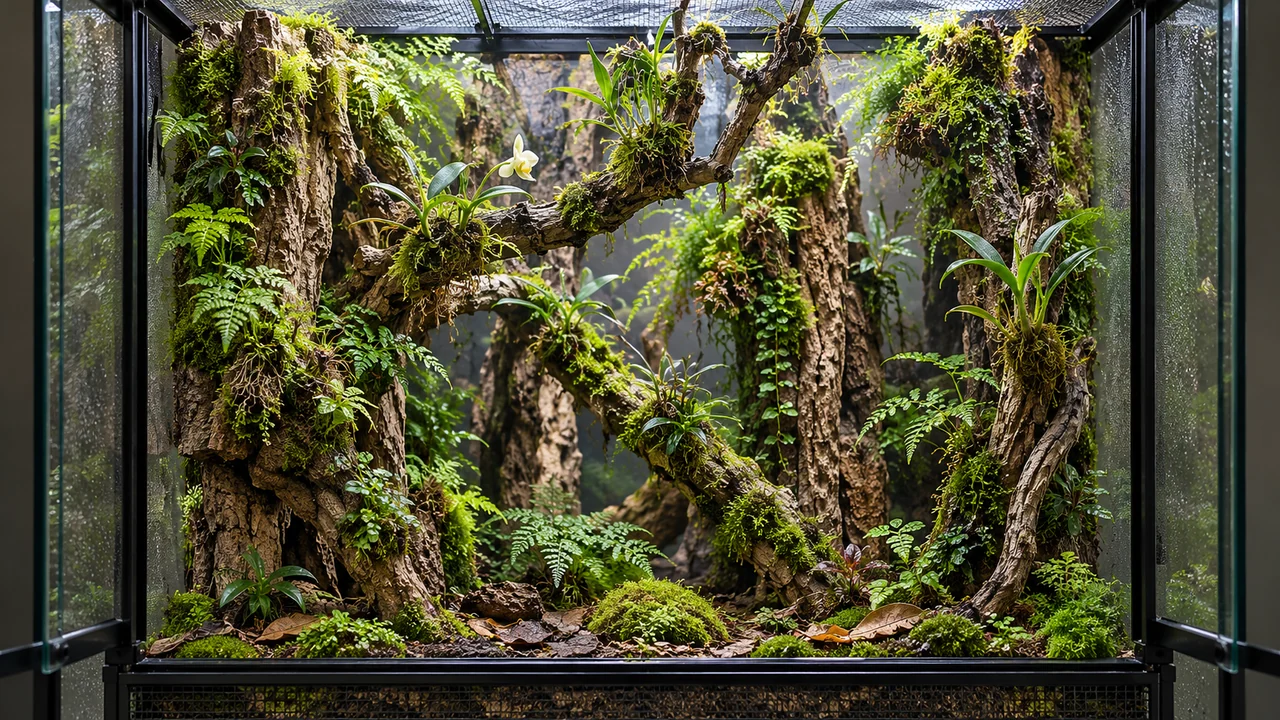
- Suggested enclosure
- 60 × 45 × 90 cm; vertical planting dimensions, not animal housing advice.
- Structure
- Spaced, securely attached mounts with light and air between them.
- Climate
- Match named plants first; cool-growing and warm-growing orchids are not interchangeable.
- Water management
- Misting wets plants; drainage removes excess; ventilation prevents stagnant pockets.
Build height with gaps between plants
The inspiration is an upland forest with moisture on bark, moss and epiphytes above the ground. Use separated vertical branches and removable mounts, not a solid wall of green. The viewer should see individual plants, the direction of their roots and the spaces through which light and air pass. The floor is a supporting margin rather than the main planted volume.
Cloud forest does not mean permanently fog-filled glass or one standard tropical temperature. Elevation, exposure and individual plant ecology matter. Treat this as a plant-focused cultivated display unless a separate animal-housing plan has been verified. The attractive combination of leaves and flowers in an image does not establish that every orchid or fern sold for terrariums shares its conditions.
1. Choose the climate before choosing the enclosure position
A 60 × 45 × 90 cm shell gives useful vertical space for compact mounts while remaining reachable from the front. Measure the proposed room position during warm days and at night before buying cool-growing plants. A daytime light and a small enclosure can raise canopy temperature well above room readings. A fan moves air; it does not reliably create the night cooling required by a specialist orchid.
Choose named species or identified hybrids with a documented cultivation range. For suitable cool-to-intermediate Masdevallia selections, published orchid-society guidance around 18–24°C days and 13–16°C nights can inform planning, but it is not valid for every member of the genus. Strict cold growers and warmer selections differ. If those conditions cannot be maintained, change the planting rather than forcing the room into an unsuitable regime.
2. Secure the frame and make mounts removable
Use suitable branches, cork panels or manufactured supports attached by an appropriate structural method. Follow cure and load requirements for any bonding system, and check that every support can carry its wet mature weight. Keep an access gap behind or beside the main structure. Avoid locking irrigation fittings and cables behind a permanent decorative surface that cannot be inspected.
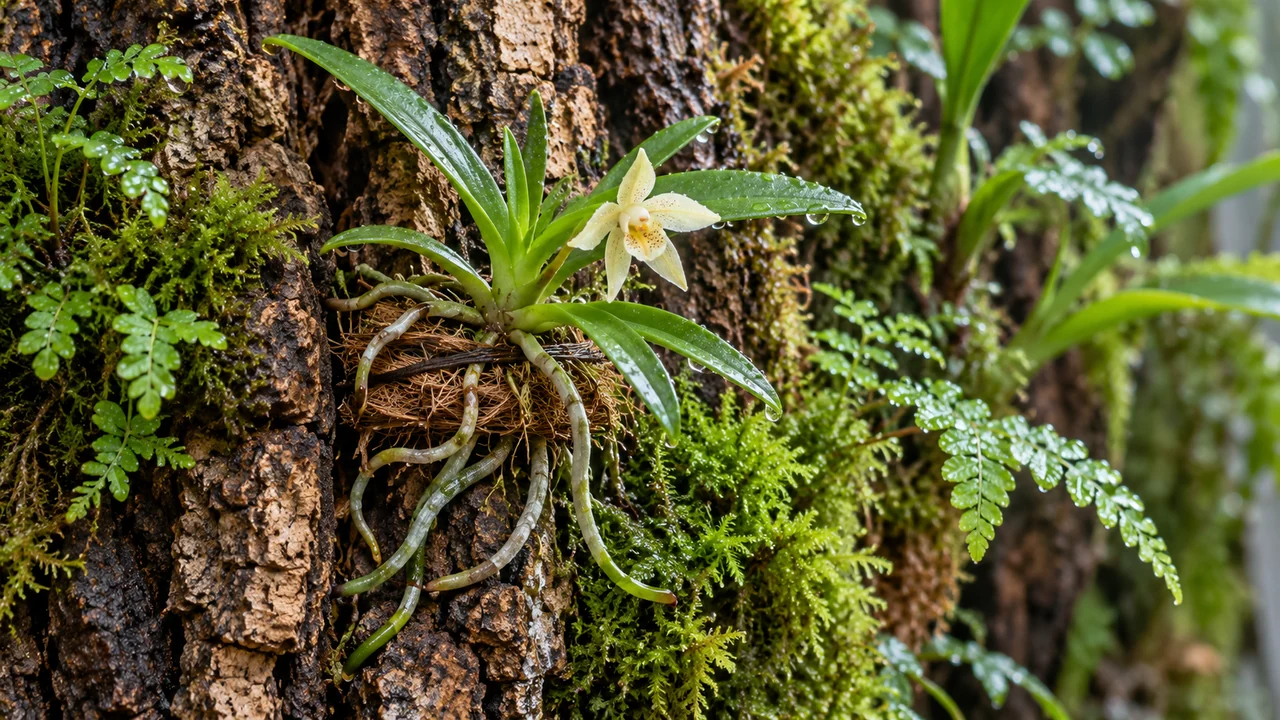
Fit several small removable plant mounts rather than one enormous slab. Secure a plant gently to a suitable surface without cutting its roots or burying its crown. Any moisture-retaining pad should suit that plant and the wetting schedule; tightly packed absorbent material can stay wet internally after the outside appears dry. Leave new roots room to attach and keep the mounting method visible enough to inspect.
For a small non-structural surface accent beside an established mount, compare Organic Coconut Husk Silk – Natural Coco Coir Fibres, 100 g with Palm Bakla Mat – Natural Coconut Leaf Sheath Texture. These products supply long fibres and natural leaf-sheath texture, not cork mounting panels or a load-bearing support. Keep the accent loose enough to inspect and clear of plant crowns, vents and any animal routes.
3. Plan drainage beneath the vertical planting
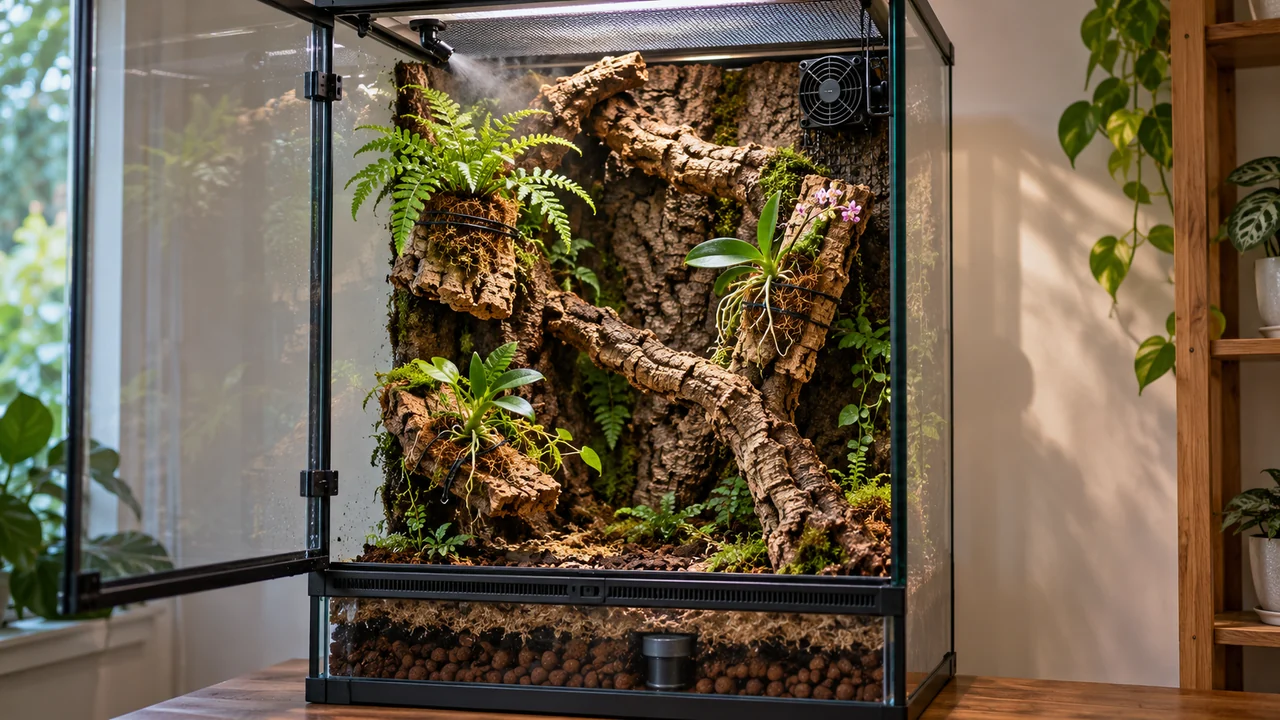
Provide a suitable collection space at the base, separated from any terrestrial rooting mix and accessible through a drain or capped siphon point. Keep the collected water below the root zone. Direct runoff from mounts into that known route. A hollow background full of untraceable wet pockets is not a drainage system, even if water eventually appears somewhere near the bottom.
The shallow floor can hold a few suitable plants and restrained leaves, but do not use it as a sump packed with compost. Test misting and runoff while the structure is still sparse. Check door edges and vent strips for water escaping the intended path. If water remains trapped behind a mount, alter its angle or support before covering the problem with moss.
For the limited floor beneath the vertical planting, compare selected Dried Bamboo Leaves (Bambusa sp.) – Premium Shrimp & Blackwater Botanical and Dried Mango Leaves – Natural Aquarium Leaf Litter, or choose suitable leaves from the Blackwater Leaf Box – Leaf Litter Starter Mix. Leave the drain and collection area visible, and retain the wetting and drying pattern required by the actual plants rather than thickening the litter to raise humidity.
4. Plant in microhabitats rather than matching colours
Place compact cultivated orchids where their required light and air are available, with suitable small ferns and moss in different positions. Select each from its growing requirements and mature dimensions. The American Orchid Society distinguishes major differences within Masdevallia; the common cloud-forest association does not establish one temperature or moisture prescription. A decorative flower is not a species identification.
Use moss as small patches that can be evaluated, not a universal wrap around every root. Some plants need consistently moist roots; others need a clearer drying interval. Keep crowns and new growth unobstructed and leave space for mature leaves. A plant that repeatedly fails at one position may need moving or replacing with a more suitable choice, rather than more spray over the entire enclosure.
5. Install light, sensors and air movement
Position the lamp at an appropriate safe clearance and check the light reaching the lower mounts. Begin with a consistent timed period and adjust to growth and plant-specific requirements. Measure temperatures at the top, middle and lower zone, including after several hours of lighting. Do not put a humidity probe directly in a mist stream and interpret the wet sensor as the whole enclosure climate.
Maintain a fresh-air route, commonly from lower ventilation to an upper outlet. If an internal circulation fan is needed, guard it and avoid directing a drying jet at one plant. Internal air movement and exchange with the room are different functions. Check both. Persistent wet stagnant corners are not solved by moving the same enclosed air around faster.
6. Tune misting to wetting and drying behaviour
Start with short, observed applications that wet the intended roots and surfaces without continually flooding the floor. Inspect the mounts later to see where moisture remains. Adjust nozzle direction, interval and plant position from that evidence; there is no useful universal daily spray duration for every plant mix. Use water appropriate to the plants and keep the reservoir and delivery equipment clean.
Misting, root watering and room humidity are related but not equivalent. A fine fog may make the air look convincing while failing to hydrate roots. Conversely, packed moss may stay saturated after the glass clears. Keep a simple record of when mounts are watered and how they respond. Select a workable cultivation regime rather than aiming for permanently obscured panes.
7. Establish the planting without unnecessary additions
Look for sound roots and appropriate new growth before adding more plants to empty gaps. Feed according to the actual plant's needs with suitable products and concentrations, keeping any future animal restrictions in mind. A living wall is not a reason to add unmeasured fertiliser to every water reservoir. Inspect new plants for pests and avoid mixing uncertain treatments into an occupied enclosure.
No waterfall or pond is necessary here. An aquarium species guide is not a stocking guide for this vertical environment, and an attractive small frog requires its own verified enclosure and climate assessment. Keep the first version plant-focused. Bioactive substrate organisms can be considered separately if they fit the floor's conditions; they will not automatically maintain an orchid crown high above it.
8. Maintain the mounts and moisture routes
Inspect ties, attachments and wet weight as growth increases. Remove dead leaves and failed roots carefully, keeping access around the crown. Thin moss where it holds excess moisture or conceals the mounting surface. Clean mist nozzles and check delivery, because a pump can sound normal while one mount receives little water. Empty drainage before it reaches the terrestrial layer.
Trim plants before they close the air gaps or shade every lower mount. Keep vents and fan guards clean and inspect condensation patterns over the day rather than at one moment. Removable mounts allow an affected plant to be examined without stripping the whole enclosure. Preserve that advantage by resisting the temptation to let every root and vine tie the separate units into one inaccessible mass.
Respond to heat, condensation and failing growth
If cool-growing plants suffer in warm weather, measure the real canopy temperature and overnight minimum. Review room placement, light heat and whether the plant selection is realistic; more humidity is not a substitute for cooler conditions. If fungal damage persists, inspect stagnant pockets, retained water and declining tissue rather than simply reducing all watering and drying every healthy root.
If the scene appears too sparse, wait for appropriate growth or improve one mount's position before filling all gaps. The final result should be layered and airy: visible bark, discrete moss, healthy epiphyte roots and a manageable floor beneath them. Those gaps are functional habitat space for the plants, not unfinished areas that need a continuous blanket of greenery.
Further reading and sources
These references support the horticultural and material principles. Enclosure dimensions and the construction sequence are BBA design proposals. The planting examples do not establish suitability for a reptile, amphibian or other animal.
- Masdevallia Culture Sheet — American Orchid Society — Primary cultivation guidance distinguishes cold, cool and warmer members of the genus.
- Growing Masdevallia — Orchid Council of New Zealand — Cool-to-intermediate planning examples, not universal genus limits.
- Humidity and Air Movement — American Orchid Society — Specialist guidance on moisture, airflow and stagnant zones.
- Mounting — American Orchid Society — Plant-specific attachment and moisture-retention considerations.