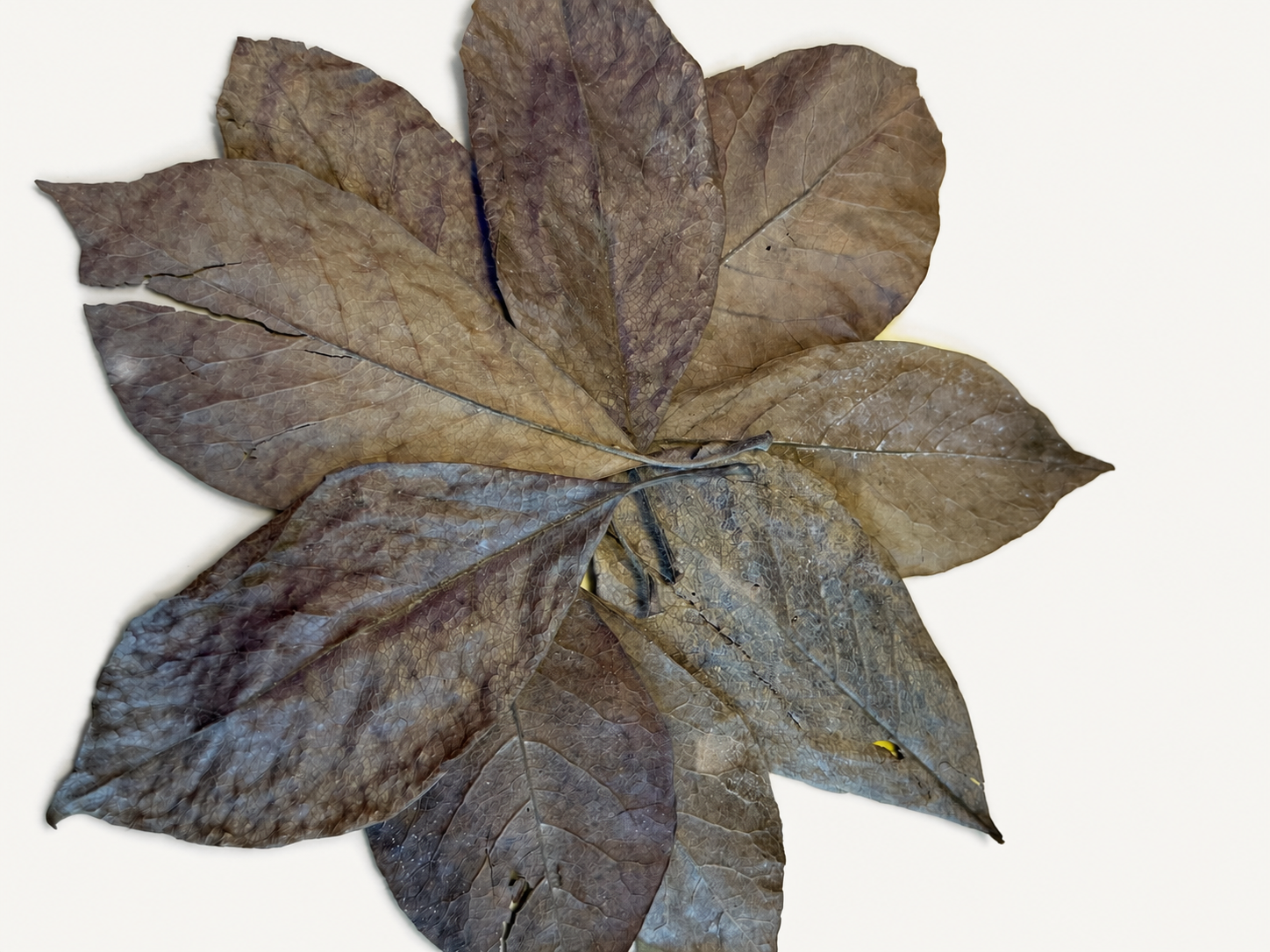
Catalogue photograph - material example, not the illustrated piece
Dried Magnolia Leaves – Natural Aquarium Leaf LitterView product and options →BBA Worlds / Canopy & ground
A crested gecko pauses above a layered forest floor. Follow the branchwork down through planting, open pods and broad leaves, then explore a separate terrestrial arrangement where low cover and open ground lead the design.
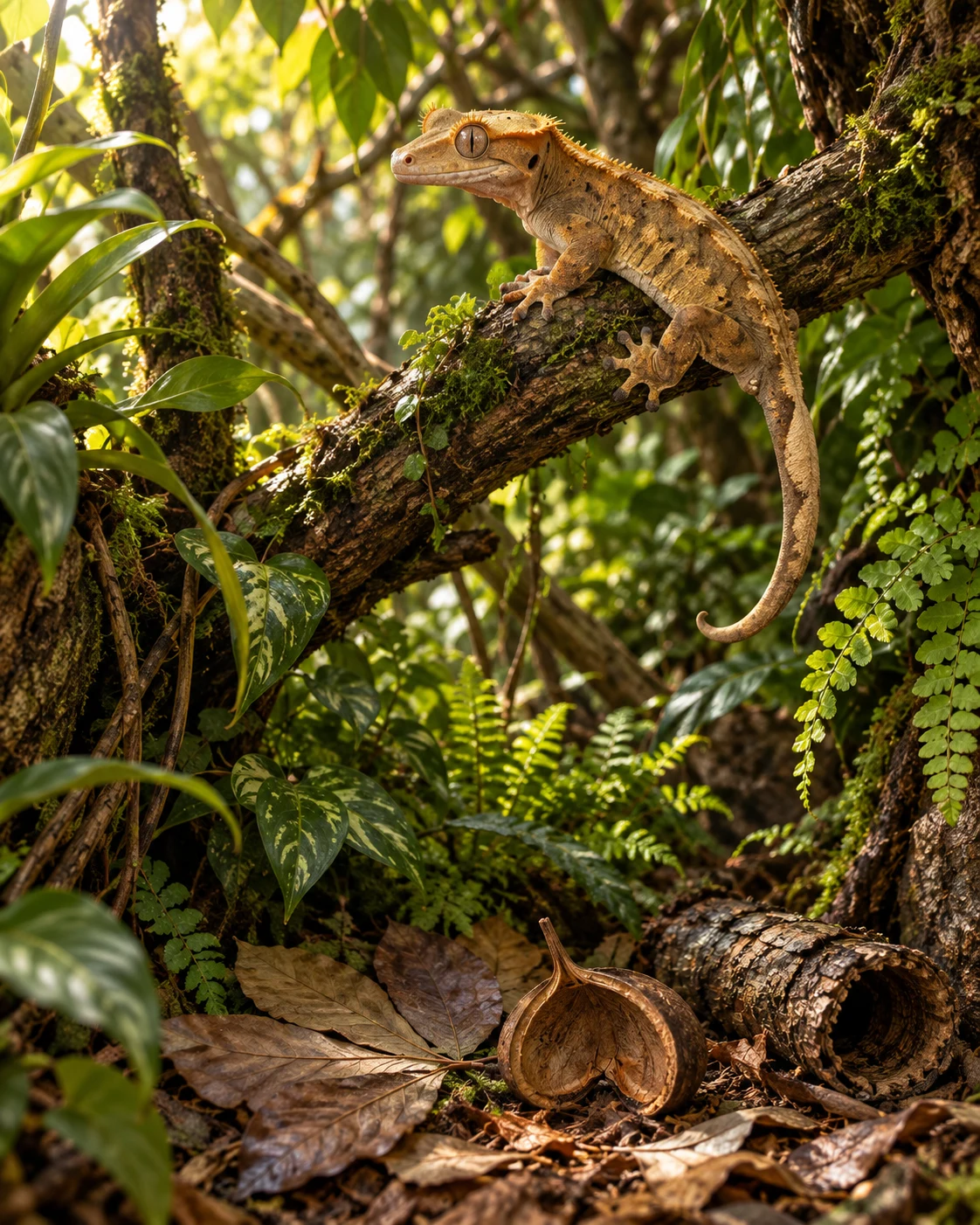
The canopy provides the climbing routes. Smaller BBA botanicals belong to the sheltered lower layer; they are not substitutes for a secure, full-size branch framework.
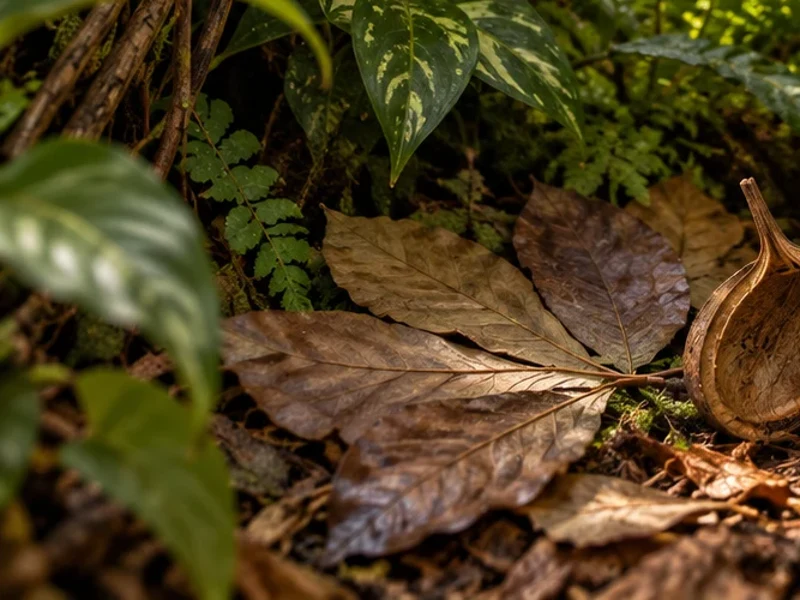
Magnolia creates a broad, veined floor layer around plant bases. Compare it with the different outlines of Oak and Beech rather than repeating one leaf throughout.
Compare the real BBA material
Catalogue photograph - material example, not the illustrated piece
Dried Magnolia Leaves – Natural Aquarium Leaf LitterView product and options →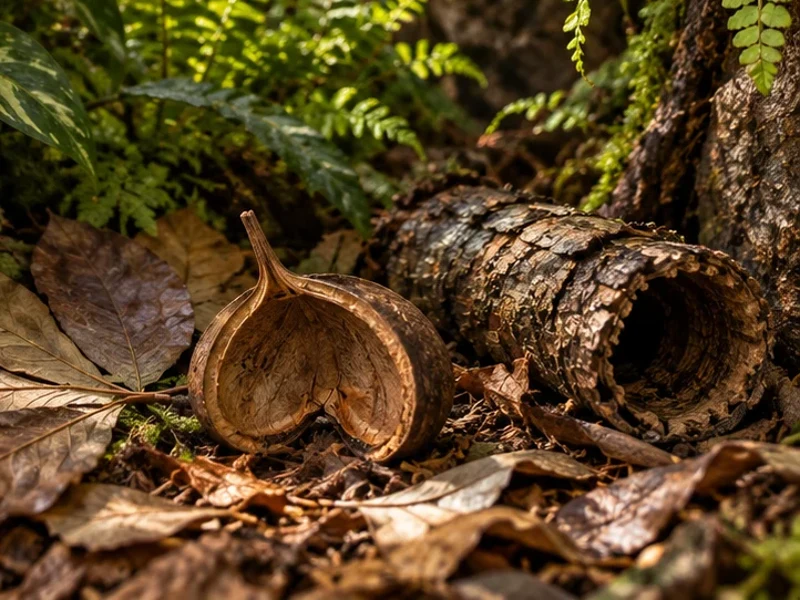
The curved Buddha Nut creates a small sheltered pocket at ground level. Choose the opening for its intended occupant; a small pod is not an adult gecko hide.
Compare the real BBA material
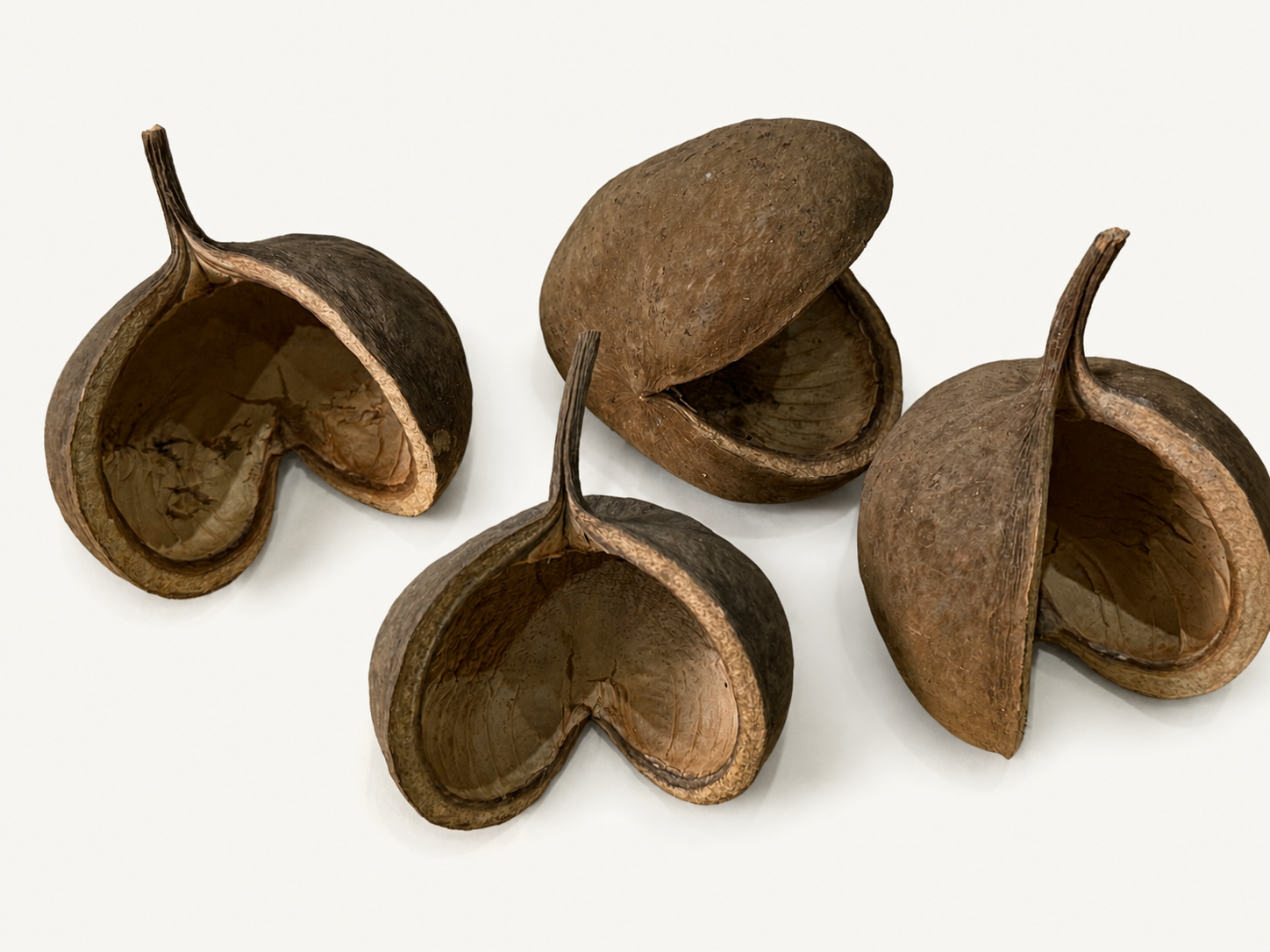
Catalogue photograph - material example, not the illustrated piece
Buddha Nut (Pterygota alata) – Natural Seed PodView product and options →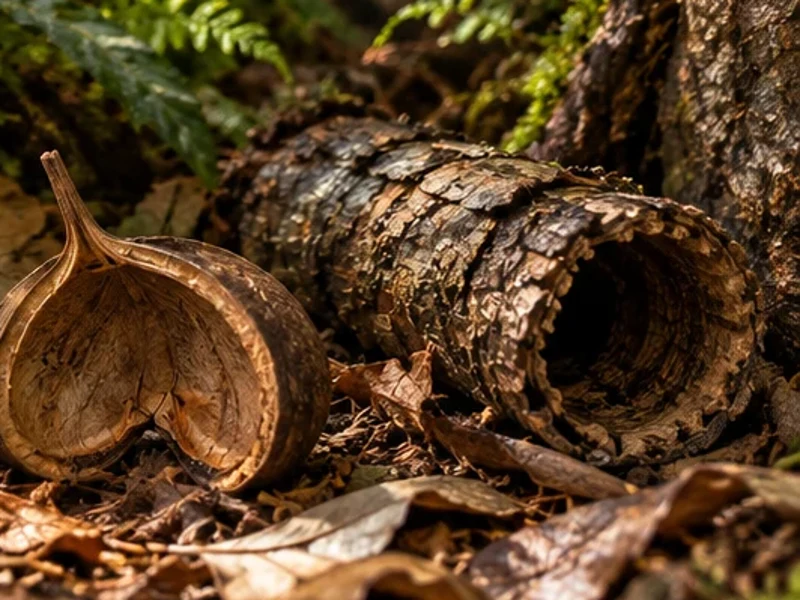
Rolled Catappa bark supplies a rough surface and small ground-level recess. Use it as detail beside the planted framework, not as a load-bearing canopy perch.
Compare the real BBA material
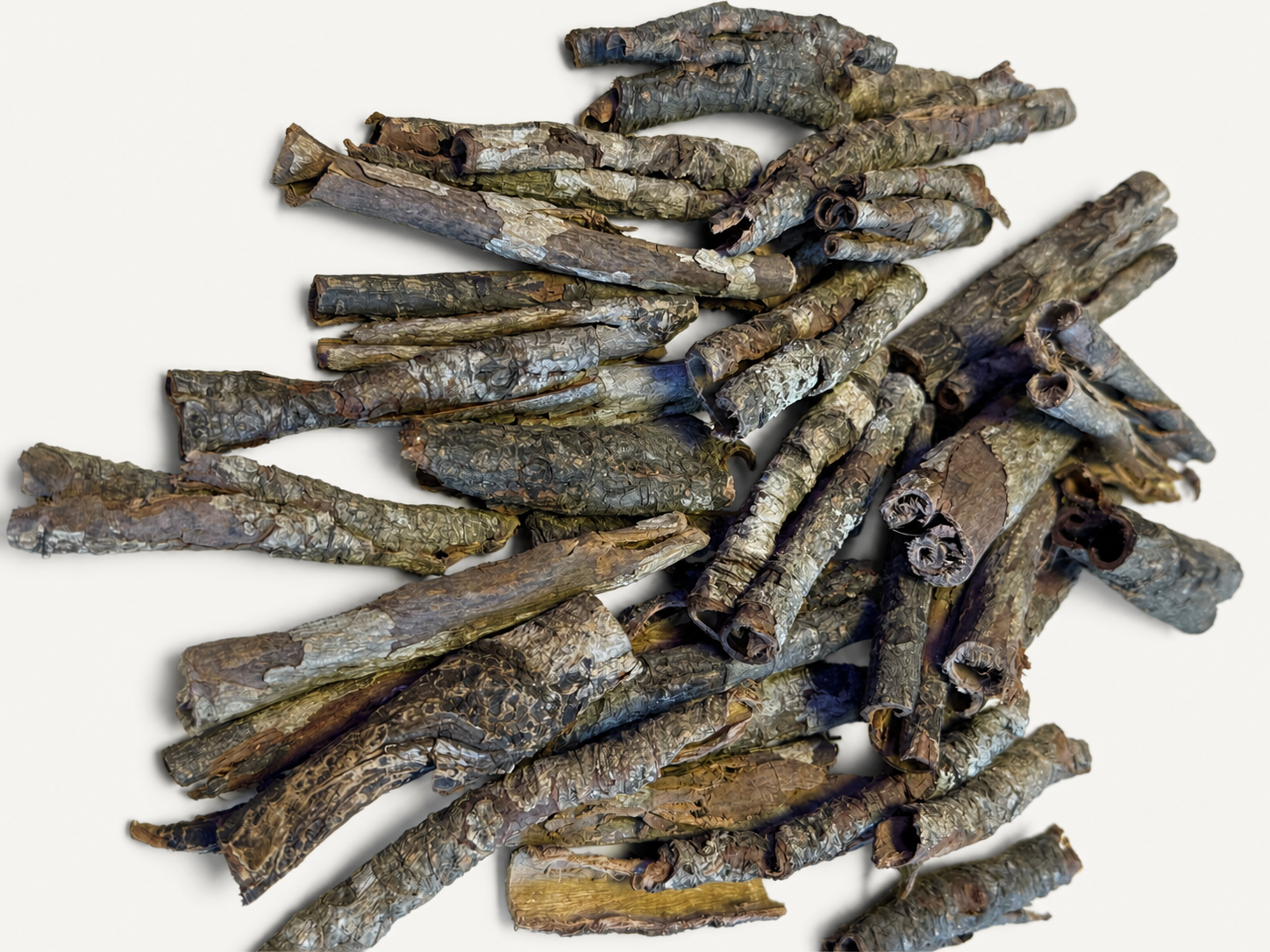
Catalogue photograph - material example, not the illustrated piece
Catappa Bark Tubes – Indian Almond Bark Hiding TubesView product and options →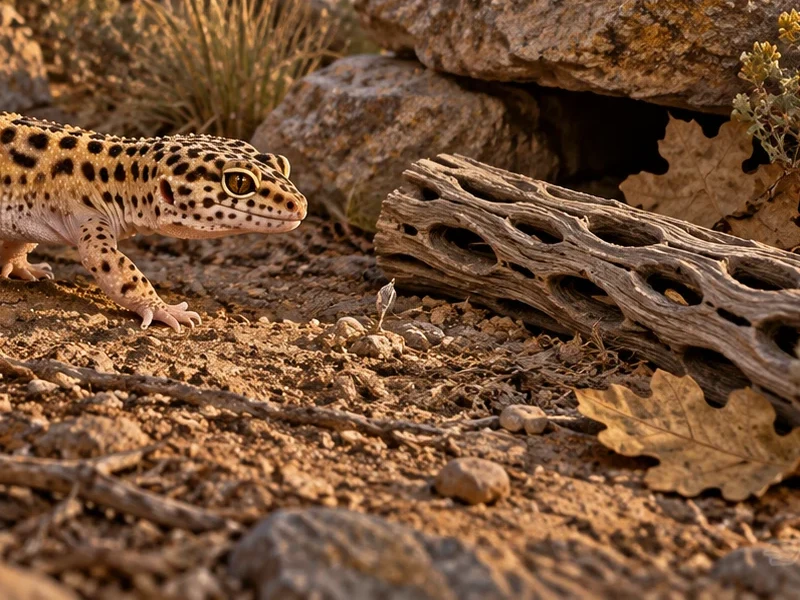
In the separate leopard-gecko scene, Cholla contributes low texture beside an open route. Compare its real perforations and thickness; the main hides are the larger sheltered spaces.
Compare the real BBA material
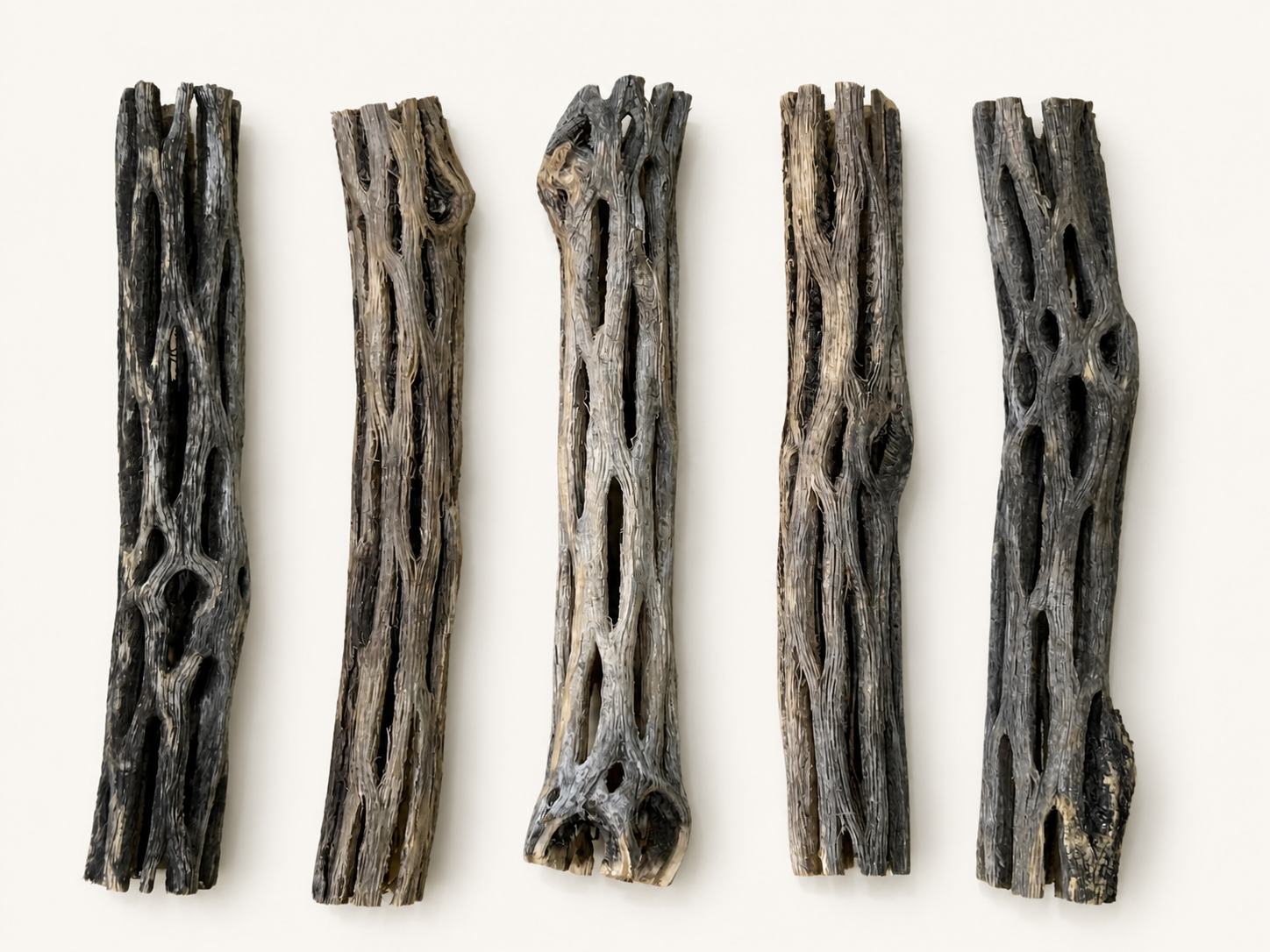
Catalogue photograph - material example, not the illustrated piece
Cholla Wood / Cactus SkeletonView product and options →A different species, a different enclosure. This terrestrial example is separate from the humid planted canopy above.
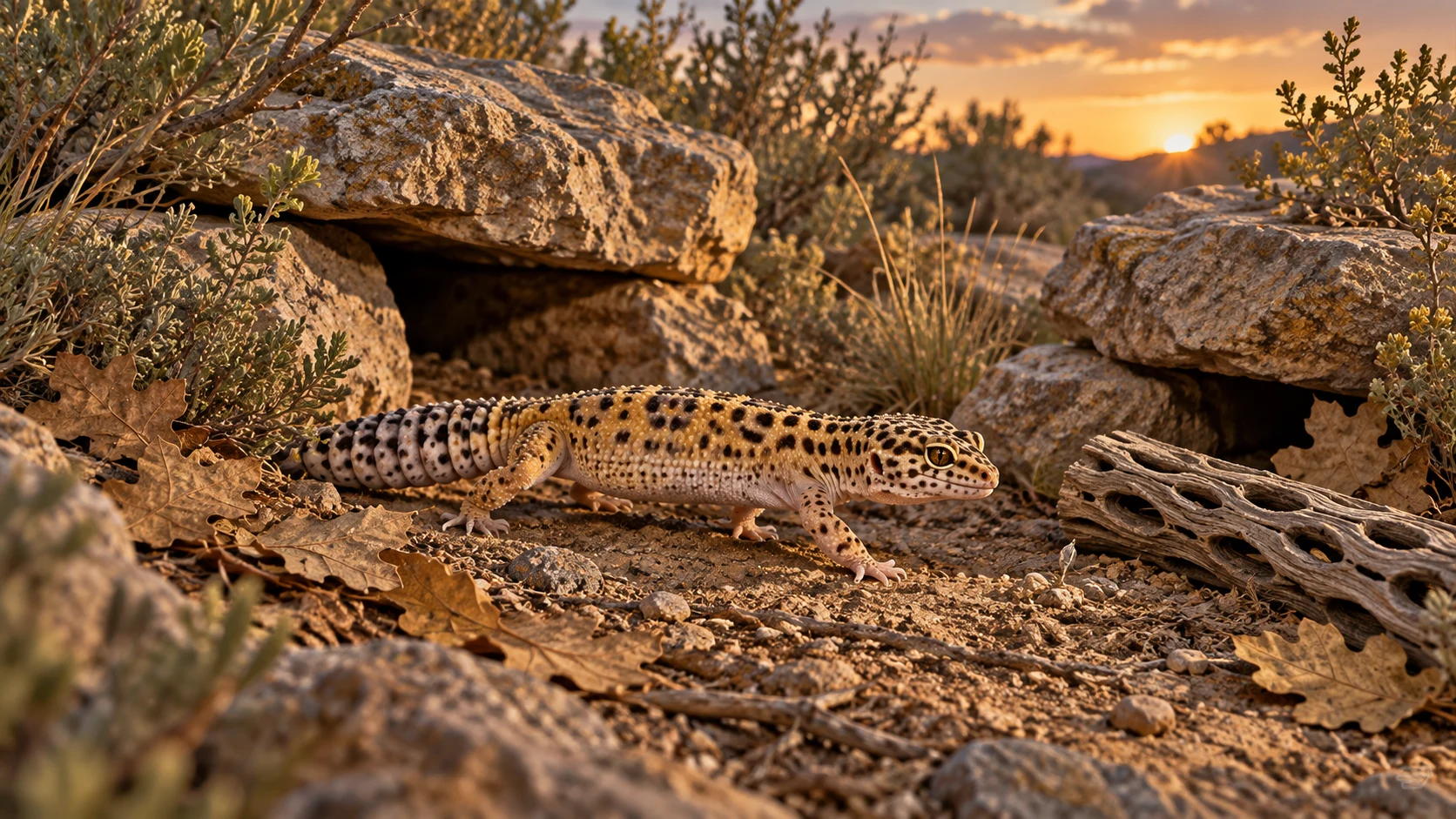
Leopard gecko / Eublepharis macularius
A leopard-gecko layout begins with low, stable hides and an accessible ground route. Dry leaves can gather at sheltered margins, while short wood adds texture. Provide the species-specific warm, cool and humid refuges; do not copy the crested-gecko canopy climate into this enclosure.
Build around the animal first, then select materials for a clear job.
Oak (about 4–8cm), Beech (about 5–8cm) and broad Magnolia give different outlines. Choose the leaf layer around planting and access routes.
Buddha Nut, Sapucaia and Canoinhas offer curved, round and elongated forms. They are smaller material details: check the actual opening before assigning a shelter role.
Use Mangrove for a low structural accent and compare Cholla perforations with rolled bark. The pictured canopy needs a separately secured branch framework of suitable size.
These featured materials are a starting point, not the full BBA range. Compare the role and real product dimensions, then explore the wider selection below. Current options and availability come from the shop.
A starting point, not the full BBA range: explore more leaf shapes, openings and textures below. Catalogue photographs show material examples; natural pieces vary. Match the actual piece to the animal and its placement.
Lobed Oak, oval Beech and broad Magnolia make a varied floor layer. Place them around the layout rather than treating every leaf as a complete enclosure substrate.
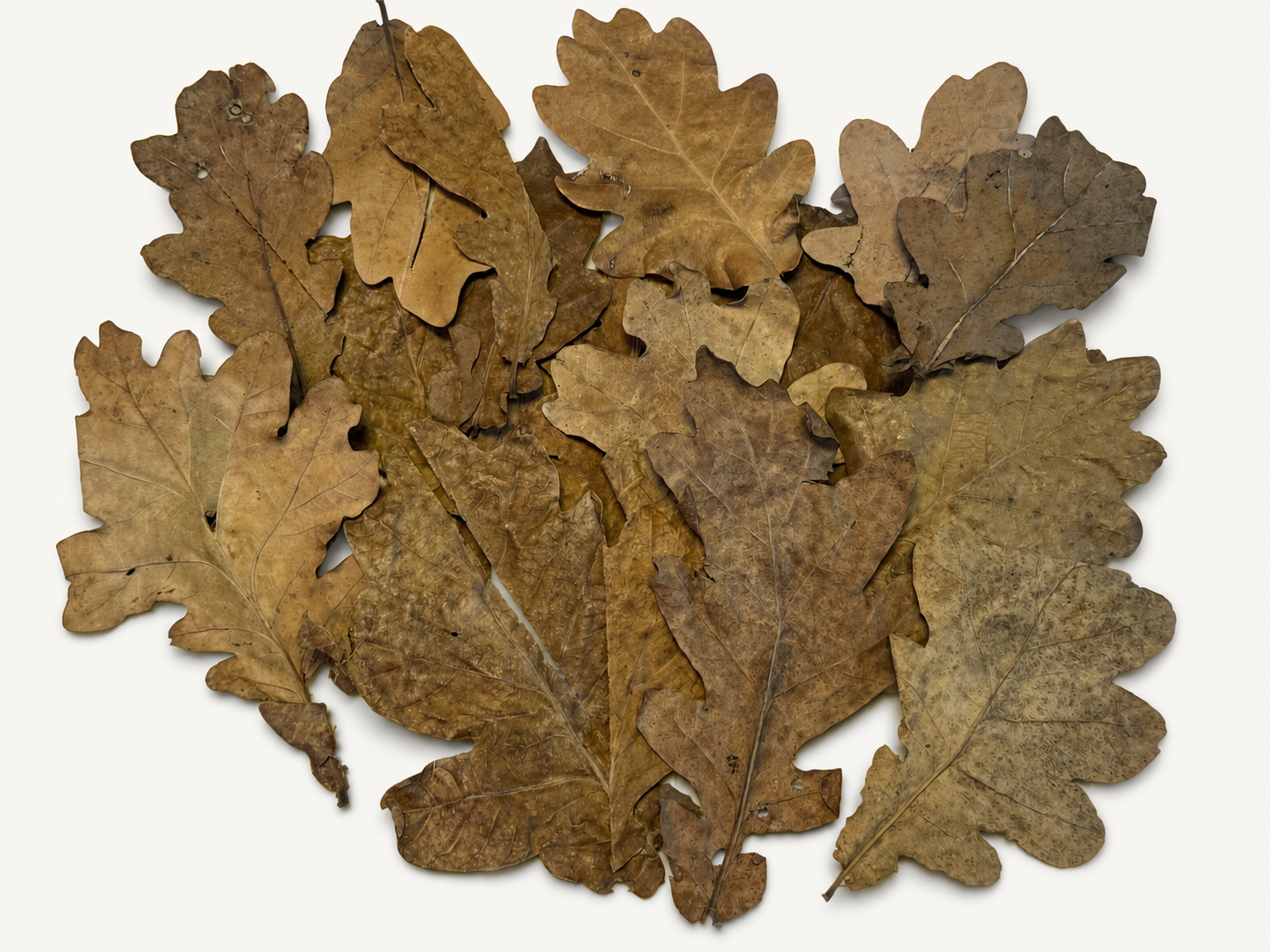
Approx. 4–8cm: lobed outline
Dried Oak Leaves – Natural Aquarium Leaf LitterView product and options →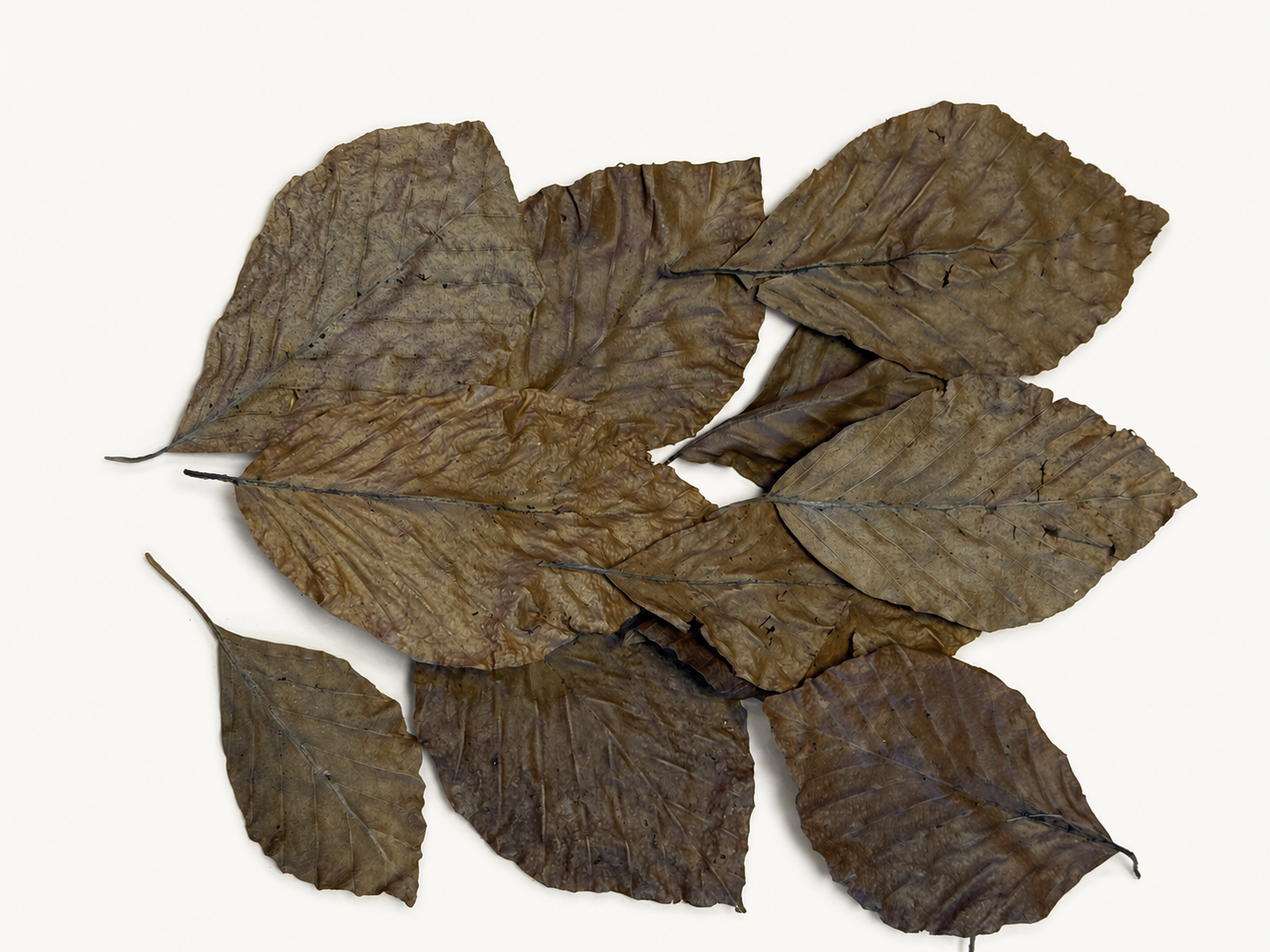
Approx. 5–8cm: clear ribbed veins
Dried Beech Leaves (Fagus sp.) – Natural Aquarium Leaf LitterView product and options →Broad leaves: a larger visual layer
Dried Magnolia Leaves – Natural Aquarium Leaf LitterView product and options →Compare a curved capsule, round pot and long canoe. These are material forms, not a promise that every opening fits every reptile.
Curved open shell and pointed stem
Buddha Nut (Pterygota alata) – Natural Seed PodView product and options →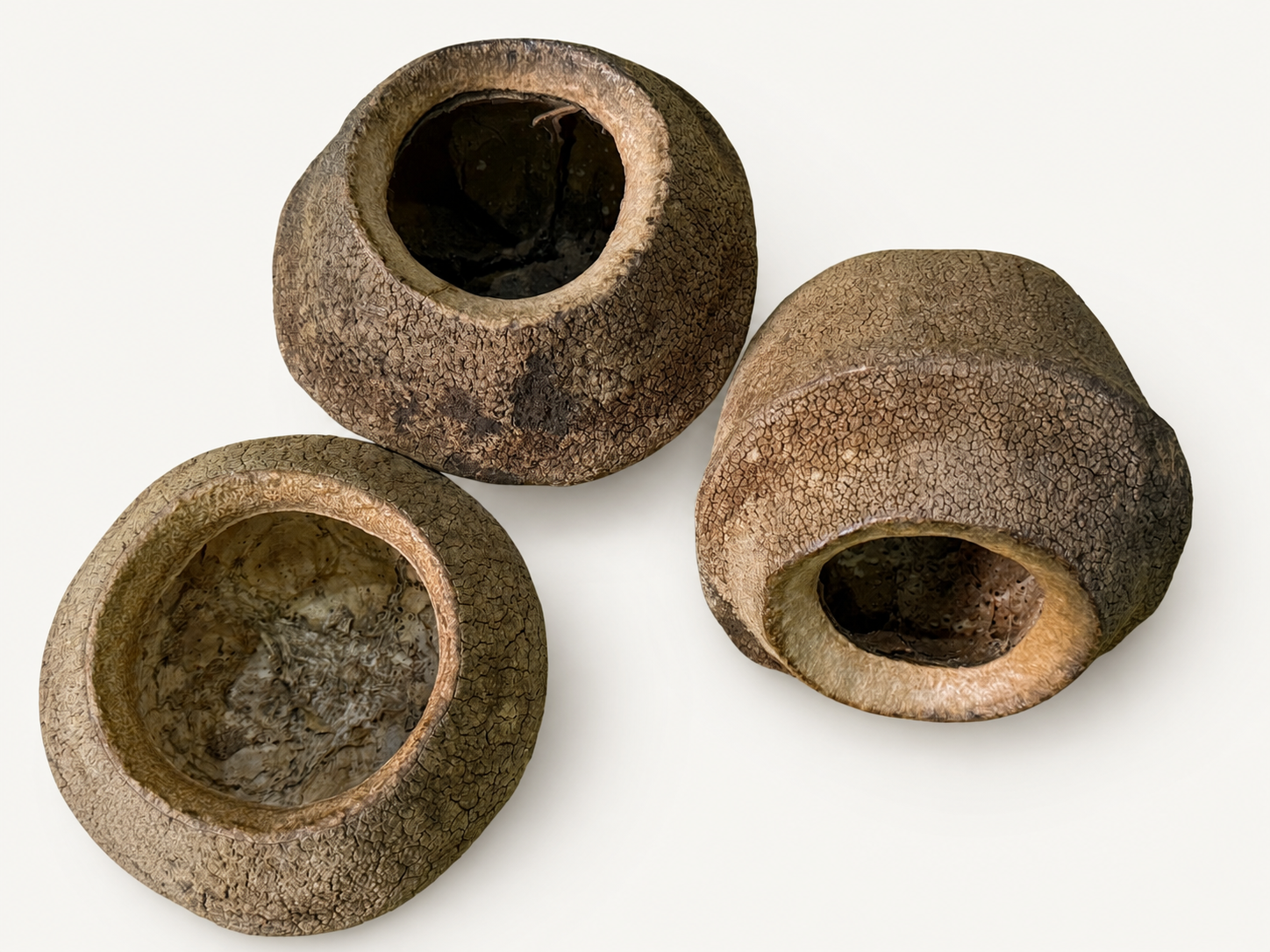
Round pot with a distinct rim
Sapucaia Pod / Monkey Pot (Lecythis pisonis) – Natural Seed PodView product and options →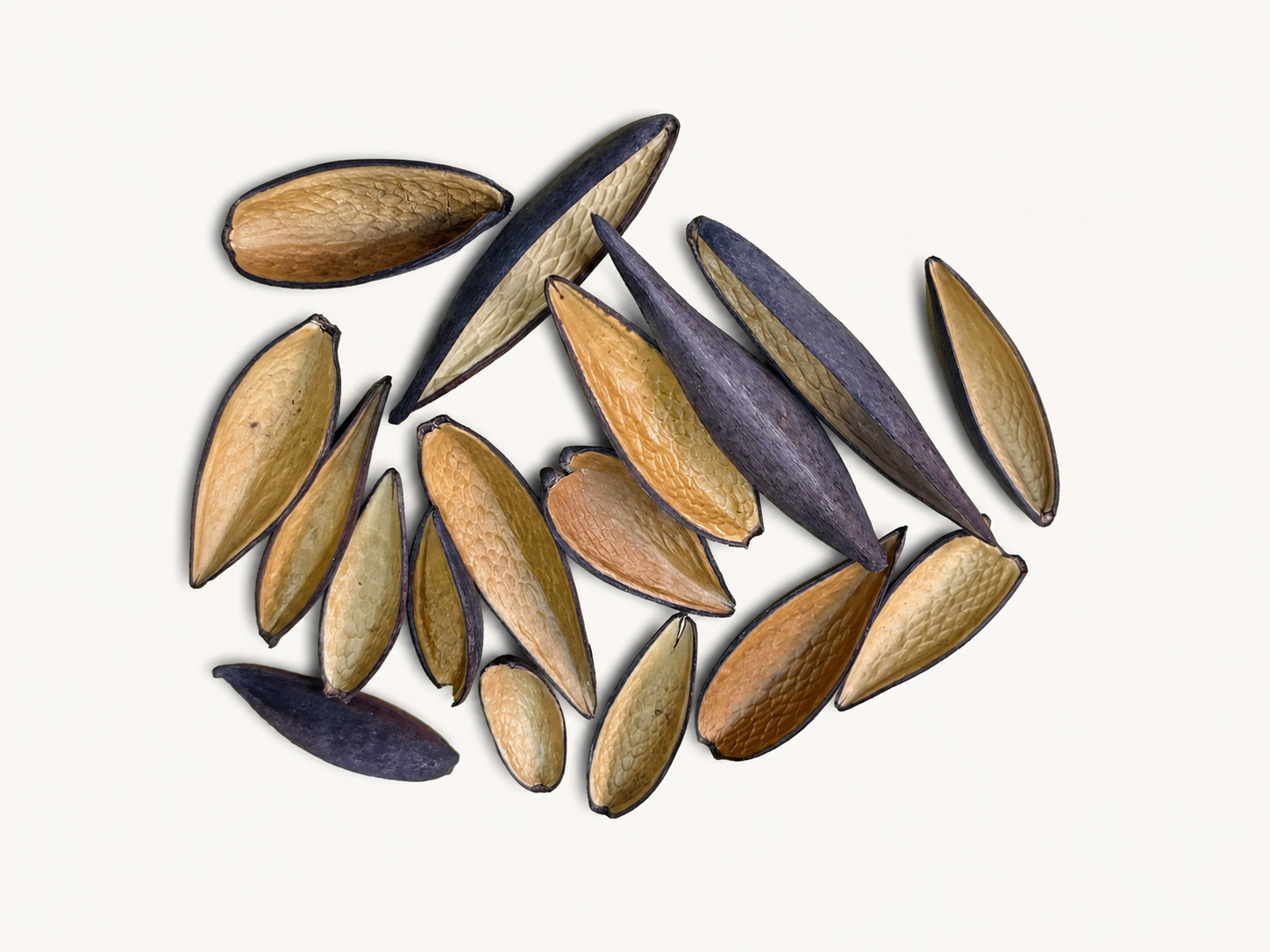
Approx. 8–14cm: elongated open form
Canoinhas Pods (Funtumia elastica) – Natural Seed PodsView product and options →Solid root lines, perforated Cholla and rolled bark do different jobs. Start low and stable; choose full-size climbing structure separately.
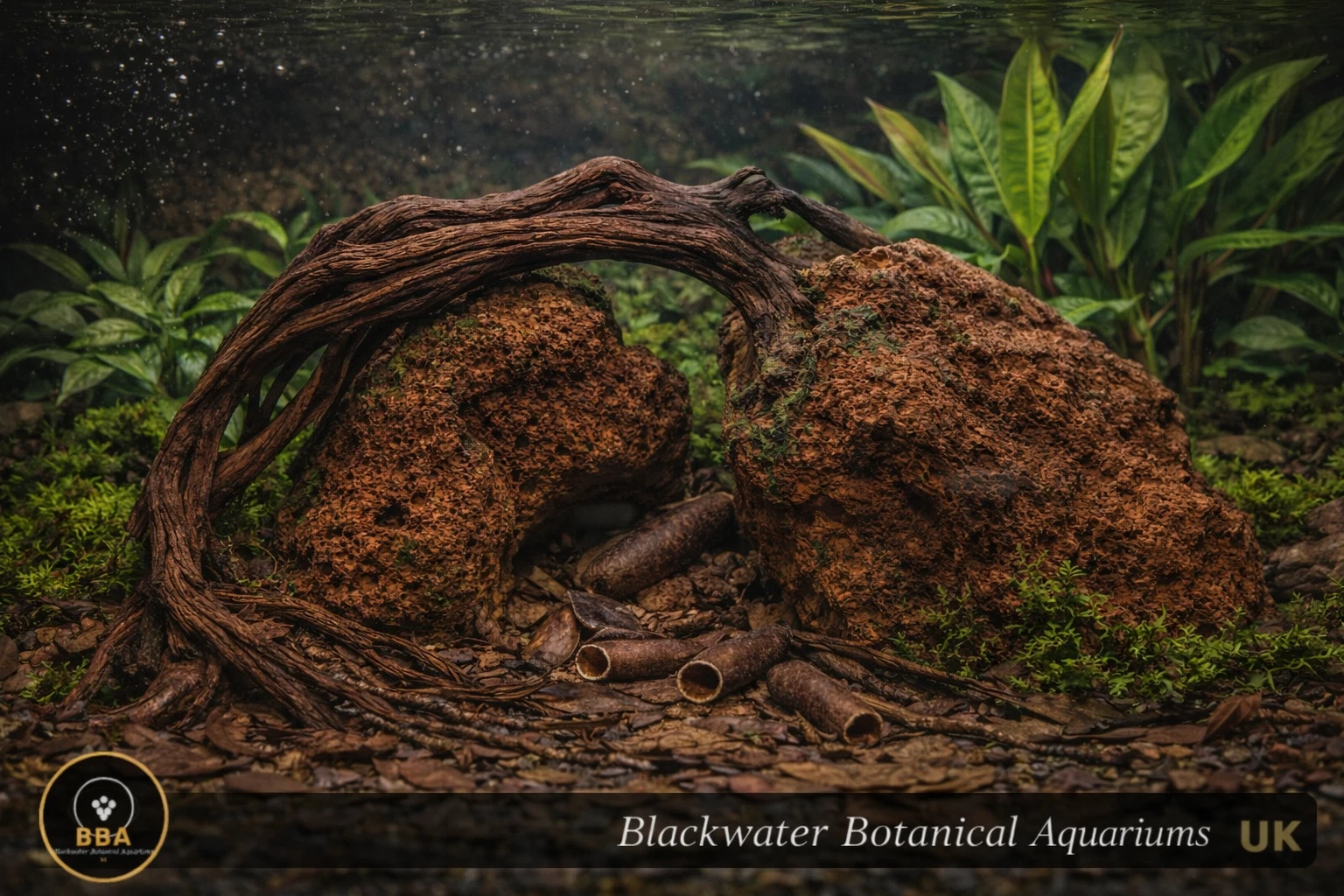
Rolled bark: small recesses
Catappa Bark Tubes – Indian Almond Bark Hiding TubesView product and options →Single-material packs let you control the mix. The Curated Blackwater pack is an aquarium selection containing 2 Canoinhas, Bell Cup, Couratari, Strelitzia, Dregea, Urchin, Badam and 5 Bakuli. Inspect individual contents for your use; it is not a gecko kit.
Single-material leaf pack options
Dried Oak Leaves – Natural Aquarium Leaf LitterView product and options →Choose a pod quantity for your layout
Buddha Nut (Pterygota alata) – Natural Seed PodView product and options →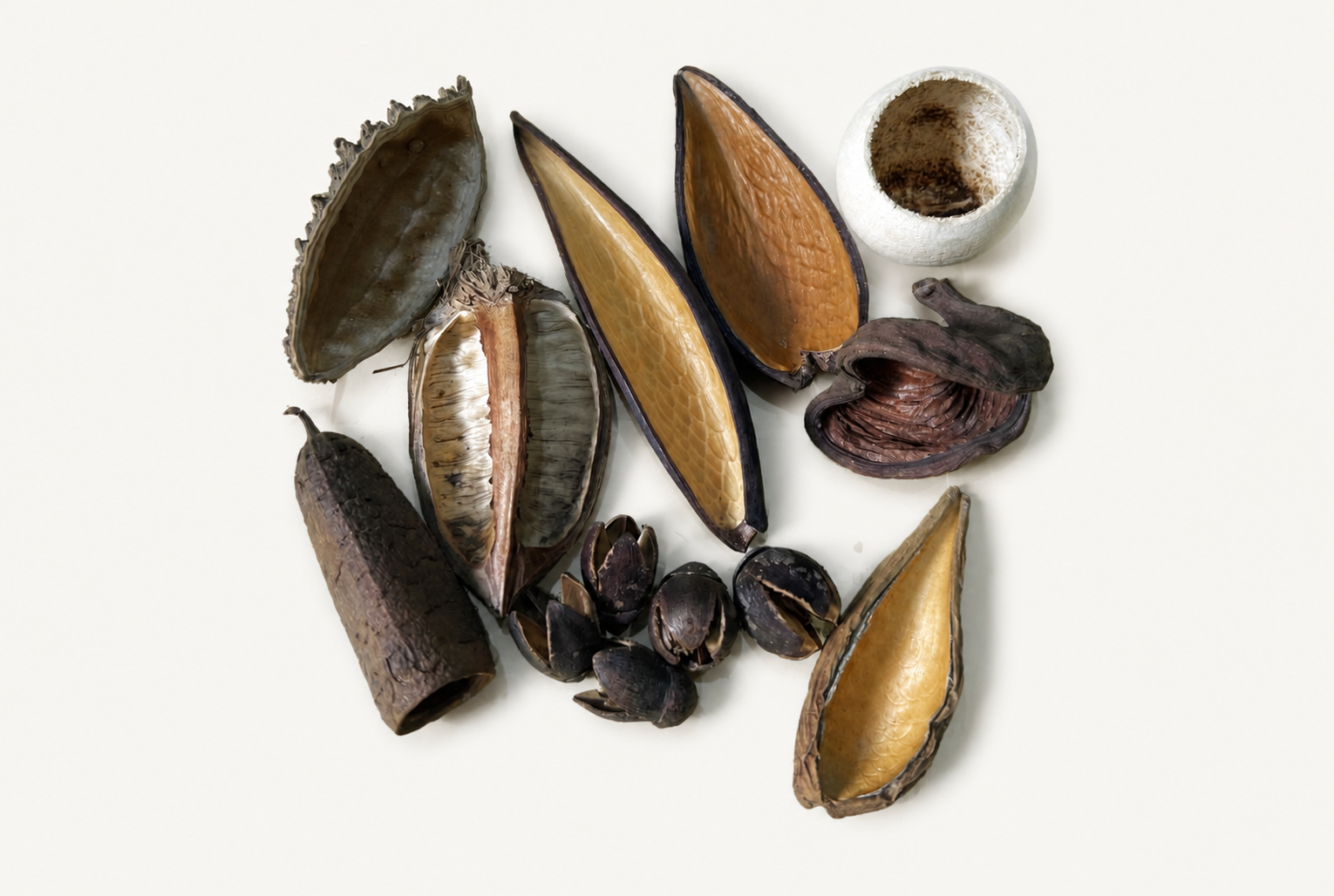
13-piece aquarium pack: inspect each material
Curated Blackwater Botanical Pod Pack – 13-Piece MixView product and options →Let the chosen species determine the enclosure, then use botanicals to give the lower layers character.
Decide which identified species you are keeping. The two examples here are separate design routes.
Secure appropriately sized branches or low hides before adding decorative ground pieces.
Use an open pod or rolled bark for a specific recess, with room around every opening.
Try broad Magnolia against Oak or Beech. Keep routes and plant bases accessible.
Check the real material as it softens or moves, retaining the climate and access your species needs.
Practical reading from the BBA Knowledge Centre, chosen for this World.
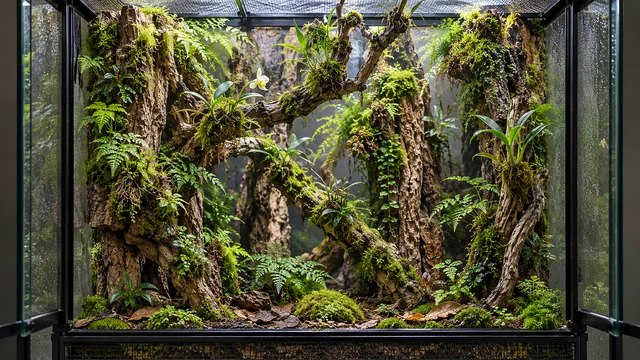
Explore vertical planting and airflow; adapt the conditions to the species.
Read the guide →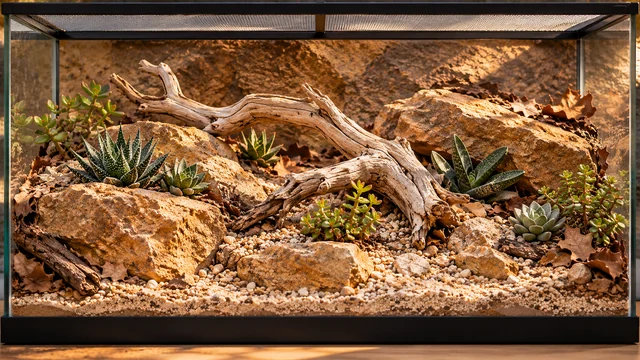
Compare a ground-led layout with sheltered areas and maintenance access.
Read the guide →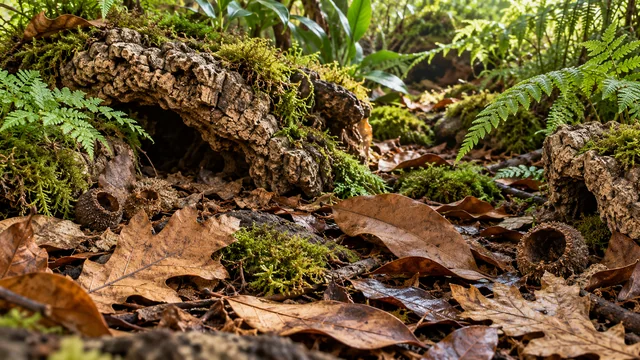
Choose leaves, pods and wood for distinct practical roles.
Read the guide →Check the animal, environment and material before building the enclosure.
Read the guide →Choose a species plan, then adapt the enclosure. These are separate alternatives, not a mixed-species stocking list. BBA supplies habitat materials, not these animals.
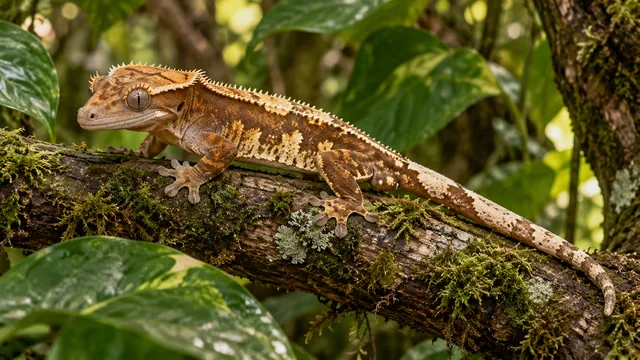 Crested GeckoCorrelophus ciliatusRead the species guide →
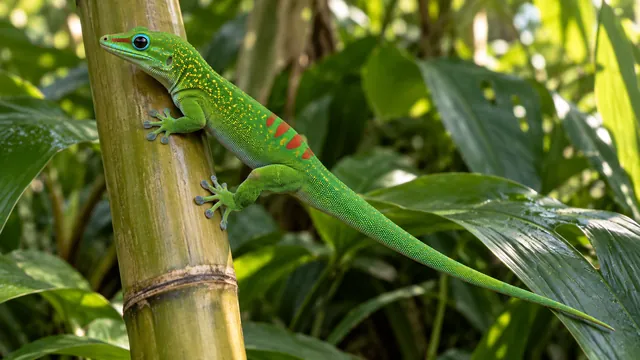 Gold Dust Day GeckoPhelsuma laticaudaRead the species guide →
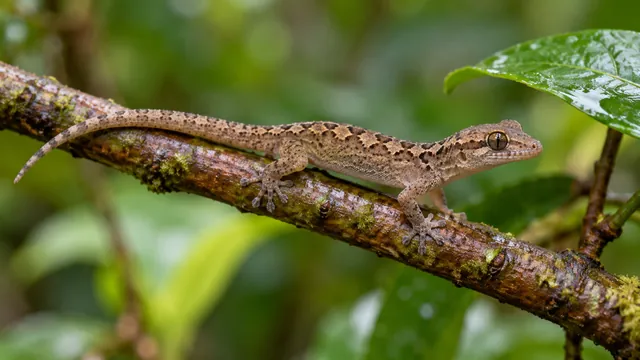 Mourning GeckoLepidodactylus lugubrisRead the species guide →
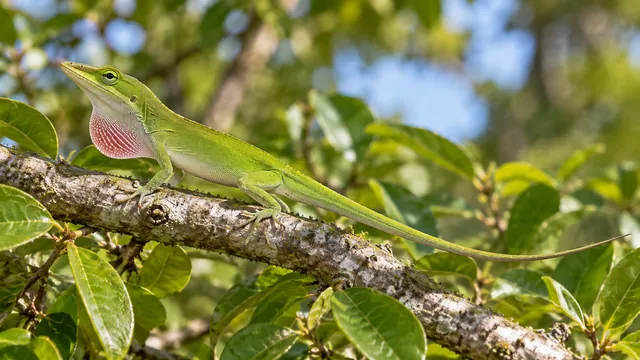 Green AnoleAnolis carolinensisRead the species guide →
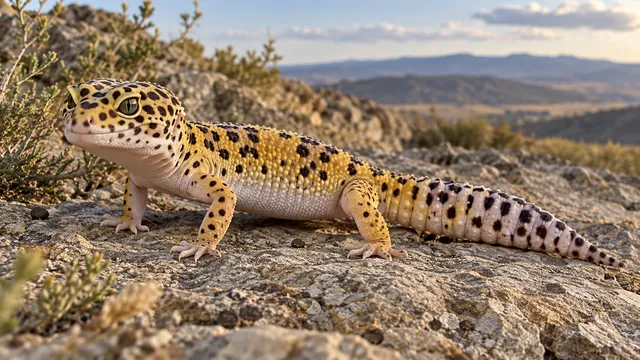 Leopard GeckoEublepharis maculariusRead the species guide →
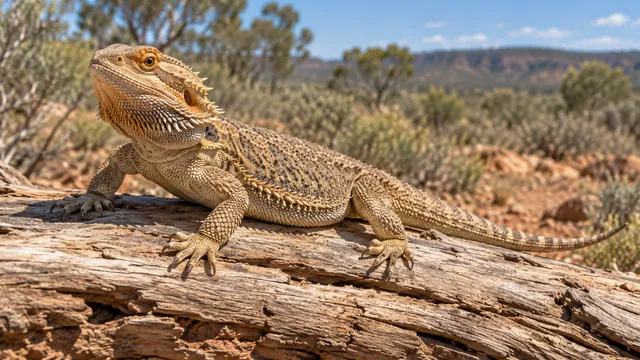 Central Bearded DragonPogona vitticepsRead the species guide →
Start with the structure or leaf layer you need, then compare alternatives in the shop.