What it does
Adds texture, cover and grazing surface as the leaf softens and becomes part of the aquarium floor.
What it does
Adds texture, cover and grazing surface as the leaf softens and becomes part of the aquarium floor.
Slow down if
Pause or remove excess leaves if livestock look stressed, water clouds unexpectedly or the tank is already unstable.
These are real botanical leaves for freshwater aquariums — perfect for shrimp tanks, blackwater setups, bettas and natural biotope-style aquariums.
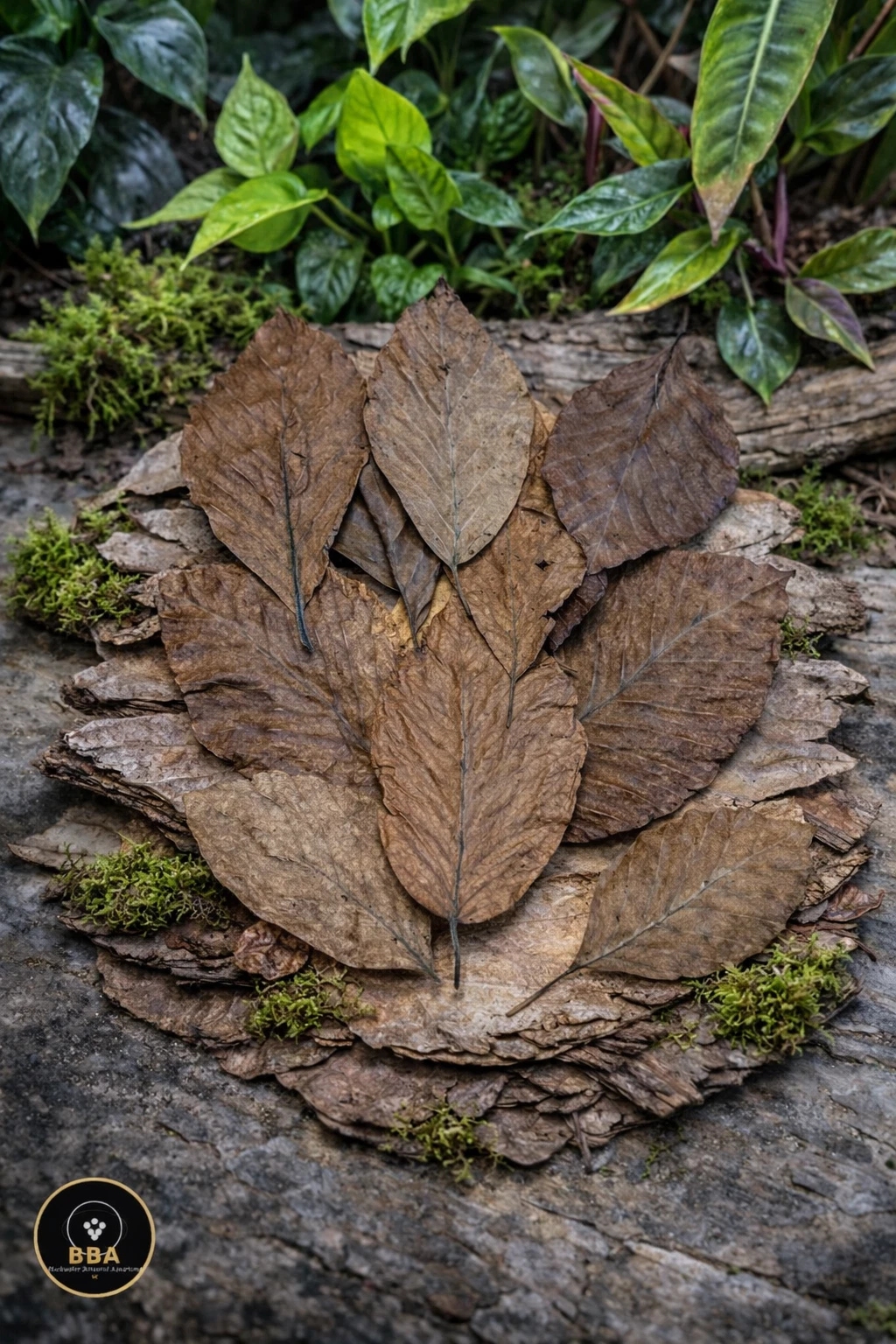
What you receive Beech Leaves (Fagus sp.) Approx. leaf size: 5–8cm, with natural variation. You receive the pack size selected from the menu. Packed dry, small batch and labelled by Blackwater Botanical Aquariums.
1) Biofilm grazing surfaces As the leaves soften, shrimp and snails can graze naturally over the leaf surface for hours.
2) Natural cover and security Leaf litter helps break open spaces and gives shrimp, fry and shy fish more secure areas to explore.
3) Gentle tannins and humics Beech leaves may add a warm natural tint and help create a more established botanical aquarium feel. The effect depends on tank volume, KH, pH, filtration and quantity used.
4) Enrichment and natural behaviour Leaf litter encourages foraging, hiding and micro-habitats, especially useful for juveniles and moulting shrimp.
5) Clean natural leaf bed Beech is a good choice if you want a natural leaf-litter layer that looks authentic without over-darkening the aquarium quickly.
Leaf picker guide — Beech leaves Best for: clean natural leaf bed, shrimp grazing and gentle botanical enrichment. Tint / tannins: Low to medium, usually a softer tint than heavy blackwater leaves. Biofilm: excellent once softened — shrimp and snails graze constantly. Longevity: medium, typically lasting weeks depending on tank conditions.
How to use Rinse before use. Do not use soap or chemicals. Optional: pre-soak to help leaves sink faster. For faster sinking and a gentler start, pour hot water over the leaves, allow to cool, then add to the aquarium. Add gradually in smaller tanks or very soft water. A light white biofilm can appear — this is normal and often eaten by shrimp and snails. Replace or top up as the leaves soften, break down or are consumed.
Important notes Natural products vary in size, colour and shape. Some leaves may float at first and sink later. Pre-soaking can help. Botanicals may release tannins and soften the visual tone of the water. Effects vary by tank volume, KH, pH, filtration and how much is used. Carbon, Purigen and some filtration media may reduce visible tannins and water colour. Botanicals are habitat and enrichment tools, not medicines. For aquarium use only. Not for human consumption. Keep away from children and pets.
Product story
Shrimp tanks and shrimp colonies, Caridina and Neocaridina shrimp
AQUARIUM PRODUCT STORY
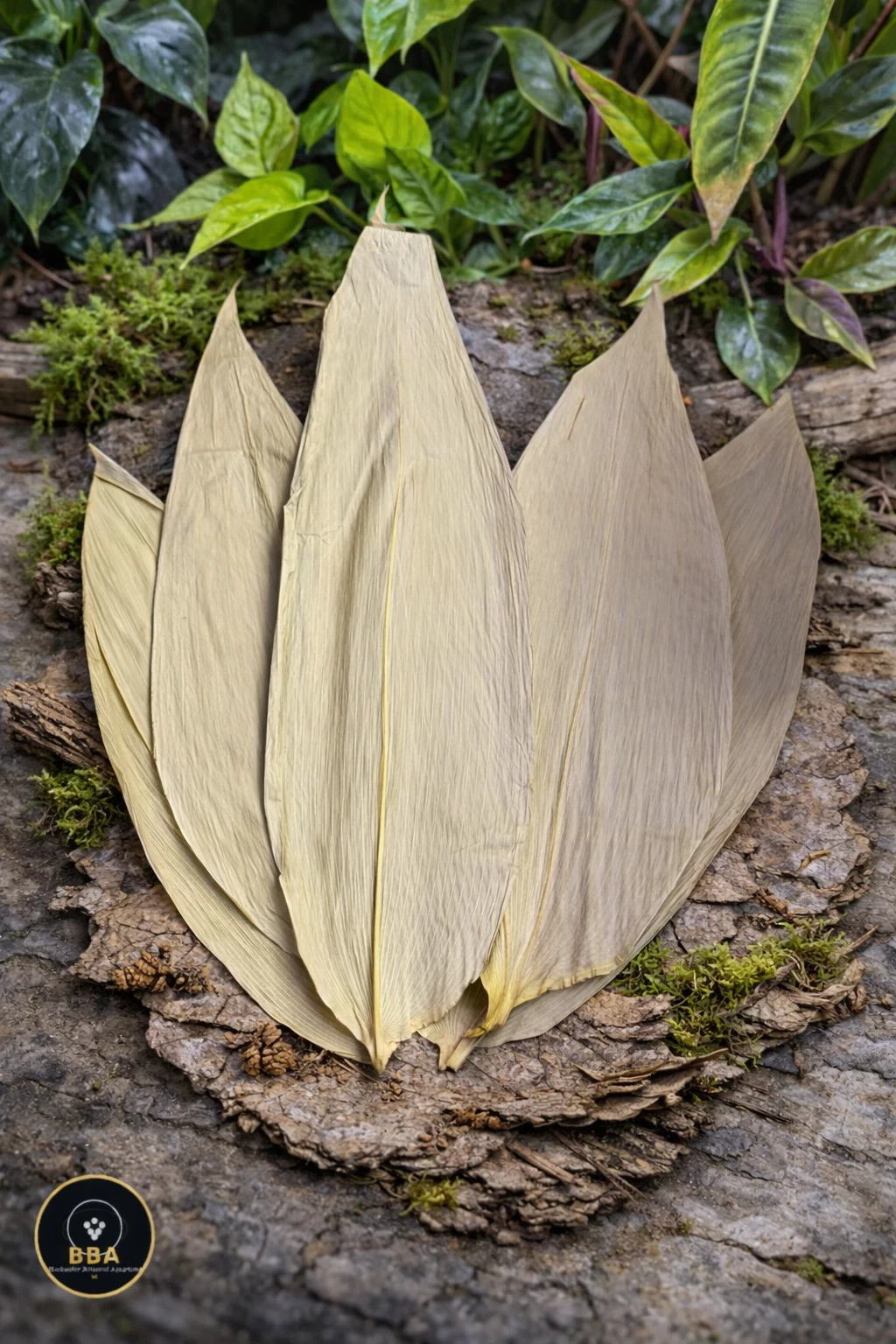
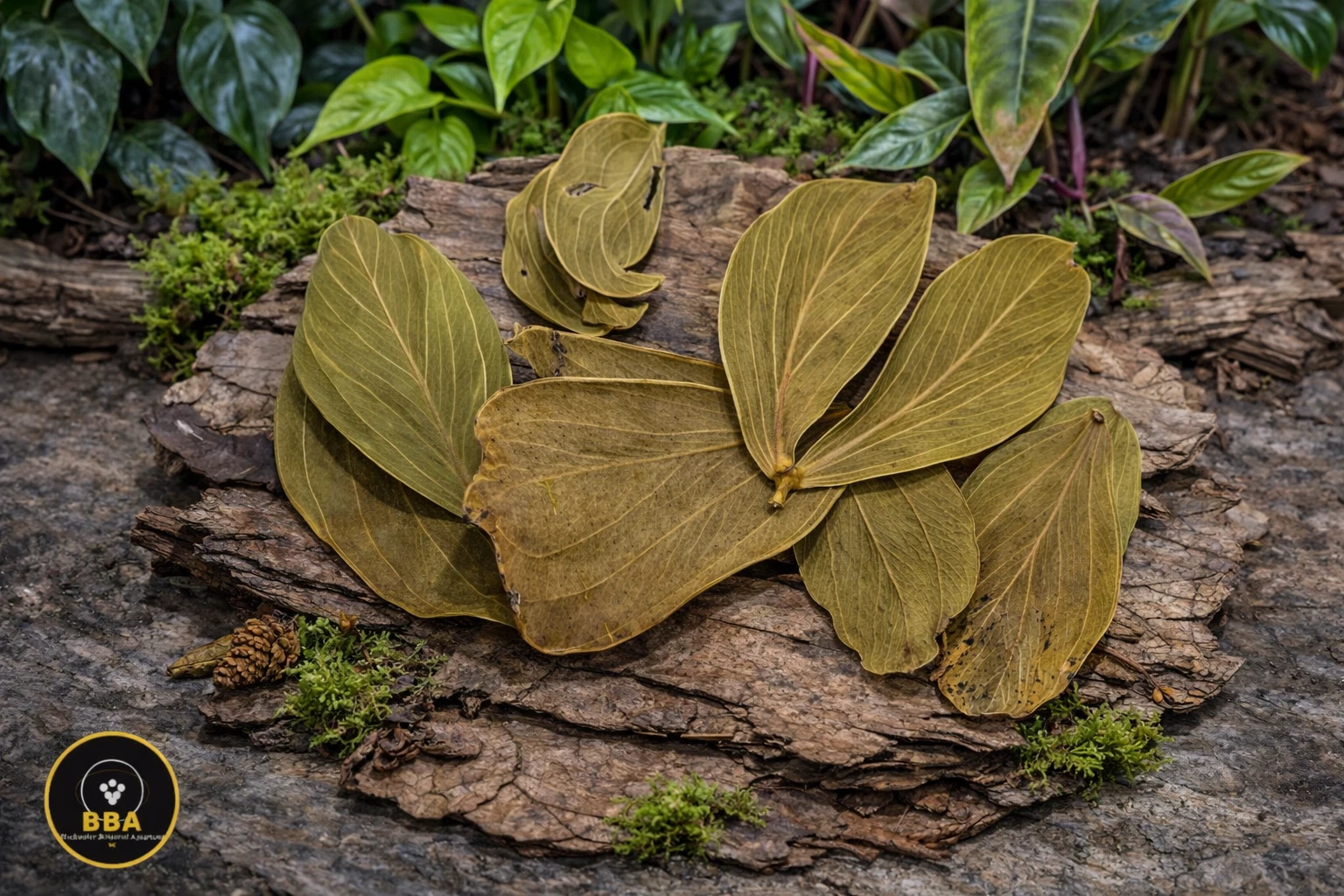
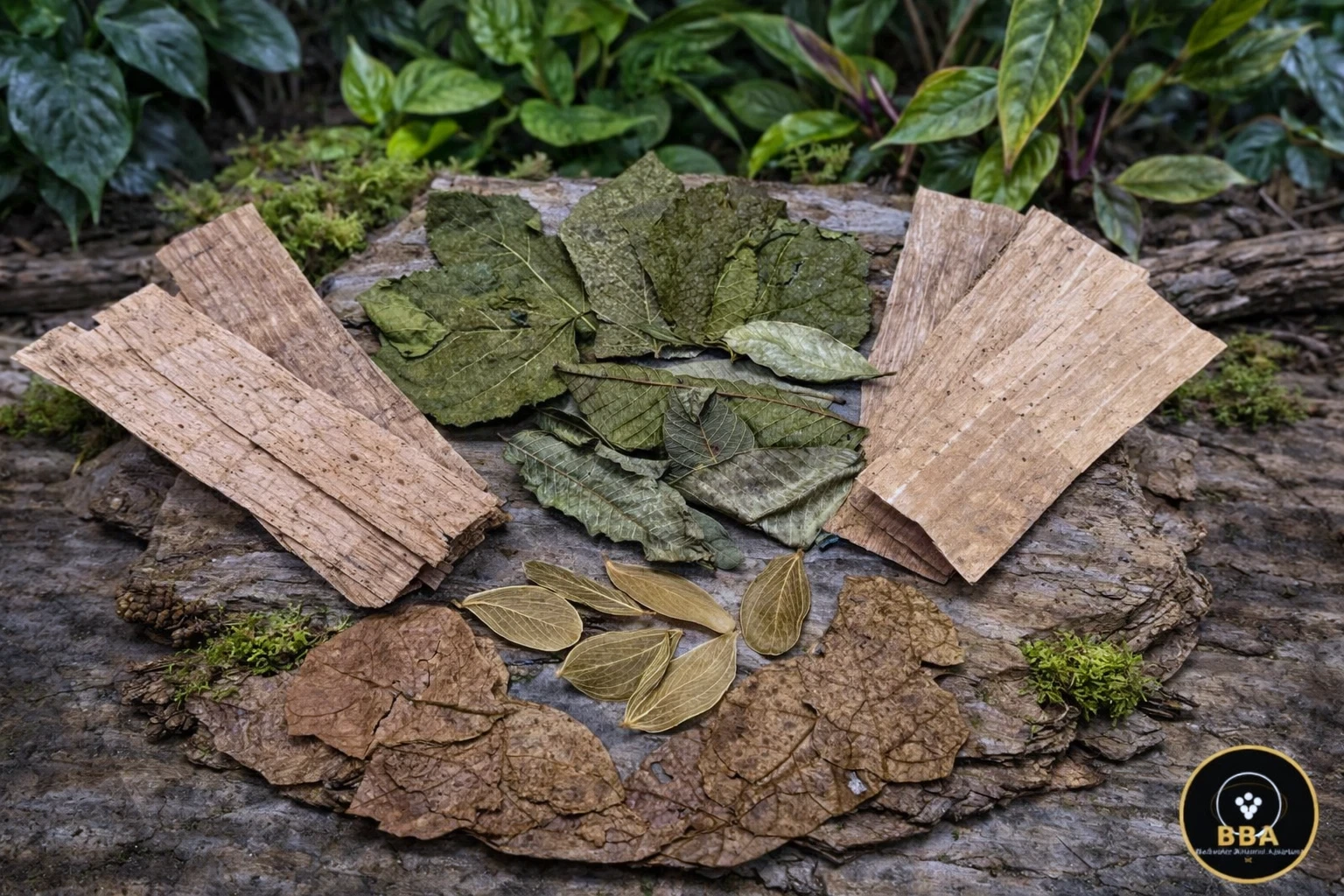
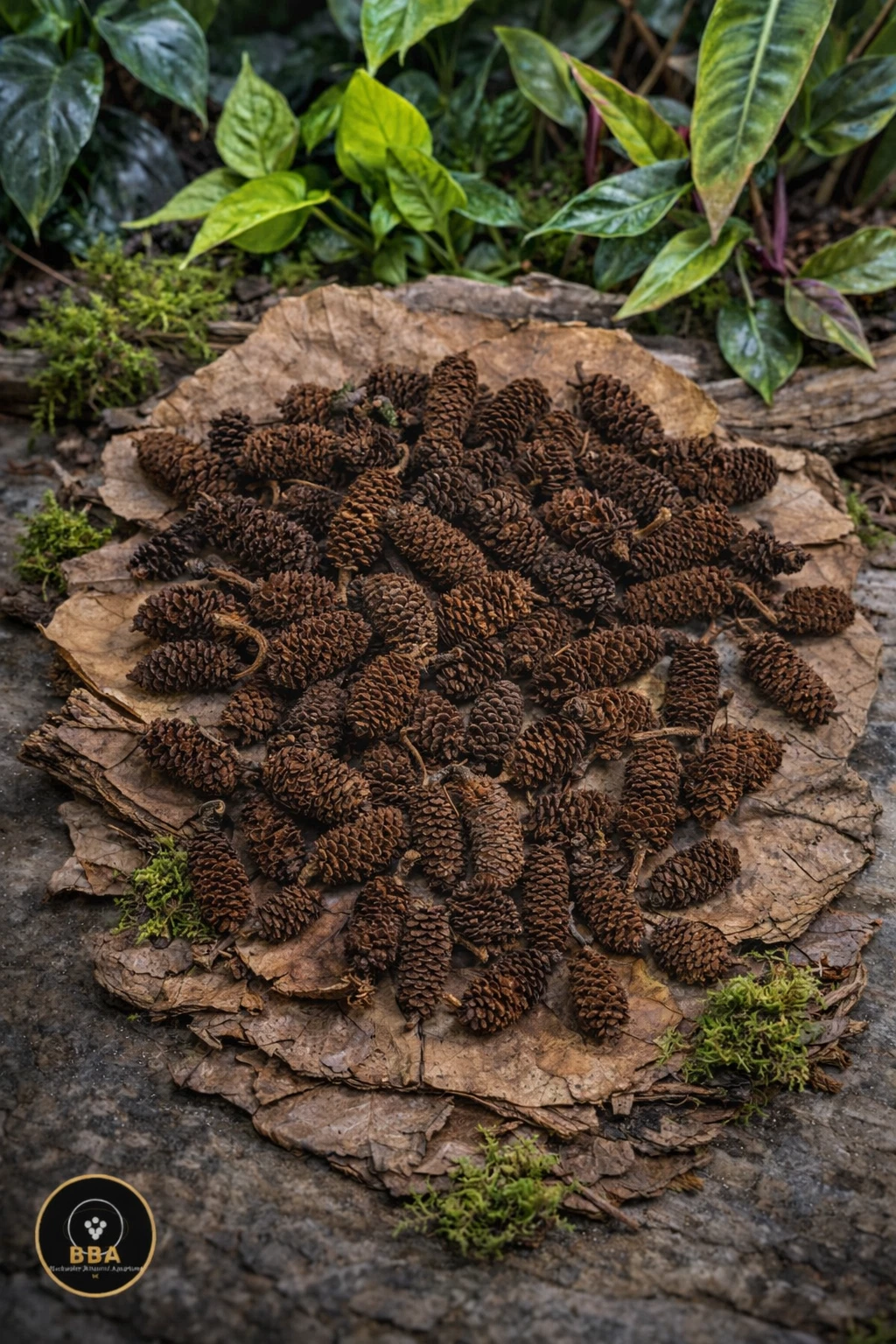
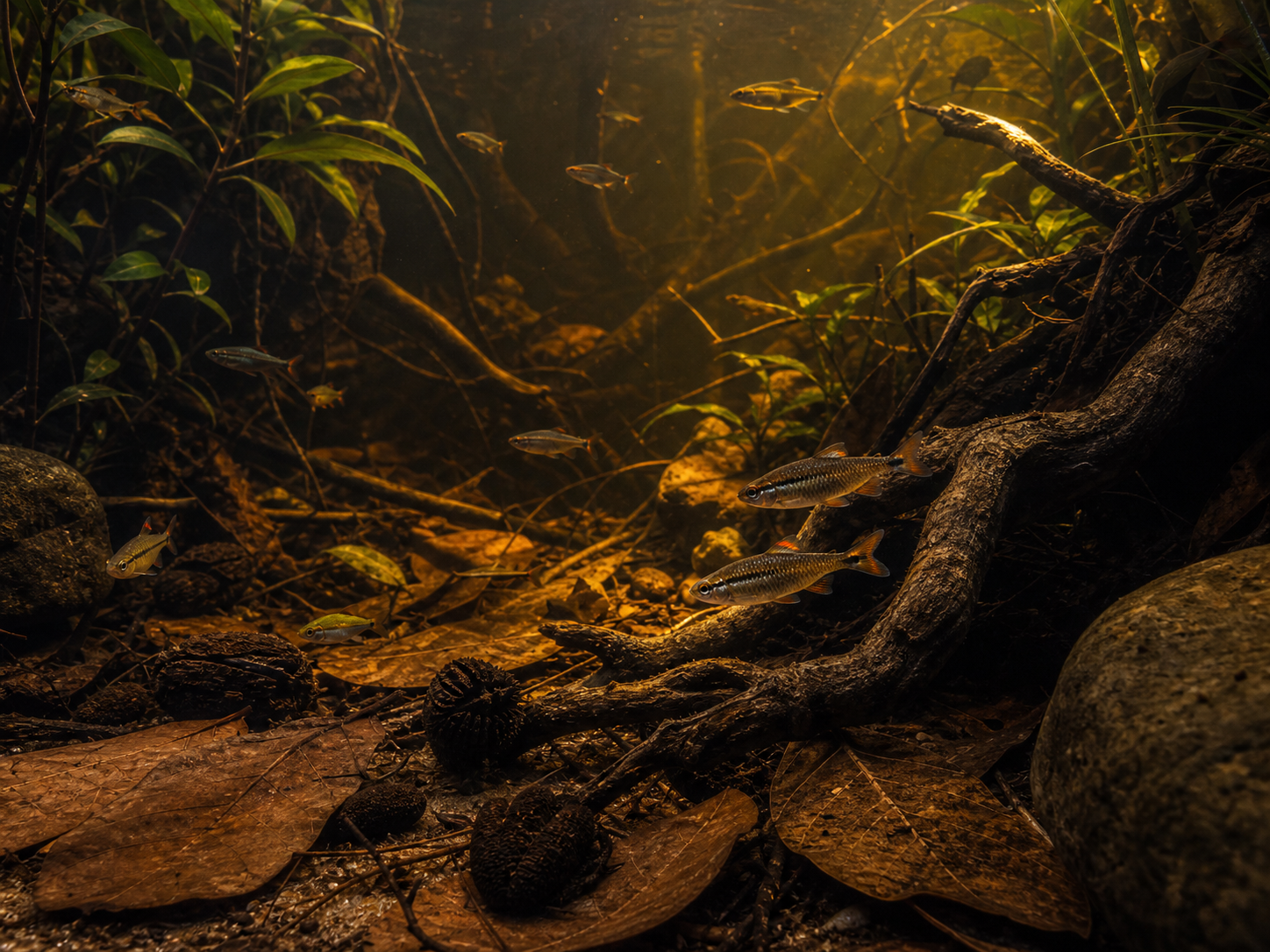
Illustrative BBA product-world scenes built from this listing's own product image. They show habitat and use-context ideas for this product; real tanks, natural pieces and aquascapes will vary.
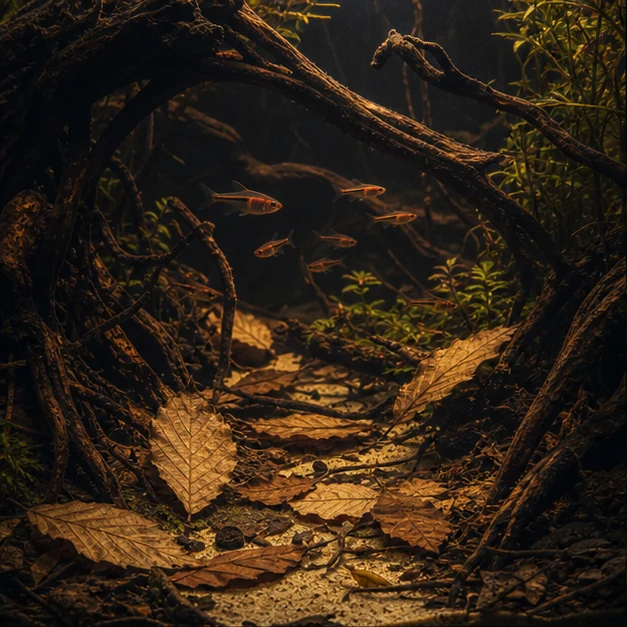
Natural habitat scene with the product placed as part of the leaf-litter floor.
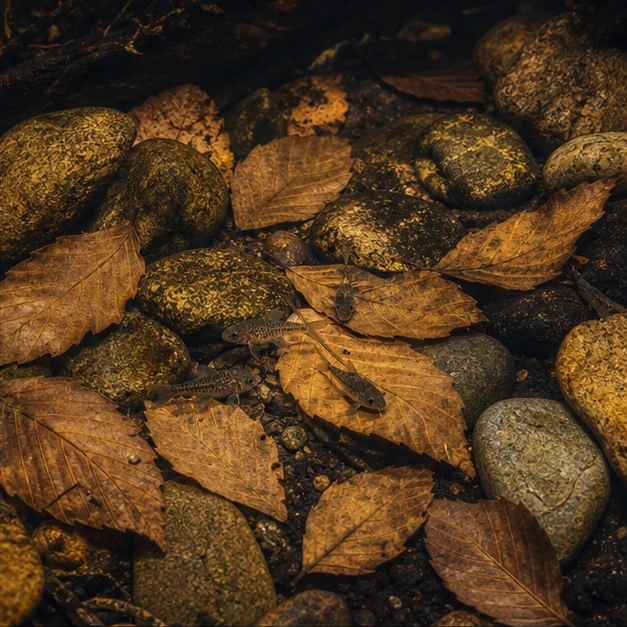
Wider aquarium habitat mood with the product settled naturally.
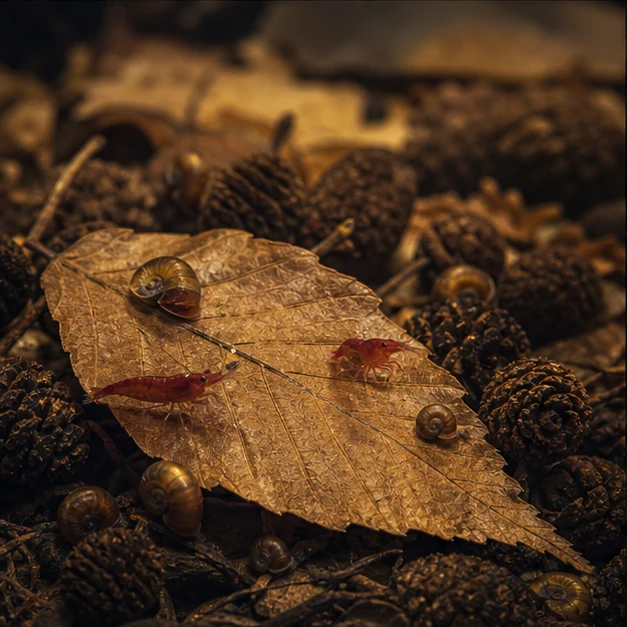
Close habitat detail showing texture, grazing surfaces and natural variation.
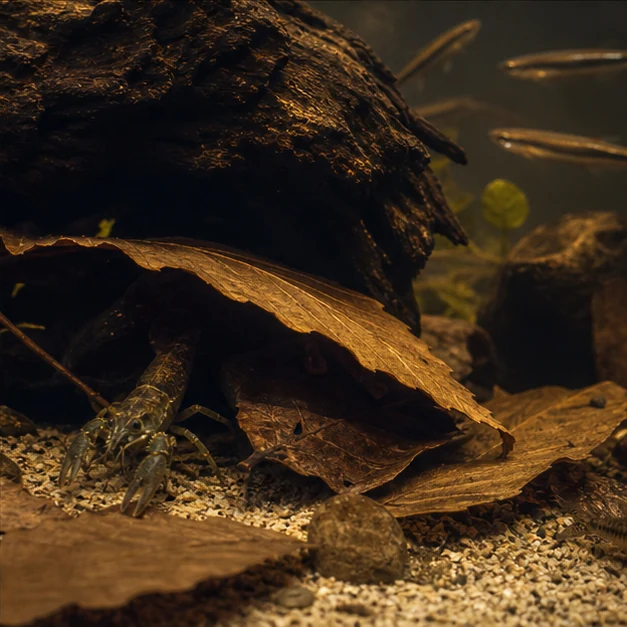
Shelter or cover context showing how leaves can become part of the habitat structure.
OTHER CUSTOMER ROUTES
Beyond aquarium use, selected dry leaves, pods and woody pieces can also add natural structure, cover and surface complexity to suitable paludarium, vivarium and bioactive setups. Choose materials to suit the scale, moisture level and animals in the enclosure.
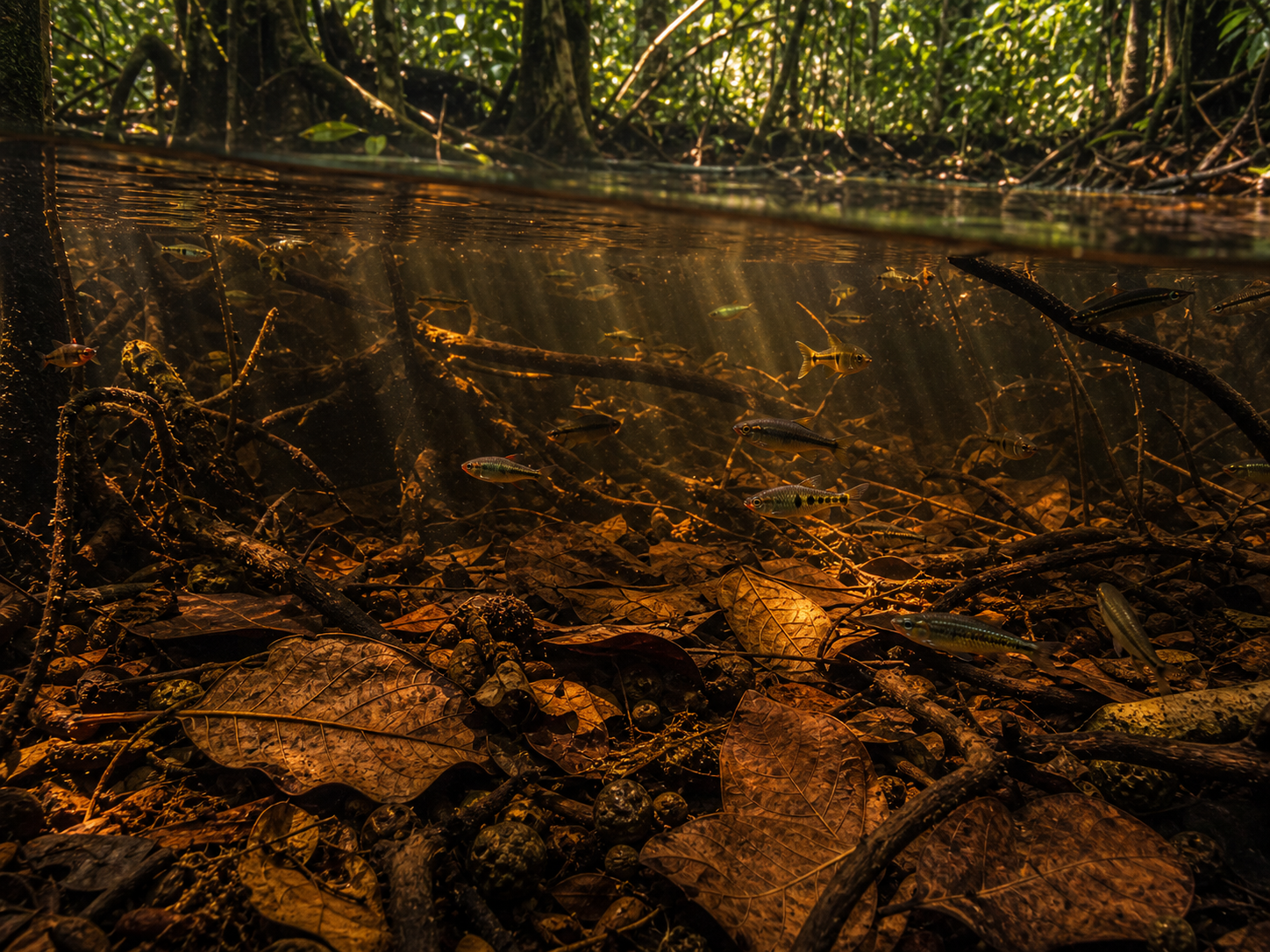
Use suitable leaves, pods and woody pieces through damp margins and transitional areas to connect the aquatic and terrestrial parts of a naturalistic layout.
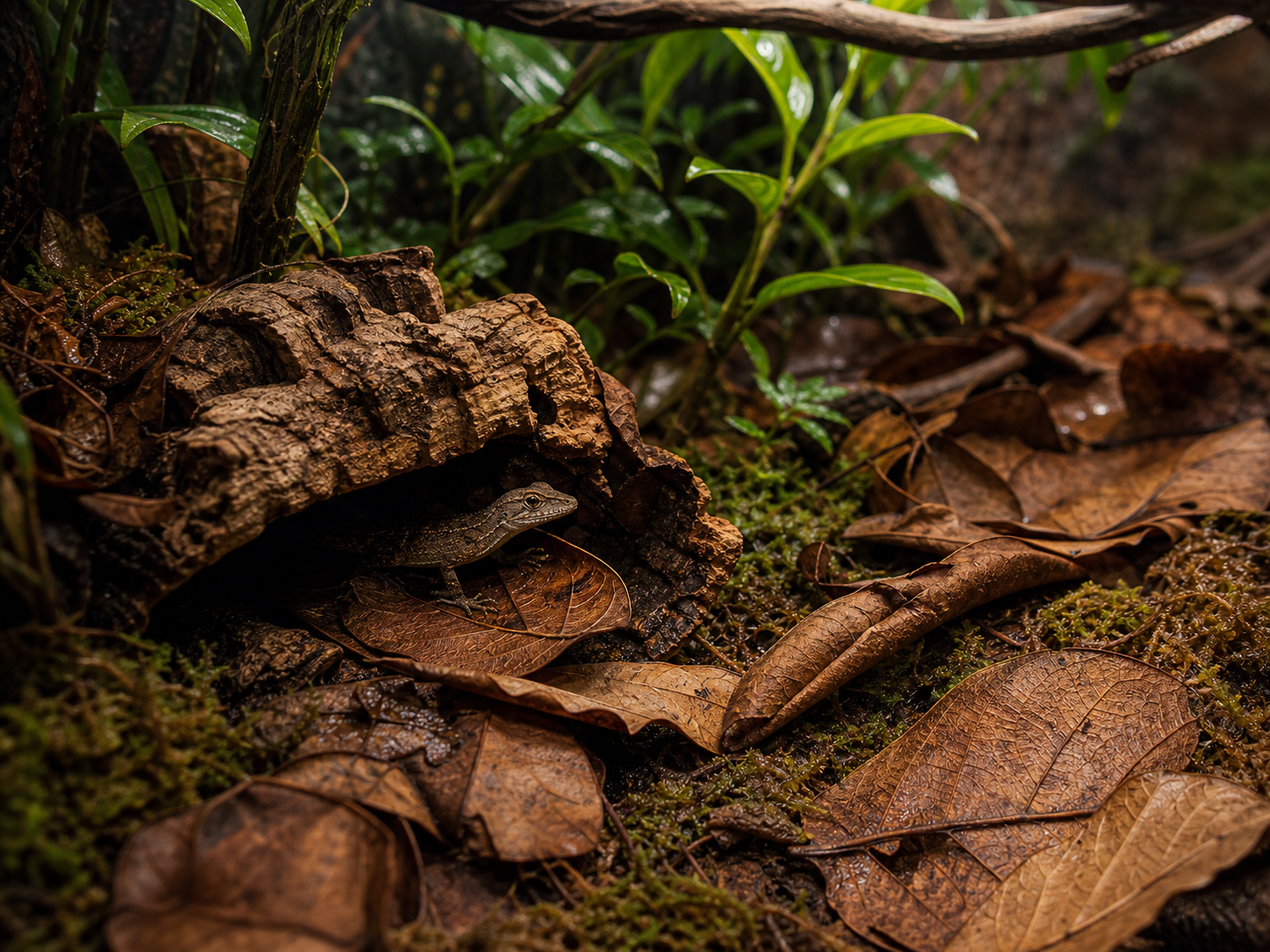
Leaves and suitable harder pieces can form part of the litter and structural layer used around an established bioactive substrate. They are not a complete substrate by themselves.
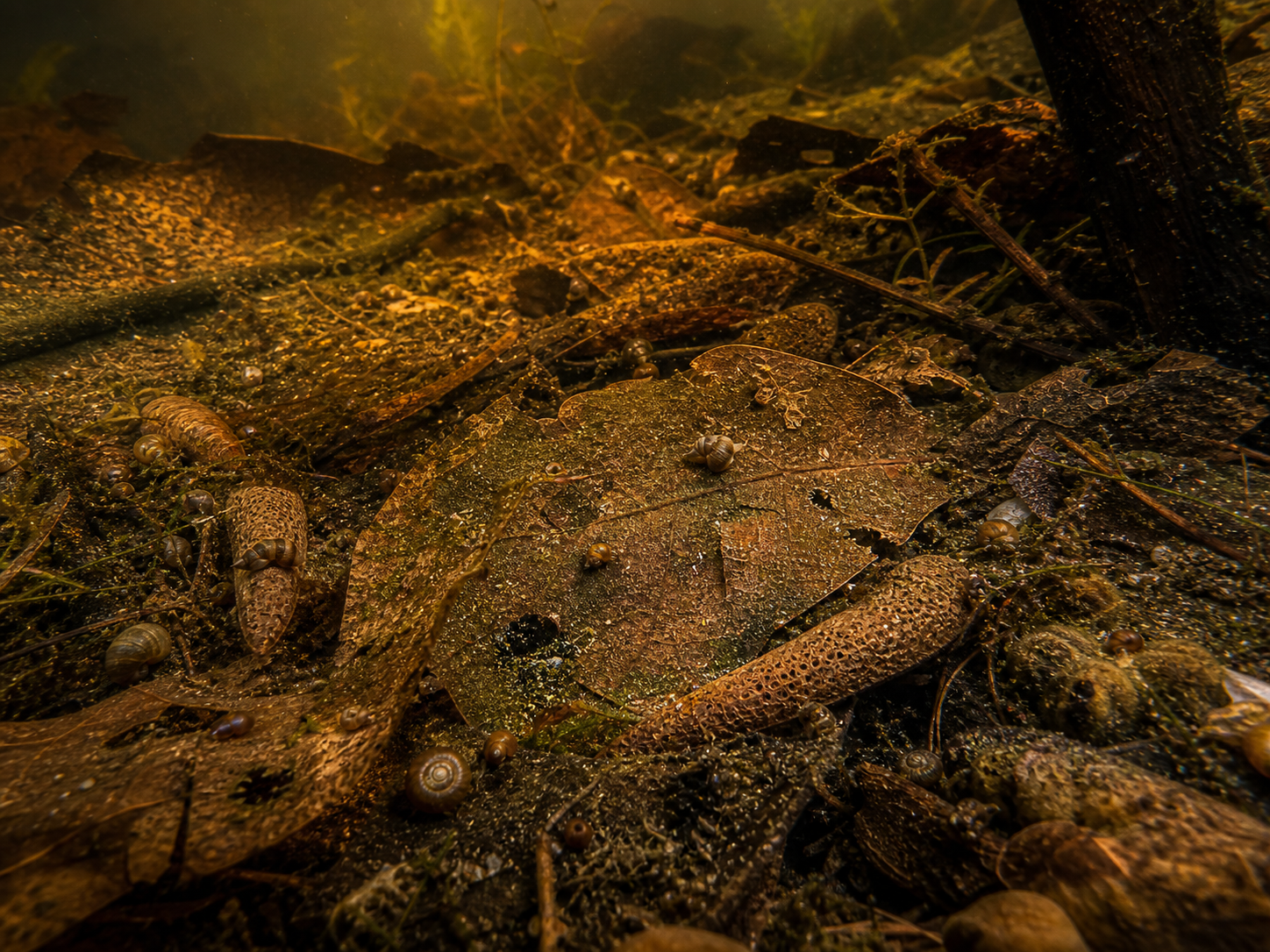
Suitable leaves and dry botanical pieces can provide cover, surface complexity and material that gradually becomes part of the decomposer environment.
Use suitable pieces as additional cover and surface complexity within an established decomposer setup, not as a complete food or substrate system.
Best for
Low-pressure botanical layouts where the customer wants a natural leaf-litter surface, not a rushed water-parameter change.
What it does not do
It does not cure livestock issues, replace filtration or guarantee specific water-parameter outcomes.
Expect natural leaf-litter texture and possible amber character. Exact colour and breakdown speed vary by leaf, tank size and flow.
Remove pieces if they become more than the tank can handle, trap debris badly or coincide with livestock stress or poor water clarity.
No. If the aquarium is unstable, heavily stocked or already showing livestock stress, stabilise first or contact BBA before adding more botanicals.
LEARN BEFORE YOU ADD
COMPLETE THE ROUTE