Shrimp · Cherry shrimp
Neocaridina davidi — Habitat and Care
A small freshwater grazer whose success depends on stable water, mature surfaces and food management. A leaf-rich shrimp aquarium can remain clear and mineral-appropriate; it need not imitate an acidic blackwater stream.
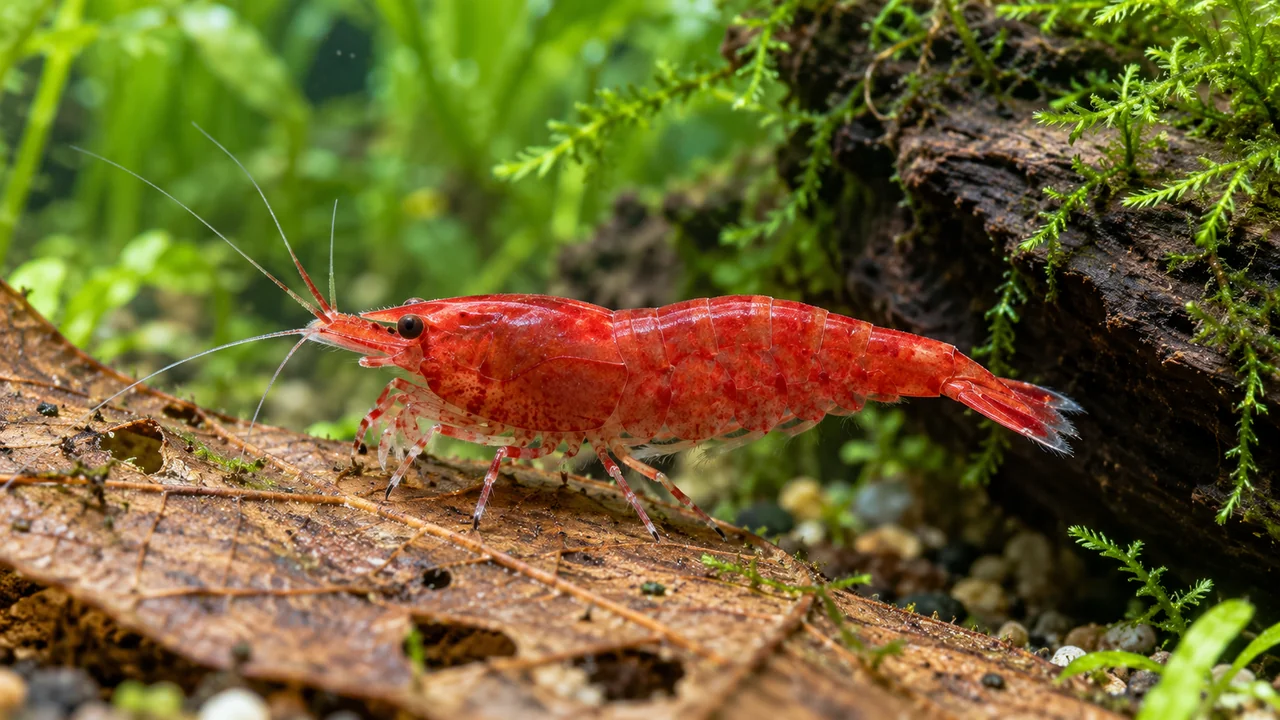
- Identity
- Neocaridina davidi; Atyidae. Older literature uses several names, including N. heteropoda.
- Adult scale
- Species summaries report up to 40 mm body length; this is an upper report, not the size of every shrimp.
- Space and social needs
- Provide a stable colony habitat with extensive accessible grazing surfaces and protected filter intakes.
- Water
- Match the established colony’s water. Do not borrow soft acidic water targets from specialist Caridina.
- Feeding
- Surface grazing plus appropriate supplementary food; leaves alone are not a complete ration.
- Main constraint
- Sudden changes and unsuitable chemical exposure can overwhelm an otherwise attractive setup.
Identity and natural setting
Neocaridina davidi is an East Asian freshwater shrimp represented in the aquarium trade by many selected colours. Older reports use different scientific names, and taxonomy within the group continues to be discussed. Colour alone is not a diagnostic character.
The USFWS synthesis describes diverse freshwater habitats and introduced populations. Its accounts of survival across environmental extremes must not be used as comfortable home-aquarium targets.
An established grazing habitat
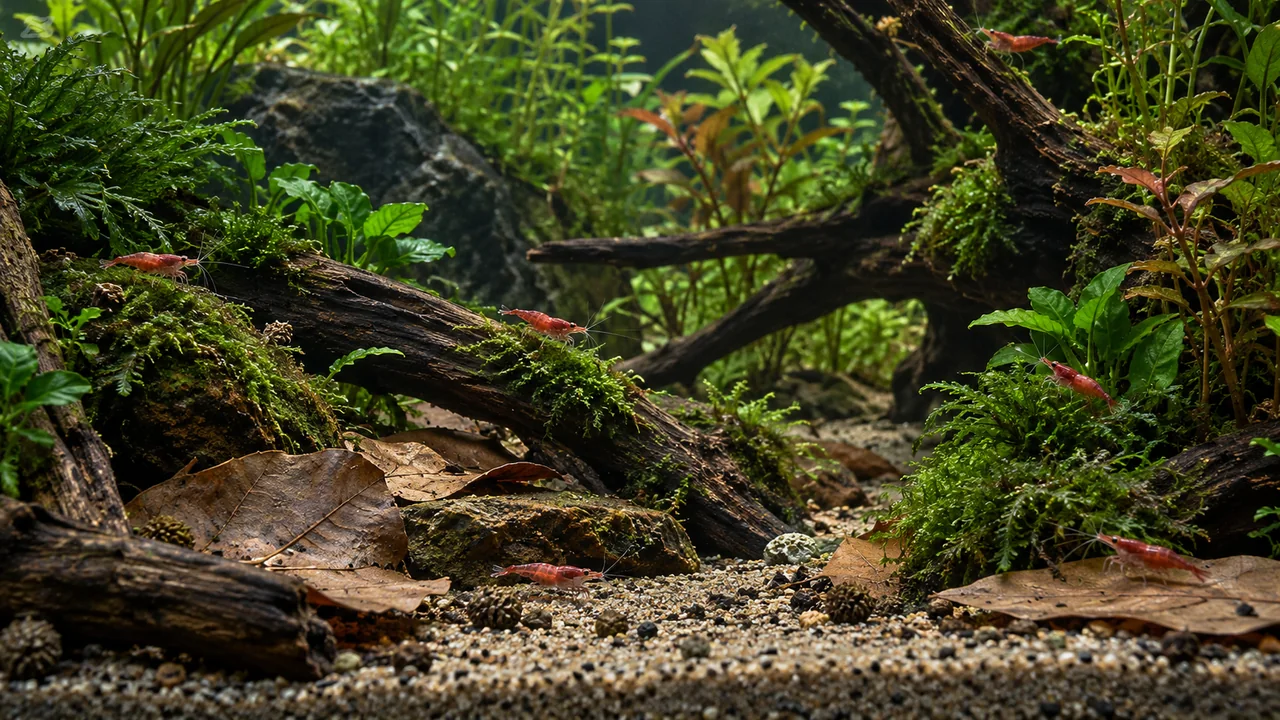
Give the colony a mature aquarium with planting, clean filter surfaces and several routes across wood and small quantities of leaves. Protect intakes so small juveniles are not drawn into the filter.
Keep the layout accessible for inspection and maintenance. A mass of fresh plant material is not the same thing as a mature grazing community. Retain oxygen exchange and open areas where feeding and activity can be observed.
Water stability and moulting
Ask how the existing colony has been maintained and compare that with your actual source water. Keep changes gradual and deliberate; do not chase an online TDS number without knowing which minerals or dissolved substances produced it.
Mineral balance matters during the moult cycle, but adding products blindly can create another imbalance. Check water quality, recent changes and husbandry if losses occur. Avoid assuming every death is a mineral shortage or that a leaf can correct it.
Behaviour and compatibility
Provide cover for vulnerable moulting animals and small juveniles. A peaceful-looking fish may still eat shrimplets, and the absence of an observed attack does not prove that a colony is reproducing safely.
Assess companions against their adult size and feeding behaviour. In a dedicated shrimp setup it is easier to monitor the colony and keep food available without direct fish competition. Do not promise compatibility from a species name alone.
Food and the surfaces it grows on
Cherry shrimp collect food from surfaces as well as taking supplementary feeds. Use an appropriate shrimp food in quantities the animals can consume, then adjust to the real colony rather than feeding to an arbitrary timetable.
Prepared leaves provide surfaces and changing organic material, but the amount and nutritional value of associated growth vary. They are not a complete formulated diet. Remove excess food and keep settled waste from accumulating unnoticed beneath the litter.
For feeding variety, Bee Pollen Gold™ Shrimp Pellets offer a treat-pellet option, while the Complete Shrimp Food & Mineral Bundle provides several foods to rotate separately. Rotate selected foods alongside the complete ration, and use the mineral component only where it fits the measured water.
Reproduction and young
Females carry eggs beneath the abdomen, and direct development produces small shrimplets without a marine larval-rearing stage. Protect those young with fine grazing surfaces and safe intakes.
Temperature experiments describe particular culture conditions, not a reason to turn up the heater to accelerate production. Higher temperature is not automatically better: research has reported adverse reproductive effects under high-temperature treatments.
Botanicals in this setup
Use a restrained leaf layer with gaps, small textured wood and accessible surfaces. These materials can make the habitat more varied while leaving the colony easy to inspect.
Do not force this species into very soft acidic conditions to make the aquarium look like blackwater. Check the actual water and colony history. Colour is optional; mineral suitability, oxygen and consistent maintenance are not.
For a small grazing patch, compare Dried Mulberry Leaves – Aquarium Shrimp Food & Leaf Litter with the more easily portioned Crushed Catappa Leaves – Indian Almond Leaf Pieces. Keep gaps between additions so the colony and the floor remain visible.
Common mistakes to avoid
Avoid introducing a colony into an immature display, feeding every surface heavily or assuming bright colour demonstrates health. Check any treatment or plant-care chemical for suitability before use.
Never release unwanted shrimp, plants or aquarium water into natural waters. This species has established outside its native range; responsible containment is part of aquarium keeping.
Further reading and sources
Natural observations and experimental conditions are distinguished from home-aquarium guidance. These sources do not constitute approval of a BBA product.
- US Fish & Wildlife Service: Cherry Shrimp ecological risk screening summary — Identity, range, size, ecology and direct development; observed tolerances are not husbandry targets.
- Tropea et al.: Temperature, growth and reproduction of red cherry shrimp — Controlled culture study under the older Neocaridina heteropoda name, not a universal care prescription.
- Serezli et al.: High temperature and egg quality in Neocaridina davidi — Experimental evidence that warmer is not automatically better for reproduction.