Botanical Aquascaping · Southeast Asian Peat-Swamp Floor
Southeast Asian Peat-Swamp Floor
Make shade, fine root cover and carefully managed leaf pockets the structure, with a deliberate soft-water plan rather than a generic Amazonian recipe.
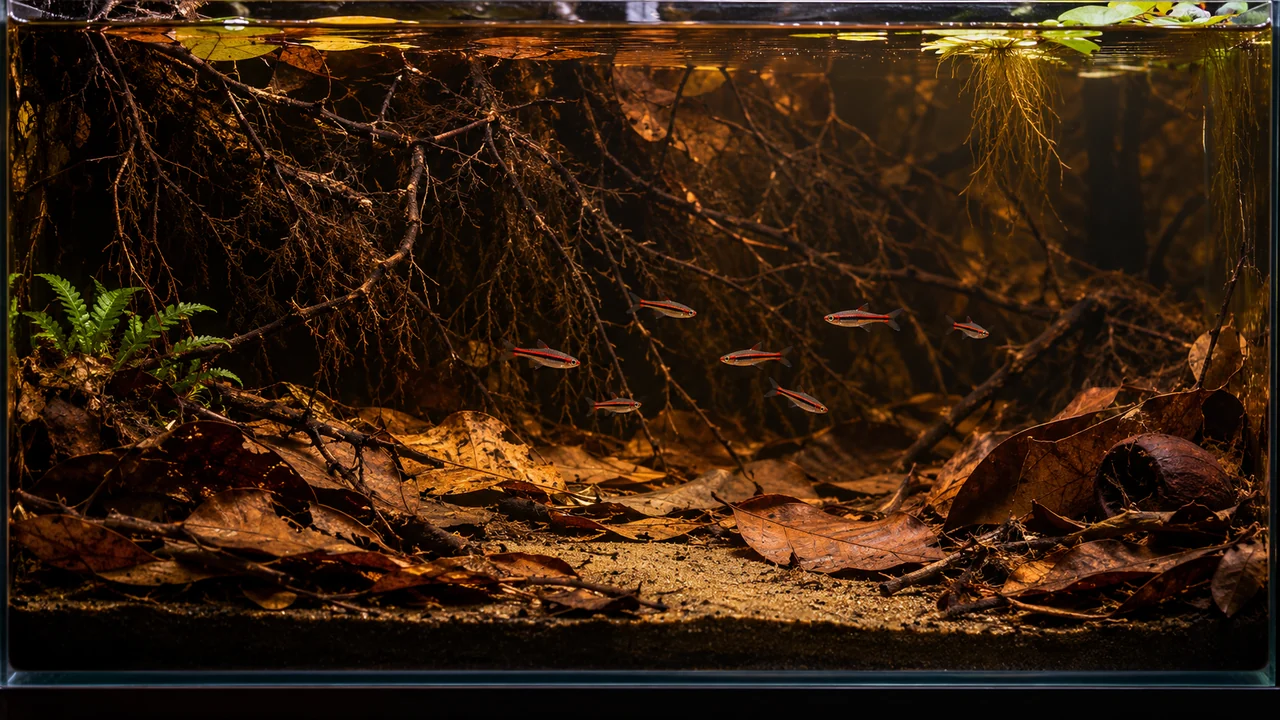
- Suggested shell
- 80 × 40 × 35 cm, with approximately 25–30 cm water depth for this layout.
- Structure
- Low fine roots, thin broken leaf cover and a visible feeding clearing.
- Equipment
- Mature gentle filtration, protected intake, reliable temperature control and secure lid.
- Stocking direction
- Choose one researched forest-water community; specialist peat-swamp fishes need a separate chemistry and feeding plan.
A different forest-water story
Southeast Asian peat-swamp waters are not simply Amazonian tributaries with different fish. Their forest history, regional plants and small specialised inhabitants give the design its own logic. Fine roots and overlapping fallen leaves carry most of the structure, while subdued light and a restrained open clearing make the small animals observable. Avoid a dramatic central timber arch: the subject here is the intimate floor beneath a low tangle.
The Parosphromenus Project describes forest streams within peat-swamp systems, not only isolated stagnant pools. That matters when translating the appearance into an aquarium. Shade and tannin colour do not remove the need for exchange, filtration and feeding access. This design borrows a habitat pattern without claiming that all peat swamps have one chemistry or that all forest fish can live together.
1. Decide which level of specialisation you can maintain
For the proposed 80 × 40 × 35 cm shell, plan a working depth of roughly 25–30 cm and enough space under the lid for safe equipment installation. Before purchasing material, choose the intended fish and assess your source water. Chilli rasboras provide one possible soft-water community direction. A dedicated licorice gourami or small specialist Betta aquarium is a different husbandry project, not an interchangeable stocking option.
The existing chilli rasbora guide proposes stable mildly acidic soft water around 24–26°C rather than reproducing the most extreme wild readings. Specialist Parosphromenus care can require substantially lower mineral content and acidity with very deliberate feeding. Consult their specific guidance if choosing them. Test GH, KH and pH, and plan safe water preparation before decorating; a bag of leaves cannot reliably convert unsuitable hard tap water into the right supply.
2. Fit filtration and build an accessible root layer
Use an established gentle biological filter, such as a suitably sized air-driven sponge arrangement, with access for servicing. Ensure its airflow produces exchange without forcing the small fish into constant swimming. Guard other intake types appropriately. Locate the heater where circulation reaches it and where fallen leaves cannot cover it. Fit the lid and close escape gaps before stocking, including gaps around air lines and cables.
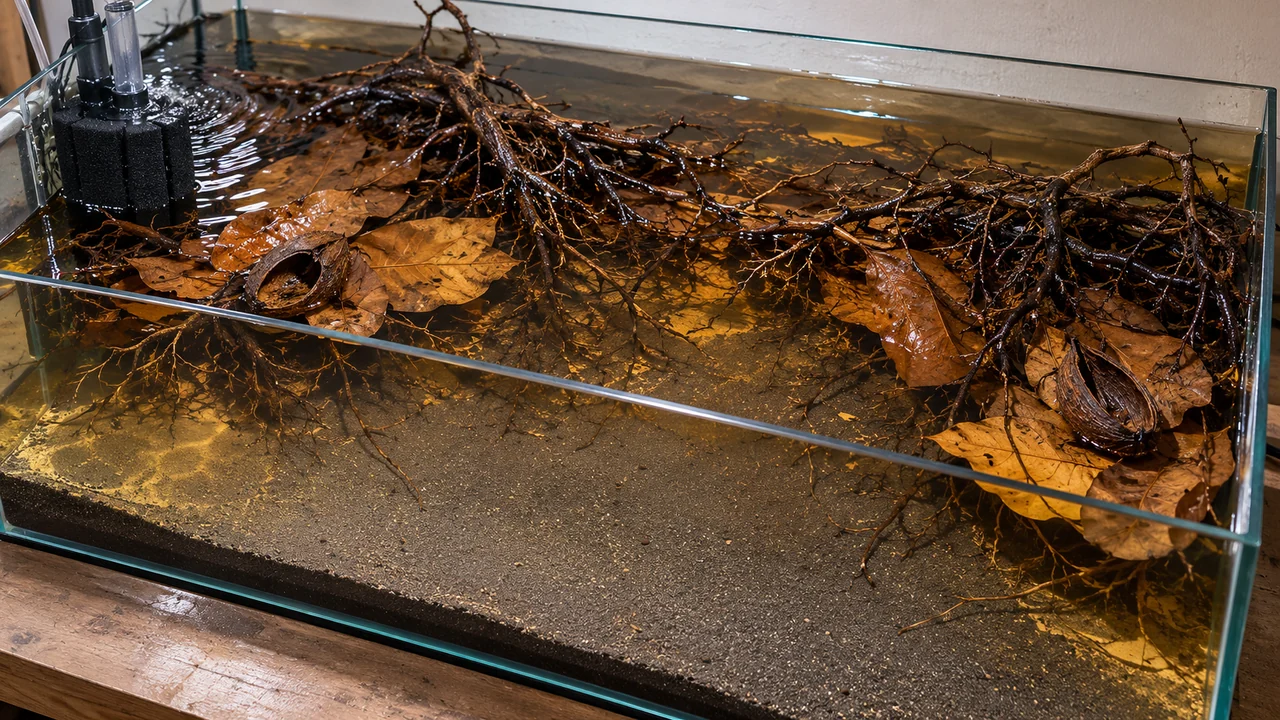
Start with a modest layer of rinsed inert dark sand. Arrange aquarium-safe fine woody roots low along the rear and sides, supporting the few heavier pieces securely. Avoid tightly woven barriers that cannot be siphoned or inspected. Leave a central feeding clearing and a service corridor to the filter. The roots should make several connected sheltered spaces, not a cage full of narrow dead ends.
3. Add a thin, varied forest floor
Prepare the leaves and woody fragments separately, using material intended for aquarium use rather than collected debris of uncertain treatment. Begin with a broken, thin leaf layer: broad pieces create shade and narrow fragments soften the transition to sand. A small pod fragment can add a different surface if its opening is safe. Keep the feeding clearing visible and leave gaps between the main pockets.
Do not use garden compost or a deep bed of unprocessed peat to manufacture a swamp appearance. A home aquarium has limited dilution and much less room for the exchange that supports natural systems. Peat extraction also has a conservation cost; dark sand, responsibly sourced wood and modest prepared leaves can create the visual structure without claiming to recreate the entire peat soil. Add further material only after observing the system's response.
For a thin, varied floor, compare Dried Bodhi Leaves (Ficus religiosa) – Aquarium Leaf Litter, small portions of Crushed Catappa Leaves – Indian Almond Leaf Pieces and selected sections of Dried Bamboo Leaves (Bambusa sp.) – Premium Shrimp & Blackwater Botanical. Prepare each material under its own directions and leave the central feeding clearing open as the first pieces settle.
For a smaller-form botanical supply, the BBA Mini Nano Botanical Box – 37-Piece Shrimp & Betta Variety Pack offers pieces to select individually around the low root layer. Check the actual shapes and openings before use; this is a material selection, while the fish’s soft-water and live-food plan remains a separate requirement.
4. Allow limited planting to be a valid choice
A shaded leaf-and-root aquarium does not need a dense submerged garden. If the selected chemistry is very soft and acidic, plant choice becomes more restricted and growth may be slow. Do not buy a collection of demanding plants and then compensate with stronger lighting, enriched substrate and added equipment that changes the intended habitat. A few suitable floating plants can supply overhead shade while leaving openings for feeding and gas exchange.
For a less extreme habitat-style version, a small patch of suitable fern or moss can provide extra structure if it actually grows in the chosen conditions. Check regional identity separately before calling the result a strict biotope. Keep rhizomes and growing tips positioned correctly for the chosen plant. Remove failing material promptly instead of allowing it to become another unmeasured organic input beneath the leaves.
5. Fill, mature and establish a stable water routine
Fill slowly so the fine floor does not become a suspended cloud. Run the equipment and check temperature at the front and near the roots. Mature the biological filtration before introducing livestock, and use water tests to judge readiness rather than the age or colour of the aquarium. Very low-buffered systems need a considered monitoring routine; avoid repeatedly adding acids in pursuit of a number.
Prepare replacement water consistently and match it sensibly during water changes. Remineralise purified water appropriately for the selected inhabitants rather than using unmodified reverse-osmosis water as a universal recipe. Check the intended species' dietary and chemistry requirements together. Snails that need mineral availability and robust shell conditions should not be added automatically to a specialist acidic setup merely because leaves provide grazing surfaces.
6. Plan the tiny-food route before stocking
A group of correctly identified chilli rasboras needs very small food and calm access to it. Feed at an opening beside the roots and observe less assertive individuals. Fine complete food, where accepted, can be complemented with appropriately sized live or frozen items. A mature leaf layer offers useful surfaces and microhabitats but does not guarantee enough suitably sized food for a planned group of fish.
If selecting licorice gouramis instead, treat reliable tiny live-food provision as part of the project rather than an optional later improvement. Do not mix every small red Betta and Boraras into one display on visual grounds. Territorial interactions, breeding arrangements and feeding competition can make a superficially quiet community unsuitable. Link the final stocking choice to a species profile and retain room to observe and separate animals if necessary.
7. Keep the shade without losing the fish
Use modest, timed lighting and adjust the beam so the feeding clearing remains visible. Dark water can conceal deterioration as effectively as it creates atmosphere, so inspect fish closely with suitable side light when needed. Keep some open surface even with floating plants. A lid supports stability but should not prevent the intended ventilation and equipment operation; inspect condensation and cable entries during maintenance.
Look for gentle exchange behind the roots, not an unmoving pocket of old water. Check filter performance after leaves soften, because fragments can gather at the guard. If fish breathe rapidly, investigate temperature, oxygen supply, ammonia and nitrite before interpreting the behaviour as shyness. Increase aeration and address the actual cause rather than adding another botanical product to an already heavily loaded floor.
8. Thin the floor in small sections
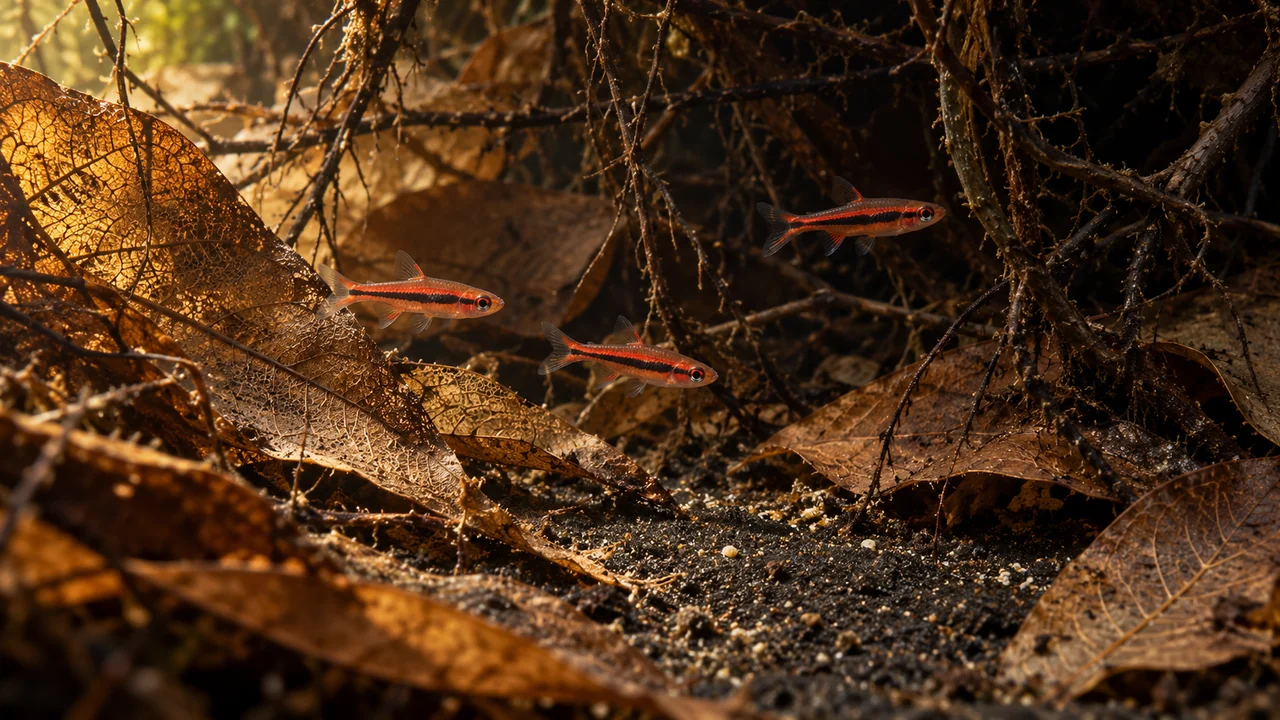
During maintenance, lift loose waste from the open clearing first, then inspect one sheltered pocket. Remove excessively softened piles and trapped food without stripping every mature surface. Add fresh leaves gradually only where they still have a role. The intended finished detail is a loose boundary between roots, leaf edges and visible sand, not an ever-deepening mattress hidden by brown water.
If the layout looks too bare, improve root spacing or light direction before increasing decomposition. If it is impossible to see whether fish are eating, widen the clearing. If plants fail, choose a more appropriate plant or accept limited planting instead of changing several water variables at once. The successful result remains recognisably Southeast Asian in its chosen biological story while being manageable as a stable aquarium.
Further reading and sources
Natural-history references inform the habitat discussion. Dimensions, construction sequence and maintenance access are BBA design proposals, not measurements from a documented wild site or a claim that the pictured aquarium has been stocked and tested. Choose livestock using the linked species guide.
- Habitats — The Parosphromenus Project — Specialist first-hand forest-stream and peat-swamp context.
- EAZA Best Practice Guidelines: Parosphromenus, 2024 — Institutional reference for specialist husbandry; not a blanket community recipe.
- Chilli rasbora — BBA species guide — Species-specific sourced maintenance, identity and feeding guidance.