What it does
Adds texture, cover and grazing surface as the leaf softens and becomes part of the aquarium floor.
What it does
Adds texture, cover and grazing surface as the leaf softens and becomes part of the aquarium floor.
Slow down if
Pause or remove excess leaves if livestock look stressed, water clouds unexpectedly or the tank is already unstable.
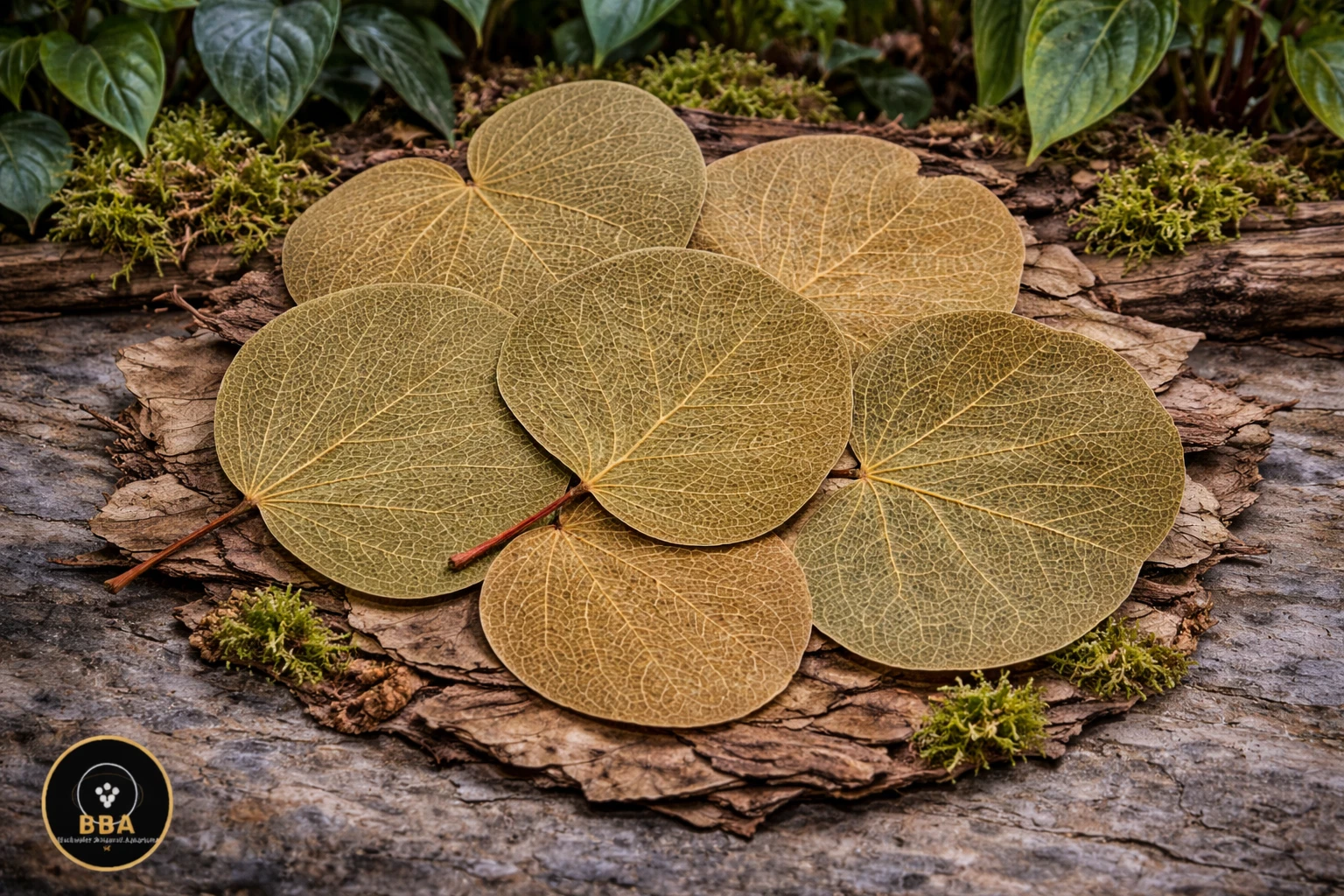
Bodhi leaves are valued for their shape and texture, making them excellent for building a natural forest-floor look and for creating biofilm grazing surfaces as they soften.
Ideal for shrimp colonies, breeding tanks, nano fish, and botanical or blackwater aquascapes.
Packed dry, small batch and labelled by Blackwater Botanical Aquariums.
Supplied in a resealable zip bag. Leaf size may vary because this is a natural product, so differences in shape, size and surface texture are normal and suitable for aquarium use.
Why aquarists use Bodhi leaves
1) Great leaf-litter look Adds instant biotope-style realism to natural freshwater layouts.
2) Biofilm and micro-life surface The textured leaf surface can support biofilm and micro-life as it softens, making it useful for shrimp and snails.
3) Cover and micro-zones Adds natural cover and small sheltered areas that can help shy fish, juveniles and shrimp feel more secure.
4) Botanical blackwater support Supports natural blackwater and botanical-style setups when used gradually.
5) Natural enrichment Useful for leaf-litter aquariums where natural behaviour, grazing and exploration are encouraged.
How to use Quick rinse under tap water to remove any dust. Optional but recommended: steep or soak for 1–3 minutes in hot water, then let it cool fully before adding to the aquarium. Add to the tank under wood, around roots, or in a quiet corner. If the leaf floats at first, it will usually sink on its own, or it can be weighed down with a small stone. You can leave the leaf in the tank until it is fully eaten or broken down.
Dosage guide Start with 1 leaf per 15–20 litres and observe for 24–48 hours. Increase only if the leaf disappears quickly and the water stays clear and stable. A common guideline is 1–3 leaves per 10 litres, depending on stock level and how fast your tank consumes botanicals.
What to expect Leaves may float initially, then sink. A light biofilm layer may appear, which is normal and usually grazed quickly by shrimp and snails. Leaves gradually soften and may skeletonise over time as shrimp and snails continue picking at them. If the organic load feels too high for your setup, remove the remaining leaf and use less next time.
Storage Store sealed in a cool, dry place and keep away from moisture when not in use.
Important notes For aquarium use only. This is not a medication. Not for human consumption. Keep away from children and pets. Natural products vary in size, colour, shape and texture. Botanicals may release tannins and soften the visual tone of the water. Do not overuse in small tanks. Add gradually and monitor water quality.
Product story
Shrimp colonies, Breeding tanks
AQUARIUM PRODUCT STORY
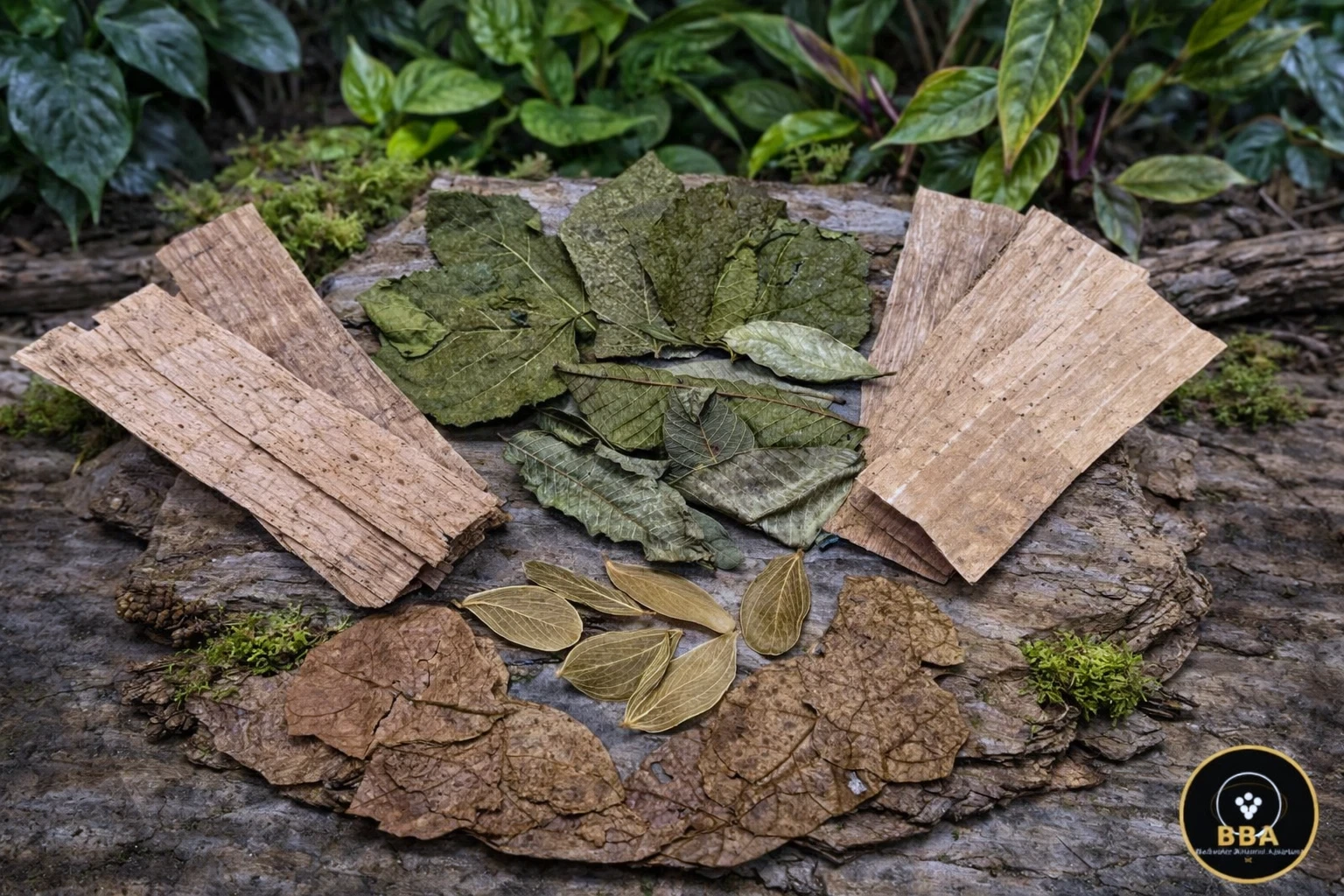
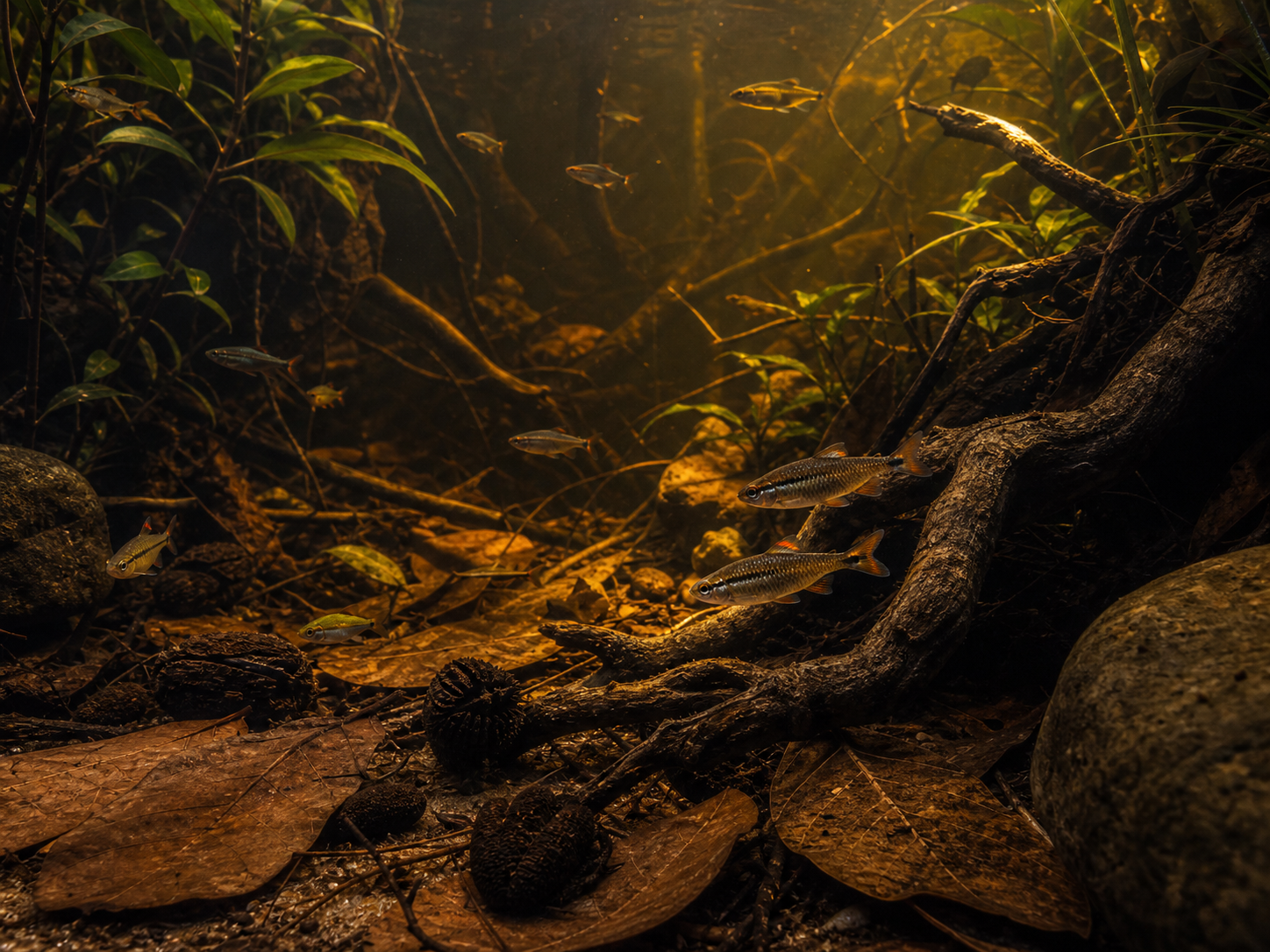
Illustrative BBA product-world scenes built from this listing's own product image. They show habitat and use-context ideas for this product; real tanks, natural pieces and aquascapes will vary.
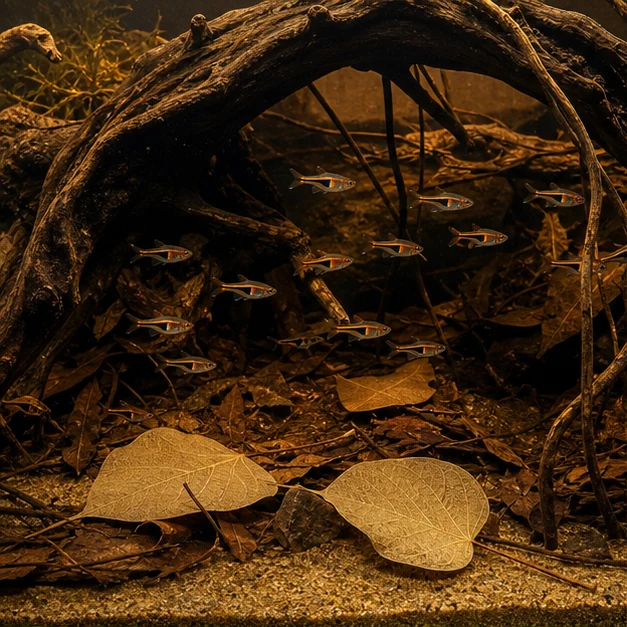
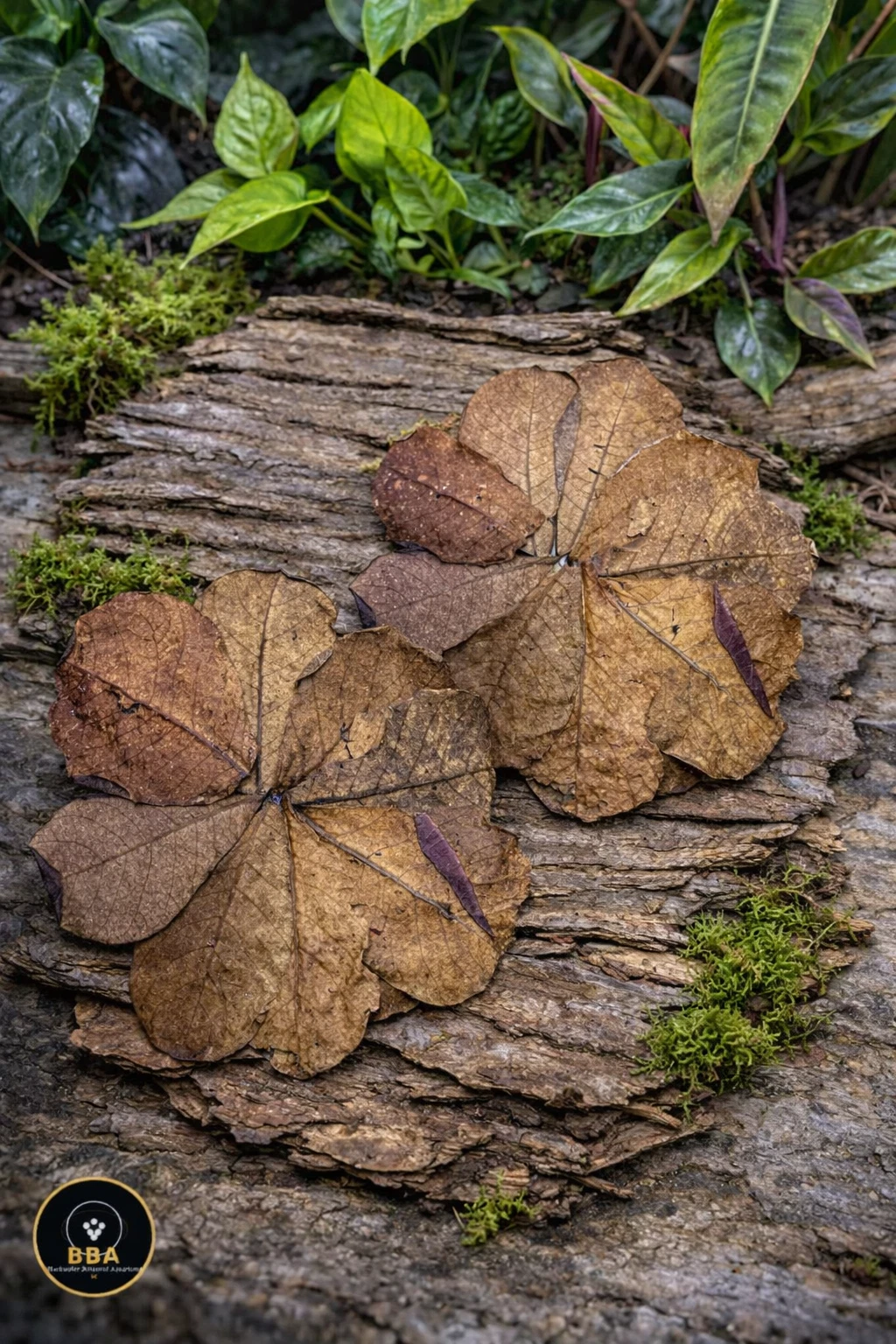
Natural habitat scene with the product placed as part of the leaf-litter floor.
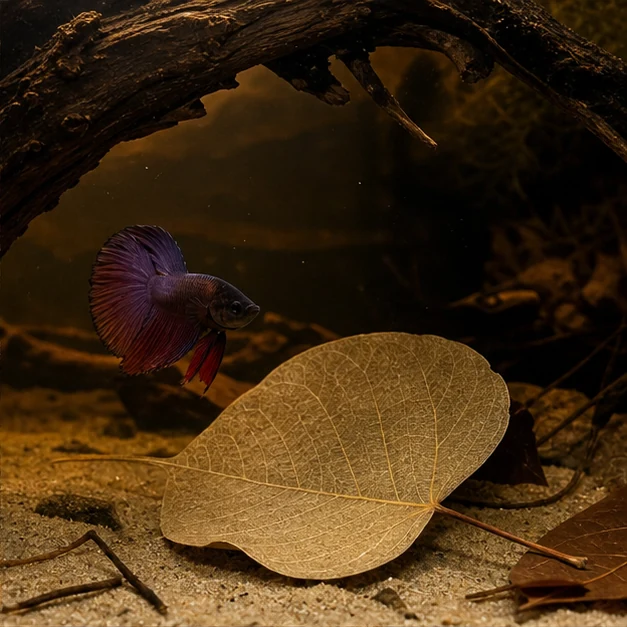
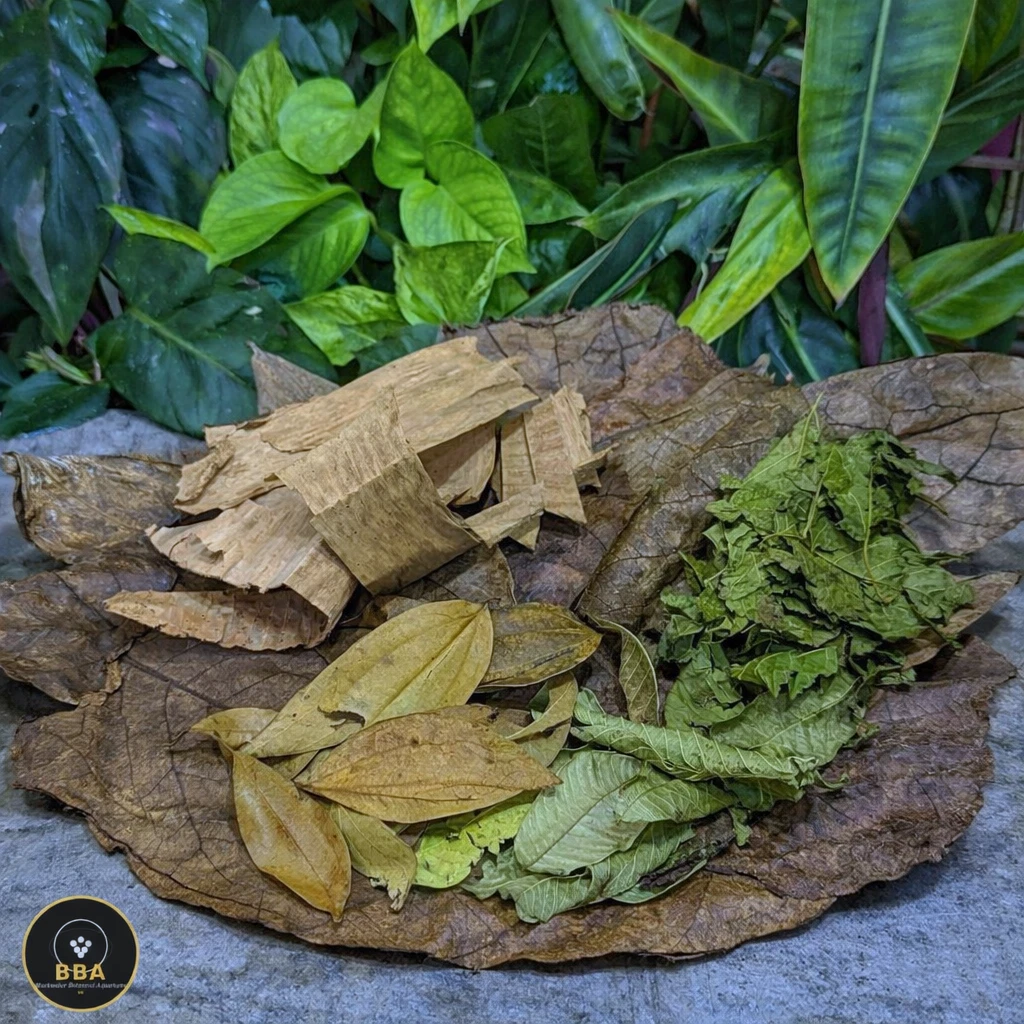
Wider aquarium habitat mood with the product settled naturally.
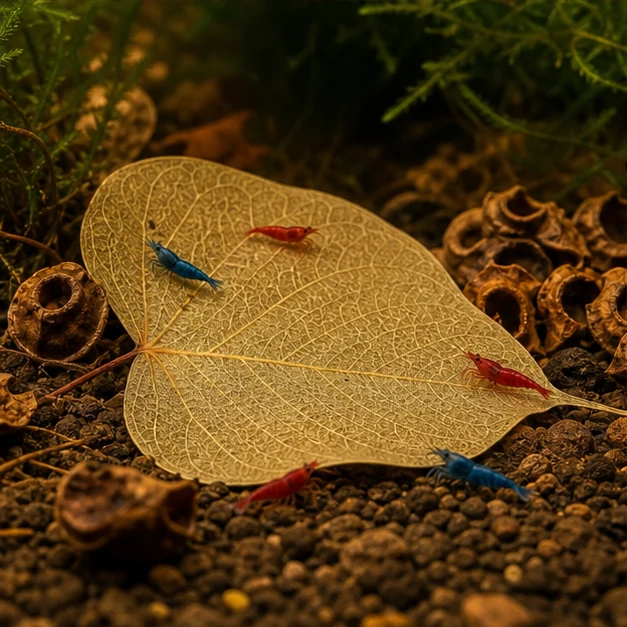
Close habitat detail showing texture, grazing surfaces and natural variation.
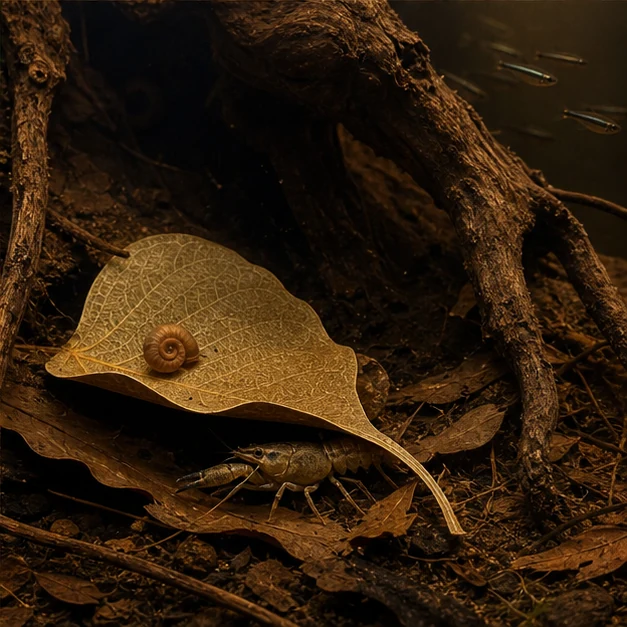
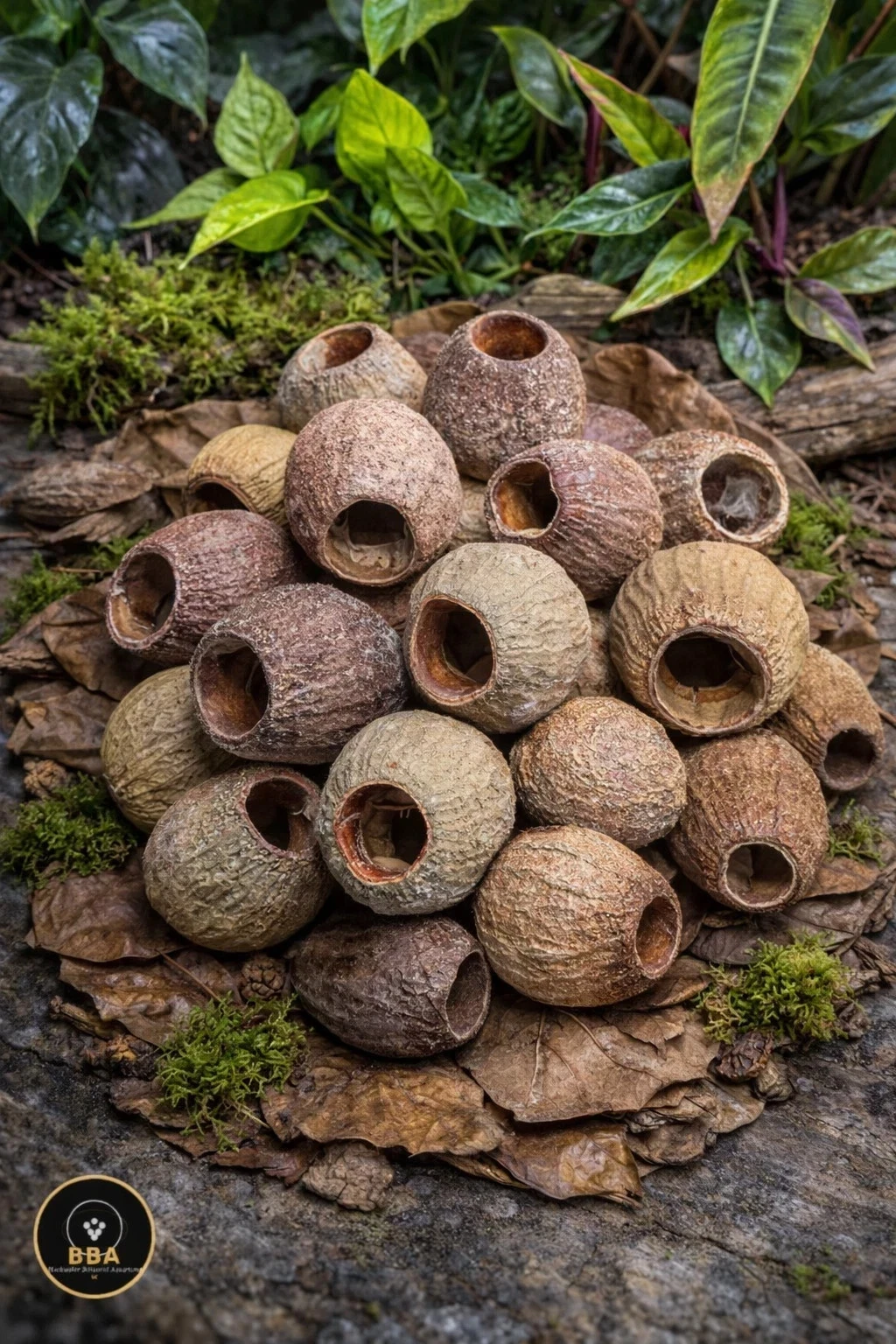
Shelter or cover context showing how leaves can become part of the habitat structure.
OTHER CUSTOMER ROUTES
Beyond aquarium use, selected dry leaves, pods and woody pieces can also add natural structure, cover and surface complexity to suitable paludarium, vivarium and bioactive setups. Choose materials to suit the scale, moisture level and animals in the enclosure.
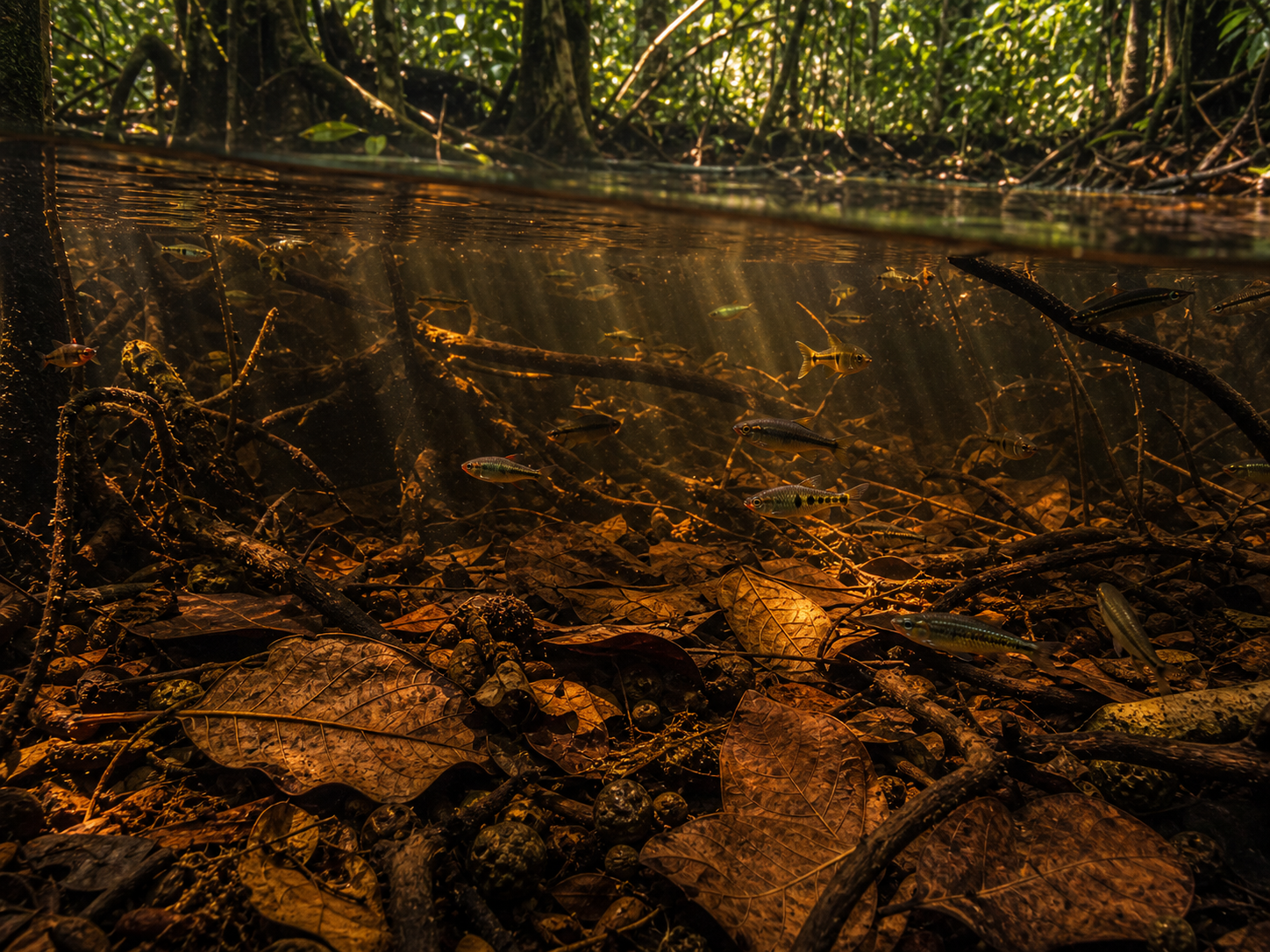
Use suitable leaves, pods and woody pieces through damp margins and transitional areas to connect the aquatic and terrestrial parts of a naturalistic layout.
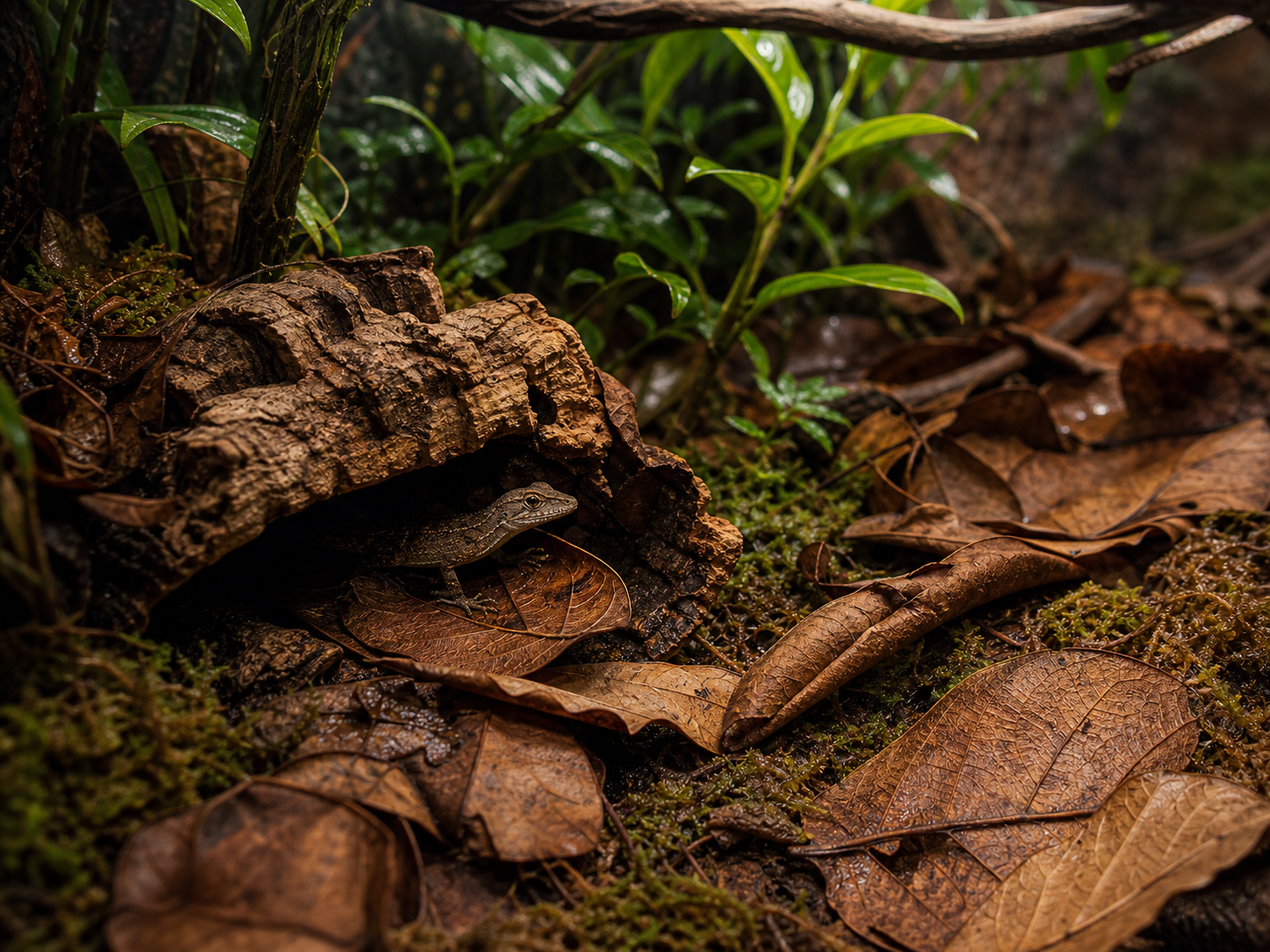
Leaves and suitable harder pieces can form part of the litter and structural layer used around an established bioactive substrate. They are not a complete substrate by themselves.
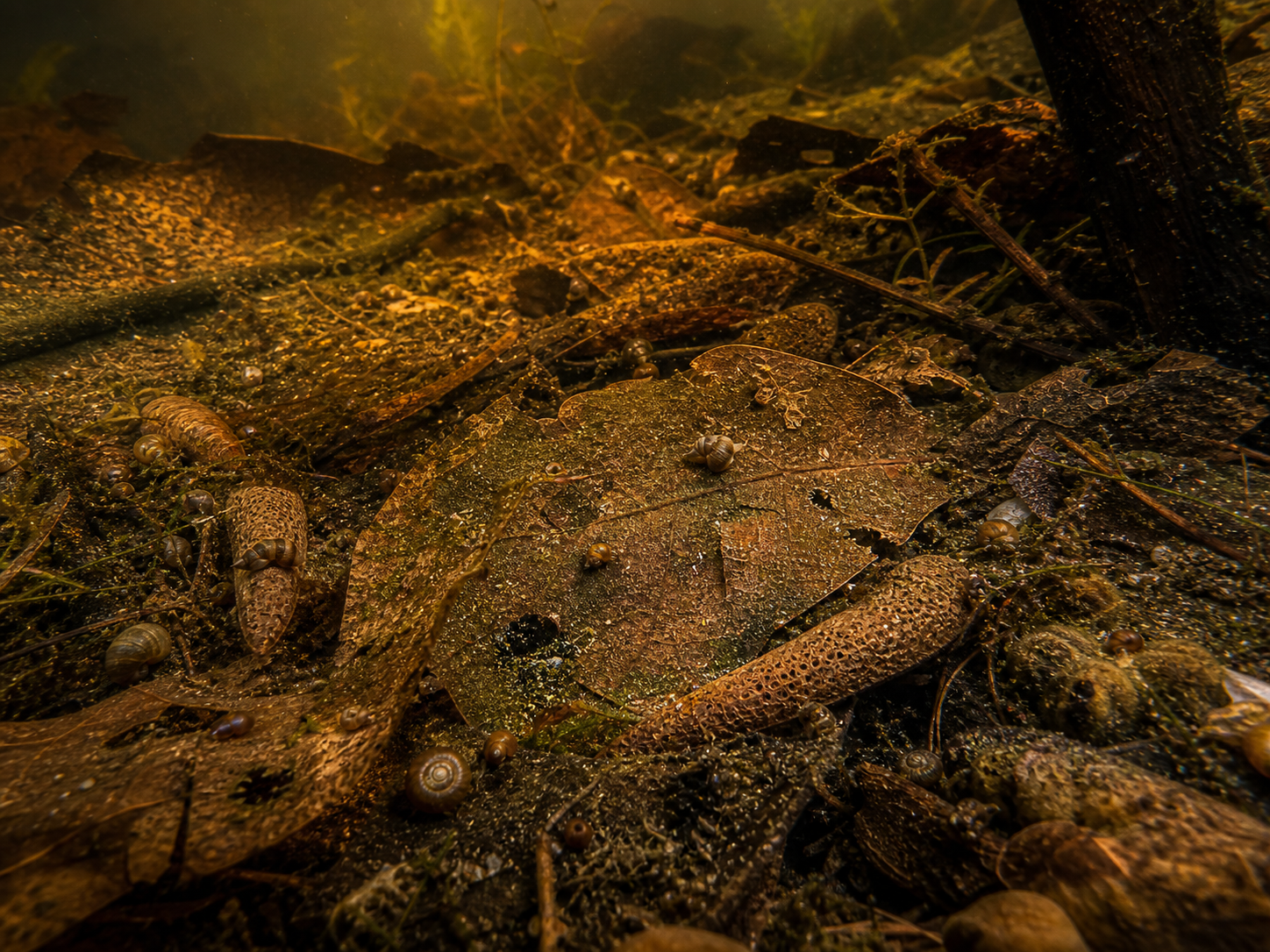
Suitable leaves and dry botanical pieces can provide cover, surface complexity and material that gradually becomes part of the decomposer environment.
Use suitable pieces as additional cover and surface complexity within an established decomposer setup, not as a complete food or substrate system.
Best for
Low-pressure botanical layouts where the customer wants a natural leaf-litter surface, not a rushed water-parameter change.
What it does not do
It does not cure livestock issues, replace filtration or guarantee specific water-parameter outcomes.
Expect natural leaf-litter texture and possible amber character. Exact colour and breakdown speed vary by leaf, tank size and flow.
Remove pieces if they become more than the tank can handle, trap debris badly or coincide with livestock stress or poor water clarity.
No. If the aquarium is unstable, heavily stocked or already showing livestock stress, stabilise first or contact BBA before adding more botanicals.
LEARN BEFORE YOU ADD
COMPLETE THE ROUTE