Shrimp · Green Babaulti Shrimp
Green Babaulti Shrimp — Caridina babaulti: Habitat and Care
A practical guide to green Babaulti-type shrimp that keeps a valid scientific species separate from uncertain commercial identifications and colour forms.
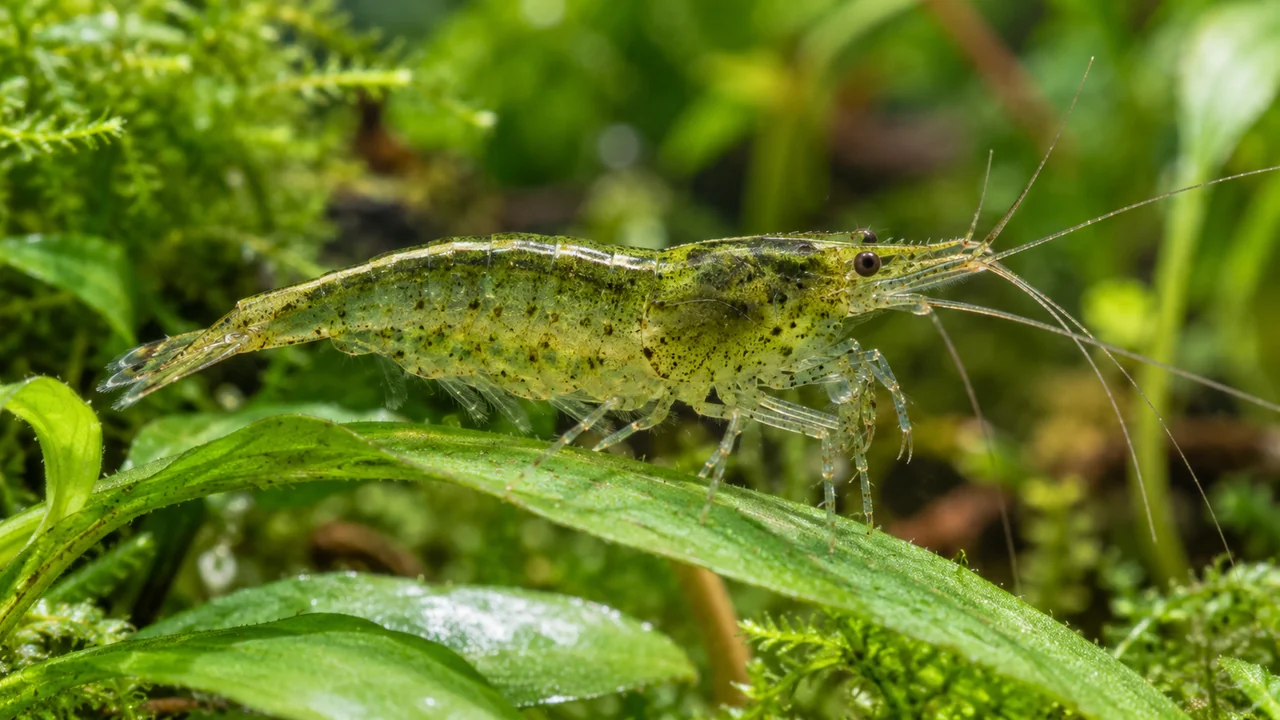
- Identity
- Caridina babaulti is valid; a green trade animal may remain Caridina cf. babaulti.
- Adult scale
- Plan for approximately 3–4 cm; commercial size estimates and line identities vary.
- Aquarium
- A mature planted 45 × 30 cm footprint or larger for a modest colony.
- Temperature
- A practical 22–25°C starting plan; obtain the actual breeder’s conditions.
- Water
- Suggested maintenance pH 6.8–7.6, GH 6–12°dGH, KH 2–6°dKH.
- Breeding
- Freshwater reproduction is reported for traded Babaulti-type lines; this does not authenticate their ancestry.
A valid name is not a certificate for a green shrimp
Caridina babaulti Bouvier, 1918 is a recognised scientific species. The difficulty is connecting that name to a particular commercial population. Green Babaulti, Caridina cf. babaulti and Green Dwarf Shrimp are not interchangeable certificates of identification. The qualifier cf. indicates a comparison with the named species rather than a confirmed identification.
Colour can shift with background, condition and individual variation. A green body alone cannot distinguish this species from every other small atyid. A 2021 investigation used morphology and molecular evidence when identifying introduced C. babaulti alongside Neocaridina in Hungary. That evidence illustrates the standard needed for a defensible identification; it does not validate all shrimp sold under the trade name.
Indian origins and the limits of a trade label
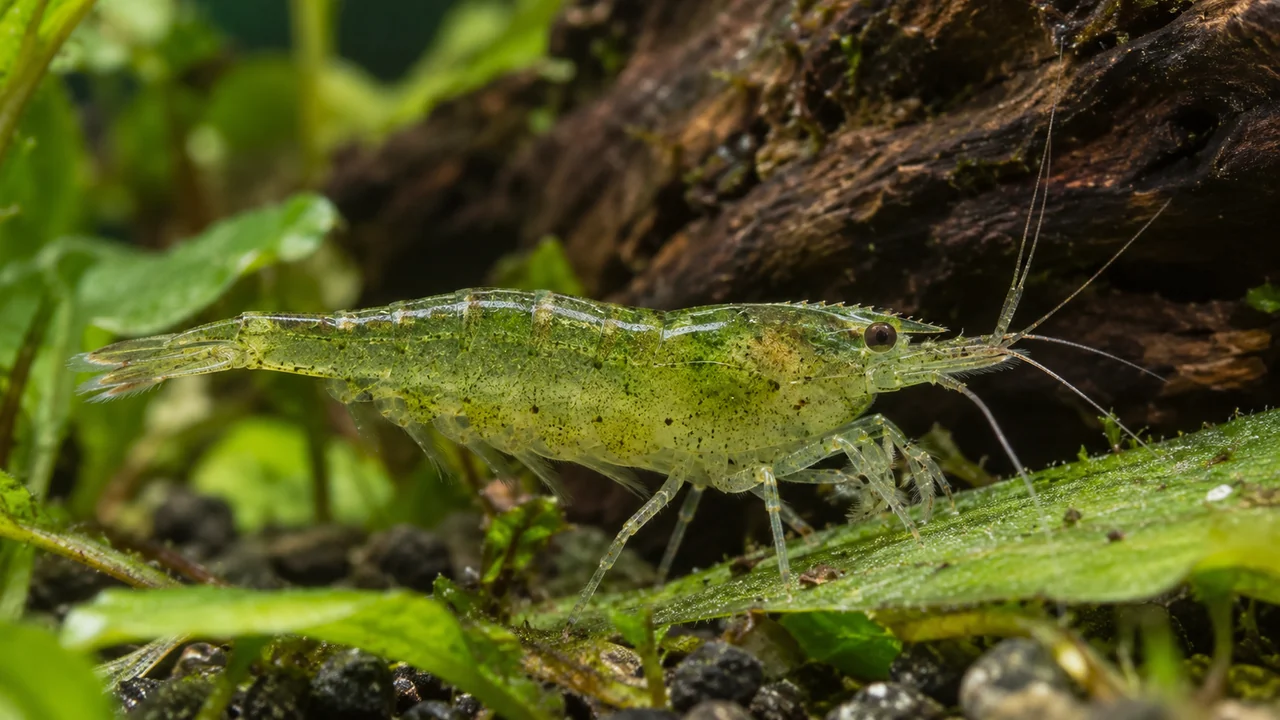
The species is associated with the Indian subcontinent and freshwater vegetation, rather than a compulsory peat-swamp habitat. Commercial green lines are often described without a documented collecting locality or diagnostic examination. Do not attach a precise wild river, elevation or water reading to such animals merely because an exporter uses the species name.
A useful purchase record includes the supplier's working name, breeding location, water conditions and whether that population has reproduced in captivity. Keep those details with the colony. Calling uncertain stock Caridina cf. babaulti is more informative than presenting a selected green photograph as proof of its exact natural distribution.
A planted colony with accessible feeding surfaces
A mature aquarium with roughly a 45 × 30 cm footprint offers a sensible starting point for a modest colony. Greater space helps if the intended population is large or the stock grows beyond common dwarf-shrimp estimates. This recommendation concerns stable water and usable surface area, not a claim that one small tank volume suits every commercial line.
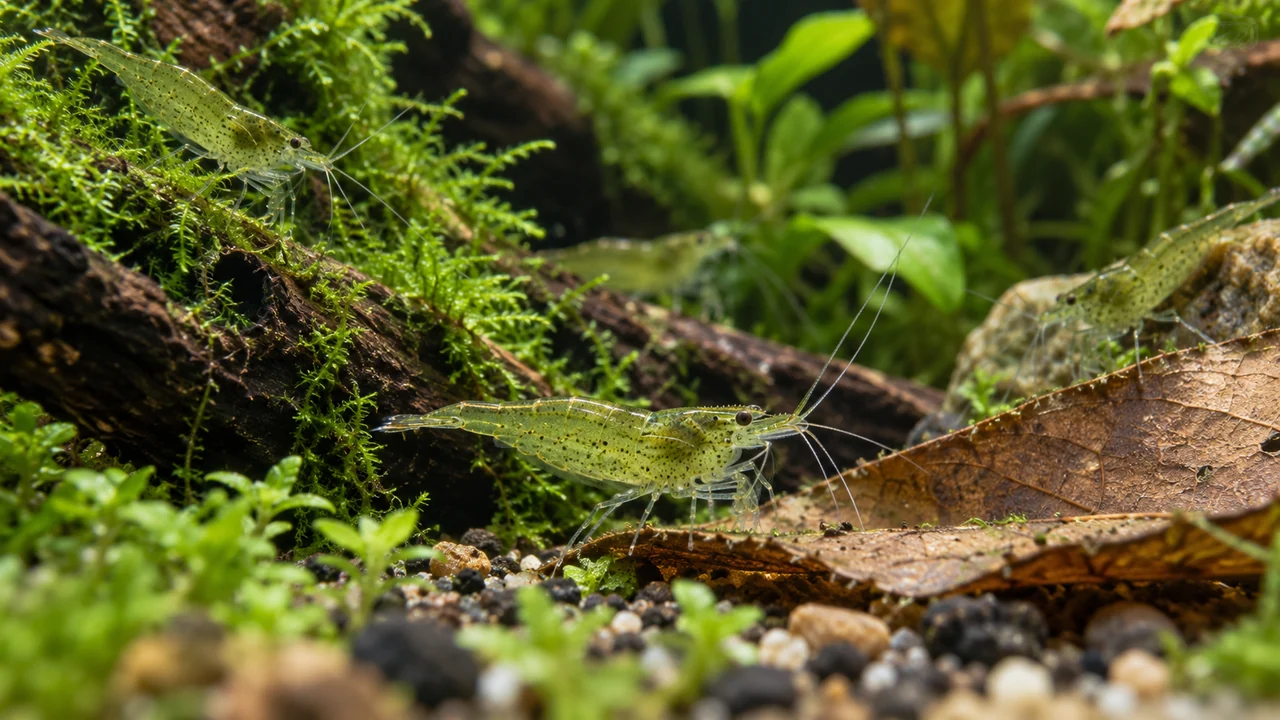
Fine plants, moss, aged wood and a small number of leaves provide grazing routes. Keep a clear feeding area and protect filter intakes. A sponge or suitably guarded filter should maintain circulation without drawing in young shrimp. Dense planting is useful, but leave enough access to remove deteriorating food and inspect animals without pulling the habitat apart.
Choose a coherent maintenance range
For established green Babaulti-type aquarium stock, 22–25°C, pH 6.8–7.6, GH 6–12°dGH and KH 2–6°dKH form a practical starting plan. They are not experimentally proven requirements for every animal carrying the name. Published supplier conditions differ considerably: some maintain cooler moderately hard water, while others describe warmer stock.
Ask for the actual colony's measured conditions and prepare replacement water accordingly. Do not assume that the genus Caridina requires an acidic bee-shrimp substrate. Inert substrate can suit a neutral-water plan; an active substrate is appropriate only if its effect fits the chosen water chemistry. Stability, complete cycling and careful changes come before chasing a generic shrimp parameter chart.
Feed a colony, not just its visible colour
These small shrimp collect food from surfaces using picking appendages. Provide a complete shrimp food in modest portions, supported by mature grazing surfaces and occasional suitable vegetable or other complementary foods. A green appearance does not mean an animal can live indefinitely on whatever algae happen to be visible.
Spread small portions so young animals and subordinate shrimp can reach them. Check leftovers and adjust feeding to the actual population, including juveniles hidden among plants. Excess powder can make a colony look busy while degrading water quality. A dedicated feeding surface helps distinguish useful consumption from food disappearing into an inaccessible leaf bed.
For observable supplementary feeding, compare a small portion of Botanical Grazing Pellets with an occasional Shrimp Lollies – Choose Your Edition stick. Choose a format the colony can reach, and remove the remains rather than adding both by default.
Moulting and peaceful company
Provide cover throughout the aquarium so an animal can withdraw after moulting without having to cross open water. The cast shell is not itself evidence of a problem. Look instead for repeated incomplete moults, declining numbers, poor feeding or sudden changes following a water change, then examine minerals, temperature and water quality together.
Peaceful adult behaviour does not guarantee safety with every community fish. Small young shrimp are especially vulnerable to predation. A shrimp-focused colony offers the clearest breeding and feeding observations. Keep unknown trade lines separately if preserving identity matters, and do not promise a particular hybrid outcome from the genus name alone.
Freshwater breeding claims need a named population
Aquarium accounts describe Babaulti-type populations reproducing in freshwater. Females carry eggs beneath the abdomen, and breeders may obtain young within the colony. Such observations are useful husbandry evidence for that stock, but should not become a claim that every green commercial shrimp has the same documented developmental history.
Published work also uses qualified labels such as Caridina cf. babaulti for particular stripe or blue lines. Do not transfer their egg counts, development times or experimental salinity results wholesale to Green Babaulti. Before planning a breeding project, establish what the supplier has actually observed. Uncertain identity is a reason to qualify the record, not to add salt to an adult freshwater aquarium.
Botanicals as grazing structure, not a colour treatment
A thin layer of prepared leaves can broaden the grazing area and create sheltered routes between plants and wood. Introduce material gradually and keep enough exposed floor to assess food and waste. Botanical material has a practical role here even when the water remains fairly clear and close to neutral.
Do not use tannin tint as proof that the aquarium has become more suitable. Large additions can increase organic demand without solving a mineral or feeding problem. The useful aim is a stable, clean colony with varied surfaces, rather than forcing uncertain commercial stock into an imagined blackwater origin.
A small patch of Dried Guava Leaves – Natural Aquarium Leaf Litter, or a portion of the larger Ceylon Cocoa (Cacao) Leaves – Natural Aquarium Leaf Litter, gives a choice of leaf forms among the planting. Use the amount that remains accessible, rather than filling every gap.
For a different managed botanical format, Lubao Bags – Slow-Release Botanical Sachets can be considered as a separate addition under its product directions, rather than combining several new organic inputs at once.
Practical checks and honest limitations
If adults hide constantly, first inspect companions, circulation, recent maintenance and food access. If the colony declines without obvious carcasses, examine intake protection and the possibility of predation. For failed breeding, verify that both sexes are present and ask whether the same stock has produced juveniles in comparable freshwater conditions.
The main unresolved limitation is commercial identification, not the existence of C. babaulti as a valid species. This guide therefore separates a workable aquarium plan from claims of verified ancestry. Keep supplier records and retain the cf. qualification wherever diagnostic evidence is absent.
Further reading and sources
Identity and natural-history sources are distinguished from aquarium husbandry. Recommended care is not a set of experimentally established survival limits; breeding conditions may differ from adult maintenance.
- ITIS — Caridina babaulti — Taxonomic record for the valid species; does not authenticate retail stock.
- 2021 study of introduced Caridina babaulti and Neocaridina in Hungary — Primary morphological and molecular identification; demonstrates why colour is insufficient.
- Flip Aquatics — Green Babaulti colony conditions — Attributed commercial stock-maintenance information, including cooler water and variable colour.
- CWA — Green Babaulti — Independent commercial maintenance account using the qualified identity; conditions differ from other suppliers.