Naturalistic Terrariums · The Temperate Woodland Terrarium
The Temperate Woodland Terrarium
Create a cool, ventilated woodland plant display with small cultivated ferns, restrained leaf cover and a moisture regime that follows the selected plants.
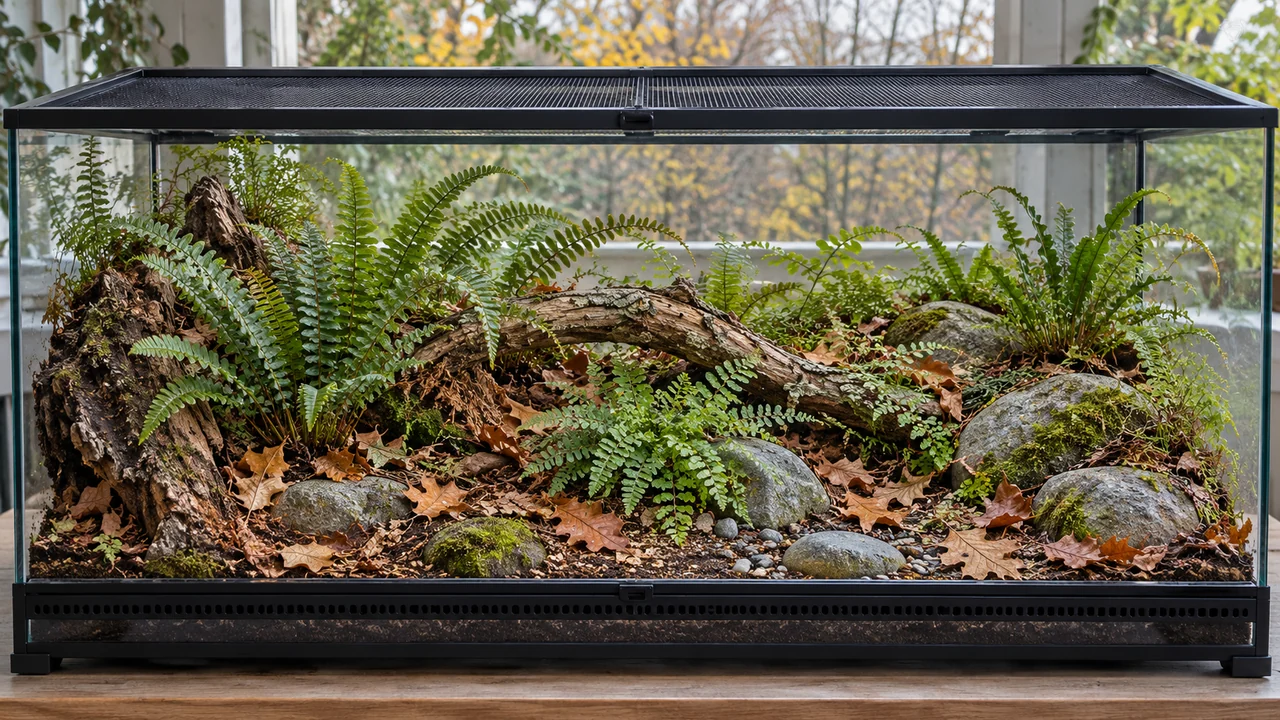
- Suggested enclosure
- 80 × 45 × 50 cm; broad plant-display footprint with practical ventilation.
- Climate direction
- A cool protected position and season-aware plant selection, not a heated tropical box.
- Growing system
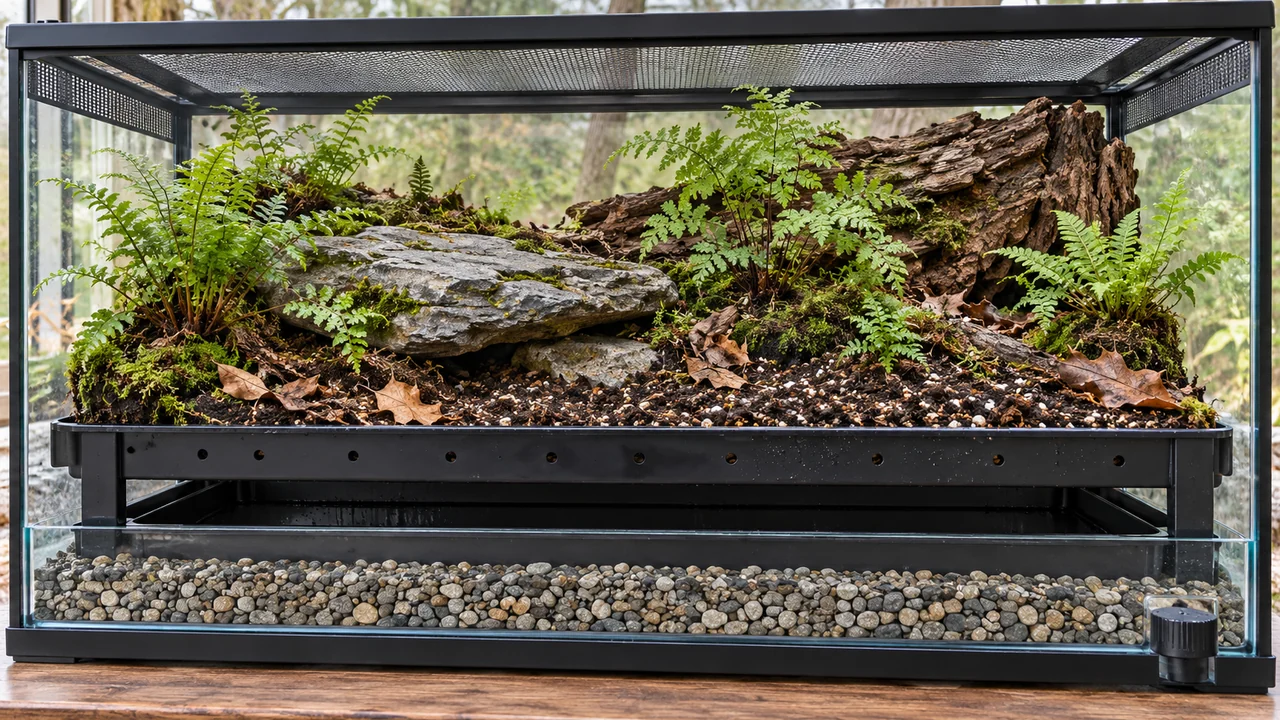
- A removable, genuinely draining planting tray above an inspectable collection area.
- Purpose
- Plant-only unless a separate animal-housing plan has been verified.
Choose a woodland floor rather than a miniature rainforest
The composition is low and open: a small fern rises beside weathered bark, a grey stone holds a little shaded moss and dry brown leaves interrupt the soil. The woodland atmosphere comes from texture, seasonal light and the relationship between damp refuges and ventilated surfaces. There is no waterfall, tropical flower wall or permanent cloud of mist. A little open ground helps the individual plants remain readable.
Temperate is a climate direction, not a guarantee that every native-looking plant will live indoors indefinitely. Some species need seasonal changes or become much larger than a terrarium allows. Begin with identified cultivated plants and a location that suits them. This is a plant display, not a recommendation to collect wild woodland organisms or keep a local amphibian in a decorative glass box.
1. Match the location to the plants
A proposed 80 × 45 × 50 cm enclosure gives room for small ferns and access around low hardscape. Choose a cool bright position away from direct solar heating through glass. A protected porch or suitable unheated room may work better than a consistently hot living-room shelf, but measure its daily and seasonal conditions first. Protected does not mean that an ordinary glass enclosure is safe to freeze or overheat.
Select plants with compatible requirements for that location. Nursery-grown Asplenium trichomanes is a small crevice-fern example to investigate; compact Polystichum selections offer another direction, with adult size checked carefully. Many hardy ferns need appropriate seasonal treatment rather than year-round heated growth. If your location cannot supply it, choose a genuinely suitable cultivated plant or relocate the display instead of hiding decline under new planting.
2. Build drainage you can actually empty
For a manageable plant-only version, use a removable growing tray with real drainage holes supported above an accessible catch area. Confirm the tray and supports fit the enclosure and can carry their wet weight. Keep a route to remove collected water without dismantling the woodland. A lower gravel layer inside a sealed container stores water; it does not by itself provide an outlet or prevent saturation above it.
Choose an airy rooting mix appropriate to the actual ferns, using suitable mineral structure and responsibly sourced organic components. Do not assume that dense garden soil or pure fine fibre will remain open in a small tray. Set the root-zone depth from the plants rather than copying a tropical vivarium recipe. Test watering, runoff and removal before planting the whole surface.
3. Set a low stable framework
Place broad stones and the main bark or wood pieces on secure supports, not perched on loose planting mix. Leave gaps beside the glass for cleaning and ensure the largest piece can be lifted if necessary. A small fallen branch can direct the eye through the scene without creating an artificial canopy. Use material of known suitability and treatment, following the material safety guide.
Keep an open area where substrate condition and runoff can be checked. Do not make a hidden hollow that fills with water beneath an attractive bark roof. If a rock is meant to carry a crevice plant, provide suitable rooting space and drainage rather than wedging a plant tightly between two heavy stones. Structure should make cultivation easier, not merely conceal the mechanics.
For a low alternative woody accent, Mahogany Slices (Swietenia spp.) – Natural Botanical Slices offer flat forms to assess beside the main framework. They are optional material choices rather than a claim of temperate geographical origin, and must remain stable and easy to lift during inspection.
4. Plant in cool, sheltered pockets
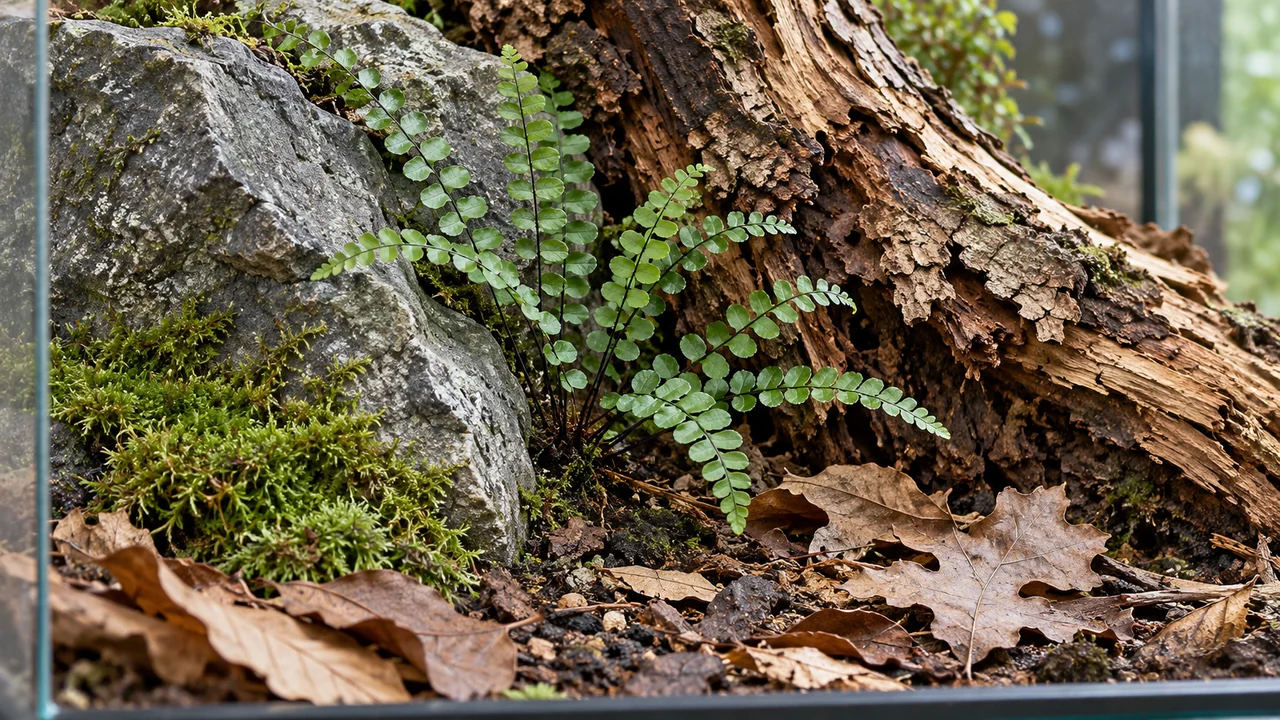
Position the main fern where its fronds have room to develop without touching every pane. Check light, rooting depth and mature spread for its actual identity. Asplenium trichomanes naturally uses crevices, but a decorative crack alone does not supply roots with suitable moisture. Keep the crown at its proper level and avoid packing leaf litter over new growth.
Add moss only where you can meet that moss's cultivation needs. Small cultivated patches on a damp shaded stone are more realistic than a universal carpet across exposed substrate. Do not strip moss, bark or plants from a wild site to make the scene appear authentic. A woodland-style display can be convincing with nursery plants and prepared materials, without claiming to recreate one local habitat exactly.
5. Use a restrained deciduous leaf layer
Broad beech-like leaves, lobed oak leaves and a few small fragments can create a different surface from the tropical projects. Use suitably sourced material and review its treatment and condition. Keep a broken layer so the substrate and plant crowns remain inspectable. Let some upper leaf edges remain dry while a shaded underside retains more moisture; the whole floor should not become a permanently wet mattress.
BBA leaves and selected bark can add structure where they suit the plant display. Their suitability is individual, not implied by the word natural. Avoid making thick barriers that block runoff or hide failing roots. Replace decaying material in small amounts as needed, rather than continually topping up until the tray is full. Leaves supply cover and organic material, not a complete nutrient or drainage plan.
For the deciduous layer, compare Dried Beech Leaves (Fagus sp.) – Natural Aquarium Leaf Litter with Dried Oak Leaves – Natural Aquarium Leaf Litter. If using BBA Leaf Litter & Substrate Variety Mix – 1 L Seasonal Botanical Blend, sort only pieces that suit this cooler plant display rather than treating its mixed contents as a local woodland collection. Keep the layer broken and liftable, with the fern crowns and drainage openings exposed.
6. Manage moisture without a tropical humidity target
Water the rooting pockets when their condition requires it, then allow excess to drain and empty the catch area. A slightly damp root zone and a dry upper leaf edge can coexist. Check beneath the surface instead of watering because the front pane looks clear. Use water suitable for the plants, and adjust the amount as growth, room temperature and daylight change.
Maintain ventilation across the surface and through the upper enclosure. Do not seal the display simply because moss looks more vivid immediately after misting. Long-lasting condensation can indicate a wet, poorly ventilated environment rather than successful woodland conditions. There is no general need to heat this project to tropical temperatures or to hold an artificial high humidity around every plant.
7. Plan light and seasonal changes
Provide bright indirect-style light, avoiding direct sun that can rapidly heat the glass. If using a lamp, select a suitable plant light at safe clearance and use a timer. Observe growth and the actual local day length. Woodland shade does not mean darkness; stretching, sparse growth or gradual decline may show that the selected plant needs more usable light.
Follow the named plants' seasonal requirements. Hardy ferns may slow growth, retain older fronds or lose foliage depending on species and conditions. Do not interpret every seasonal change as a reason to increase heat and fertiliser. A plant that needs a cooler seasonal rest should be given an appropriate location or cultivation arrangement, not promised perpetual growth inside a warm sealed display.
8. Establish and maintain a plant-led system
Look for healthy roots and appropriate new growth before adding more material. Remove failing leaves, inspect the catch tray and keep drainage holes clear. Use plant-specific feeding where needed rather than an unmeasured general dose into a hidden reservoir. Lift part of the surface leaf layer during inspections and trim growth before the maintenance route disappears.
Do not introduce tropical isopods or springtails automatically because another guide uses them. Any deliberate invertebrate community needs suitable temperature, moisture, food and containment. This enclosure is complete as a plant-only display. If an animal is later proposed, its seasonal environment, space, security and other husbandry needs must be assessed independently; the word woodland does not establish compatibility.
Correct decline without changing the whole climate
If the rooting layer stays sodden, check drainage and watering before adding more ventilation alone. If frond tips dry while the soil remains wet, investigate plant suitability, root condition and excessive local airflow rather than continually spraying the leaves. If moss fails on the open stone, move it to a better microhabitat or accept bare stone instead of turning the whole enclosure into a tropical humidity chamber.
If a plant outgrows the tray, replace or relocate it while access is still easy. If the scene looks untidy, remove excessive decaying material and restore the low open framework. The finished woodland should look changeable and cultivated with care: healthy individual plants, readable bark and stone, modest leaf cover and a moisture regime that suits temperate growth.
Further reading and sources
These references support the horticultural and material principles. Enclosure dimensions and the construction sequence are BBA design proposals. The planting examples do not establish suitability for a reptile, amphibian or other animal.
- How to grow ferns — RHS — Different fern habitats, sizes and seasonal care; not all ferns are tropical.
- How to grow Polystichum — RHS — Plant size, shade and root-zone moisture considerations.
- Maidenhair spleenwort — The Wildlife Trusts — Natural crevice habit of Asplenium trichomanes, not permission for wild collection.
- Terrariums and Bottle Gardens — RHS — Container cultivation context; humid tropical bottle gardens are distinguished from this ventilated temperate proposal.