Shrimp · Australian Freshwater Shrimp
Australian Freshwater Shrimp — Paratya australiensis: Habitat and Care
A transparent surface collector, not a miniature fan feeder. Modern Paratya taxonomy changes how older wide-range and breeding accounts should be interpreted.
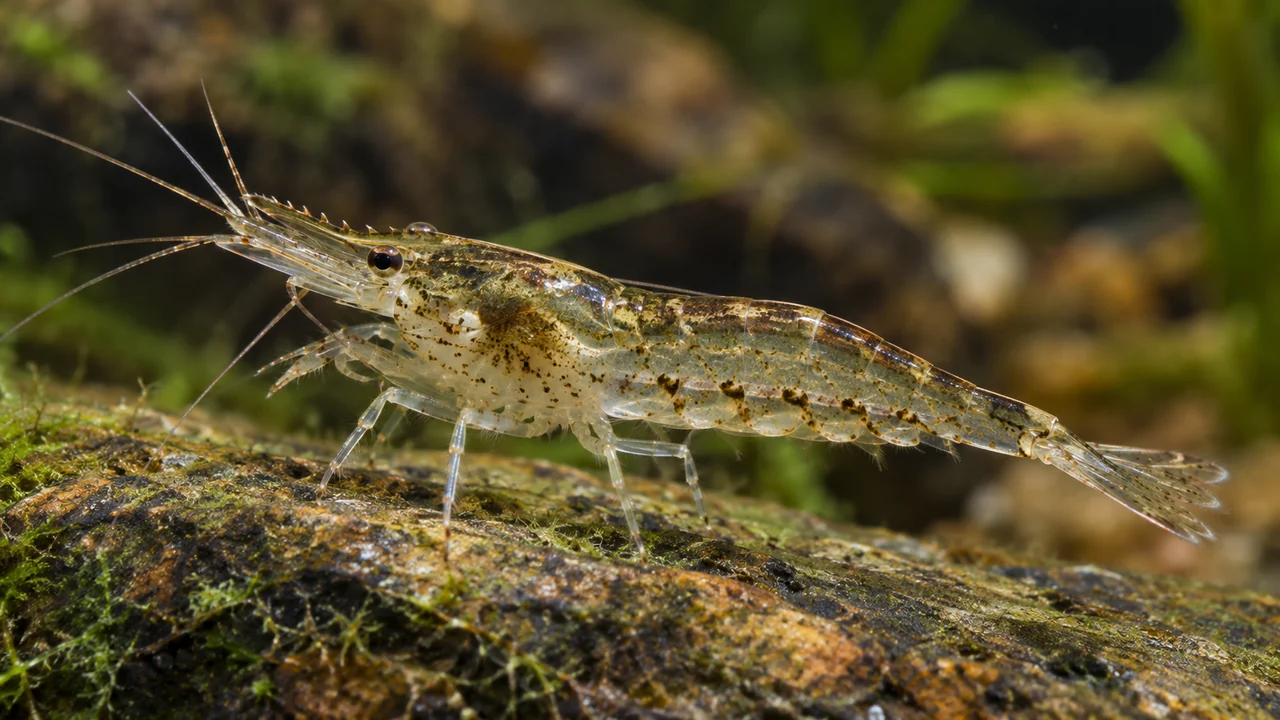
- Identity
- Paratya australiensis Kemp, 1917, in the narrower sense of the 2022 revision.
- Adult scale
- Common aquarium accounts allow around 3–3.5 cm total length; carapace measurements are not body length.
- Aquarium
- A mature planted 45 × 30 cm footprint or larger for a modest group.
- Temperature
- Suggested adult maintenance 18–23°C rather than the full reported tolerance span.
- Water
- Working freshwater plan: pH 6.5–7.5 and GH 5–10°dGH; prepare stable replacement water.
- Development
- Free-swimming larvae; older records encompass newly separated species and do not establish one universal salinity recipe.
A familiar name with a narrower modern meaning
Paratya australiensis Kemp, 1917 was once used broadly for highly variable Australian freshwater shrimp. Molecular studies exposed several lineages, and Suter, Mynott and Crump's 2022 revision recognised ten species, including newly described forms. The story is therefore more specific than saying that an unnamed complex might exist.
In that revision, P. australiensis is associated with the Sydney coastal catchments and Shoalhaven area, rather than every population historically listed across eastern Australia. Older supplier ranges and ecological papers may use the wider name. Keep the purchase label and provenance together, and avoid relabelling an unexamined aquarium colony merely because its body looks transparent.
A grazing shrimp, not an Australatya fan feeder
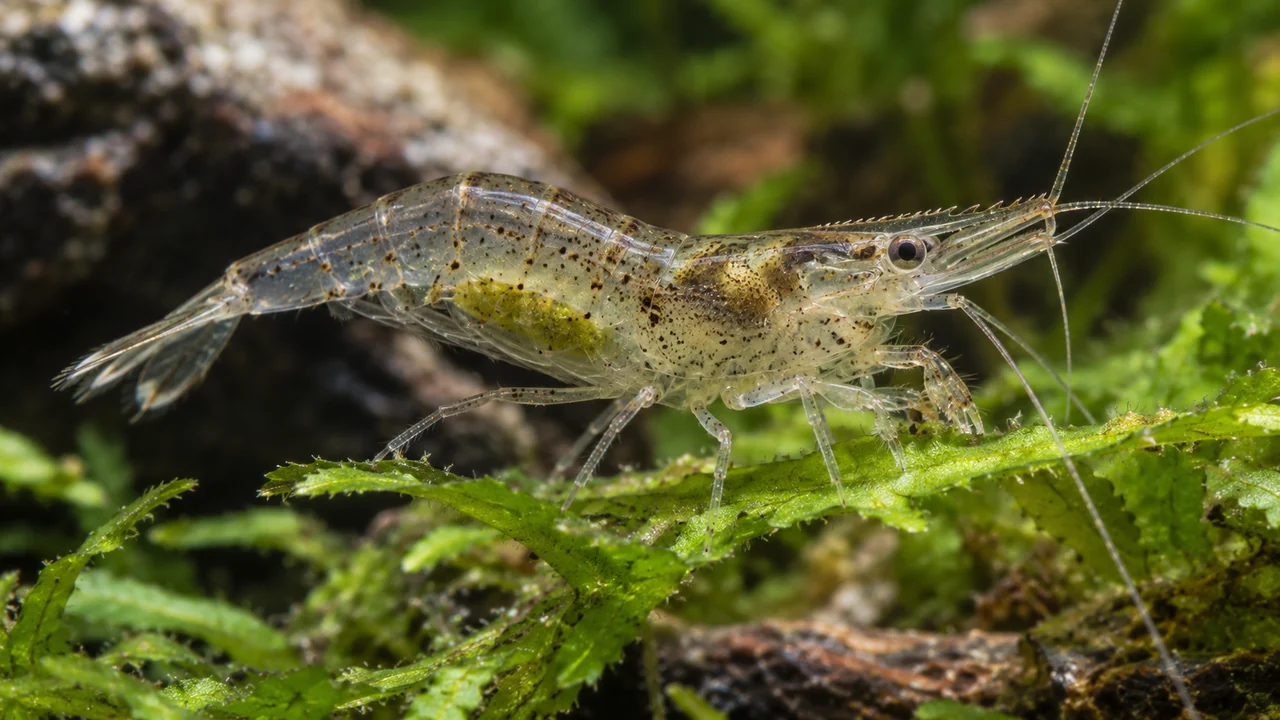
The animal has a translucent, often subtly mottled body, fine walking legs and small setose collecting chelae. It picks material from surfaces and vegetation. It does not carry the broad open feeding fans that make a riffle shrimp's current-facing posture so distinctive, and it is not a long-armed Macrobrachium predator.
Rostral length and fine anatomical details help distinguish Australian Paratya species, but a long rostrum alone is insufficient. Some diagnostics require close examination beyond a normal display photograph. This matters when comparing breeding claims: similar-looking animals from different catchments may no longer share the same accepted species name.
Vegetation and accessible fine surfaces
A planted aquarium around 45 × 30 cm offers a useful footprint for a modest group. Extra volume helps buffer temperature and maintenance errors, but productive accessible surface area is more useful than a tall bare container. Use fine planting, mature wood and a protected filter intake.
Provide moderate circulation and a clear feeding patch beside cover. The animals should be able to collect food without competing with a dense fish population. Avoid assuming that a bowl is appropriate simply because an old supplier sheet describes these shrimp as small. Stable filtration and dependable oxygen remain part of the aquarium plan.
A temperate adult plan with measured minerals
An adult maintenance range of 18–23°C, pH 6.5–7.5 and GH 5–10°dGH is a practical starting recommendation within published aquarium guidance. It is not a controlled optimum for every historical Paratya lineage. The commercial literature often predates the 2022 revision, so its broad limits require qualification rather than being assigned unchanged to a newly delimited species.
Keep the carbonate system stable and avoid rapid pH manipulation. Use dechlorinated replacement water and control evaporation. Do not transfer salt tolerance or acid-drainage experiments into a recommendation to alter the adult aquarium. Experimental survival in an unusual solution answers a different question from long-term care.
Small picking hands need more than leftovers
Offer a complete fine or small sinking shrimp food, with mature surfaces as a supporting resource. The animals collect a range of material while moving through plants and over wood. That activity does not prove that fish leftovers or visible algae alone provide a complete ration.
Distribute modest portions and watch whether all animals feed. Juveniles and smaller individuals need access that is not monopolised by adults or fish. Remove degrading leftovers and adjust the ration to the actual population. A practical feeding routine gives more useful information than attempting to make every surface look heavily coated.
For supplementary feeding variety, compare Snowflake Shrimp Food with the Shrimp Snail Pleco Food & Botanical Bundle. Use a selected component in a small portion; the pack is a choice of materials to manage separately, not a single addition to empty into the aquarium.
Group behaviour, companions and moults
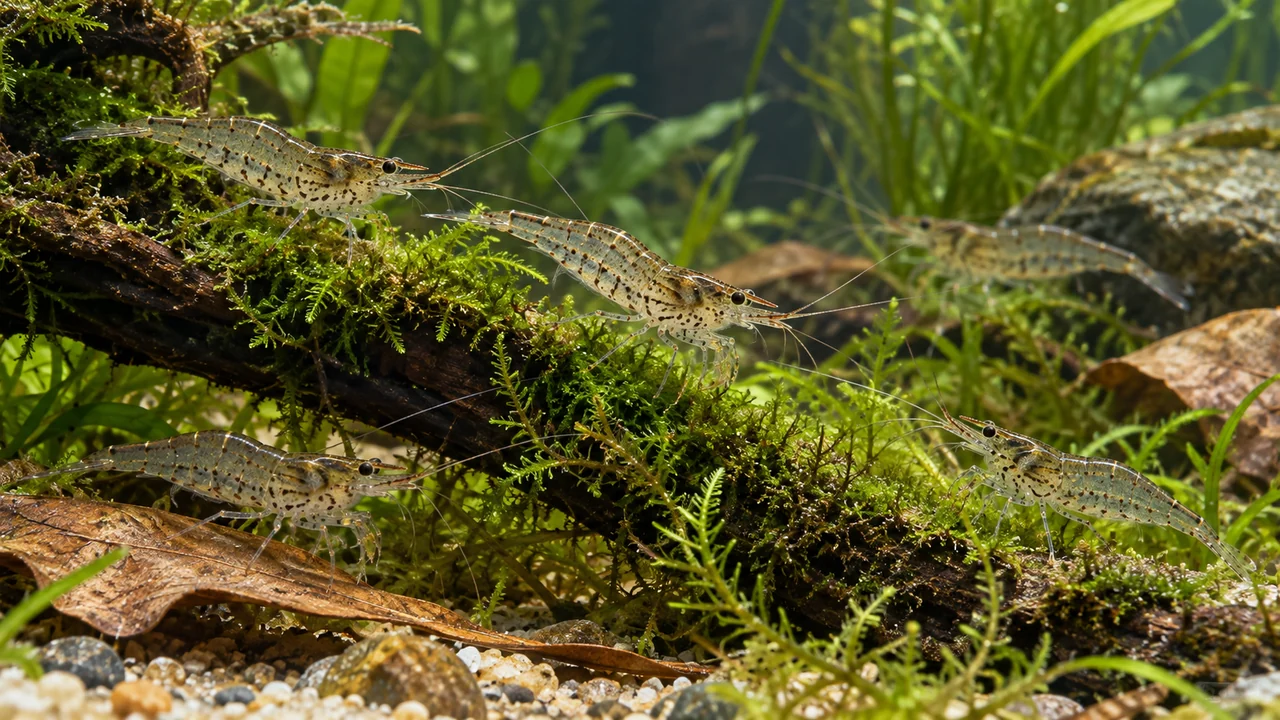
A small group can occupy different plant and wood surfaces without requiring the territorial divisions of a large clawed prawn. Nevertheless, crowding and food competition can reduce usable space. Retain cover around feeding routes and protect small animals from equipment intakes.
Select companions conservatively. Fish that ignore adults can still eat larvae, and a recently moulted shrimp is especially vulnerable. Do not move soft animals for routine inspection. If losses recur after changes, compare temperature and mineral preparation and check nitrogenous waste before adding supplements or medications.
Larval development must be linked to the right population
Paratya hatch as larvae rather than miniature Neocaridina. Historical research documents differences in life history and salinity use among populations formerly placed under australiensis. Coastal estuarine development and landlocked freshwater adaptation are not interchangeable, and the modern species separation makes that warning more important.
Neither promise easy freshwater recruitment nor prescribe a compulsory marine nursery for every shrimp sold under this old broad name. Establish the population's identity and actual breeder observations first. A nursery needs protected filtration and appropriately small suspended food. Failure to recruit young in a community tank does not, by itself, identify the missing salinity or prove the adults are infertile.
Leaves and wood as a managed grazing area
A small amount of prepared leaf litter can extend the fine collecting surfaces around wood and plants. Leave a visible floor patch and retain gentle movement through the arrangement. Deep accumulations are unnecessary and can hide deteriorating food or obstruct maintenance.
The botanical role is structural and nutritional support, not an instruction to acidify a temperate freshwater aquarium. Tannin tint cannot show whether minerals, oxygen or food are adequate. Use gradual additions and observe the shrimp's access to the surfaces rather than judging success by water colour.
A limited patch of Dried Beech Leaves (Fagus sp.) – Natural Aquarium Leaf Litter or Dried Cinnamon Leaves – Natural Aquarium Leaf Litter can extend the collecting area beside plants and wood. Leave a clear floor for portion feeding and routine removal of debris.
Practical checks without inventing a lineage
For poor activity, examine temperature, oxygenation, filtration, recent chemicals and available food. For disappearing small animals, inspect intakes and companions. If breeding is the goal, source identified stock with a documented freshwater or estuarine developmental history instead of testing random salinity changes on an unknown colony.
The main limitation is not a lack of an accepted name: it is applying older broad-name evidence to present-day stock. This guide retains the distinction between a workable adult plan and a verified species-specific rearing protocol. It does not invent a collection locality, ancestry or successful home breeding history.
Further reading and sources
Identity and natural-history sources are distinguished from aquarium husbandry. Recommended care is not a set of experimentally established survival limits; breeding conditions may differ from adult maintenance.
- Suter, Mynott & Crump (2022), Australian Paratya revision — Primary full revision: ten species recognised, narrower australiensis range and anatomical distinctions.
- Cook et al. (2006), Paratya life-history diversification — Primary historical lineage/life-history study; read through the later revision, not as proof of one universal breeding strategy.
- Australian Museum — Freshwater Shrimp — Institutional appearance and natural-history context; older wide-name usage needs qualification.
- Aquarium Industries — Freshwater Glass Shrimp care sheet — Supplier adult size, temperature, pH and mineral guidance predates the taxonomic revision; not a breeding or bowl recommendation.