Fish · Axelrod’s Sundadanio
Axelrod’s Sundadanio — Sundadanio axelrodi: Habitat and Care
A specialist miniature whose real identity matters before care advice is transferred. The Bintan species has a blue-green upper sheen and needs a stable, carefully fed group aquarium; old colour-form names can conceal different Sundadanio.
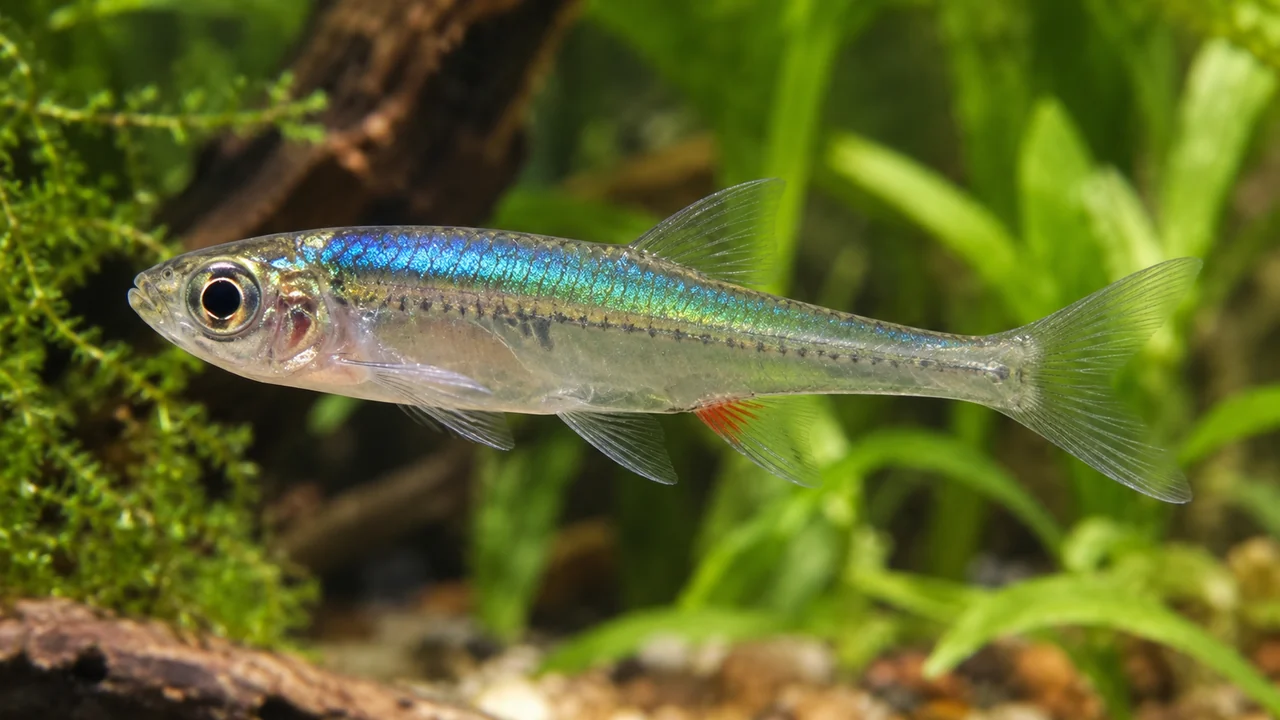
- Identity
- Sundadanio axelrodi sensu the 2011 revision, known from Bintan; not all fish traded as axelrodi blue, red or green.
- Adult scale
- The revision examined fish to 17.1 mm standard length; plan for a very small fish around 2 cm overall.
- Routine plan
- About 23–25°C, soft acidic water around pH 5–6.2 and 1–4°dGH is a cautious specialist framework, not a verified breeding formula.
- Group and space
- Around 20–30 consistently identified fish in a mature planted aquarium about 60 × 30 cm or larger.
- Food
- A dependable supply of suitably tiny live/frozen food, with dry-food acceptance checked rather than assumed.
- Evidence limit
- Much aquarium literature predates the species split or covers cf. axelrodi. Provenance and observed feeding are essential.
Which axelrodi is actually being discussed?
Sundadanio axelrodi was originally Rasbora axelrodi. The 2011 revision redescribed it and separated seven other species from material formerly grouped under that broad name. The restricted axelrodi account is associated with Bintan Island. Descriptions calling the genus monotypic or treating all red, green and blue imports as this one fish are outdated.
The redescribed male shows blue to green upper iridescence, weak dark flank pigmentation and red on the front of the anal fin. Specialist identification also uses small scale and tubercle characters that a normal aquarium portrait cannot reliably establish. Ask for collection or breeder provenance. A blue fish supplied as cf. axelrodi should keep that qualification rather than gaining certainty from a pleasing photograph.
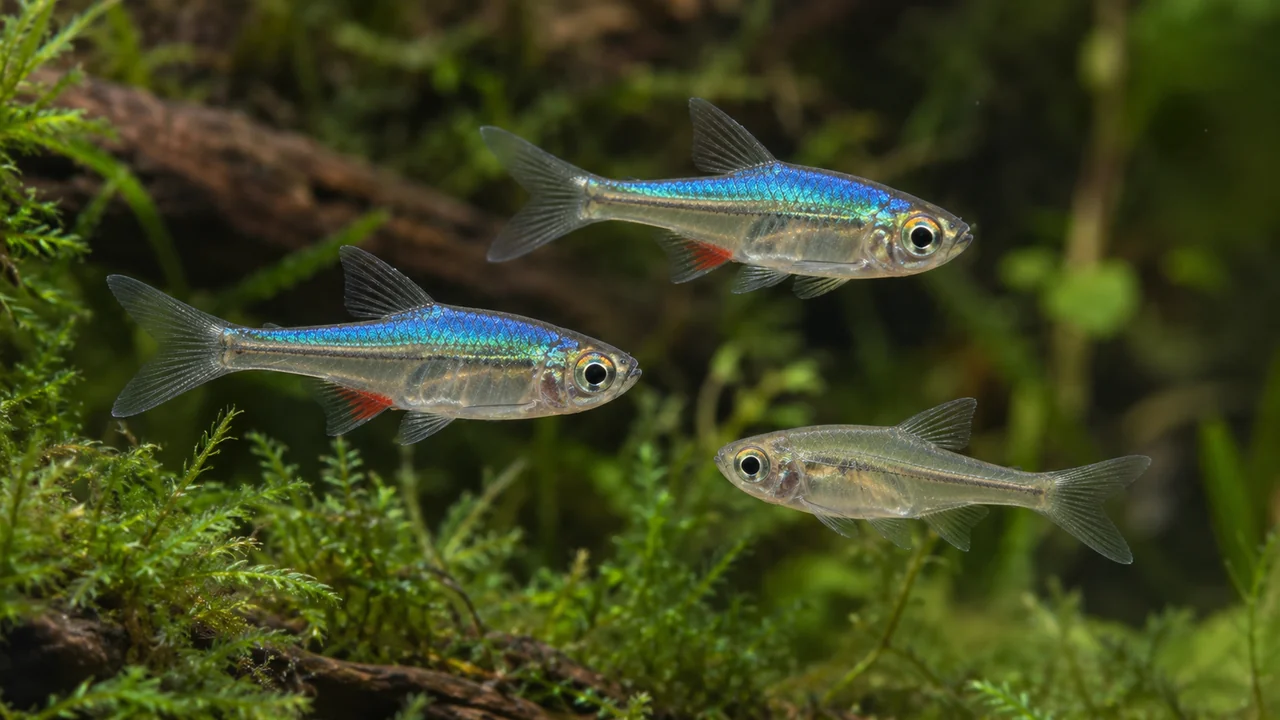
Bintan peat-swamp context
The primary revision records the species from Bintan peat-swamp forest. That is a different statement from the old catch-all range spanning much of Borneo and Sumatra. Several of those other records now belong to other named Sundadanio, even where the colours appear similar. Keep locality records with captive groups if they are available.
A shaded mature aquarium with fine plants, slender roots and quiet open water is a useful specialist arrangement. Choose plants that can live under the actual soft-water and light regime. A restrained leaf layer can give texture below, while the upper feeding area remains accessible. The goal is a functioning aquarium with observable tiny fish, not a dark container whose chemistry and occupants are difficult to assess.
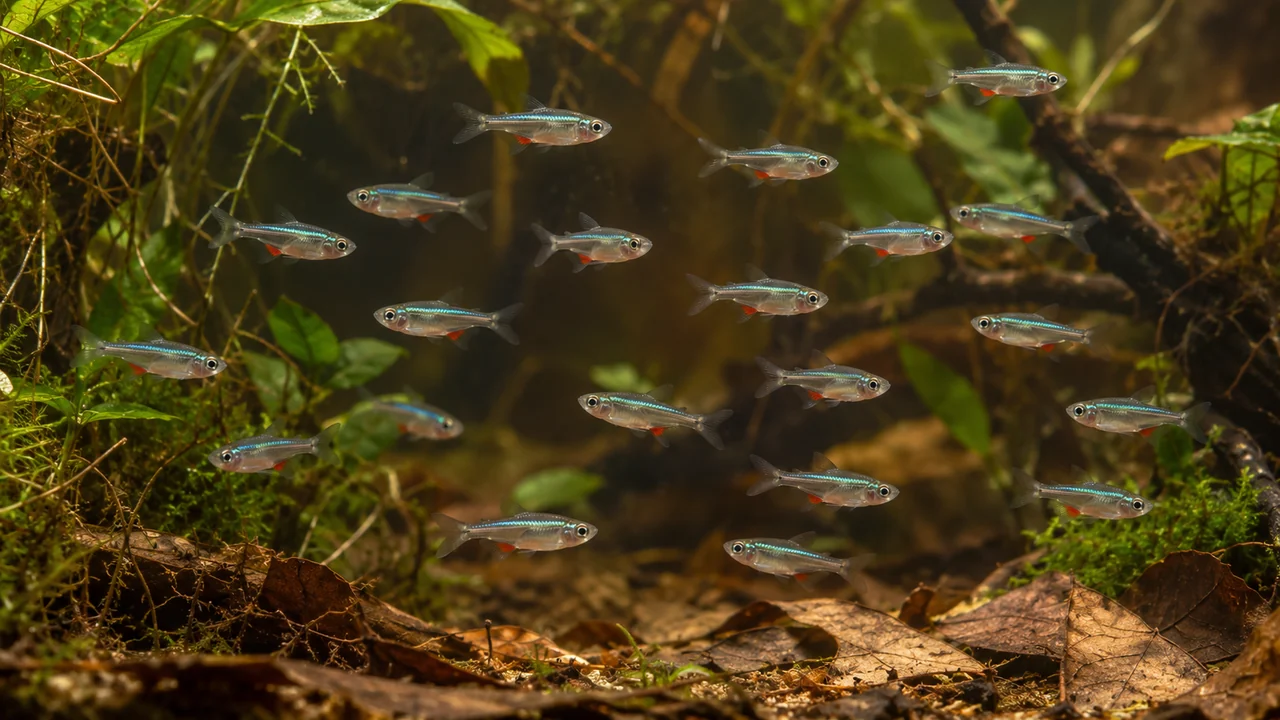
Plan a real group, not a micro-container
The revision’s largest examined axelrodi was 17.1 mm standard length. That specimen measurement is not a universal adult total-length ceiling; it does make the food and equipment scale clear. Keep a substantial group, around 20–30 consistently identified fish, rather than a handful purchased as incidental colour.
A mature aquarium around 60 × 30 cm or larger gives a practical margin for a group, plants and maintenance. This deliberately exceeds tiny container suggestions in older literature. Spread cover around several edges and retain a calm middle lane. Cover the aquarium, protect the intake and avoid gaps behind guards. A small fish needs a stable water volume and reliable access, not simply less space because its body is short.
A cautious water framework with honest evidence
For a dedicated unfamiliar group, around 23–25°C, pH 5–6.2 and 1–4°dGH is a conservative soft acidic framework. The older husbandry literature covers a wider pre-revision assemblage, so those values are not presented as a controlled test on verified Bintan axelrodi. Prepare water consistently, using a sustainable soft-water supply, and compare the actual stock’s established conditions.
A named wholesaler reports keeping blue cf. axelrodi in ordinary tap water for years, while noting that breeding required more natural conditions. That is useful first-hand experience with qualified stock, not proof that every newly imported Bintan fish can be moved into arbitrary hard water. Do not abruptly alter a healthy established group. Know its source, measure the water and plan the transition before purchase.
Tiny food must be ready first
Have a dependable supply of mouth-sized live food before acquiring an uncertain new group. Small aquatic invertebrate foods and suitably small frozen alternatives are useful; size and acceptance matter more than the packet name. A whole adult Daphnia or a coarse granule may be useless to an individual that appears to be pecking enthusiastically.
Offer modest portions in the calm occupied water and observe swallowing. Introduce suitable complete dry food only while checking that it is accepted; do not remove the reliable ration merely because one fish has investigated a flake. Feed across several positions, follow the quieter individuals and remove unused food. A group can lose condition while plenty of unsuitable particles pass through the aquarium.
Mature surfaces and gentle maintenance
Use established biological filtration with protected intakes and modest circulation. Maintain surface exchange without sweeping fish away from the food. Keep ammonia and nitrite undetectable. Fine planting and some mature surfaces can support the setting, but they do not guarantee an adequate ration for twenty tiny mouths.
Prepare replacement water carefully and make measured changes matched to the aquarium’s needs. An arbitrary small percentage is not a substitute for checking accumulation or responding to a real water problem. Avoid a major simultaneous clean of all cover and filter media. The useful routine preserves stability while keeping feeding stations, plant margins and the intake easy to inspect.
A species-focused social arrangement
A dedicated group makes food access and observation easier than a busy community. Male displays and brief changes in spacing may occur, but persistent exclusion deserves attention. Do not stress or lift fish out of water to investigate reports of sound production in the genus; those reports also involve taxonomic identity questions.
If companions are contemplated, assess actual adult mouths, activity and water needs very carefully. A quiet label does not make a small predator safe for a miniature fish. Keep different locality groups and uncertain colour forms separate, especially for breeding. This preserves information and avoids turning an unresolved identification into a mixed-stock problem.
What can be said about reproduction
The fish is not safely assigned a universal captive-breeding recipe. Older reports under axelrodi can concern other Sundadanio, and reliable rearing evidence for confirmed Bintan stock is limited. General aquarium accounts discuss spawning in mature planted groups, but they should not be converted into an assured species-specific method with promised yields or dates.
For a deliberate attempt, keep identification records, stable soft water, fine deposition cover and protected filtration. Prepare extremely fine first food and enough observation to distinguish eggs, larvae and feeding young. Record actual results. Avoid repeatedly moving or shocking a settled group merely to test a recipe; responsible adult care and a credible food supply remain worthwhile even when breeding is not achieved.
Botanicals and early warning signs
A small amount of prepared leaves and stable fine wood can add shade and surfaces. Keep food paths and plant growth workable. Neither dark tint nor a long list of leaves demonstrates the correct mineral content, maturity or nutritional supply. Add material gradually and observe its effect on the real maintenance load.
For thinning, first check food acceptance and individual access. For withdrawal, inspect disturbance, flow, recent transport and water preparation. Fast breathing needs prompt oxygen and water checks. If the fish’s identity is uncertain, retain that uncertainty in the records rather than applying a more dramatic chemical target from another species. Specialist keeping begins with clear observations, not greater intervention.
For a modest botanical edge beside the shoal’s open water, compare Crushed Catappa Leaves – Indian Almond Leaf Pieces with Dried Longan Leaves – Natural Aquarium Leaf Litter. Choose a small number of pieces around the planting so food remains visible and the floor can be inspected.
Further reading and sources
Identity and natural-history sources are distinguished from aquarium husbandry. Recommended care is not a set of experimentally established survival limits; breeding conditions may differ from adult maintenance.
- Conway, Kottelat & Tan (2011) — Sundadanio revision — Primary redescription, Bintan distribution, diagnostic characters and separation of former colour-form records into species.
- Eschmeyer’s Catalog of Fishes — axelrodi — Current indexed valid-name record; not aquarium care evidence.
- Frank Schäfer — blue cf. axelrodi trade observations — Named first-hand account distinguishes Bintan axelrodi and Bangka gargula, and qualified maintenance from breeding.
- Seriously Fish — Sundadanio axelrodi — Species-specific husbandry, adult scale, social arrangements and reproduction. Read explanatory water notes, not just summary numbers.