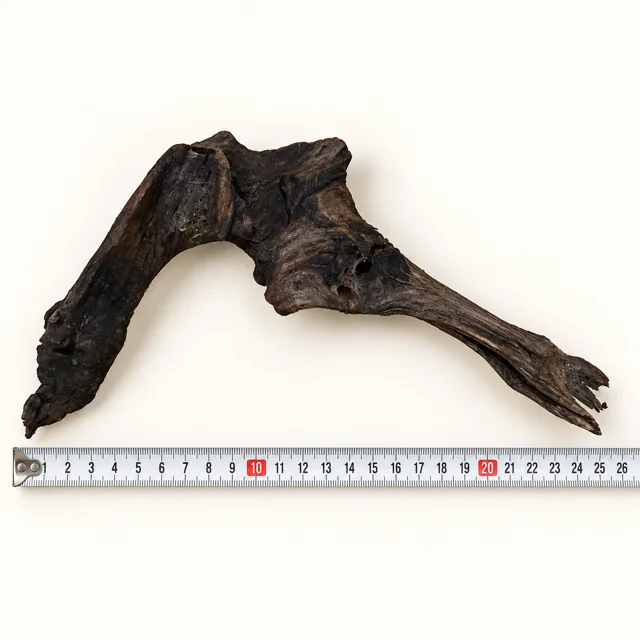
Catalogue photograph - material example, not the illustrated piece
Mangrove Root DriftwoodView product and options →BBA Worlds / Snails
Follow a ramshorn across a broad leaf, around a weathered branch and onto an open sandy path. A snail aquarium can be a planted garden, a current-washed grazing landscape or a warm mineralised lake-inspired habitat. Choose one approach around the animals, then give every surface a useful role.
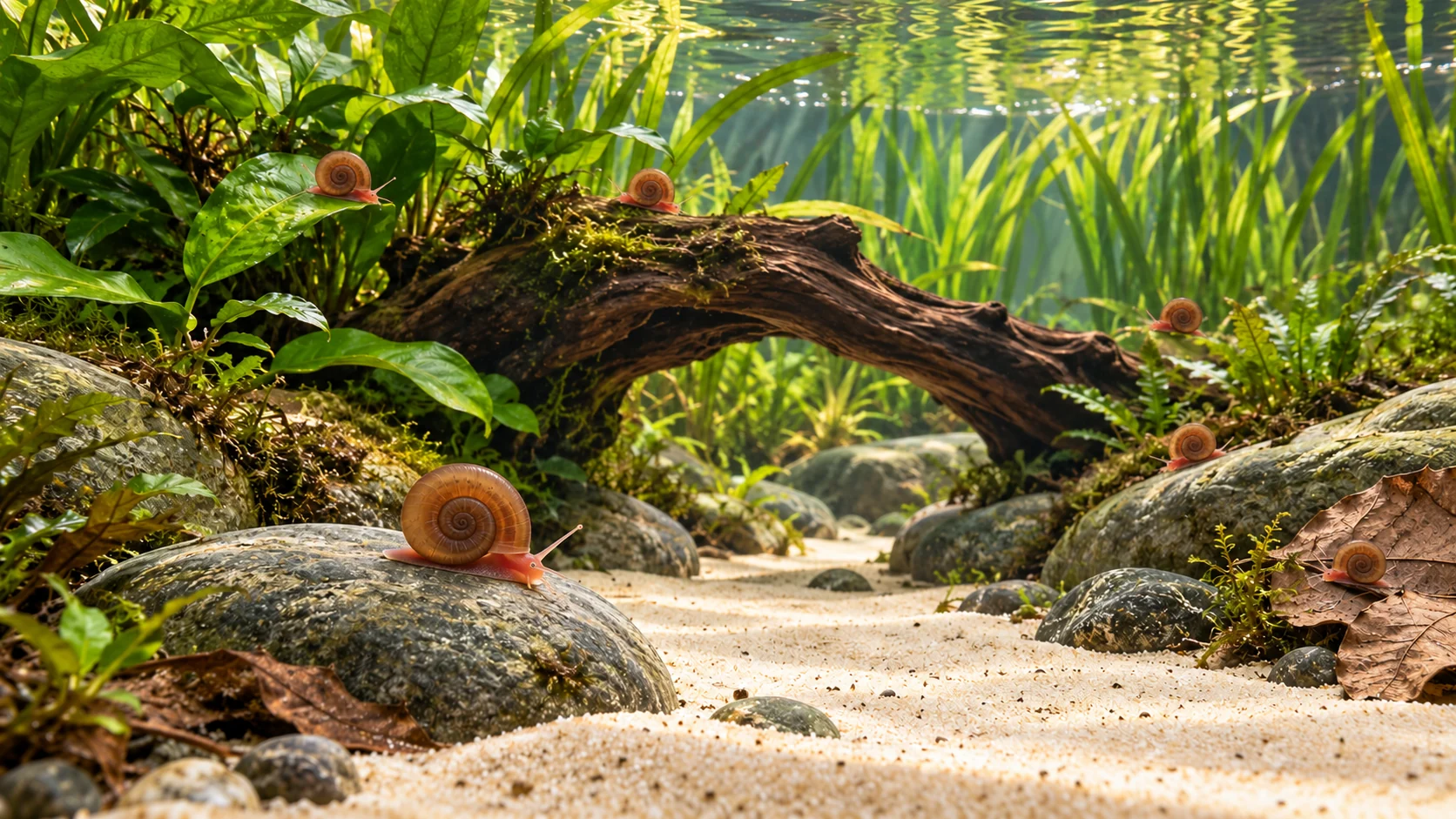
Notice the open floor, the broad leaves and the access around the wood. Natural materials create structure; mature filtration, suitable minerals and deliberate feeding make that structure habitable.
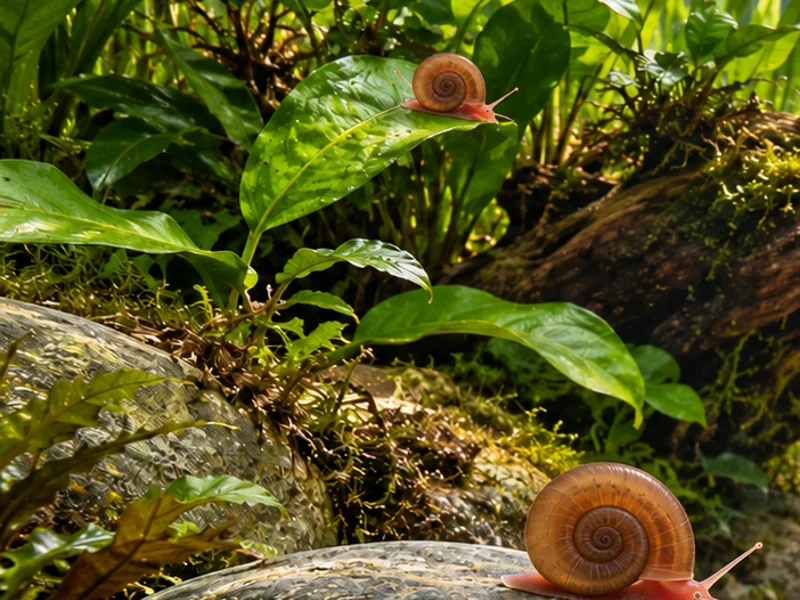
Planting creates grazing surfaces and shelter. Keep enough light and circulation for the plants, and leave the snails access to the water surface. Conditioned wood can support the arrangement without filling every gap.
Compare the real BBA material
Catalogue photograph - material example, not the illustrated piece
Mangrove Root DriftwoodView product and options →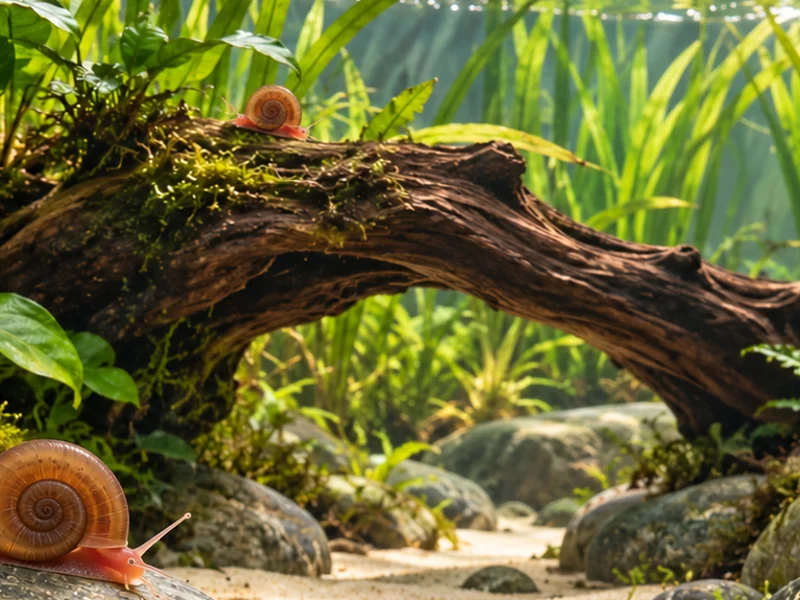
Secure wood so that it cannot shift. Leave routes beneath it wide enough for the adult shell and easy to inspect. Cholla is a smaller alternative texture: check its openings against the inhabitants rather than assuming every hollow is safe.
Compare the real BBA material
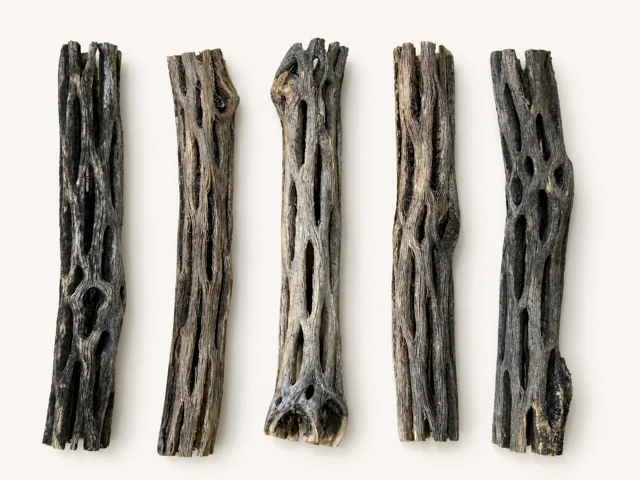
Catalogue photograph - material example, not the illustrated piece
Cholla Wood / Cactus SkeletonView product and options →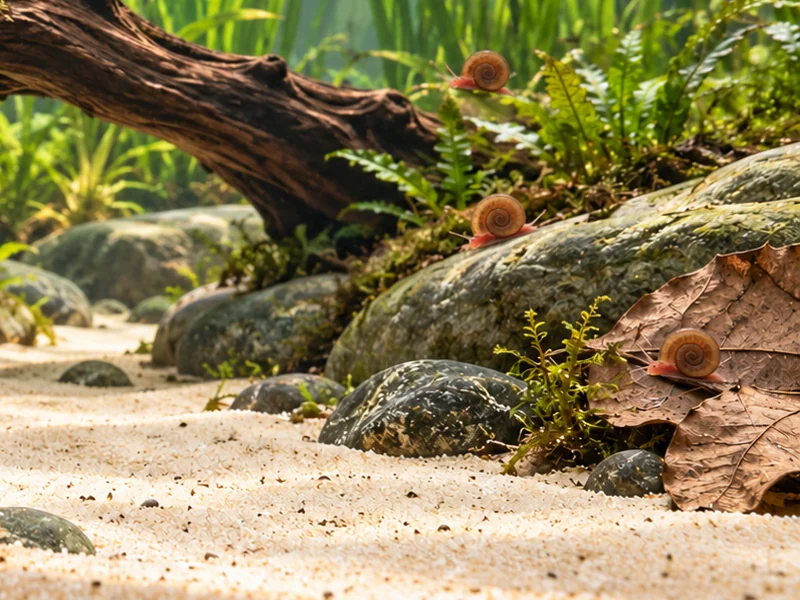
A few prepared leaves give the planted route an irregular edge and supplementary grazing. Start with a small portion and remove excess food. Mulberry leaves are one option; neither leaves nor tannins replace dietary calcium or appropriate water chemistry.
Compare the real BBA material
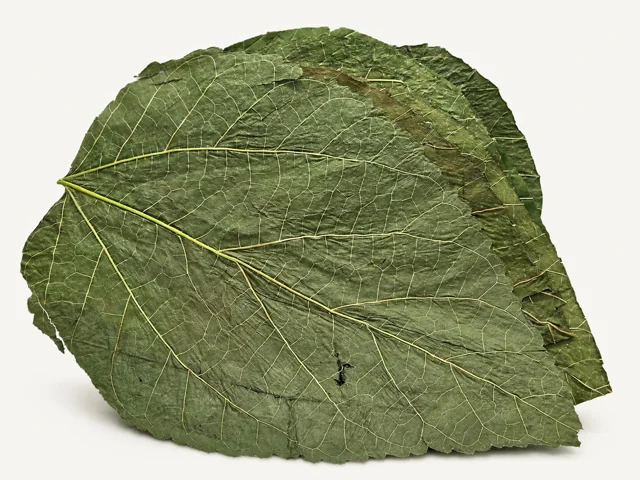
Catalogue photograph - material example, not the illustrated piece
Dried Mulberry Leaves – Aquarium Shrimp Food & Leaf LitterView product and options →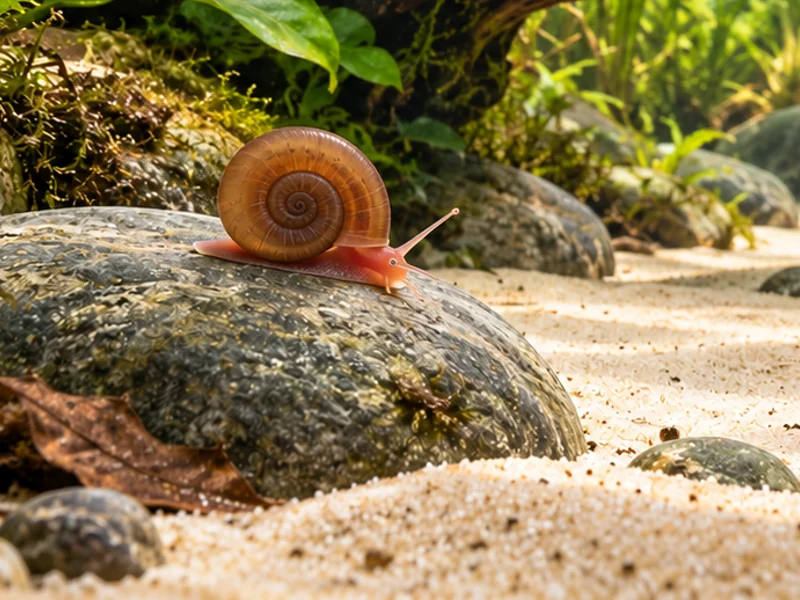
Use an accessible place for small measured food portions. Watch which animals actually eat and remove leftovers. A sinking grazing pellet can supplement the planted-snail diet; do not assume a specialist nerite will accept it.
Compare the real BBA material
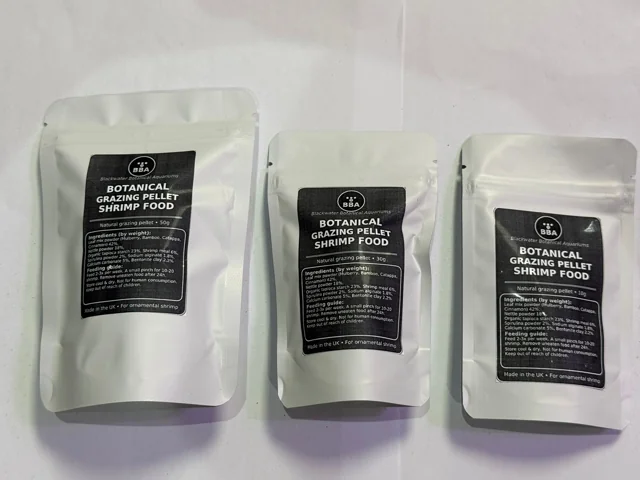
Catalogue photograph - material example, not the illustrated piece
Botanical Grazing PelletsView product and options →Choose the water, food and adult space for one coherent habitat. These alternatives are not instructions to mix all thirteen species in one aquarium.
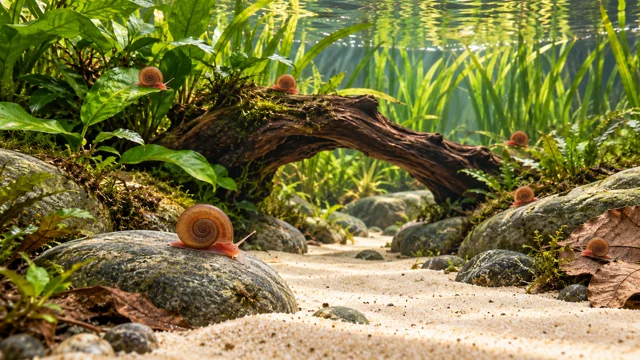
Planorbella duryi / Pomacea diffusa
A planted garden with wood, accessible grazing surfaces and a restrained leaf edge.
Planorbella can suit a modest established planted aquarium; the much larger Pomacea needs more floor space, waste capacity and a secure cover with a humid air gap. Follow each care profile separately. Keep stable, adequately mineralised freshwater, suitable surface access and balanced feeding. Use leaves sparingly and keep the substrate accessible.
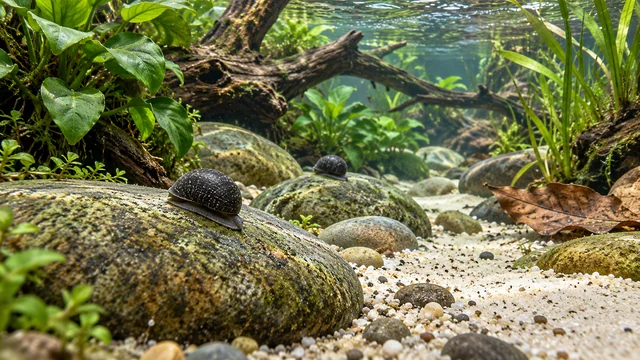
Neritina pulligera / Clithon corona / Septaria porcellana
Mature stone surfaces, established attached growth and well-oxygenated moving water.
Establish food-bearing surfaces before the animals arrive. Arrange stable stones without trapping gaps, and provide current appropriate to the species with sheltered resting areas. Neritina, Clithon and especially Septaria depend on actual grazing access; purchased wafers are not proof that they will eat. Maintain appropriate buffered mineral water. A little wood can add structure, but leaf decomposition must not displace the oxygenated stone habitat.
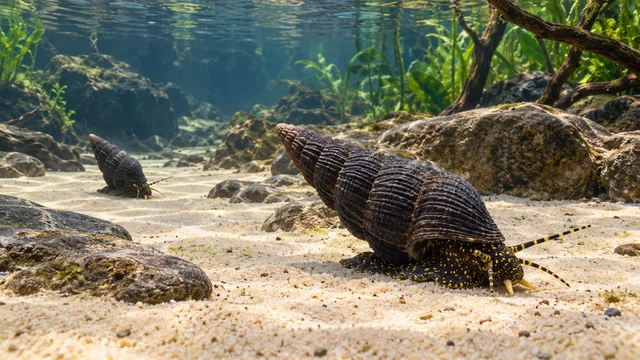
Tylomelania gemmifera / Tylomelania patriarchalis
Warm, stable, mineralised water with rocks, an open sand-and-mud-inspired floor and room for long shells.
This is not an acidic blackwater aquarium. The two Matano species are associated with soft bottom habitats, so a lake-inspired rocky composition still needs accessible sandy feeding space. Plan around adult shell length, steady warmth, filtration and oxygenation. Use the individual profiles for water preparation. Offer suitable measured food; a mineral product is not an automatic recipe for lake water. Avoid large acidifying leaf additions.
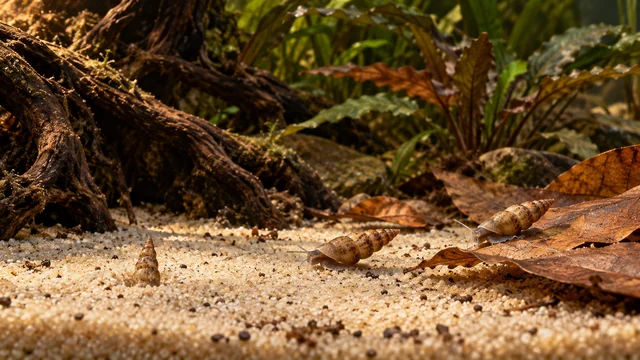
Melanoides tuberculata / Physella acuta
A fine sandy bottom with scattered leaves, shallow shelters and visible feeding access.
Melanoides burrows in fine substrate; Physella explores plants and surfaces and needs air access. Neither makes an overfed aquarium self-cleaning. Keep the leaf layer shallow, maintain circulation and inspect the floor during maintenance. Adjust feeding when populations increase and never release snails outdoors. Anentome helena belongs in a separate predatory-snail plan, not an automatic companion for this route.
The best shopping list follows the chosen species and water plan. No single leaf, food or bundle is a complete snail habitat.
Observe feeding rather than assuming every surface provides enough nutrition. These foods offer different supplementary options for suitable snails; specialist grazers may refuse them.
Select a modest leaf portion for the planted or substrate route. Different leaf sizes let you shape the margin without burying the feeding area. Introduce them gradually.
Compare the real dimensions and openings with the adult shell. Secure wood and leave inspection routes; a hollow form is useful only when the animal can enter and leave safely.
A bundle helps compare several feeding or leaf options, not an instruction to add every component. Dietary minerals and stable water are separate needs: follow product directions and the species guide.
Current BBA catalogue photographs and shopping links. Select for the individual habitat; BBA supplies these materials and foods, not the animals shown.
Different materials and foods have different roles. Compare the actual contents and the feeding response in your aquarium.
Rotate appropriate small portions as part of a balanced feeding plan. Do not add all of these together, and check that the intended snail accepts the food.
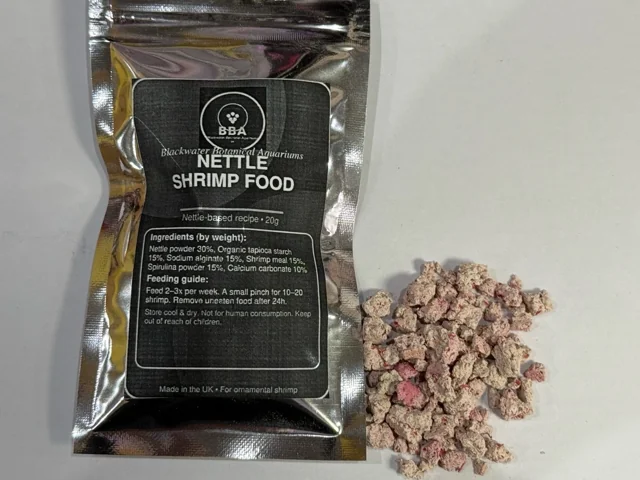
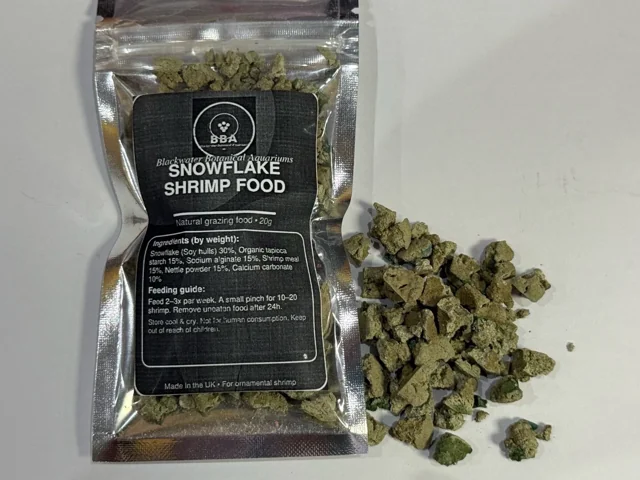
Read directions; not a replacement for water preparation
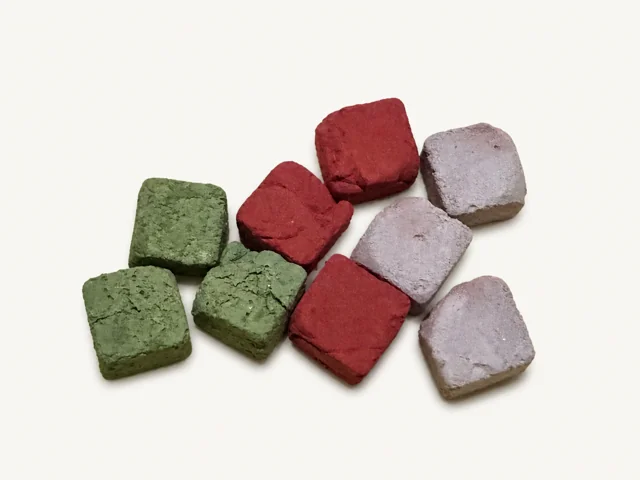
Calcium Mineral Grazing BlocksView product and options →Choose a manageable portion and keep access to the floor. A mineralised river or Sulawesi route does not need a dense acidifying leaf bed.
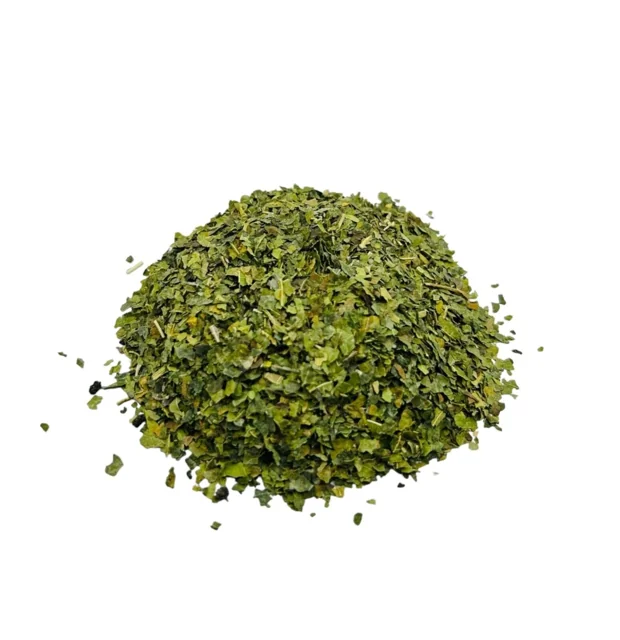
Small portions for a shallow leaf edge
Broken / Crushed Mulberry Leaf PiecesView product and options →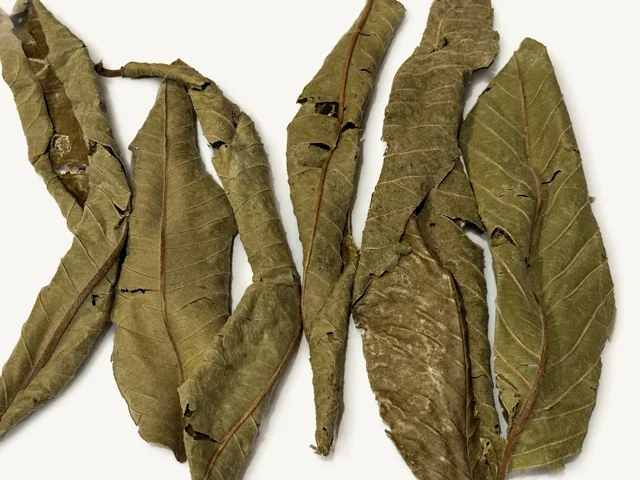
A different leaf shape and texture
Dried Guava Leaves – Natural Aquarium Leaf LitterView product and options →Inspect dimensions and openings for adult shells
Cholla Wood / Cactus SkeletonView product and options →Start with the snail and its food supply, then build the scene. A finished photograph cannot establish that an aquarium is ready.
Read its adult size, mineral needs, temperature and feeding requirements. Keep the four approaches separate and allow for larger shells.
Stabilise rocks and wood, check openings and leave usable maintenance routes. Match substrate grain and depth to the chosen species.
Cycle the aquarium and develop accessible grazing. Nerites and limpets need genuine established food-bearing surfaces, not just a recently assembled layout.
Rinse and prepare suitable leaves or wood. Add gradually and preserve oxygenation; darker water is not a measure of shell health.
Provide an appropriate diet, check access to food and stable mineral chemistry. Existing shell damage may remain visible; do not promise a product will reverse it.
Remove excess food, inspect burrowing and hidden areas, and make suitable water changes. Population increases often call for a feeding review.
Practical reading from the BBA Knowledge Centre, chosen for this World.
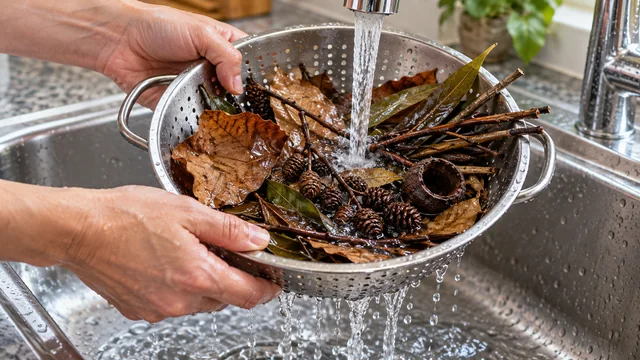
Prepare leaves and wood, then introduce them gradually.
Read the guide →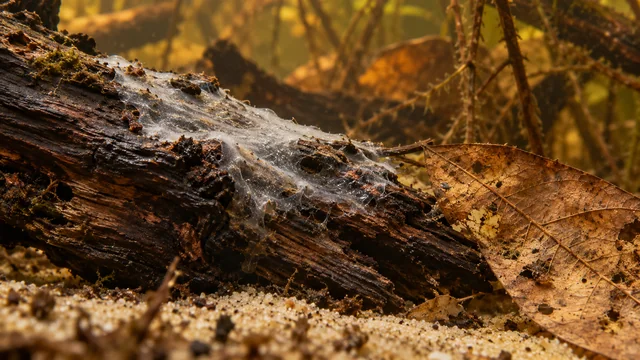
Recognise surface growth without confusing it with a complete diet.
Read the guide →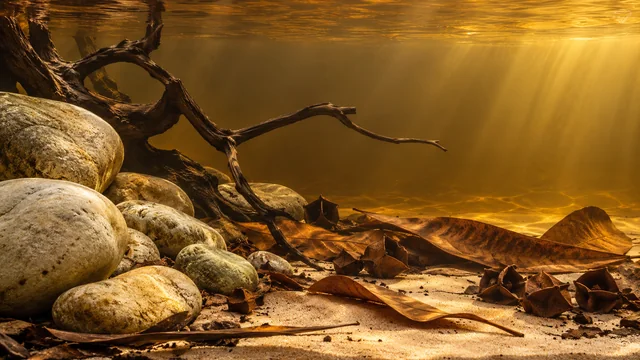
Keep colour, decomposition and oxygen demand in perspective.
Read the guide →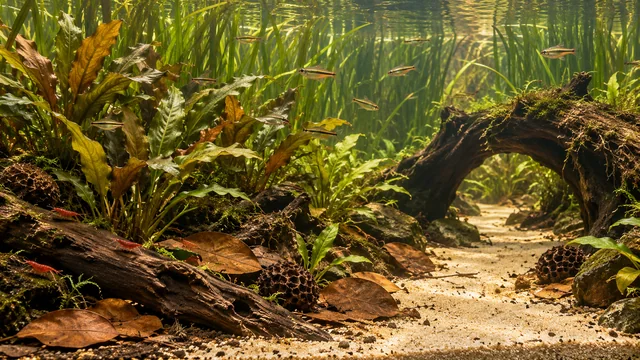
Balance planting, light and a manageable leaf layer.
Read the guide →Explore these separate species plans before choosing a habitat. Size, shell health, feeding and reproduction differ; this is not a community stocking list.
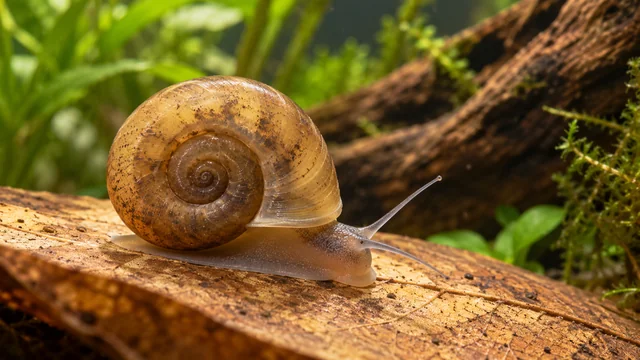 Seminole ramshorn snailPlanorbella duryiRead the species guide →
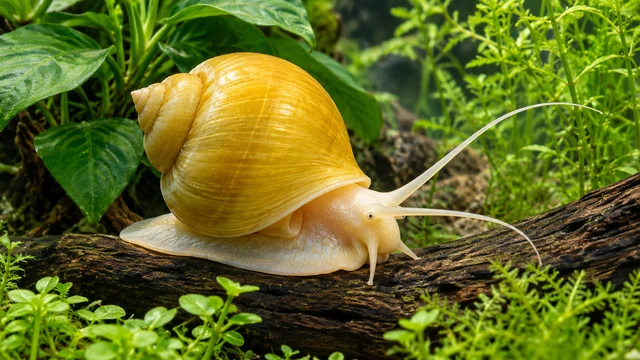 Mystery SnailPomacea diffusaRead the species guide →
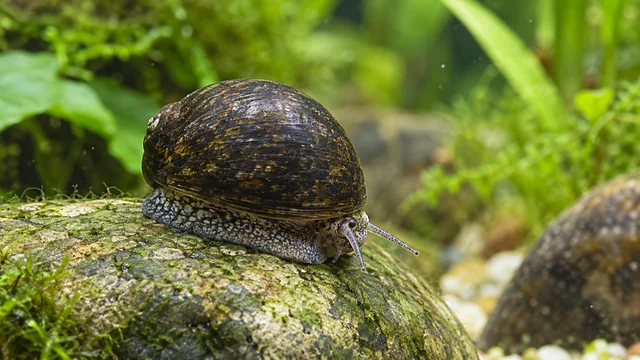 Military Helmet NeriteNeritina pulligeraRead the species guide →
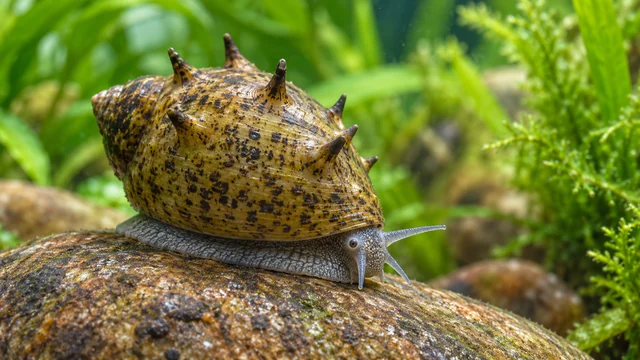 Horned NeriteClithon coronaRead the species guide →
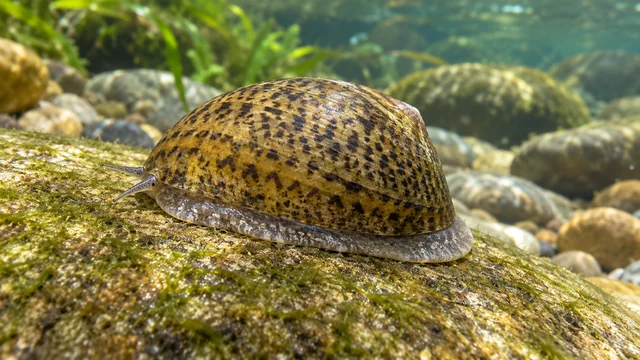 Freshwater Limpet NeriteSeptaria porcellanaRead the species guide →
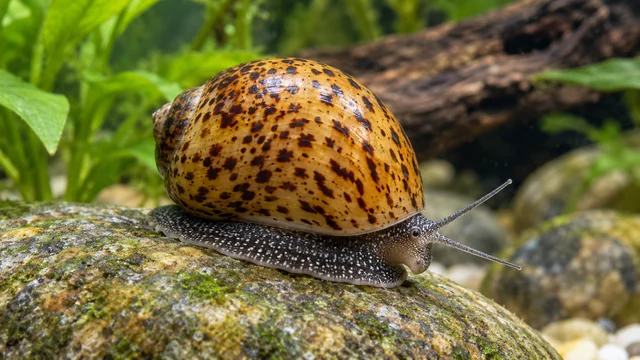 Spotted NeriteVittina natalensisRead the species guide →
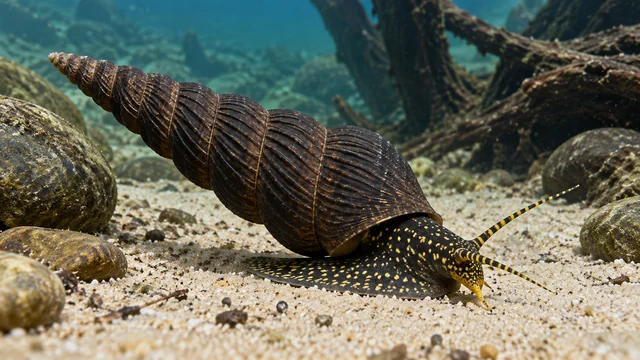 Rabbit SnailTylomelania gemmiferaRead the species guide →
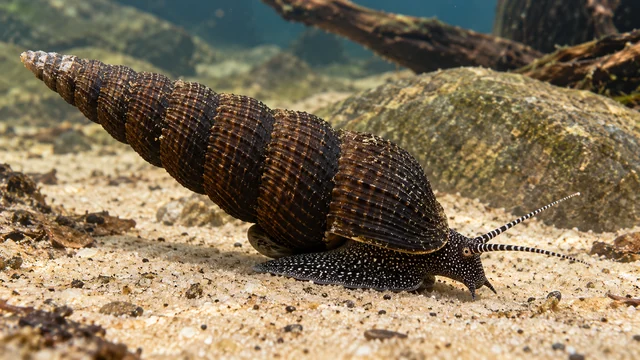 Matano Rabbit SnailTylomelania patriarchalisRead the species guide →
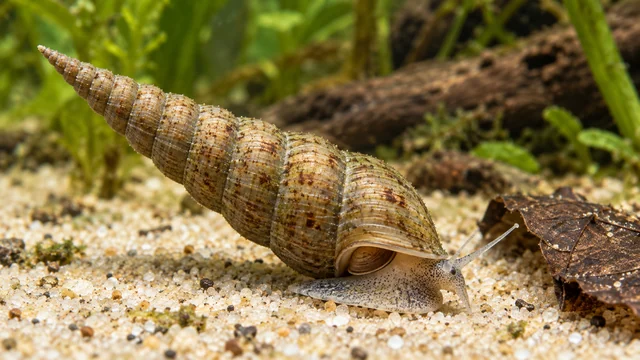 Malaysian Trumpet SnailMelanoides tuberculataRead the species guide →
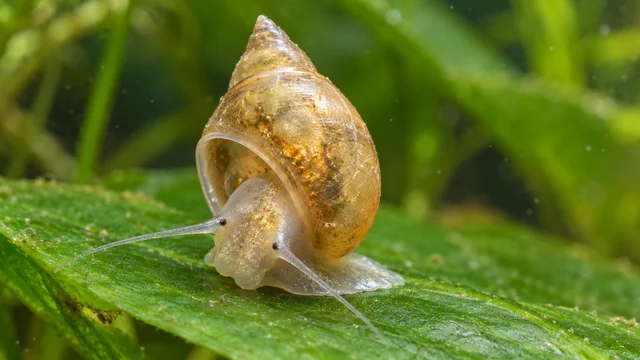 Bladder SnailPhysella acutaRead the species guide →
Choose one habitat, read the species guidance and buy the materials that add a useful role. Keep shell health, feeding and stable water at the centre of the design.