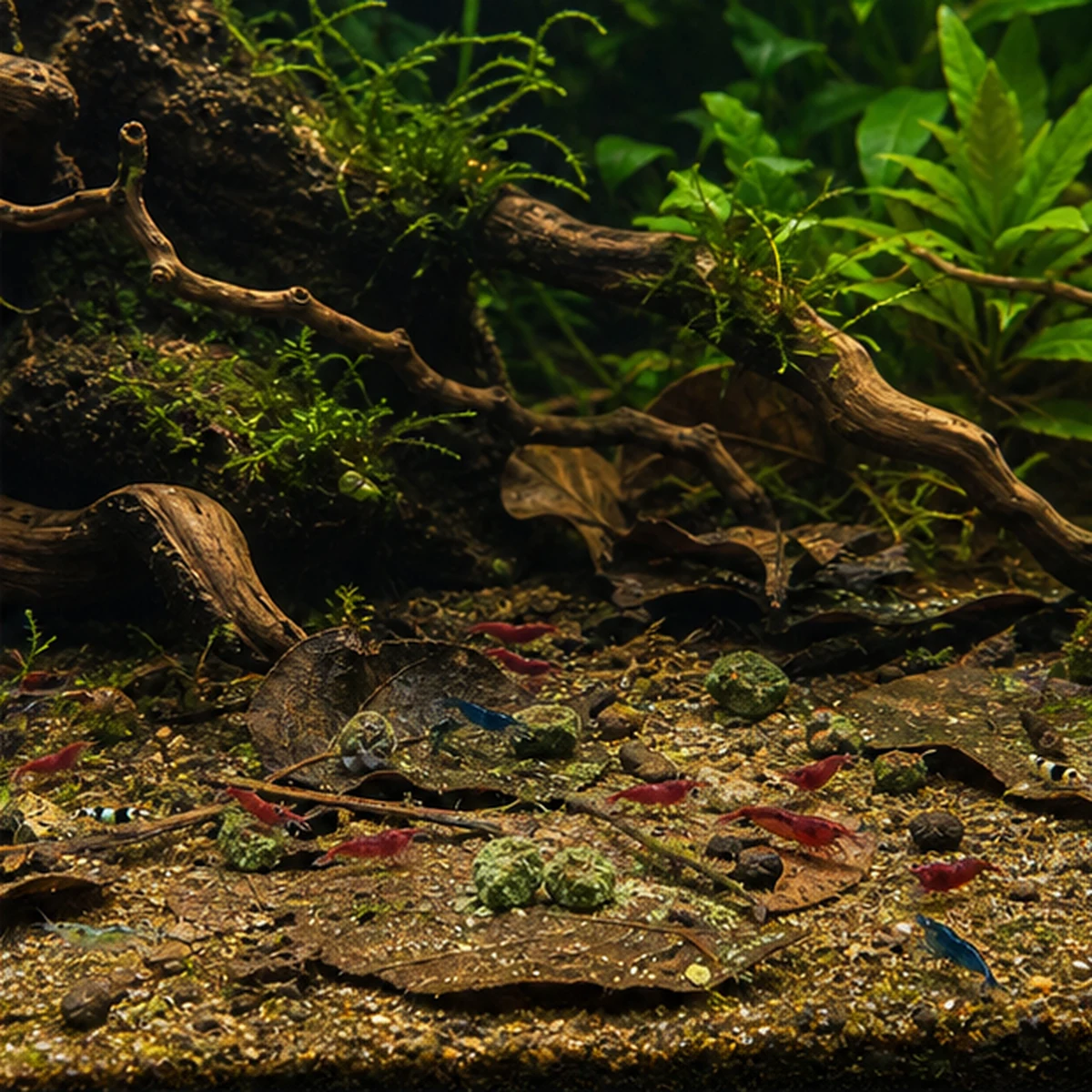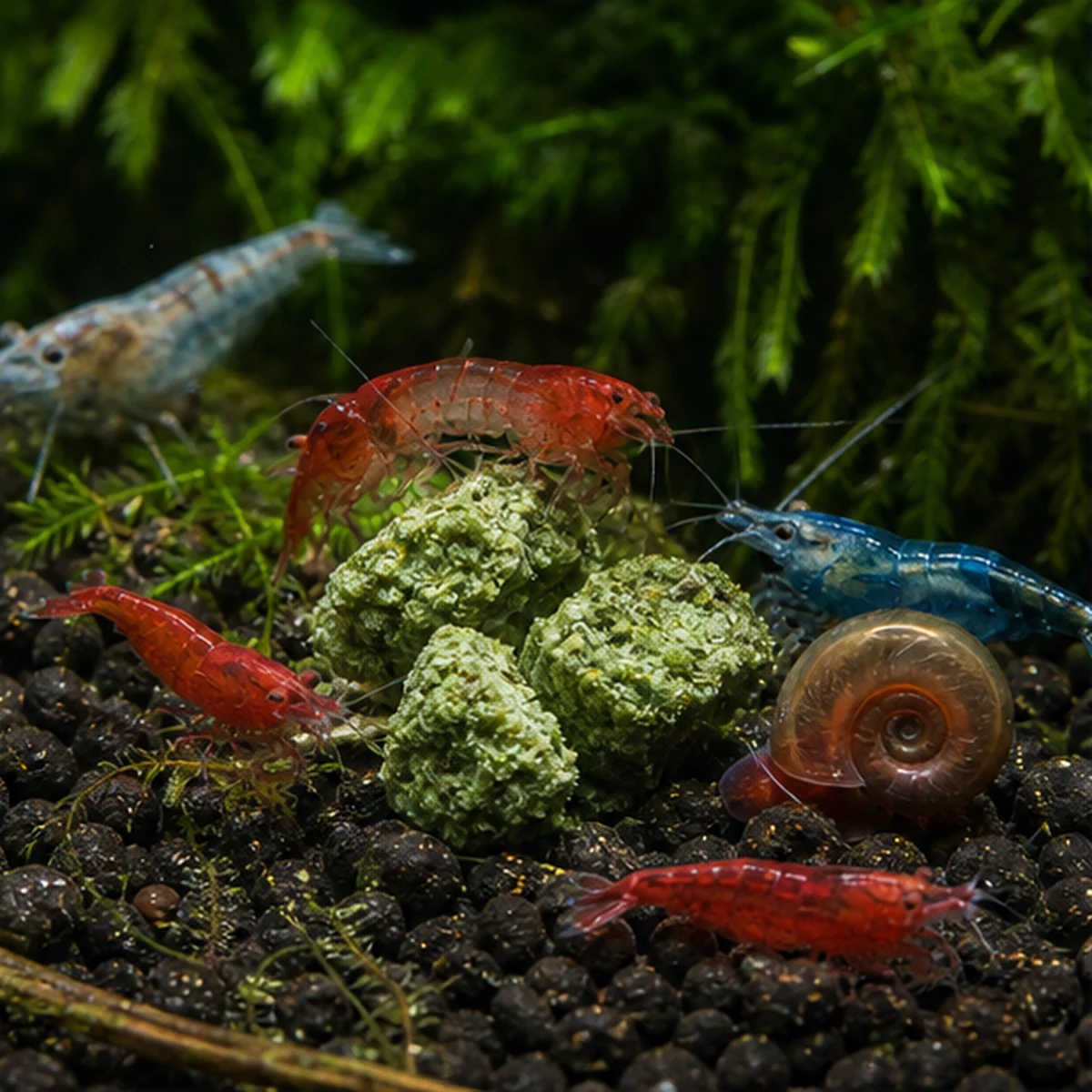
This recipe is made for slow feeding and steady grazing rather than disappearing immediately after it is offered.
FEEDING IN USE
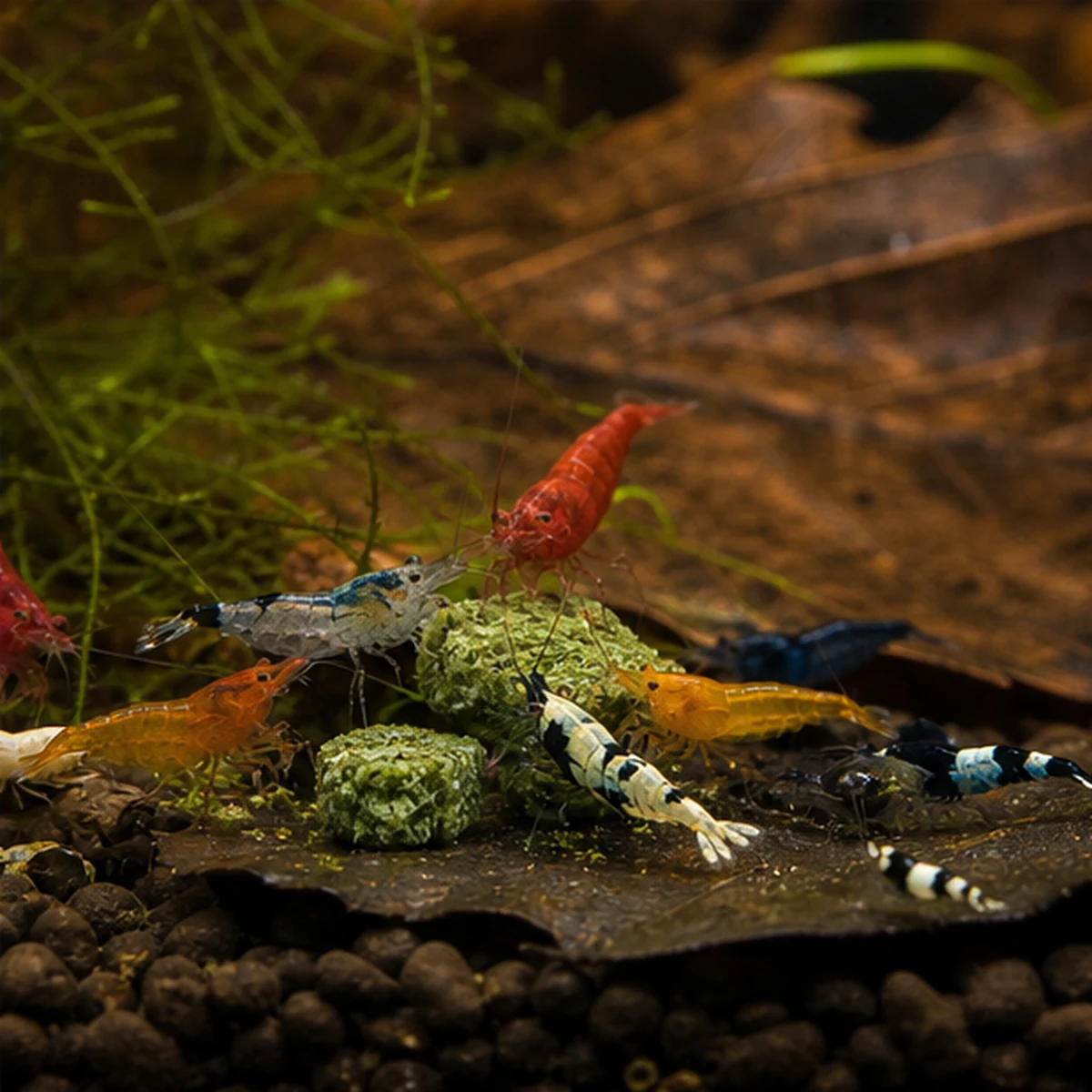
Nettle Shrimp Food during feeding
SLOW-GRAZING PIECES
Designed to remain available for gradual picking rather than disappear immediately.
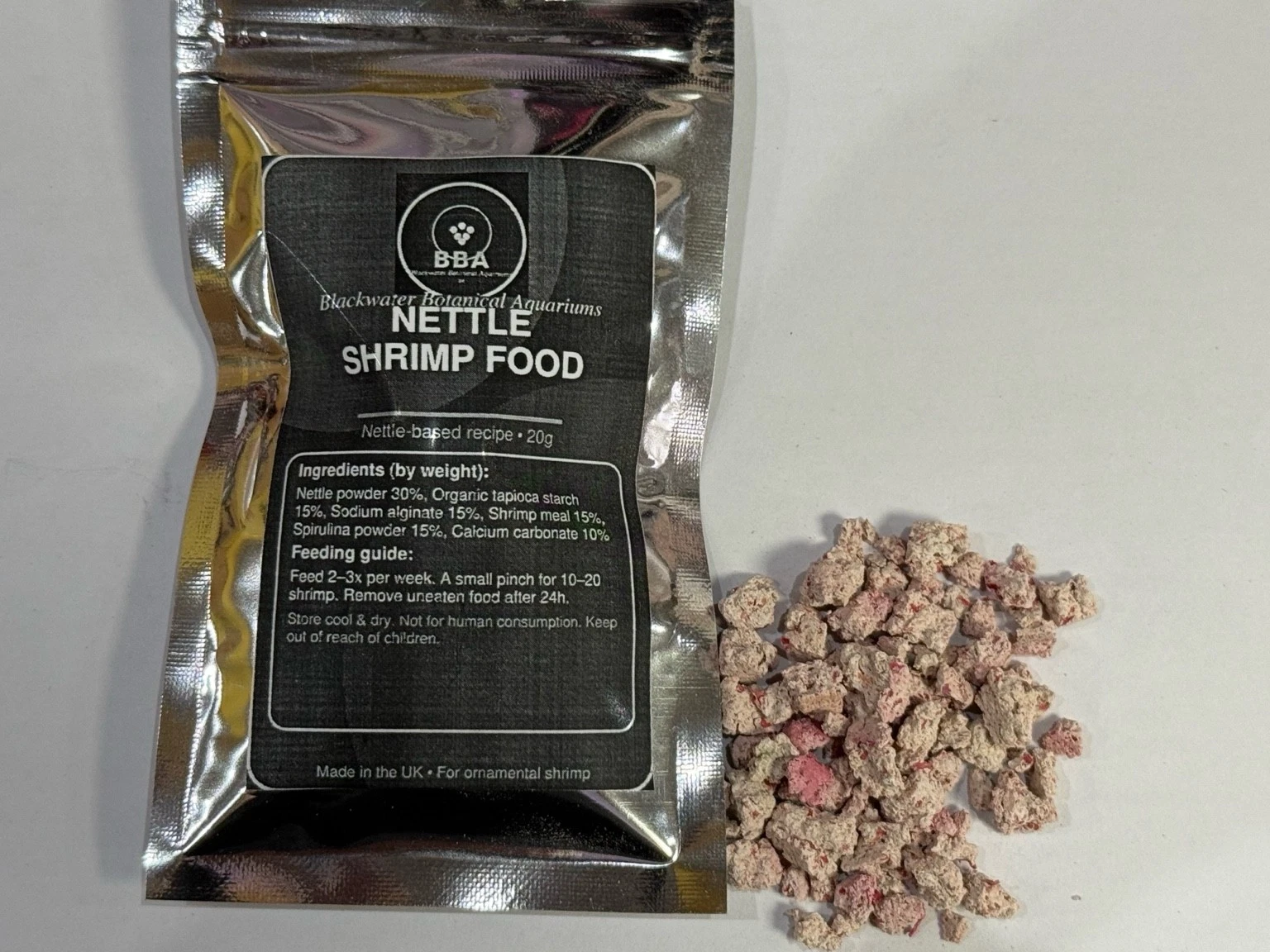
DIRECT FEEDING
Offer the food directly in an open feeding area where livestock can gather around it.
FEEDING DISH
Use a feeding dish when you want easier portion control and cleanup.
OBSERVE & ADJUST
Watch how much is actually grazed and adjust future portions instead of automatically adding more.
Before and after feeding
SAFETY & STORAGE
SAFETY
Feed sparingly as a supplementary food, not as the sole diet.
Do not overfeed; excess uneaten food can affect water quality.
Handmade pieces may vary slightly in size, shape and appearance.
For ornamental freshwater aquarium use only. Not for human consumption.
Keep the sealed product away from children and non-target pets.
STORAGE
Store cool and dry.
Keep the pack sealed between feeds.
Product-specific answers
FAQ
Is Nettle Shrimp Food plant-only?
No. The recipe is nettle-based but is not plant-only. It contains 15% shrimp meal alongside nettle, green spirulina and the other declared ingredients.
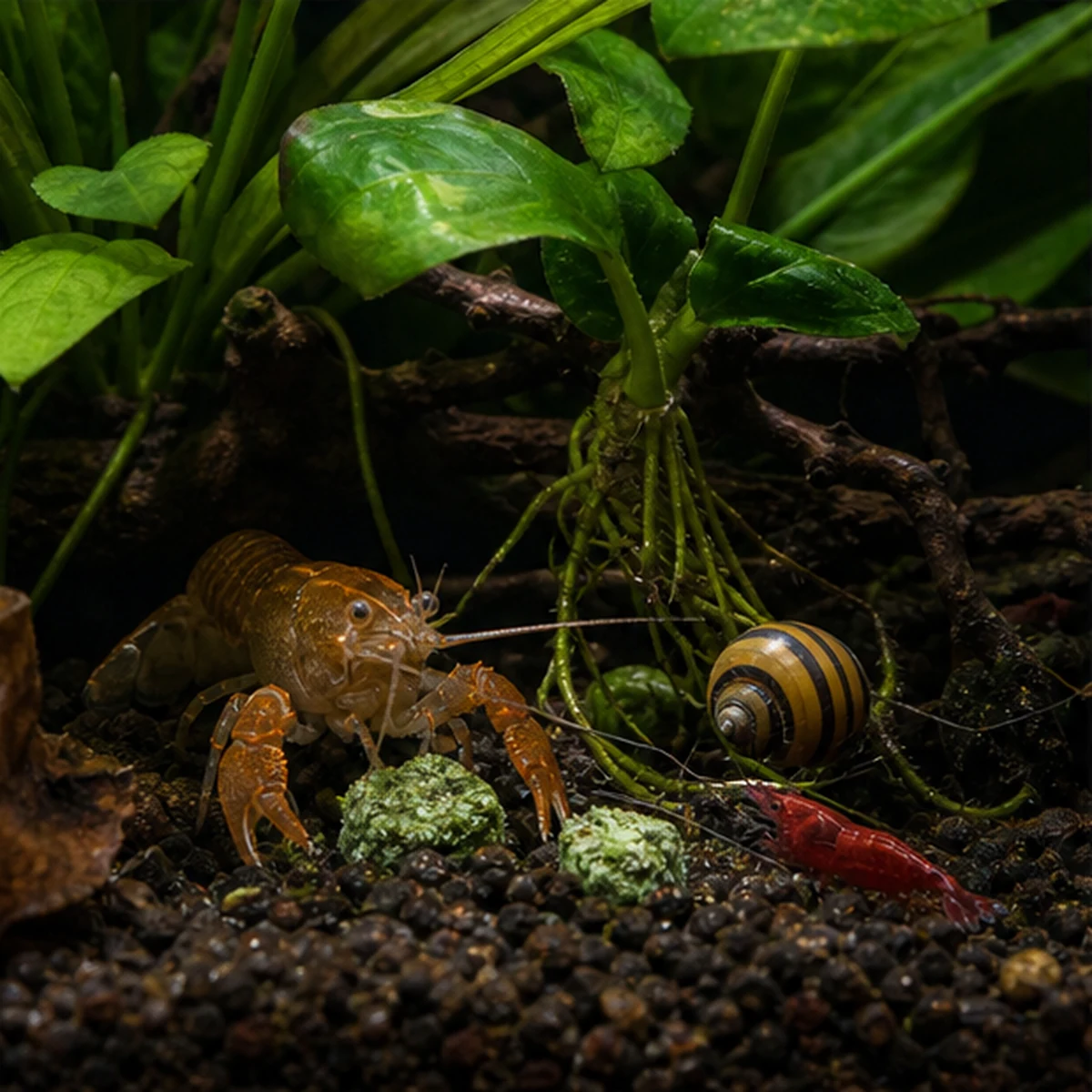
Can I feed this to snails or crayfish as well as shrimp?
Yes. This food is intended for freshwater shrimp, aquarium snails, crayfish and other freshwater invertebrates.
Can I use a feeding dish?
Yes. You can feed the pieces directly or use a feeding dish when you want easier control of the portion and simpler cleanup.
How do I know if I am feeding too much?
Start with the listed small portion and observe how much is grazed. If a significant amount remains uneaten, remove it after 24 hours and offer a smaller portion next time.
Can this be used as the only food?
No. Nettle Shrimp Food is a supplementary grazing food and should not be used as the sole diet.
Why do the pieces vary slightly?
The food is made in natural handmade pieces, so small differences in size, shape and appearance are normal.
DISCOVER MORE FROM BBA
Explore botanicals, habitat structure and other natural aquarium routes.