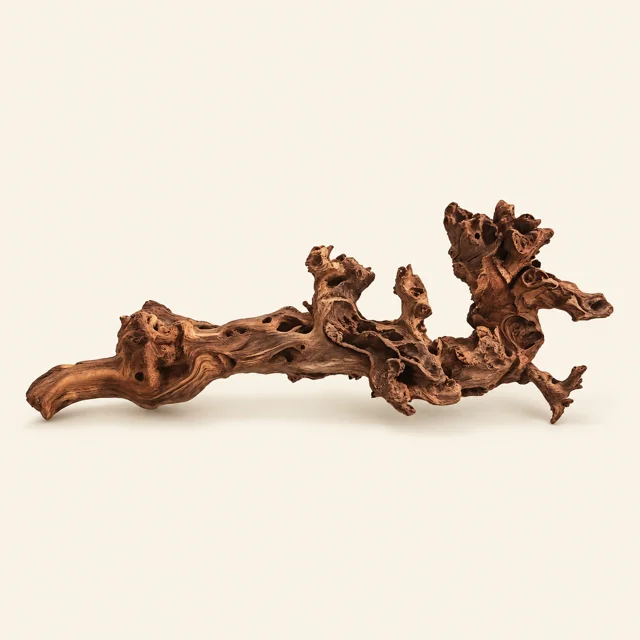
Catalogue photograph - material example, not the illustrated piece
Natural Gnarled Root Driftwood – Sculptural Aquarium & Terrarium HardscapeView product and options →BBA Worlds / Discus
A group of discus moves through deep, warm water beside substantial roots, with open sand below and space between the fish. Build around that scale and social life first. Explore wild Heckel, natural brown discus, planted captive-bred displays and the separate work of managing pairs and young fish.
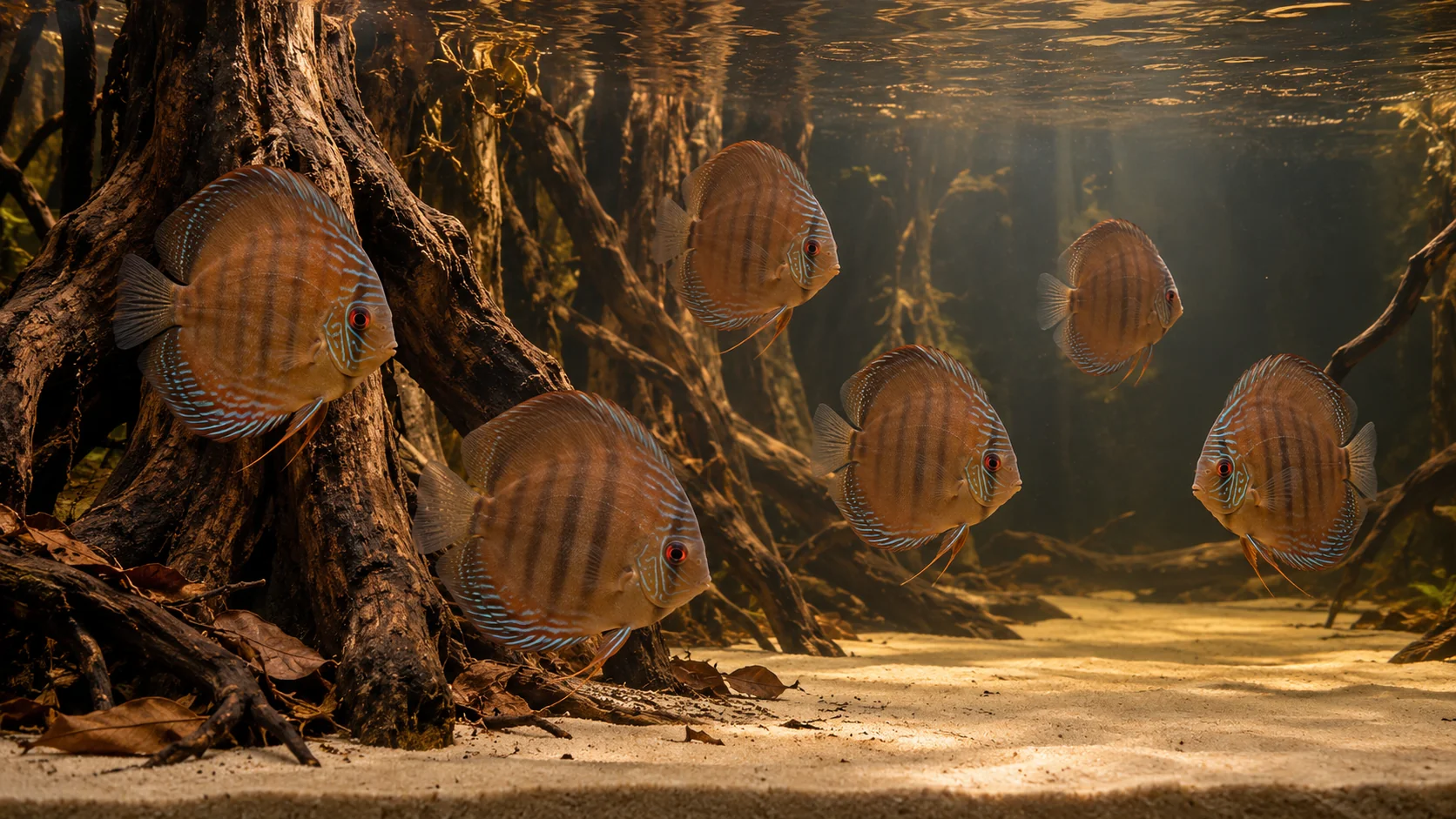
Discus need more than a beautiful backdrop: usable adult space, calm feeding access, warm stable water and effective gas exchange. Keep the root structure substantial without filling the swimming volume.
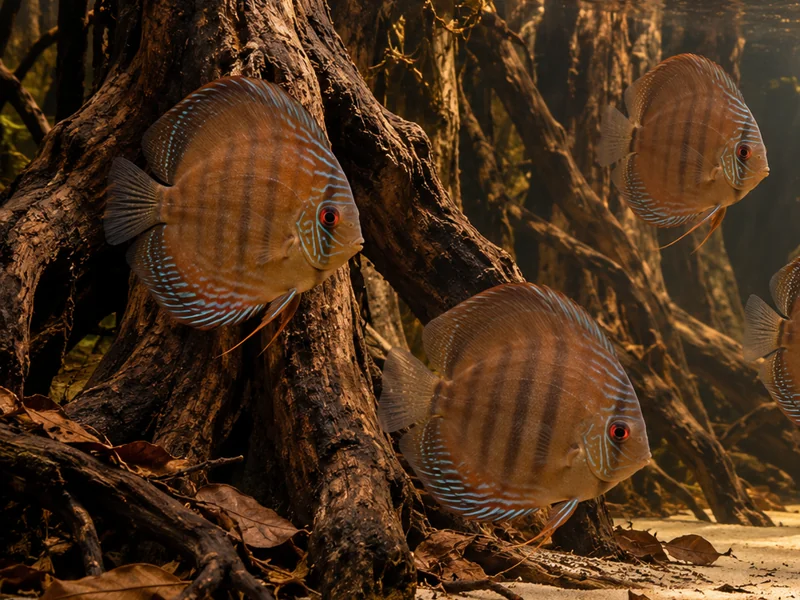
Place the main structure at a margin so the group can turn and pass comfortably. Gnarled Root Driftwood is a real form to compare; check the individual piece dimensions. The monumental illustrated root is a composition idea, not a promise that a small catalogue piece fills the same role.
Compare the real BBA material
Catalogue photograph - material example, not the illustrated piece
Natural Gnarled Root Driftwood – Sculptural Aquarium & Terrarium HardscapeView product and options →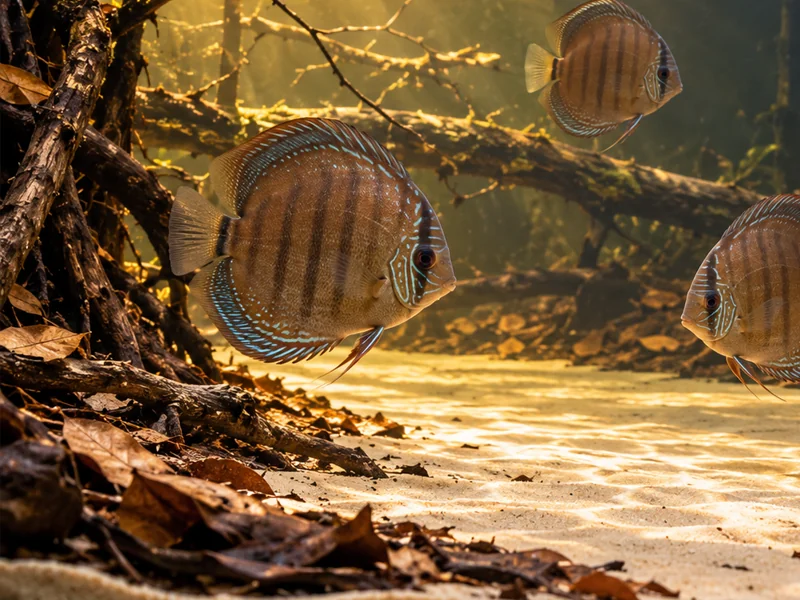
Gather prepared leaves at a sheltered edge rather than burying the entire floor. Catappa offers one broad-leaf option. Keep access for removing leftovers and observe decomposition; extra tint does not measure oxygen, waste or water suitability.
Compare the real BBA material
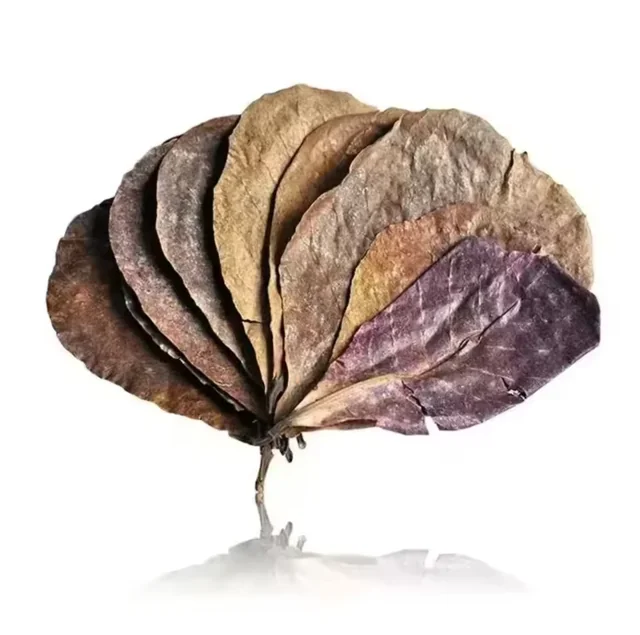
Catalogue photograph - material example, not the illustrated piece
Indian Almond / Catappa Leaves – Aquarium BotanicalsView product and options →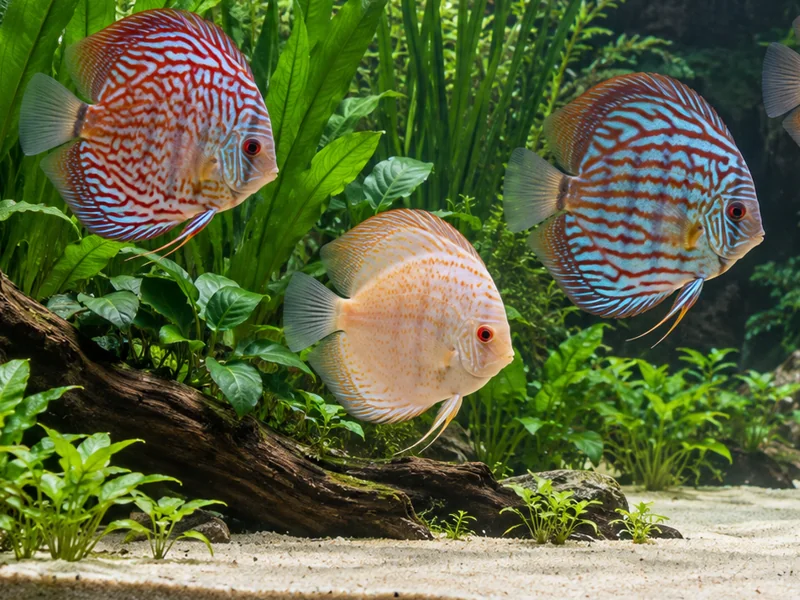
Choose plants that can tolerate the actual warm-water routine and keep circulation through the planting. Mangrove Root can support a planted margin. Match the established captive-bred stock’s conditions rather than forcing every ornamental strain into a wild Heckel recipe.
Compare the real BBA material
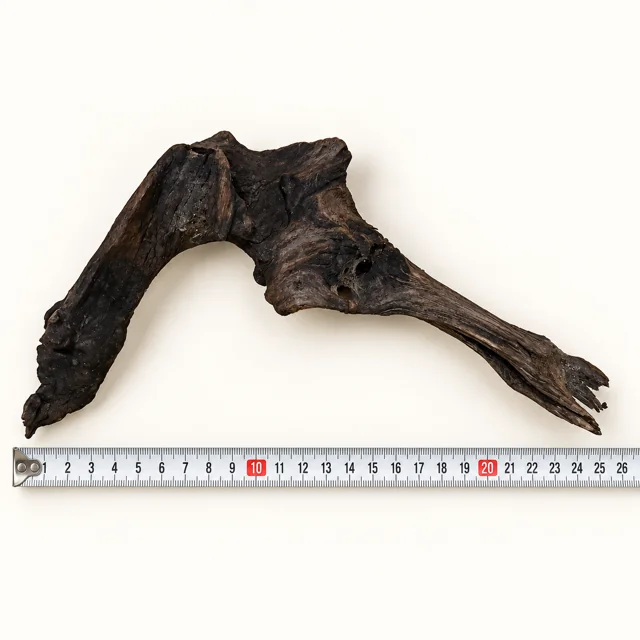
Catalogue photograph - material example, not the illustrated piece
Mangrove Root DriftwoodView product and options →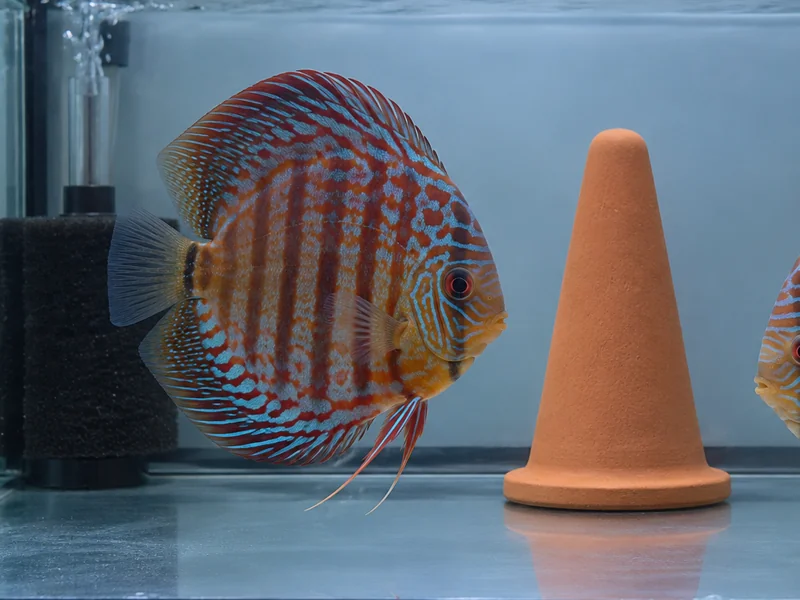
A simple dedicated setup can make food access and cleaning easier to observe. Soft Artemia food is one catalogue option for suitable fish; choose an appropriate portion and remove excess. The cone shown is equipment context, not a claim that BBA sells it or that this is a proven breeding pair.
Compare the real BBA material

Catalogue photograph - material example, not the illustrated piece
Artemia SuperSoft Fish FoodView product and options →These are separate habitat and life-stage plans, not instructions to combine unrelated populations or treat a breeding tank as an adult-group display.
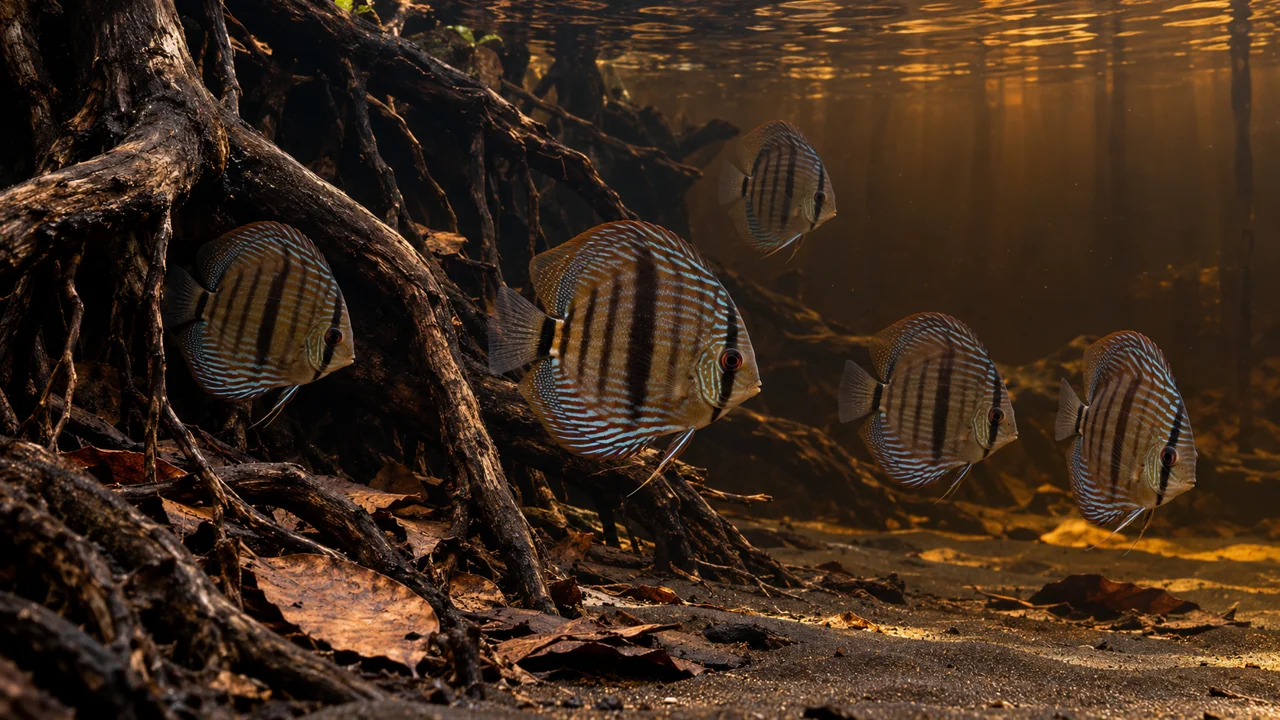
Symphysodon discus / Rio Negro inspiration
A shaded root margin with soft dark-water character, deep open water and deliberate specialist care.
The strong central fifth bar helps distinguish the Heckel presentation. Use the existing species profile’s taxonomy and documented stock history. Around 28–30°C, very soft acidic water and effective gas exchange need a repeatable preparation and maintenance routine. For five or six adults, the guide plans genuinely large quarters around 150–180 × 60 × 60 cm gross. Shade and appropriate leaves can complement the plan; tannins do not replace water preparation or filtration.
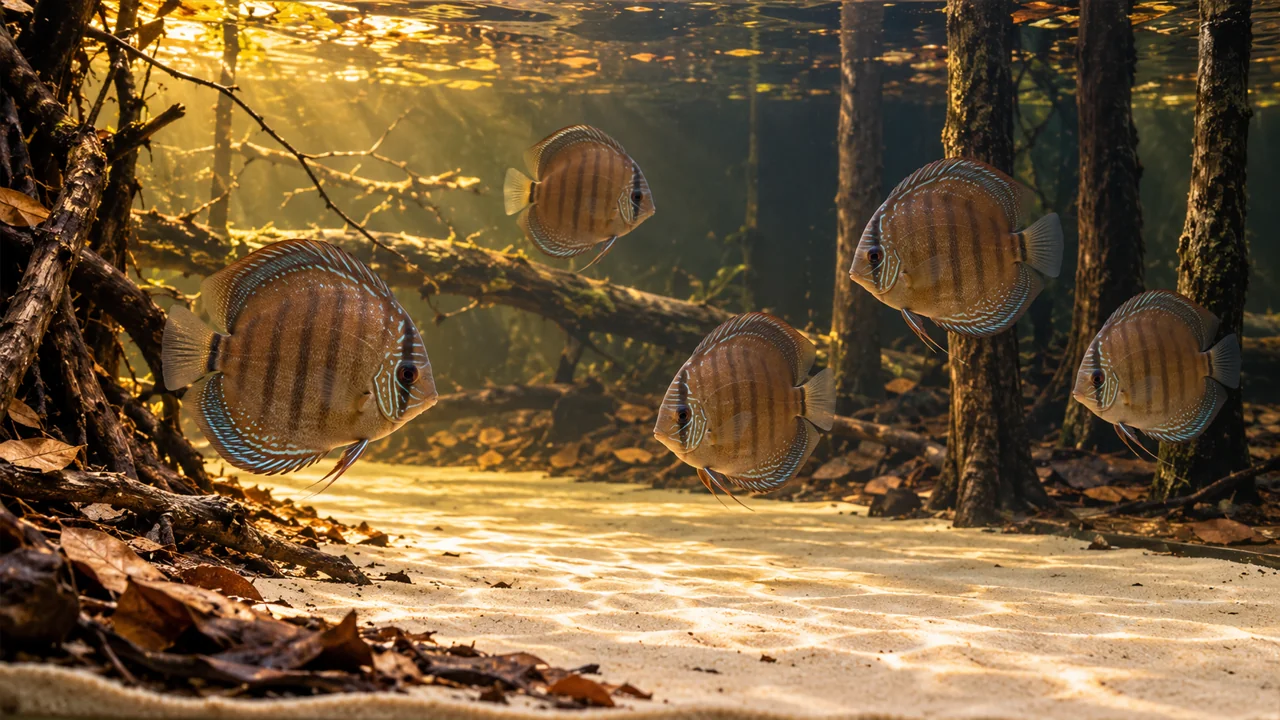
Natural brown discus / flooded margins
Open sand, widely spaced submerged trunks and a loose leaf edge inspired by flooded forest margins.
The natural brown phenotype here follows the scope of the existing aequifasciatus article; it is not a label for every blue, green or domestic discus. Its practical wild-origin framework differs from Heckel: around 26–29°C, commonly near 28°C, and a soft-water plan informed by the stock’s history. Keep screened edges and room for each fish to feed. A flooded-forest design is not automatically densely planted or covered in deep decomposing litter.
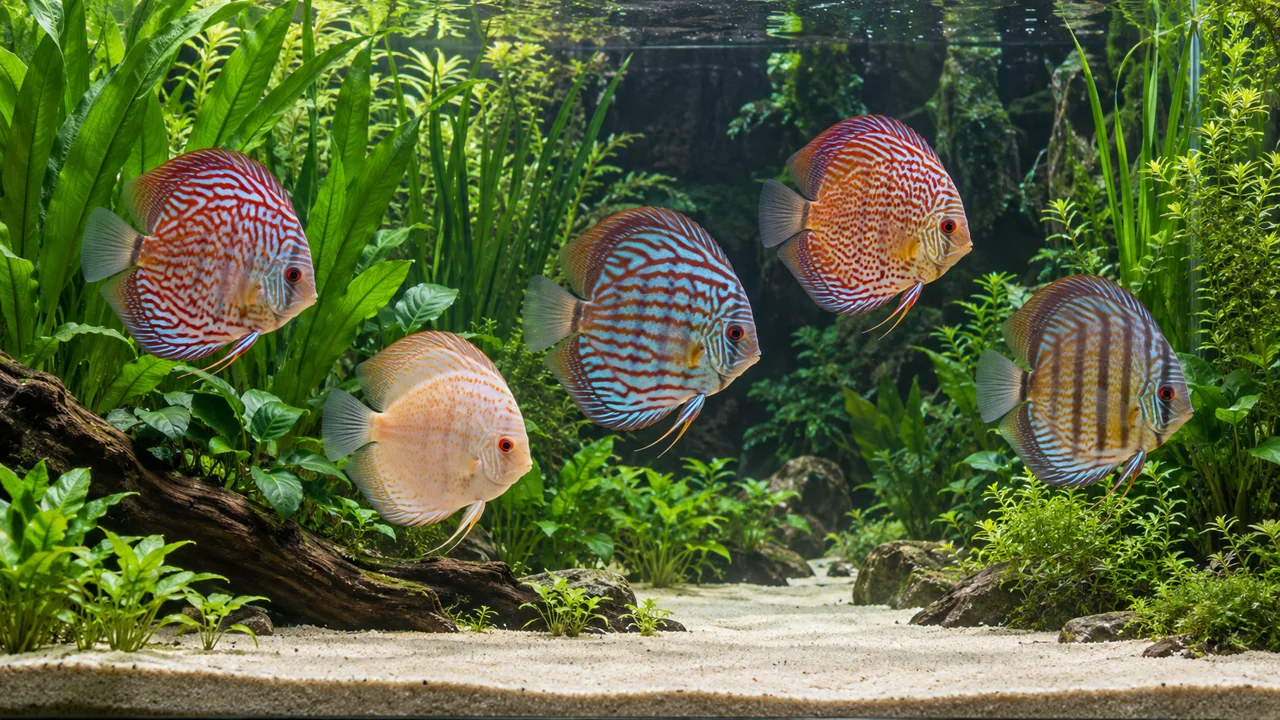
Established captive-bred stock / clear-water planting
A green planted display with a broad swimming bay, low wood and manageable access around the floor.
Match temperature, minerals and replacement water to the established stock, and select plants and equipment that support that routine. Not all captive-bred strains have identical requirements, and strong amber tinting is not compulsory. Keep oxygenation, feeding access and waste removal ahead of planting density. Angelfish reading offers a useful comparison of adult height and territorial behaviour, not an automatic recommendation to house both together.
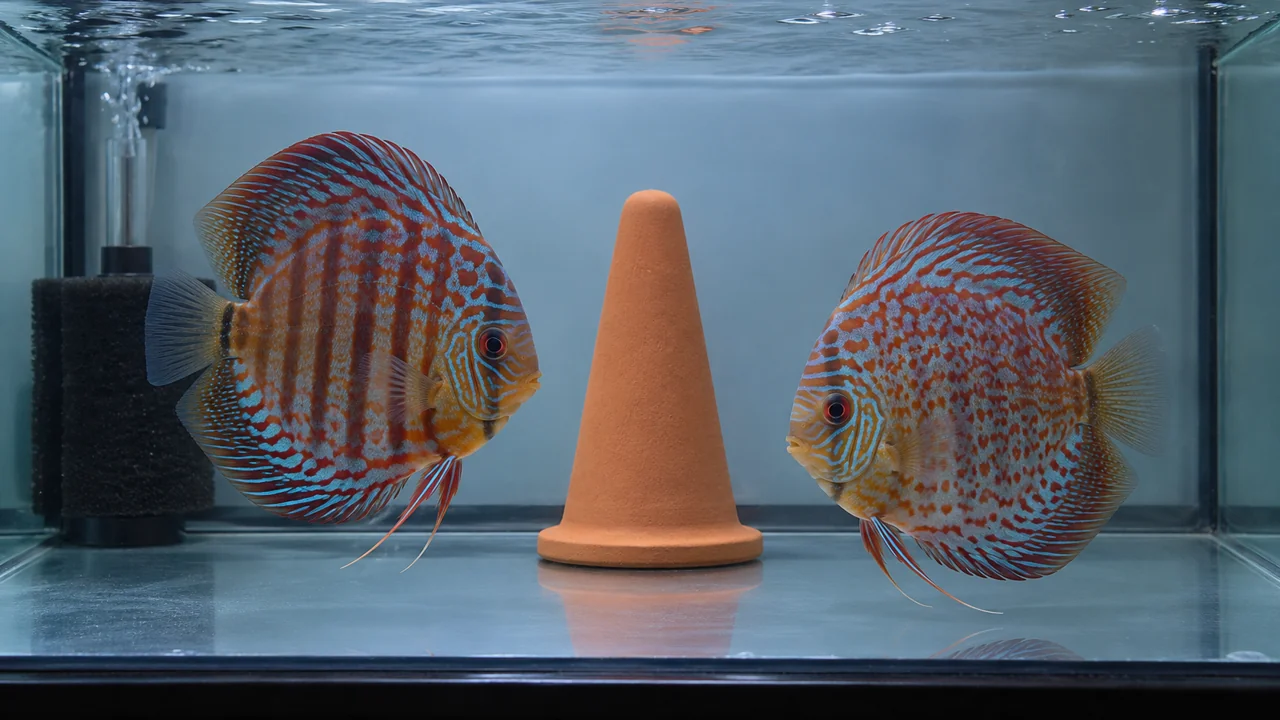
Adult groups / dedicated pairs / juveniles
Social observation and life-stage-specific care, illustrated by a simple dedicated pair-setup concept.
Adult groups need enough space and reliable individual feeding access; watch persistent exclusion and keep a separation plan. A breeding pair needs its own preparation, appropriate spawning surfaces and quiet observation. Discus lay eggs on a surface, and early free-swimming fry initially depend on parental skin mucus. Juveniles need suitably sized frequent feeding and diligent waste control, not simply the adult display’s routine scaled down. The pair scene shows no eggs or fry and makes no claim of breeding success.
Meet the fish I bred and raised, shown here in my actual group photograph.
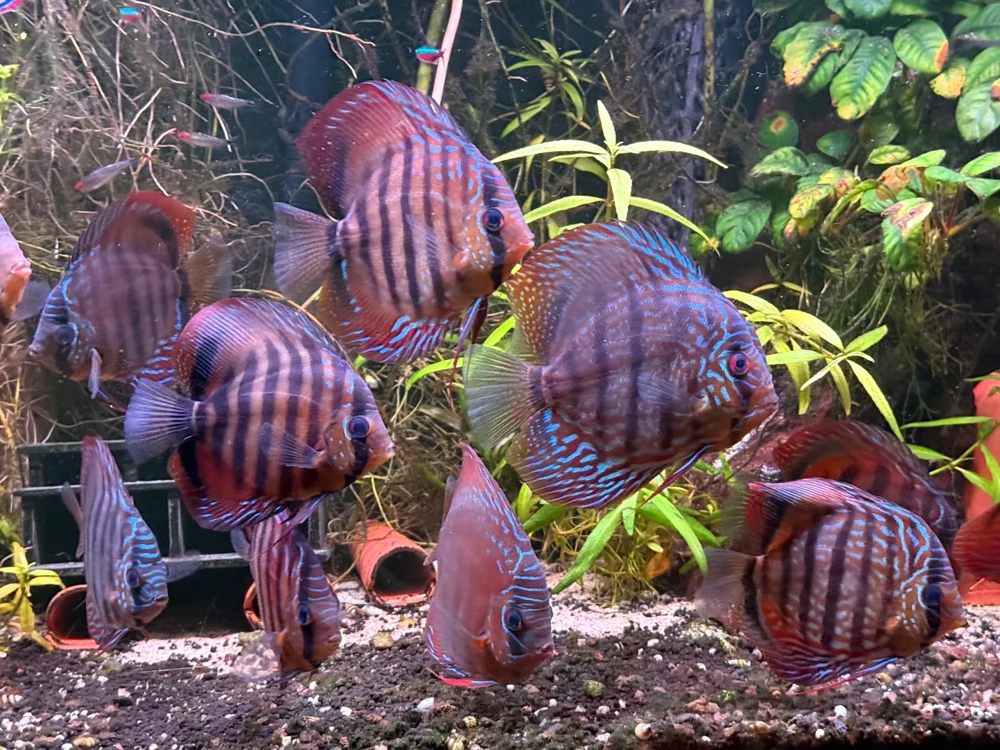
I bred and raised these F1 discus from a wild-caught male Blue Heckel and a wild-caught female Cuipeua. Both size groups come from the same parent pairing. These are my captive-bred crosses, not wild-caught fish or a separately recognised species.
I raise this group on a varied prepared-food diet; they have never been fed live food or worms. The food suggestions elsewhere on this page are general options for suitable discus, rather than a record of what I have fed this group. I offer individual fish, with no guaranteed sex or confirmed breeding pair.
I strongly prefer collection by appointment, so you can see the available group and choose your fish. Open my listing for the current size options and contact me to arrange collection. Shipping is considered only by prior agreement.
A few well-positioned structural elements matter more than a dense collection of small pods. Compare real dimensions and introduce organic materials gradually.
Compare the current Gnarled and Mangrove Root shapes for the main structure. Fine Root bundles add smaller marginal lines. None of these listings guarantees a single root the size of the illustrated tree; assemble a stable, adult-scale plan with maintenance access.
Catappa, mangrove and cacao leaves give different shapes along a protected edge. Alder cones are small botanical additions, not a reliable mineral or pH recipe. Keep the warm aquarium oxygenated and observe the fish and decomposition.
Read the XXL and Grand Box contents rather than equating a box title with suitable fish housing. The Grand Box is a large 800–1600 L catalogue collection. Choose useful components and add them gradually; do not empty a high-count pack into a display simply for a darker photograph.
Premium Freeze-Dried Australian Blackworms is an actual Bio Pigment Plus cube product with blackworms, spinach and spirulina listed. Compare it as a supplementary option for suitable fish alongside an appropriate varied diet. Soft Artemia is another real prepared food. Observe acceptance and portion size; these recommendations do not describe the feeding history of my F1 group.
Current catalogue photographs, options and availability. Match them to the actual aquarium and fish rather than buying a complete picture.
Choose each supply for a practical role. You can meet my own F1 discus in the separate feature above and use the product links below to compare habitat materials and foods.
Keep the central swimming space open. Compare a smaller root line and different leaves for restrained edges; these are not compulsory additions to every discus aquarium.
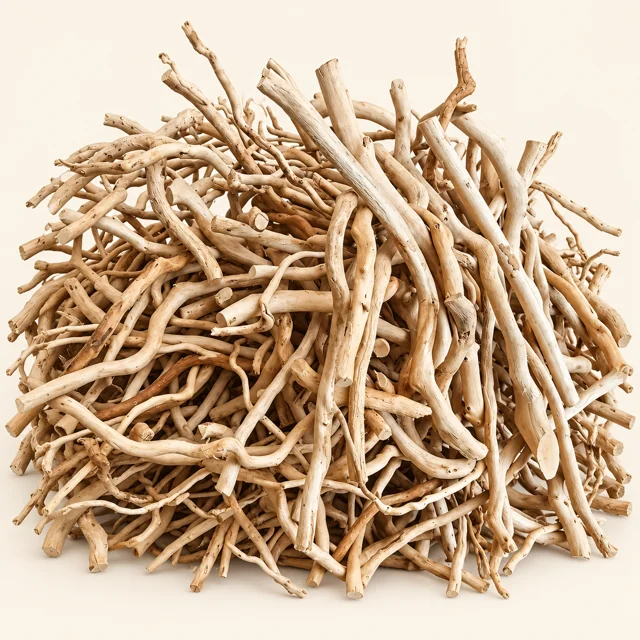
Smaller branching detail at a sheltered edge
Natural Fine Root Driftwood – Botanical Root BundleView product and options →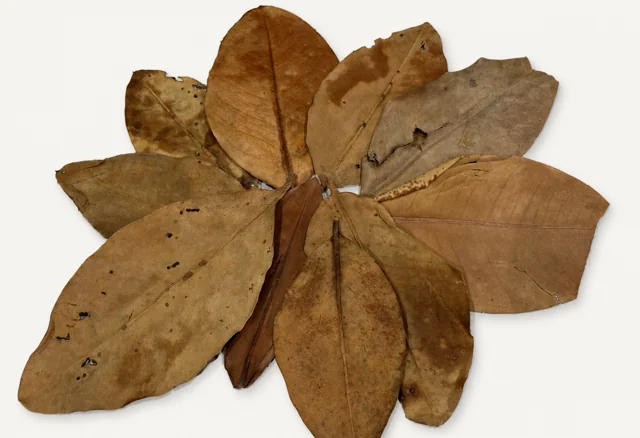
Compare leaf size and shape
Premium Mangrove Leaves – Natural Aquarium Leaf LitterView product and options →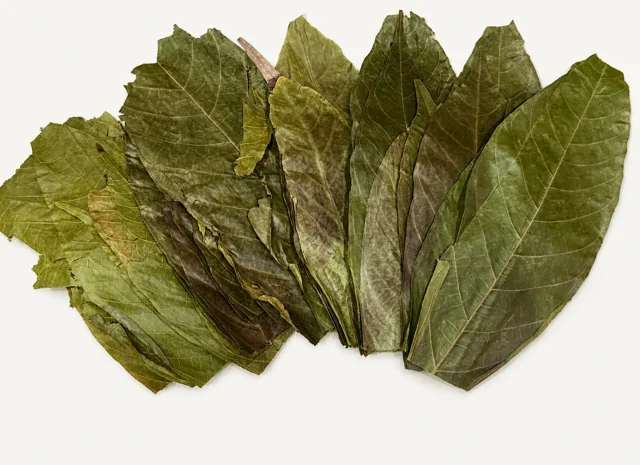
An alternative broad-leaf texture
Ceylon Cocoa (Cacao) Leaves – Natural Aquarium Leaf LitterView product and options →Read ingredients, portions and collection sizes. A large botanical pack is a supply to select from; food must fit the actual fish and feeding response.
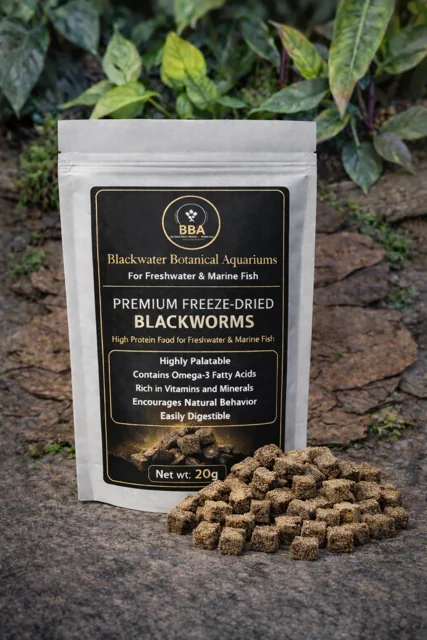
Actual freeze-dried cube product; read ingredients
Premium Freeze-Dried Australian BlackwormsView product and options →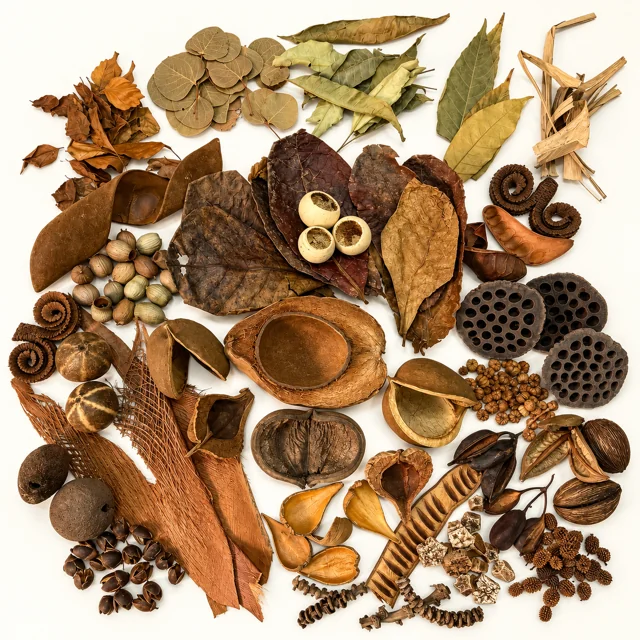
Large collection; compare contents and intended scale
BBA Grand Botanical Habitat Box – 705-Piece XXL Collection for 800–1600 L AquariumsView product and options →Choose the group and life stage, prepare the water, then arrange a habitat that remains easy to observe and maintain.
Distinguish wild-origin Heckel, the natural brown-discus profile scope and captive-bred lines. Keep F1 crosses labelled by their actual parentage.
Use the full species guidance for footprint, height, temperature and oxygenation. Large warm-water fish need usable volume, not just a tall-looking photograph.
Prepare suitable replacement water and avoid abrupt chemistry changes. Tannin colour cannot confirm pH, hardness, filtration or readiness.
Stabilise roots, keep open turning routes and leave floor access for cleaning. Select modest botanical portions instead of covering every surface.
Check individual intake and persistent exclusion. Adjust portion size and remove leftovers; maintain a suitable varied diet rather than relying on habitat grazing.
Prepare dedicated arrangements where appropriate for pairs and juveniles. Manage feeding and waste according to life stage; do not treat a breeding cone as proof of a compatible or proven pair.
Practical reading from the BBA Knowledge Centre, chosen for this World.
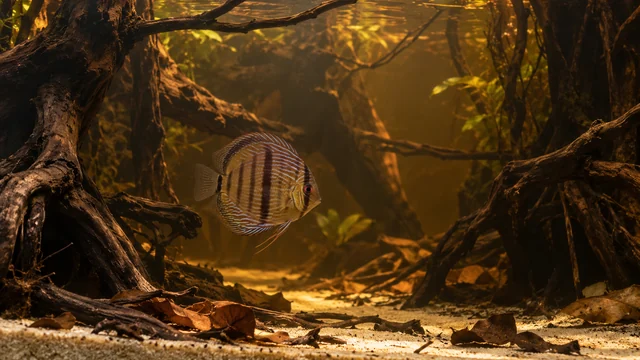
Heckel identity, specialist water and adult-group planning.
Read the guide →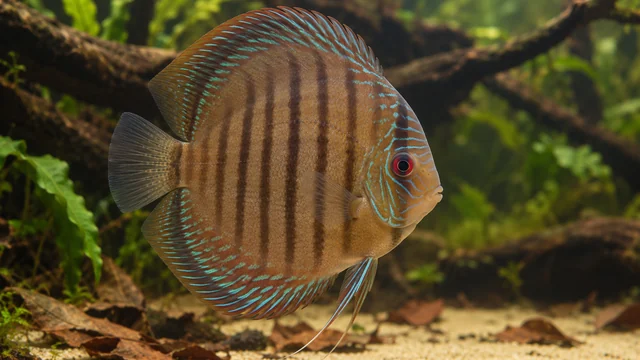
Natural brown discus scope, habitat and practical care.
Read the guide →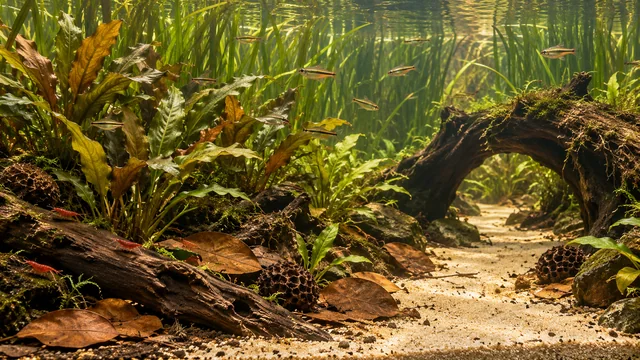
Understand the flooded-forest inspiration without assuming dense planting.
Read the guide →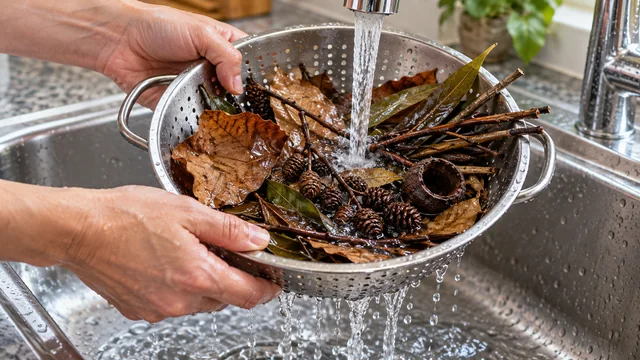
Prepare roots and botanical materials before gradual use.
Read the guide →Explore my Heckel and Brown Discus guides to compare their natural habitats, water needs and adult-group care.
Choose the stock and water plan, then use roots, leaves and suitable foods to support a spacious, observable aquarium. Keep beauty and practical care connected.