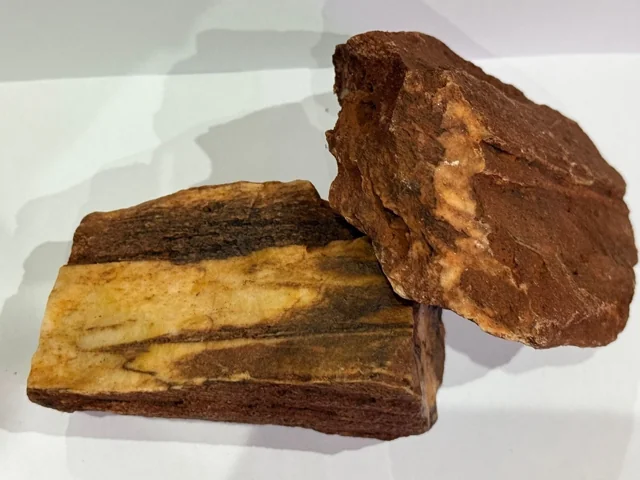
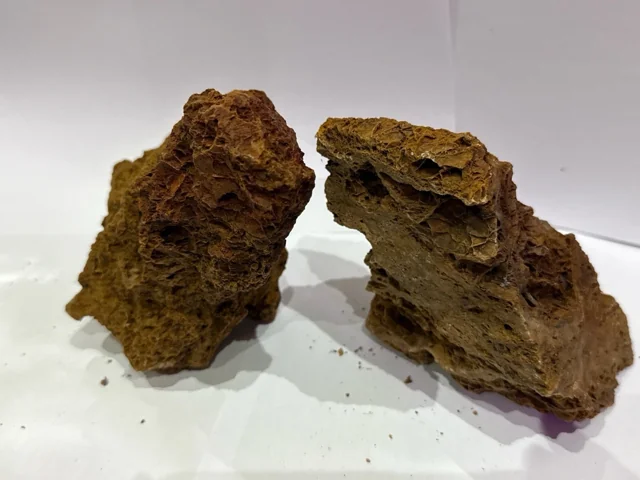
Catalogue photograph - material example, not the illustrated piece
Red Wood Rock Aquascape StoneView product and options →BBA Worlds / Rocky Rivers & Plecos
Follow clear water across varied stone, through sheltered galleries and into open feeding lanes. Rocky river aquariums can be dramatic without a dense botanical floor. Explore zebra plecos, L236, planted Ancistrus habitats and a separate Asian goby stream, then match the structure and feeding plan to the fish.
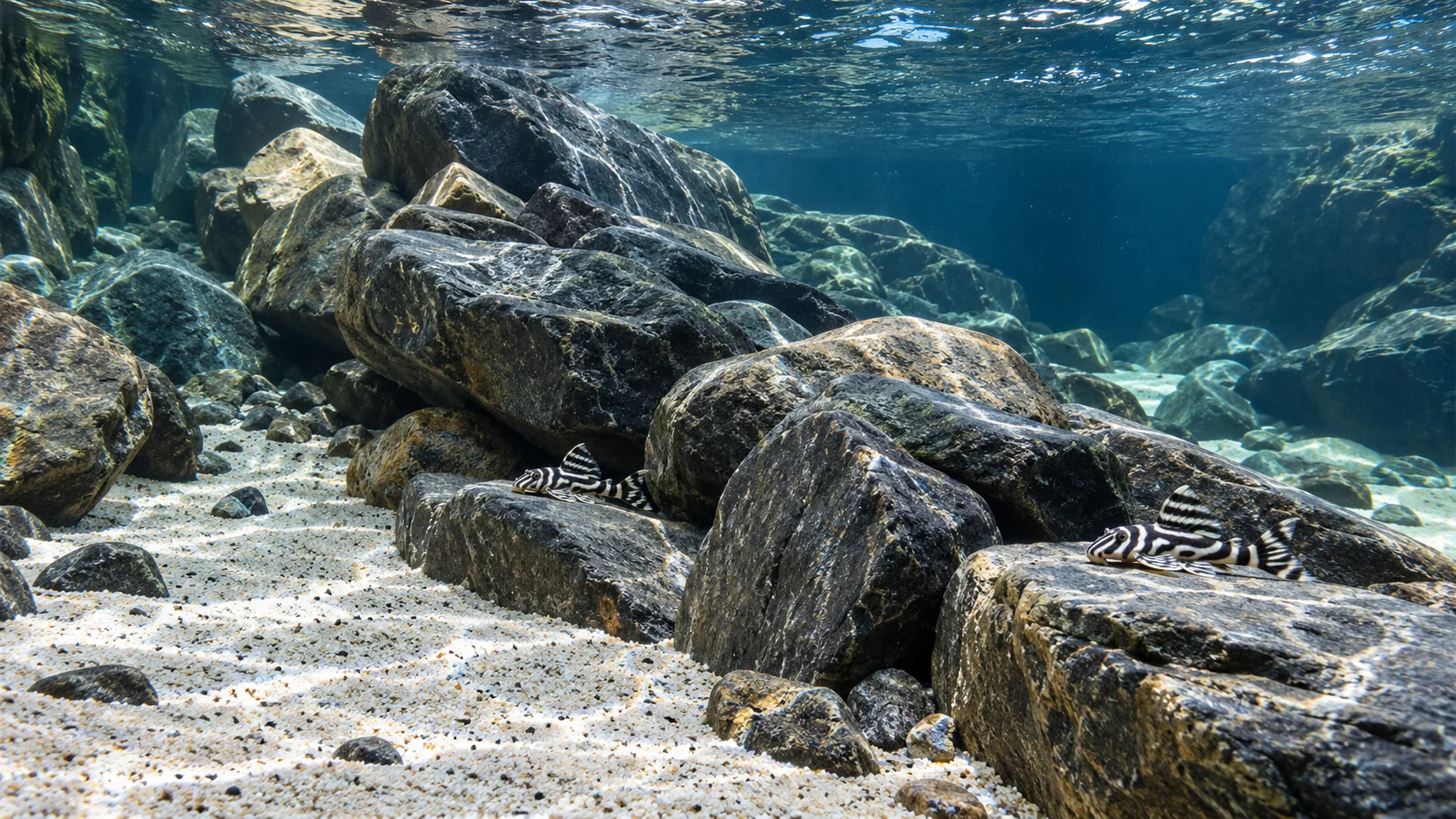
Stable structure, oxygen-rich water and reachable food matter more than the number of stones. Leave open routes around the shelters and keep the floor accessible for cleaning.
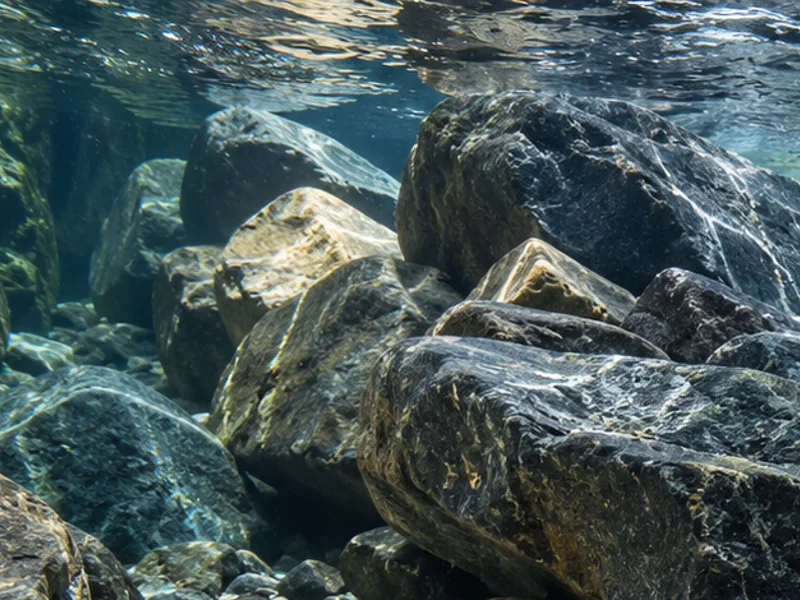
Check the aquarium and stand’s load limits, protect the base appropriately and stabilise every support before adding fish. Red Wood Rock is a warm-toned textured alternative to the grey boulders pictured. Compare the actual product and its water-chemistry notes; it is not an identical stone or a pre-made cave.
Compare the real BBA material
Catalogue photograph - material example, not the illustrated piece
Red Wood Rock Aquascape StoneView product and options →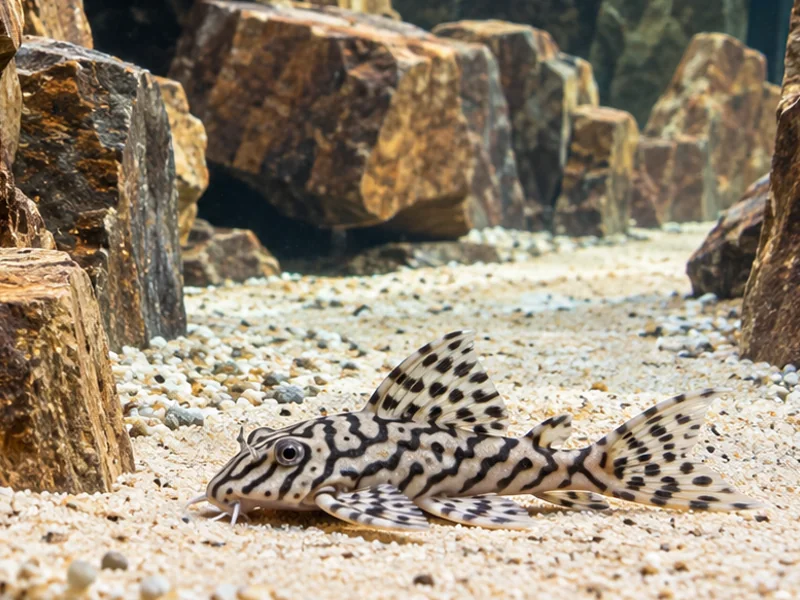
Use sight breaks and more than one usable refuge so that a dominant fish cannot control the whole floor. Maple Leaf Rock offers a different layered texture from the illustrated stone. It may affect hardness or pH, so check suitability for the intended water rather than assuming every decorative rock is inert.
Compare the real BBA material
Catalogue photograph - material example, not the illustrated piece
Maple Leaf Rock Aquascaping StoneView product and options →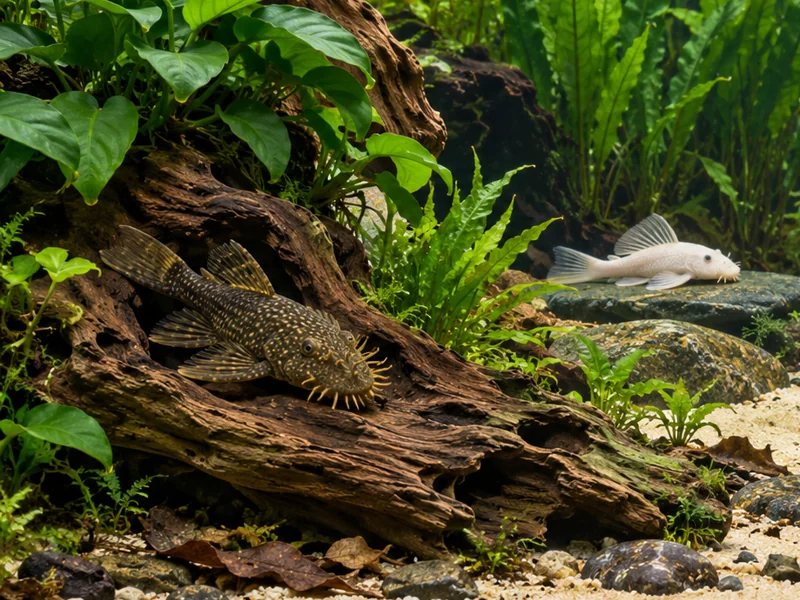
The Ancistrus approach combines wood, planting, stones and accessible grazing surfaces. Mangrove Root adds structure and cover, but neither wood nor aquarium algae supplies a complete diet. Keep space around long fins and match adult size to the actual shelter openings.
Compare the real BBA material
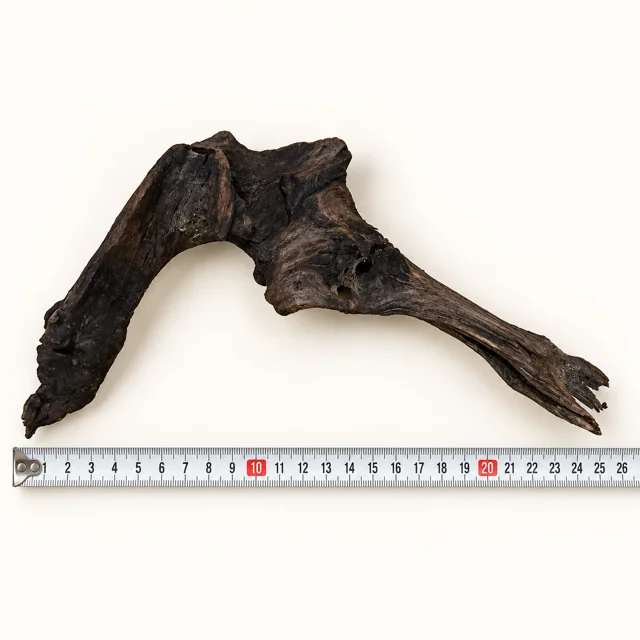
Catalogue photograph - material example, not the illustrated piece
Mangrove Root DriftwoodView product and options →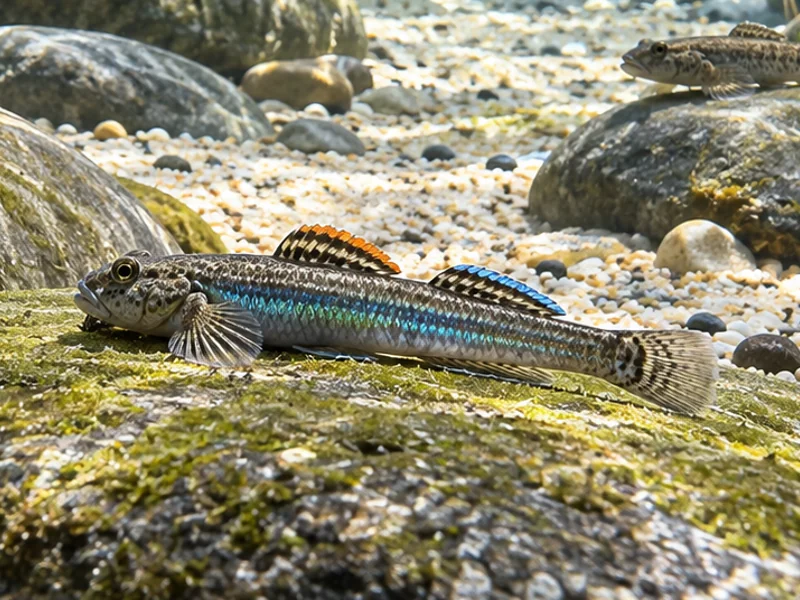
A goby’s feeding ground is the established film of algae and microorganisms on usable surfaces. Spirulina tablets are a supplementary option only if the fish accepts them. A token tablet cannot make a bare new tank ready or replace the need for a productive, mature grazing area.
Compare the real BBA material
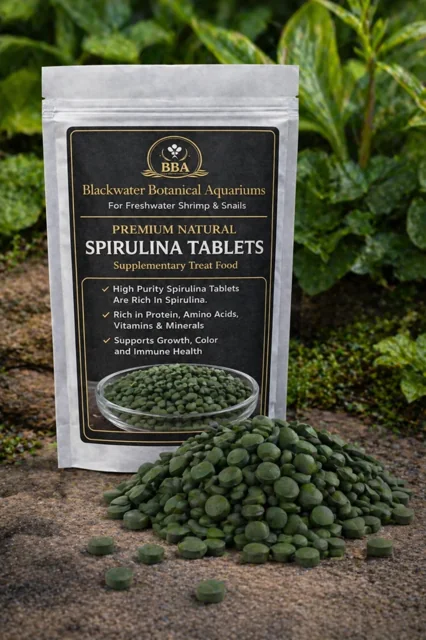
Catalogue photograph - material example, not the illustrated piece
Premium Natural Spirulina TabletsView product and options →Keep these habitat and food plans separate. An Asian Stiphodon stream is not the Rio Xingu, and attractive bottom fish are not automatically compatible tankmates.
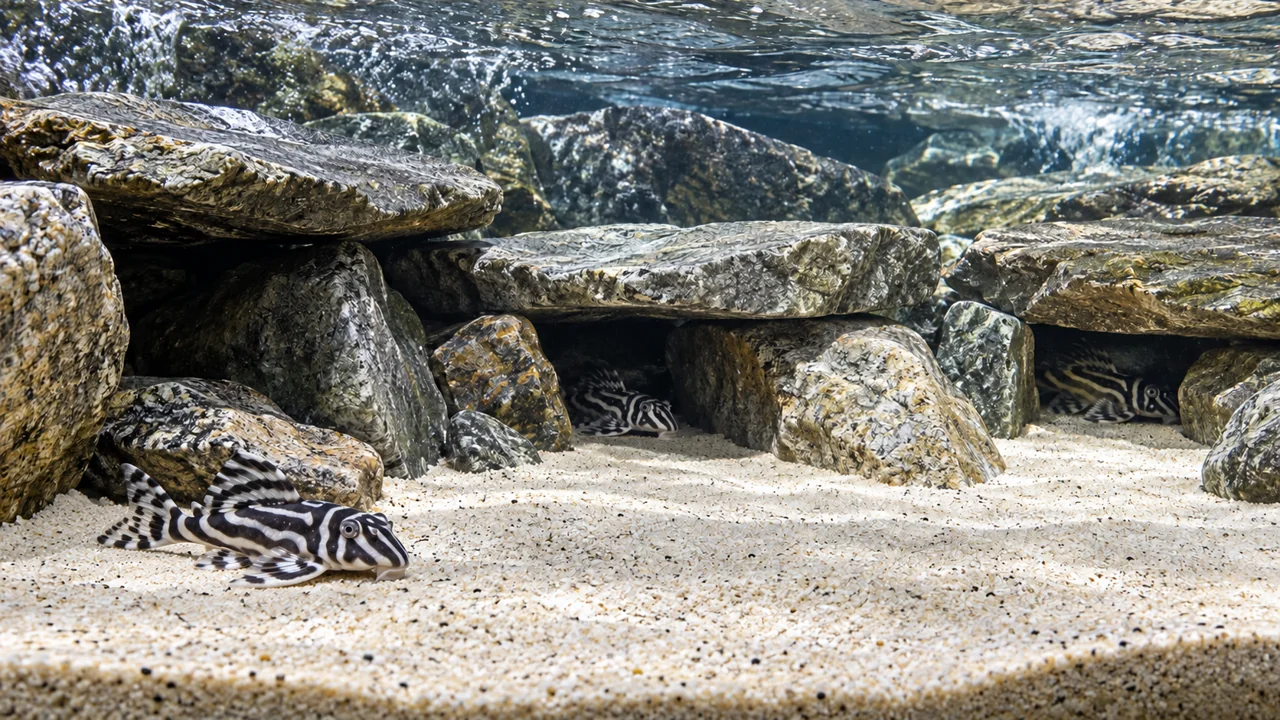
Hypancistrus zebra / L046
Warm, well-oxygenated clear water with secure rock galleries, open sand and separate protected resting areas.
Use my L046 and Rio Xingu guides together. The care profile plans around 27–29°C with strong gas exchange and stable maintenance. An 80 × 35 cm base is a useful individual or carefully managed pair starting plan; a group needs additional floor space, separate shelters and food access. Direct circulation through the habitat while retaining quieter resting pockets. This is not an acidic leaf-litter blackwater recipe. Provide suitable complete sinking food with appropriate animal ingredients and varied small invertebrate foods; zebra plecos are not algae-only cleaners.
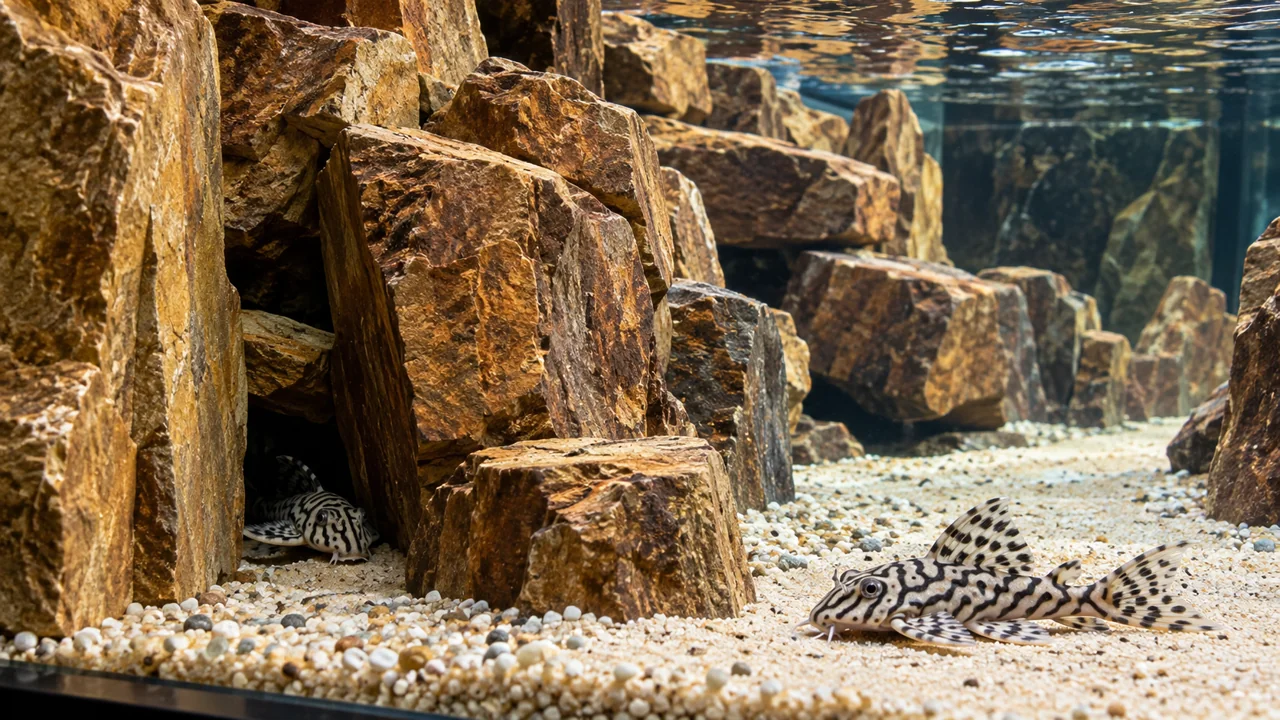
Hypancistrus seideli / historical L236 association
A more spacious, broken-sightline rock arrangement with individual recesses and an accessible feeding lane.
The 2025 description places L236 among the historical associations of Hypancistrus seideli. Its lower-Xingu habitat includes varied rock types and both stronger and slower flow, so it is not simply a larger copy of the L046 scene. My profile allows around 120 × 45 cm for a planned small group and uses a 27–29°C maintenance framework. Provide separate caves, observation access and an appropriate complete sinking diet. A pale maze pattern does not certify a Super White pedigree or guarantee a small adult.
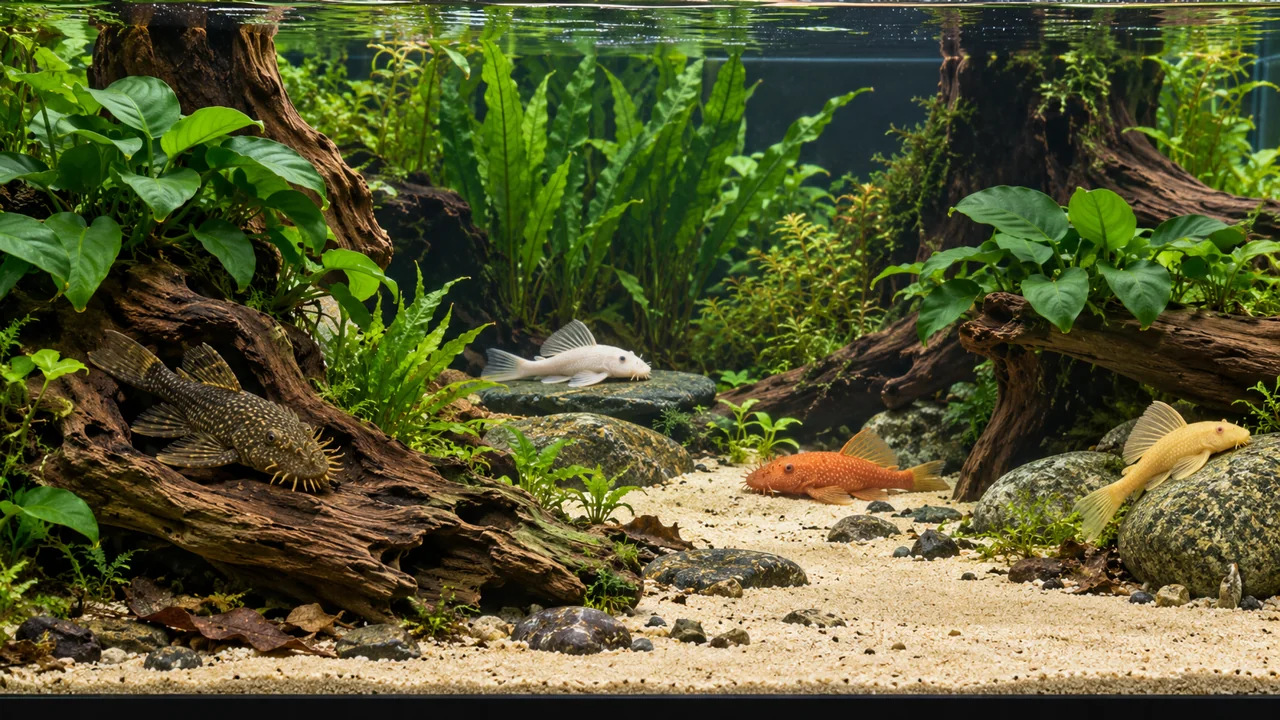
Domestic Brown / Super Red / Albino / White forms
A planted clearwater approach with wood, stones and separate resting and feeding places.
Explore my Ancistrus guide for Brown, Super Red, Albino and White forms, including fin and eye-colour differences. Colour labels do not establish a wild species or pedigree. The guide’s ordinary domestic-stock framework is around 23–25°C, not the warmer Hypancistrus routine copied without thought. One adult or an observed compatible pair needs an appropriate footprint; groups need more separate territory. Use complete sinking omnivorous food with a plant/algal component, suitable vegetables and measured protein variety. The four forms shown illustrate variety, not a fixed stocking recipe.
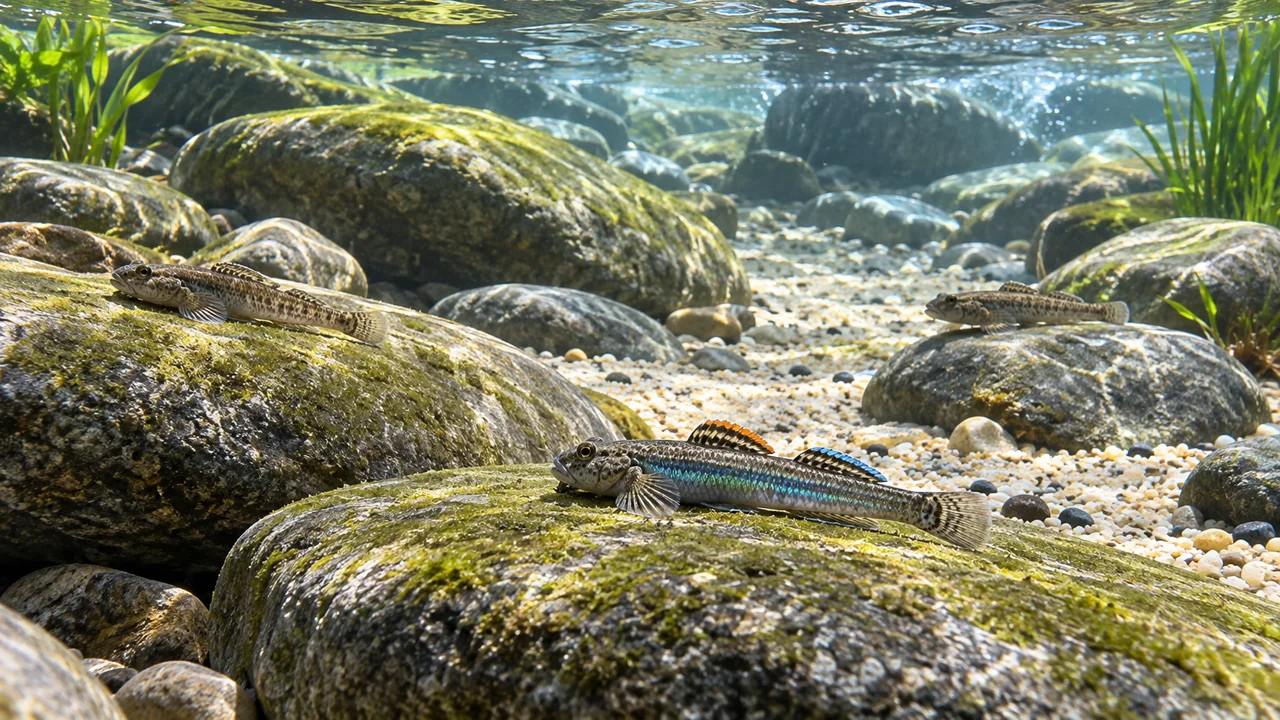
Stiphodon semoni / Stiphodon atropurpureus
A separate Asian stream approach with illuminated mature grazing stones, movement and oxygenated water.
The pictured male follows the atropurpureus-type dorsal pattern; semoni generally has much more translucent dorsal fins. Read both profiles rather than identifying every blue-striped goby by colour alone. Their care plans are cooler than the warm pleco routes: around 24–26°C for semoni and 23–25°C for atropurpureus. Provide secure water-worn stones, abundant established biofilm, suitable surface exchange and sheltered pockets. Accepted supplements help a feeding plan but do not replace mature grazing. Eggs in freshwater do not mean their amphidromous young can complete development in this display.
The pictures illustrate different riverbeds. Compare actual materials and ingredients, rather than assuming one rock, cave or food suits every bottom-dwelling fish.
Red Wood Rock and Maple Leaf Rock are actual BBA decorative stones, with warm red/rust tones rather than the exact grey slabs shown. Check mineral effects, sharp edges and support. The pale sand is a design reference rather than a matching product in my current catalogue; choose an appropriate grade for the fish separately.
Mangrove and Coral-Style Driftwood add different planting and cover structures. Coconut Cup and Half Coconut Shelter are alternative forms to inspect against the actual adult fish. External shell size does not establish internal fit; the smaller Half Coconut is not automatically an adult breeding cave.
The actual lava product is porous 1–2 cm granules. Compare it for a suitable protected filter-media compartment, with proper rinsing and maintenance access. It is not the large smooth river stone pictured and is not a substitute for circulation, aeration or an established biological filter.
Hypancistrus need appropriate complete sinking nutrition with substantial animal ingredients; wood and algae are not enough. Ancistrus need a suitable plant/algal component within an omnivorous diet. Stiphodon need productive mature grazing surfaces. Compare the actual prepared foods and supplements below, check individual acceptance and make sure food reaches each fish; do not assume a floating freeze-dried cube feeds a hidden bottom fish.
Current BBA photographs, options and availability. These supplies have different roles; they are not a single kit for all four habitats.
Follow the role that fits your aquarium, with no forced leaf-litter or acidifying bundle for a clearwater rock habitat.
Compare alternative wood and shelter shapes for appropriate Ancistrus arrangements. Check openings, adult fin clearance and cleaning access before choosing.
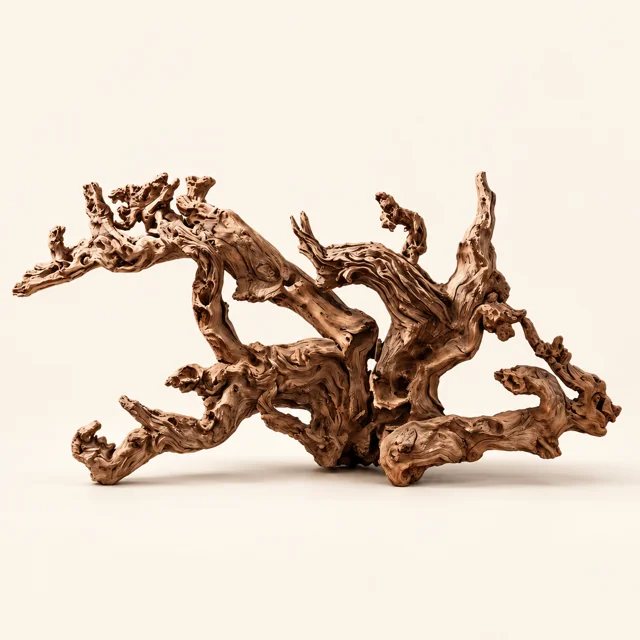
Branching support for planting and screened routes
Natural Coral-Style Driftwood – Sculptural Branching Wood, 19–24 cm, 26–30 cm or 35–40 cmView product and options →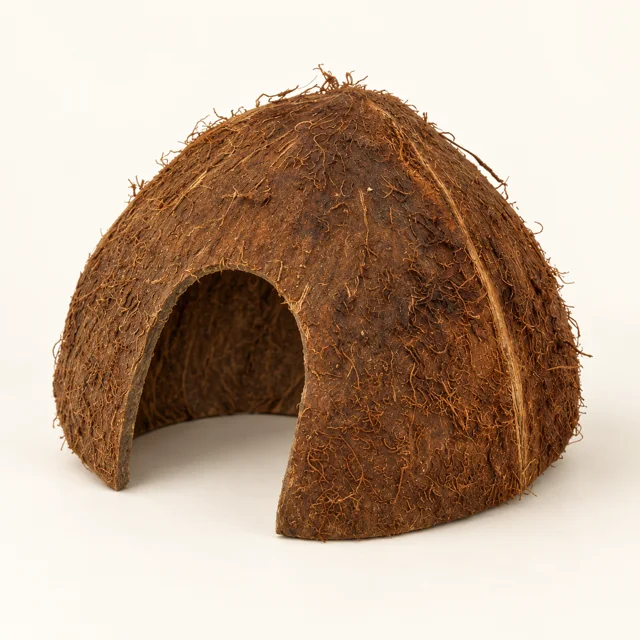
Inspect internal size; not a guaranteed adult cave
Half Coconut Shelter – Natural Coconut HideView product and options →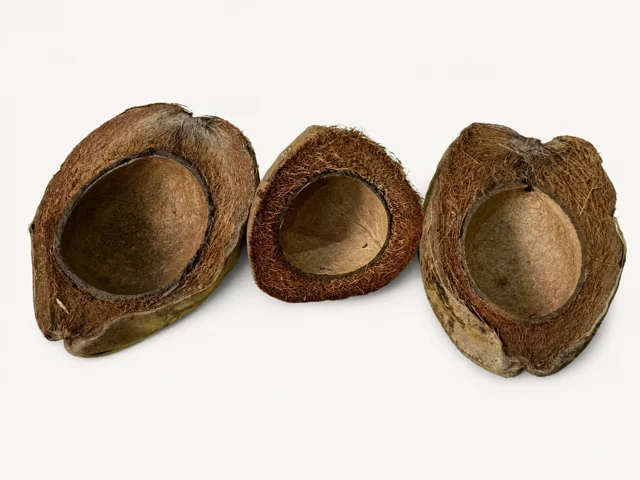
A larger natural cup form to compare
Coconut Cup (Cocos nucifera) – Natural Botanical CaveView product and options →These are separate functions: supplementary animal food, an accepted algal supplement and porous media for a suitable filter. None replaces a complete species-specific care plan.
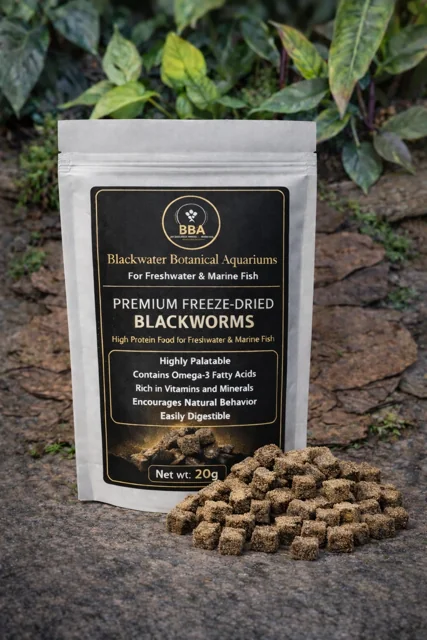
Supplementary food; check portions and feeding access
Premium Freeze-Dried Australian BlackwormsView product and options →Supplement only if accepted by the intended fish
Premium Natural Spirulina TabletsView product and options →
The most useful layout can be maintained without dismantling every shelter. Plan access, flow and food before adding the inhabitants.
Keep South American pleco and Asian goby approaches distinct. Use the actual adult size, temperature and food needs rather than a generic bottom-fish label.
Plan the aquarium base and stand for the rock load, stabilise the structure and avoid trapping gaps. Leave accessible routes around the shelters.
Maintain effective surface exchange and flow through the aquarium, while retaining usable shelters out of the strongest jet. Guard intakes and keep maintenance access.
Establish filtration and stable water. For Stiphodon, develop actual food-bearing surfaces before the fish arrive; a clean-looking new stone is not a grazing ground.
Watch which fish eats and which is excluded. Use suitable food forms and portions; remove leftovers rather than leaving more food in hidden crevices.
Siphon accessible waste, inspect shelter stability and maintain circulation equipment. Preserve useful grazing surfaces without allowing accumulated debris to block the habitat.
Practical reading from the BBA Knowledge Centre, chosen for this World.
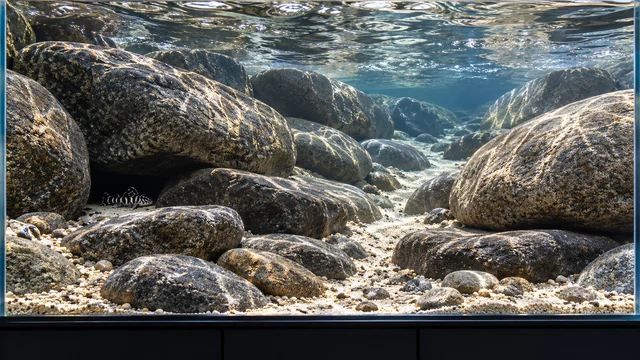
Build a clearwater stone-channel interpretation with practical access.
Read the guide →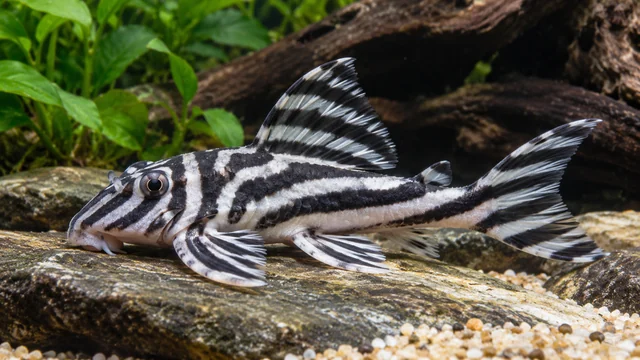
Zebra pleco identity, warm oxygenated care and deliberate feeding.
Read the guide →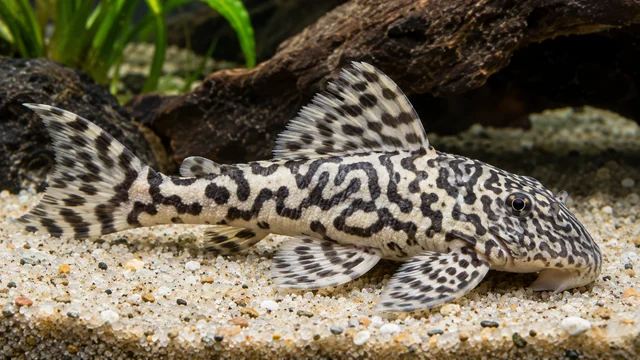
L236 identity, adult space and individual rock shelters.
Read the guide →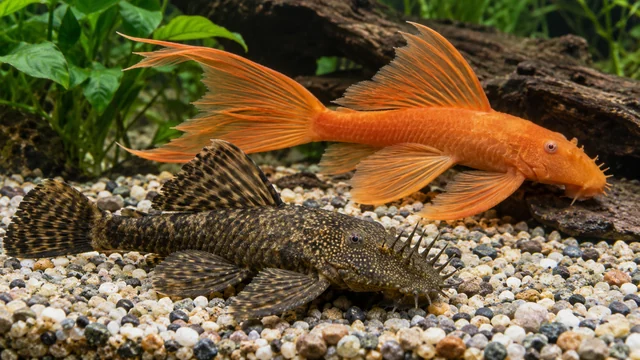
Compare Brown, Super Red, Albino and White forms, their markings and fin differences.
Read the guide →Explore my five pleco and goby guides to compare identification, adult space, food and reproduction. These are separate care plans, not a mixed-community shopping list.
L046 Zebra PlecoHypancistrus zebraRead the species guide →L236 PlecoHypancistrus seideliRead the species guide →Ancistrus varietiesAncistrus spp. (domestic varieties)Read the species guide →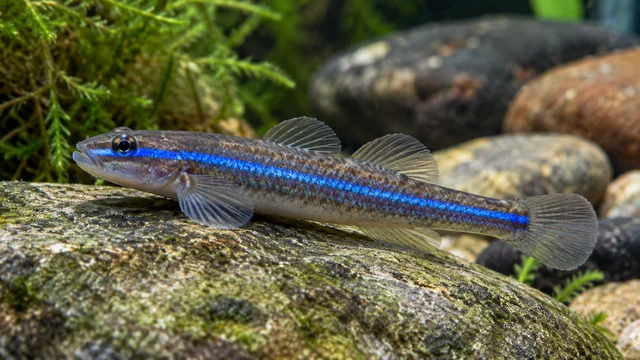 Cobalt Blue GobyStiphodon semoniRead the species guide →
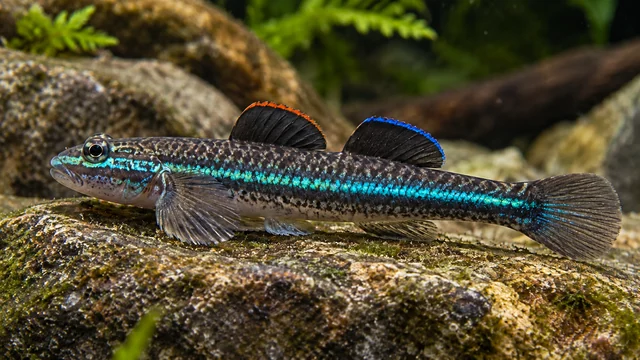 Blue Neon GobyStiphodon atropurpureusRead the species guide →
Choose the fish and their feeding plan, then build stable shelter, usable current and open maintenance routes. Select real materials for those roles and keep the habitat distinct.