What it helps with
It gives the aquarium a more complete botanical floor without the buyer guessing what to combine.
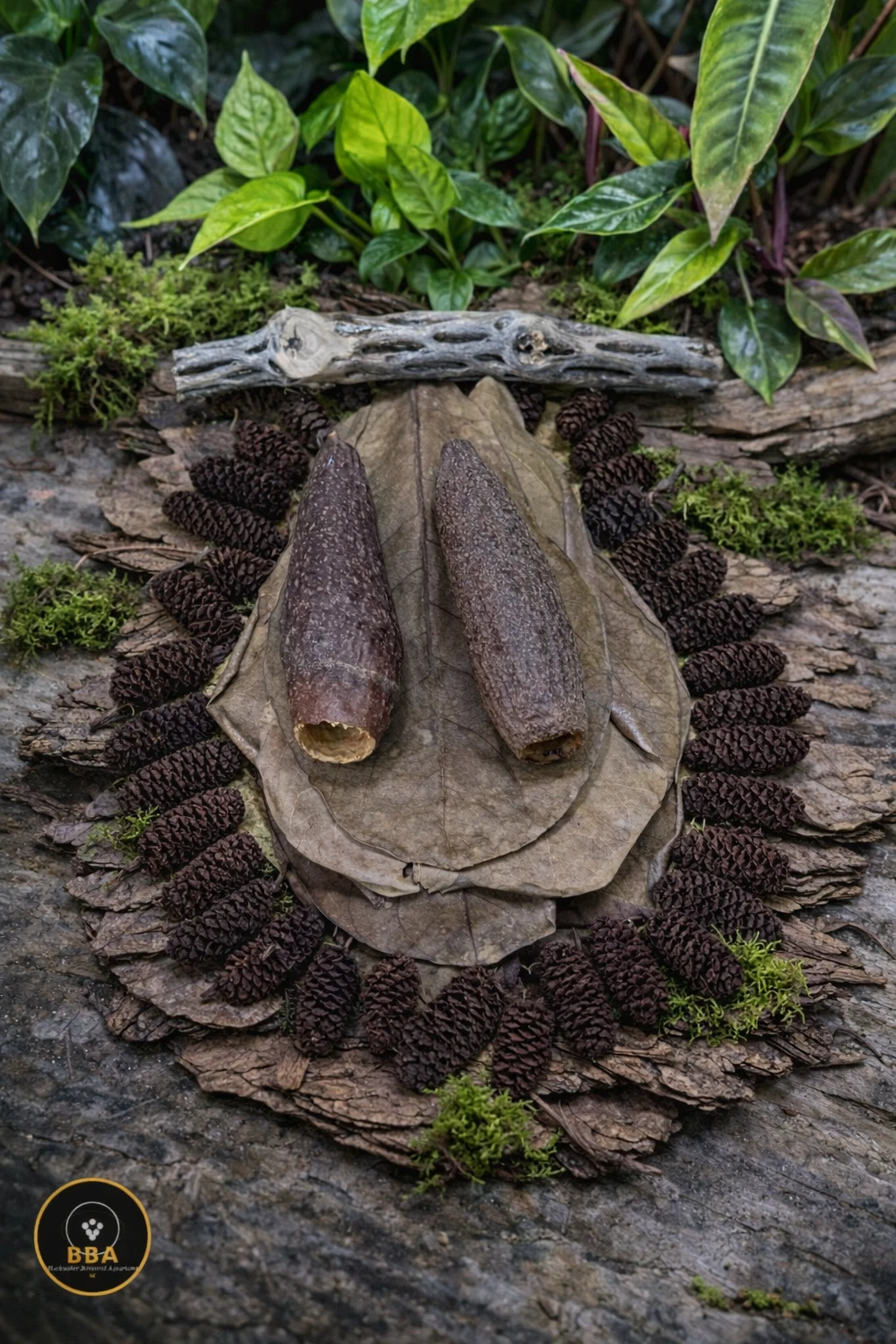
Selected option contents
Natural product: size, shape, colour, texture and surface detail will vary.
What it helps with
It gives the aquarium a more complete botanical floor without the buyer guessing what to combine.
What to watch
Watch tannin colour, soft-water response, biofilm and how quickly leaves break down.
Product story
AQUARIUM PRODUCT STORY
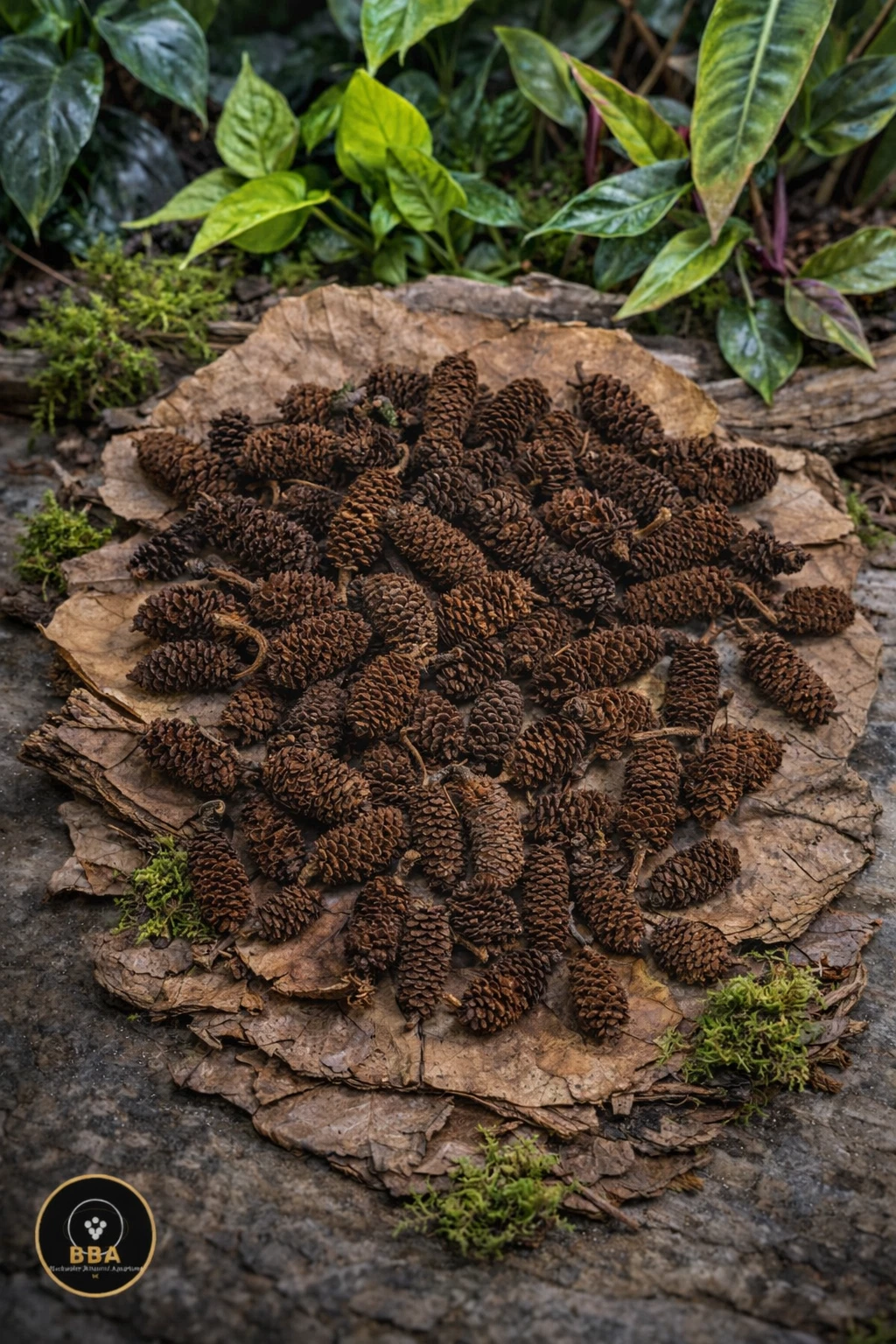
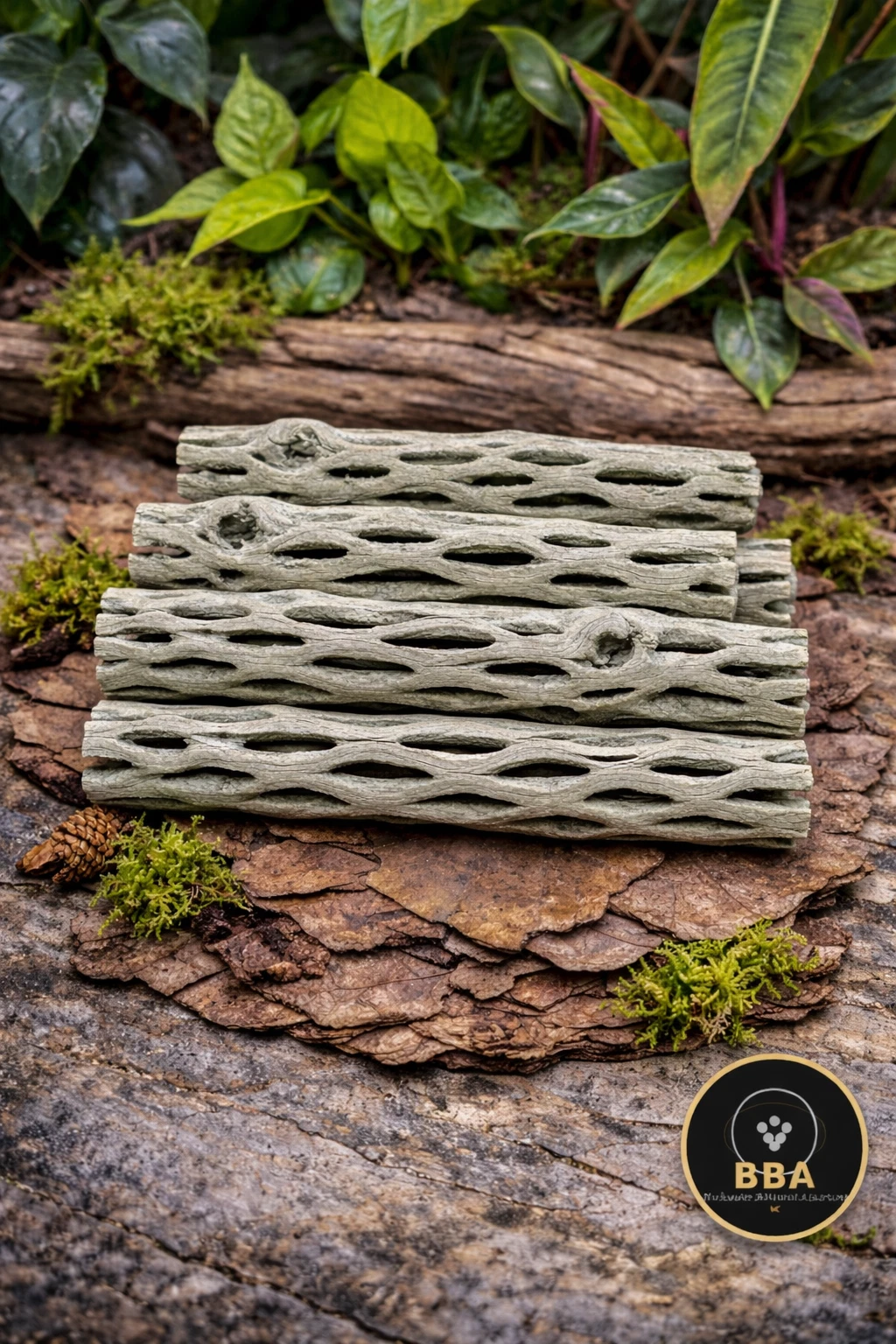
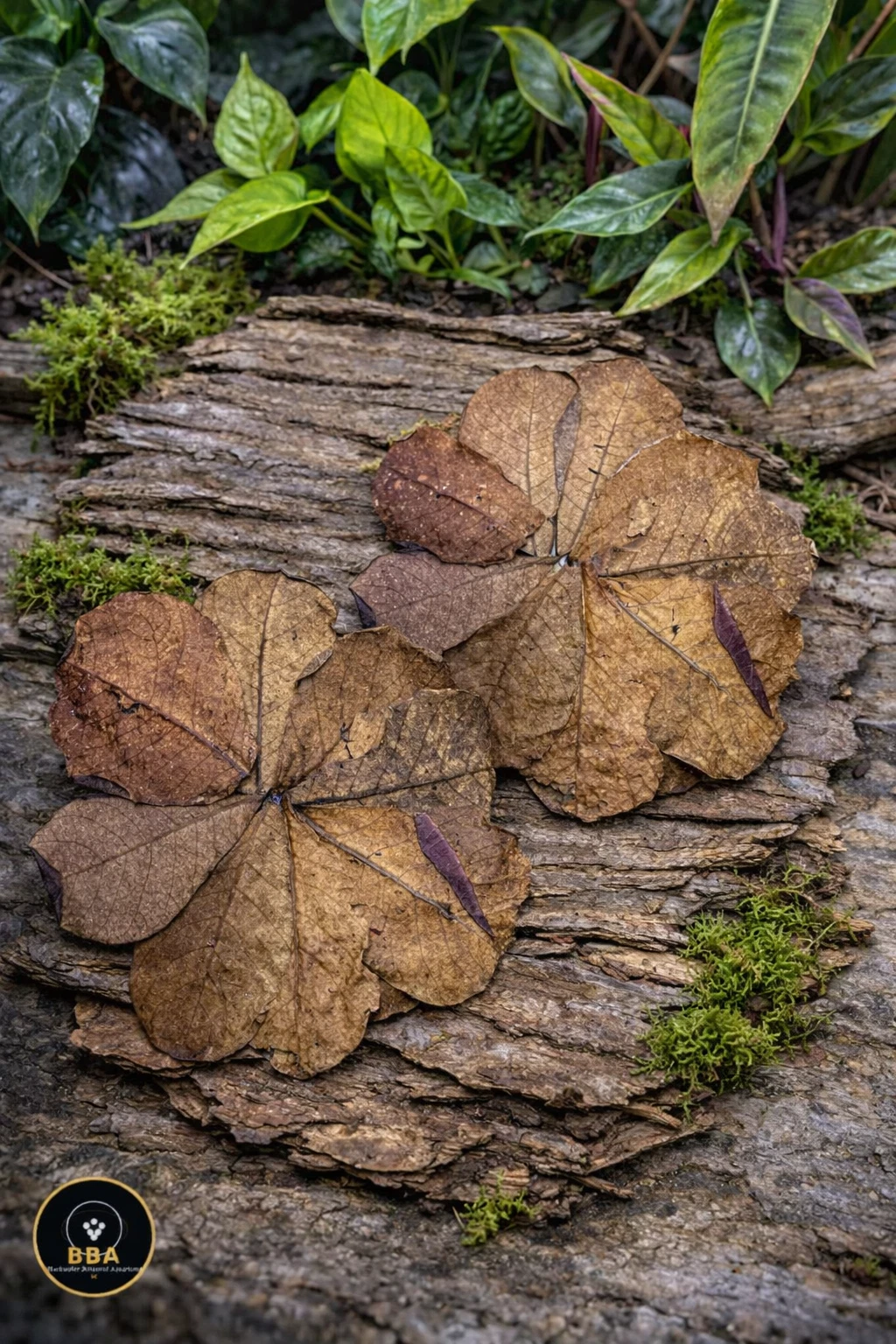
These are illustrative product-world scenes, not customer proof or review images. They help customers understand the habitat, packing and staged-use context before buying.
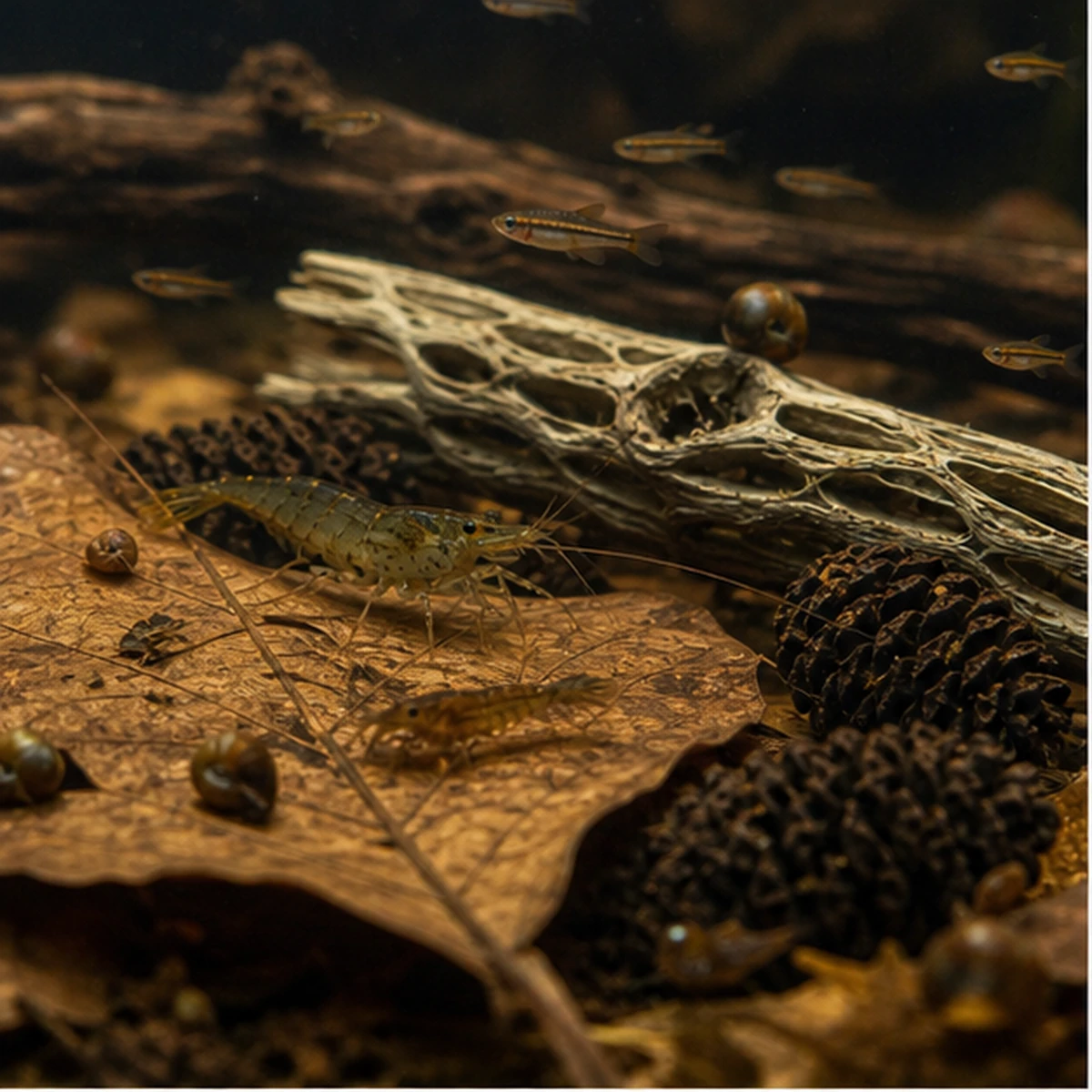
Set the largest structural botanical first and build the smaller materials around it.
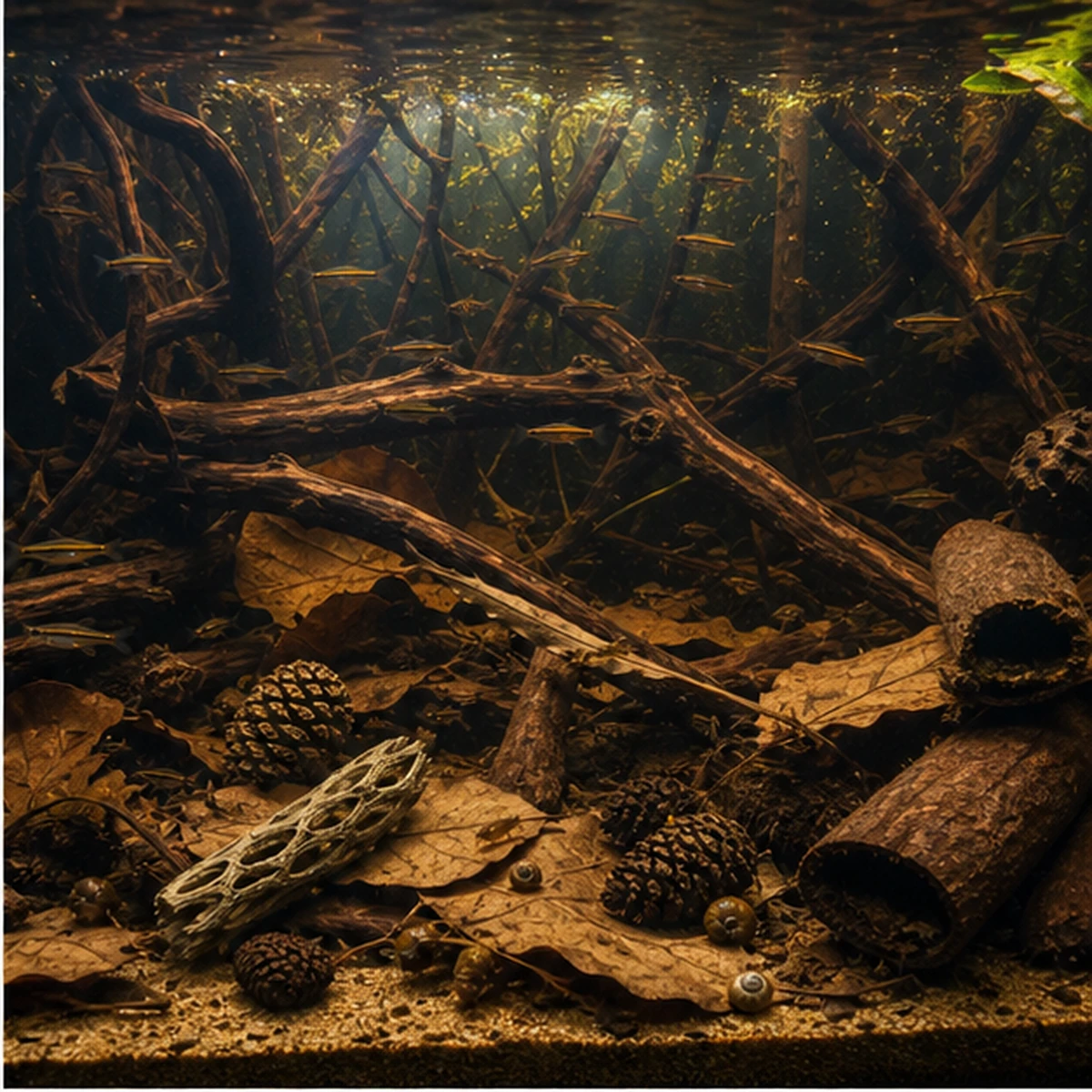
Leave open sand and swimming space instead of filling the entire substrate.
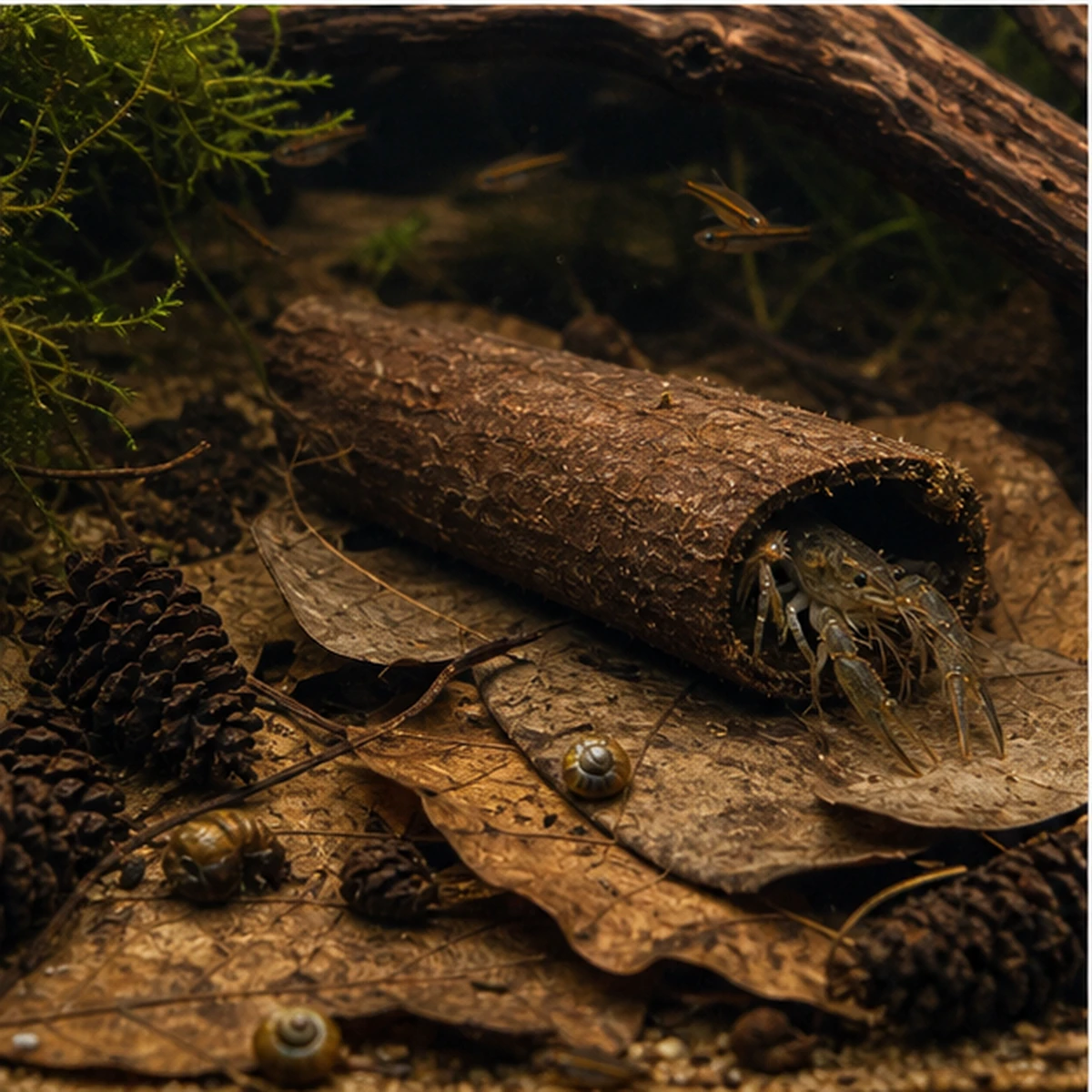
Spread leaves and textured pieces so shrimp and small fish can explore multiple surfaces.
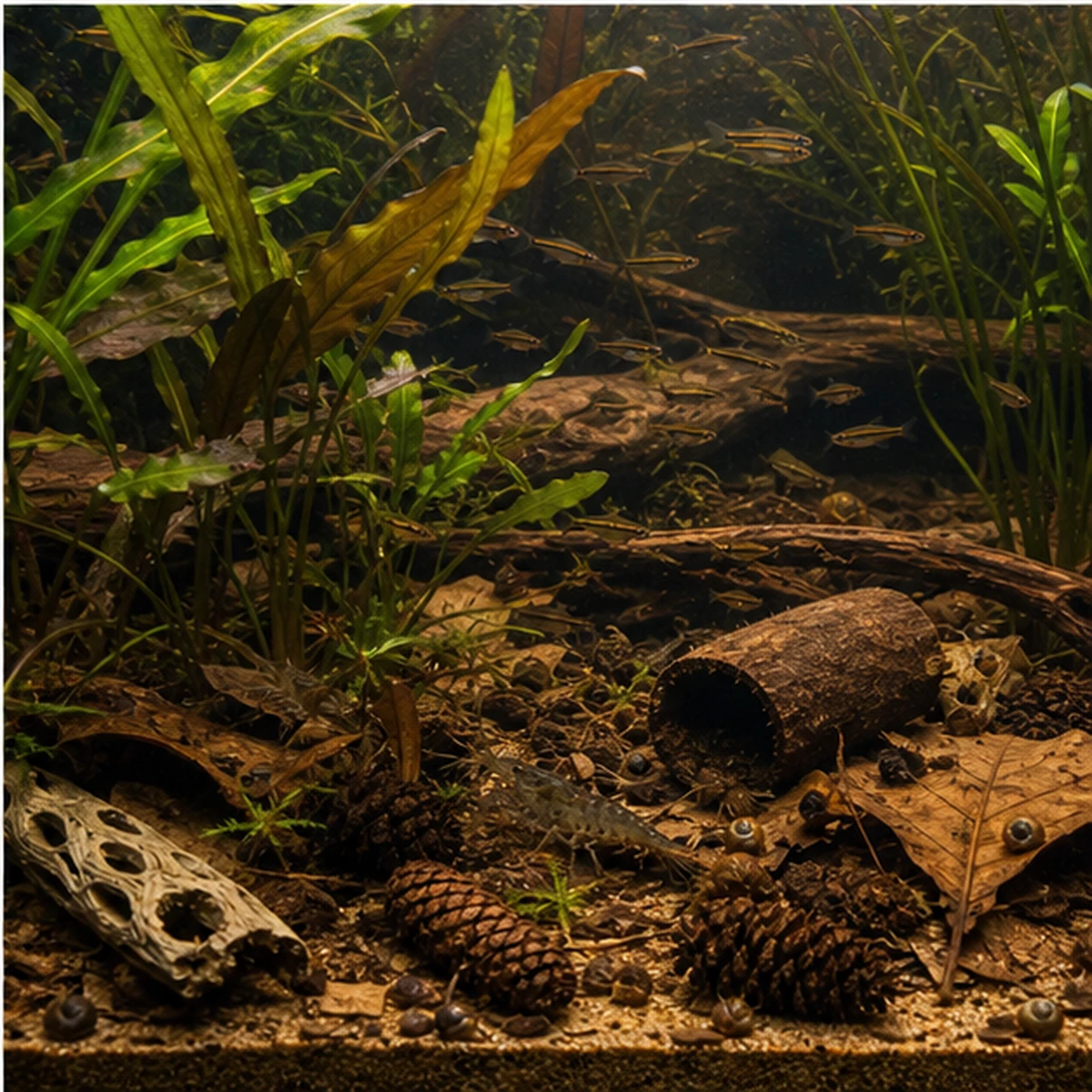
Use pods and harder forms to create cover without turning the whole aquarium into one dense pile.
OTHER CUSTOMER ROUTES
Beyond aquarium use, selected dry leaves, pods and woody pieces can also add natural structure, cover and surface complexity to suitable paludarium, vivarium and bioactive setups. Choose materials to suit the scale, moisture level and animals in the enclosure.
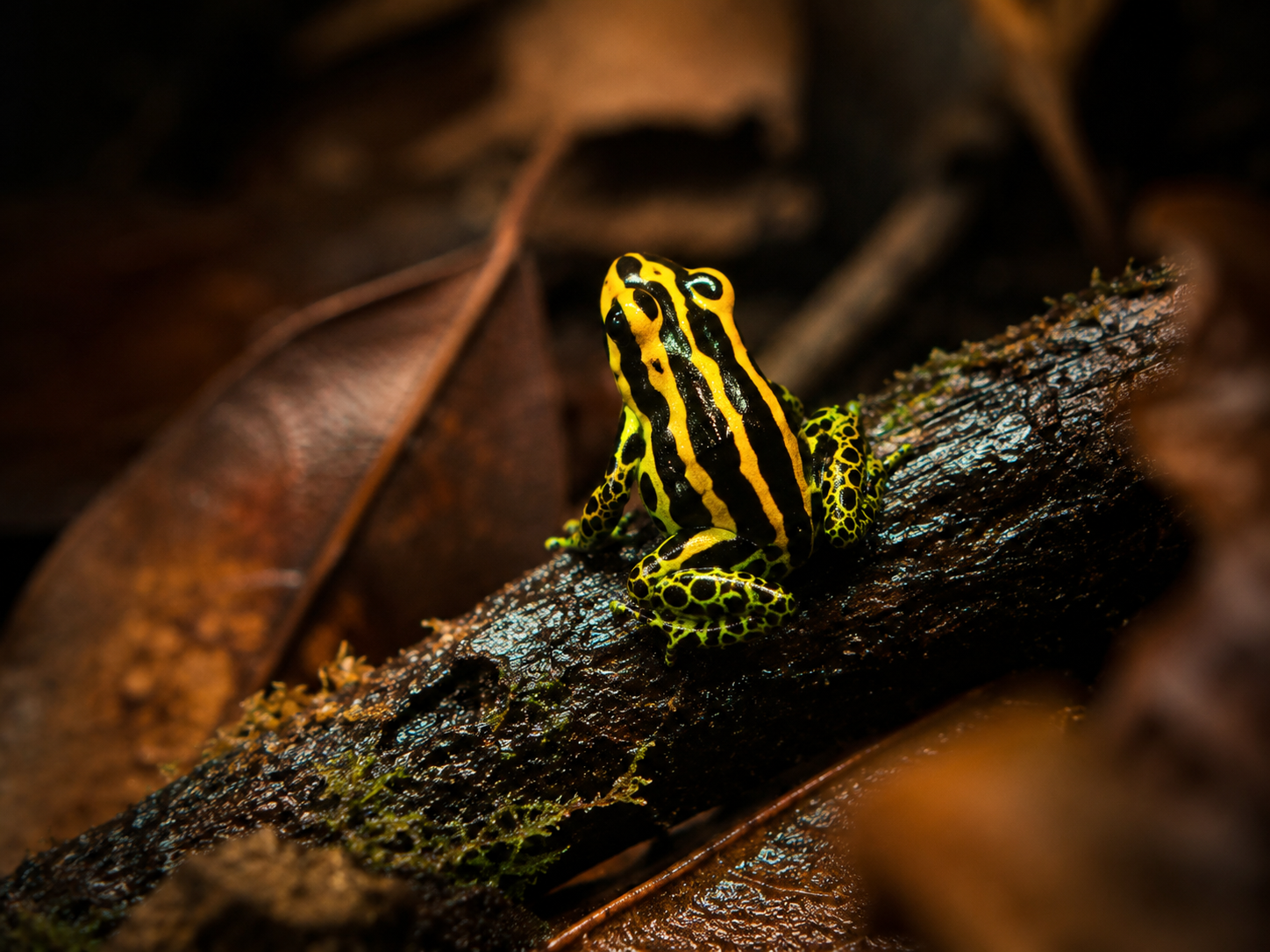
Use suitable leaves, pods and woody pieces through damp margins and transitional areas to connect the aquatic and terrestrial parts of a naturalistic layout.
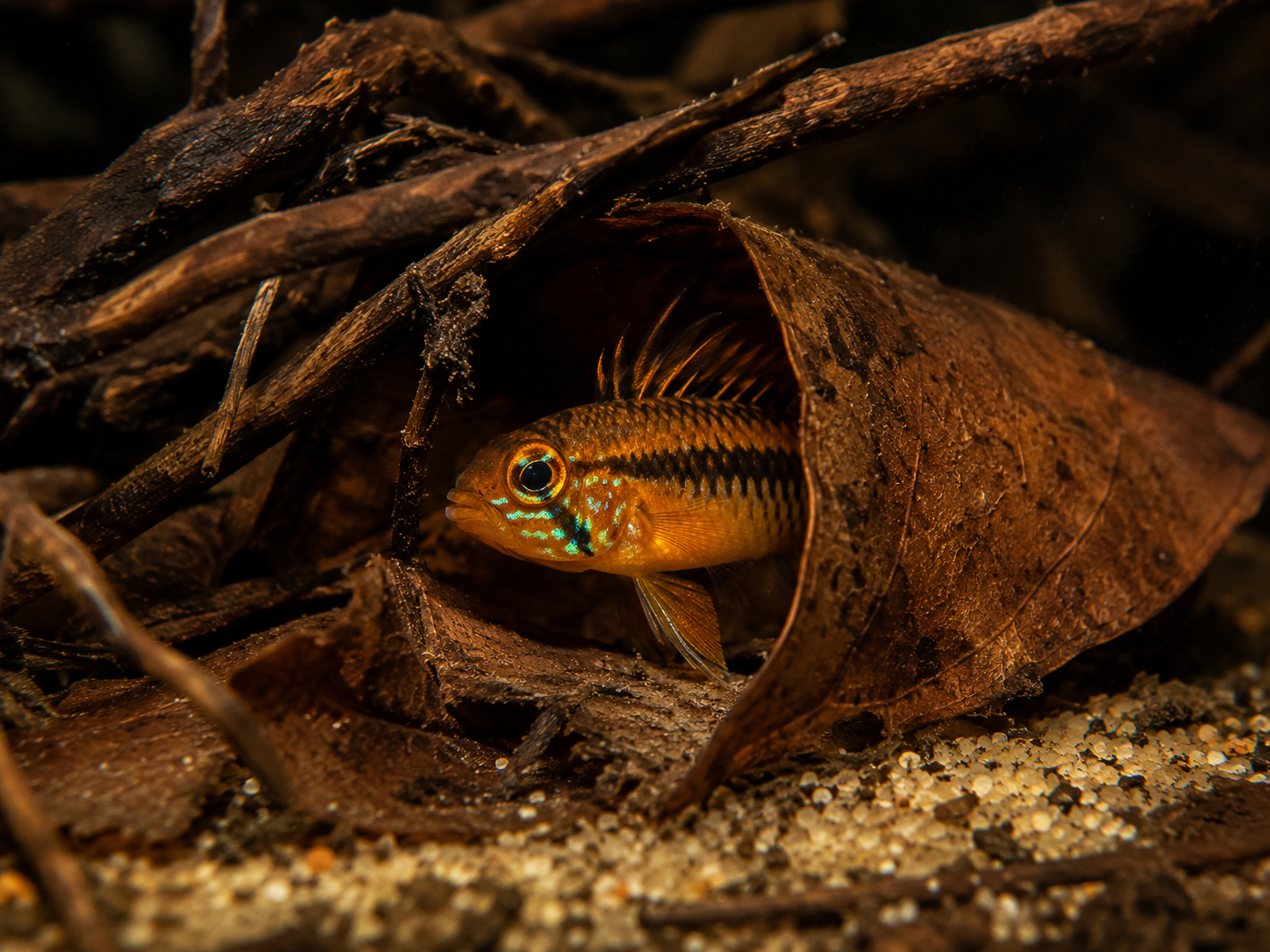
Leaves and suitable harder pieces can form part of the litter and structural layer used around an established bioactive substrate. They are not a complete substrate by themselves.
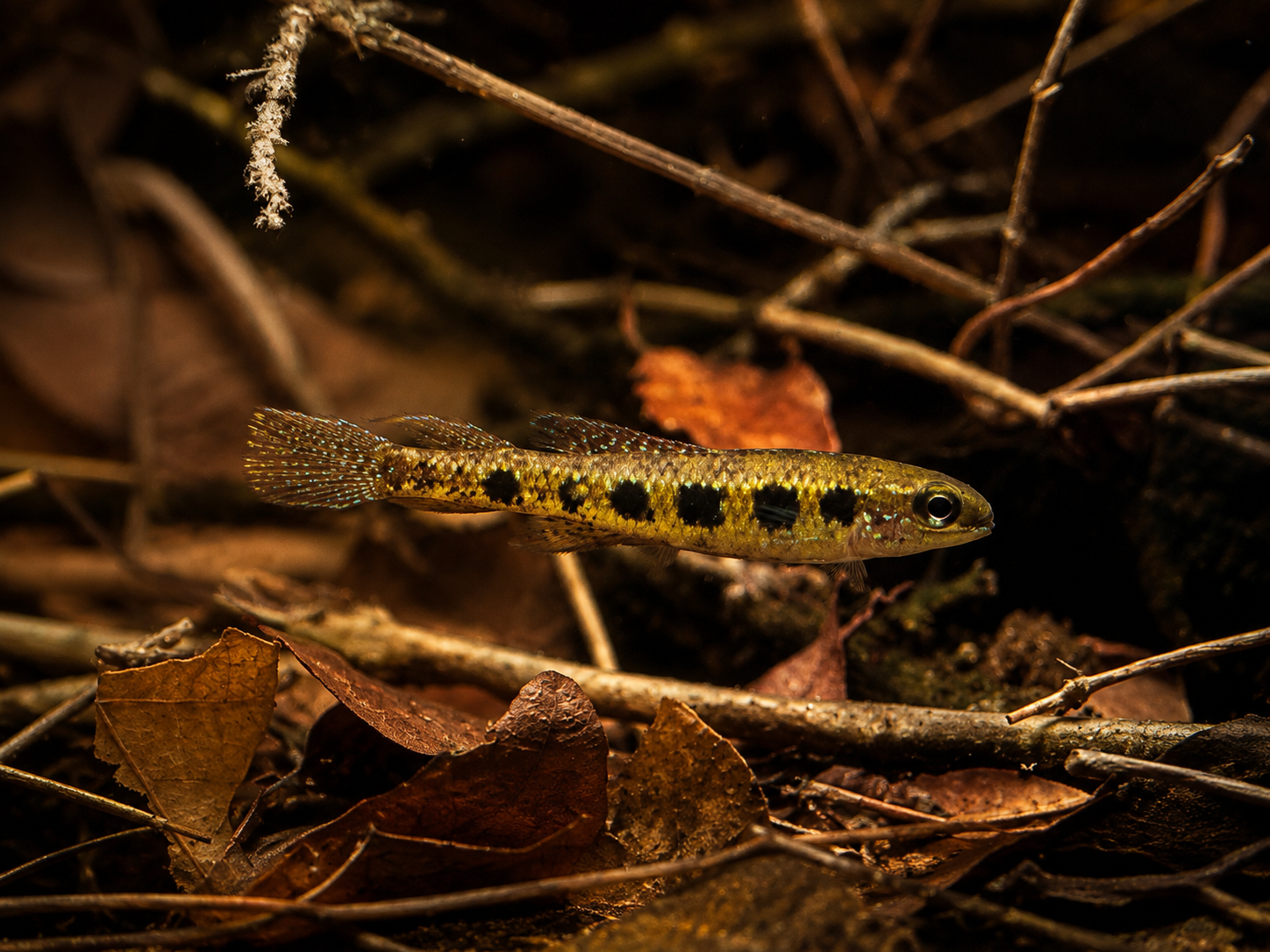
Suitable leaves and dry botanical pieces can provide cover, surface complexity and material that gradually becomes part of the decomposer environment.
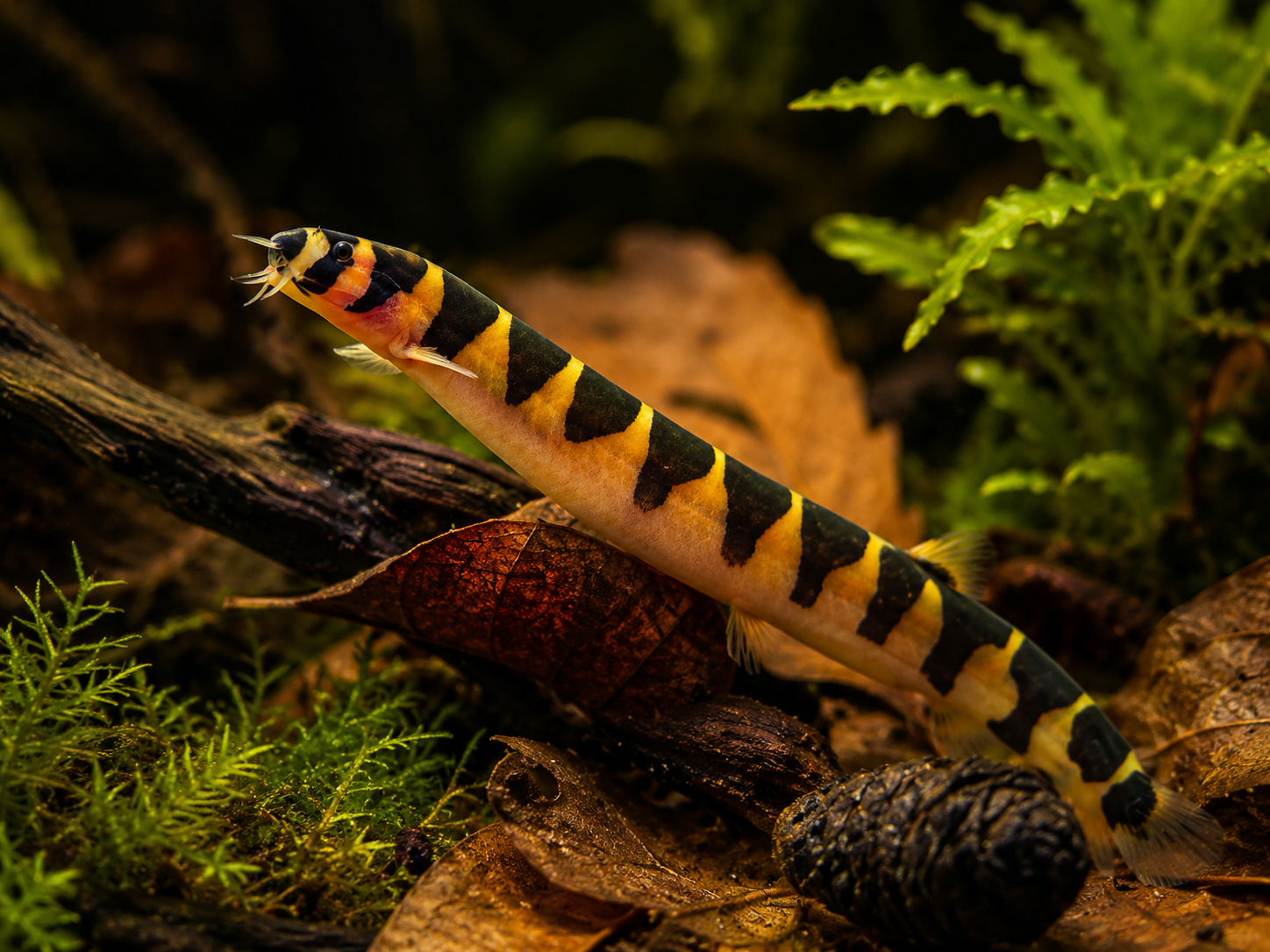
Use suitable pieces as additional cover and surface complexity within an established decomposer setup, not as a complete food or substrate system.
No. The bundle works best as a staged route, especially in nano, shrimp or soft-water aquariums.
LEARN BEFORE YOU ADD
COMPLETE THE ROUTE