What it does
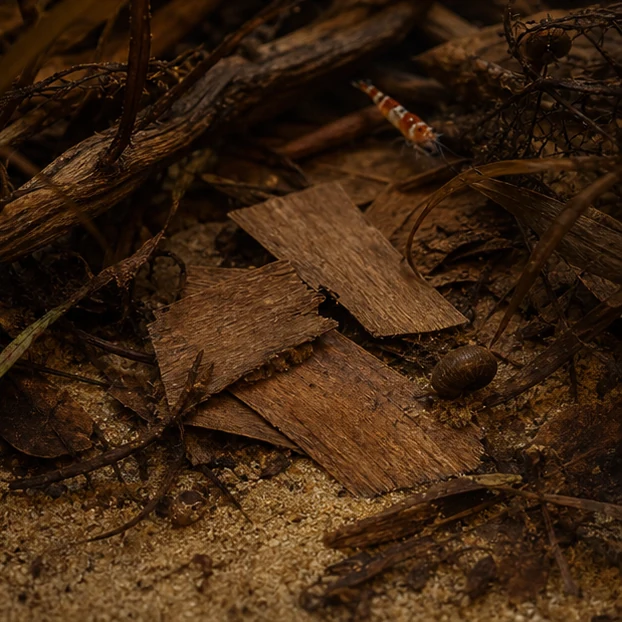
Creates textured surface, gentle cover and visible leaf-litter detail as the pieces hydrate and break down.
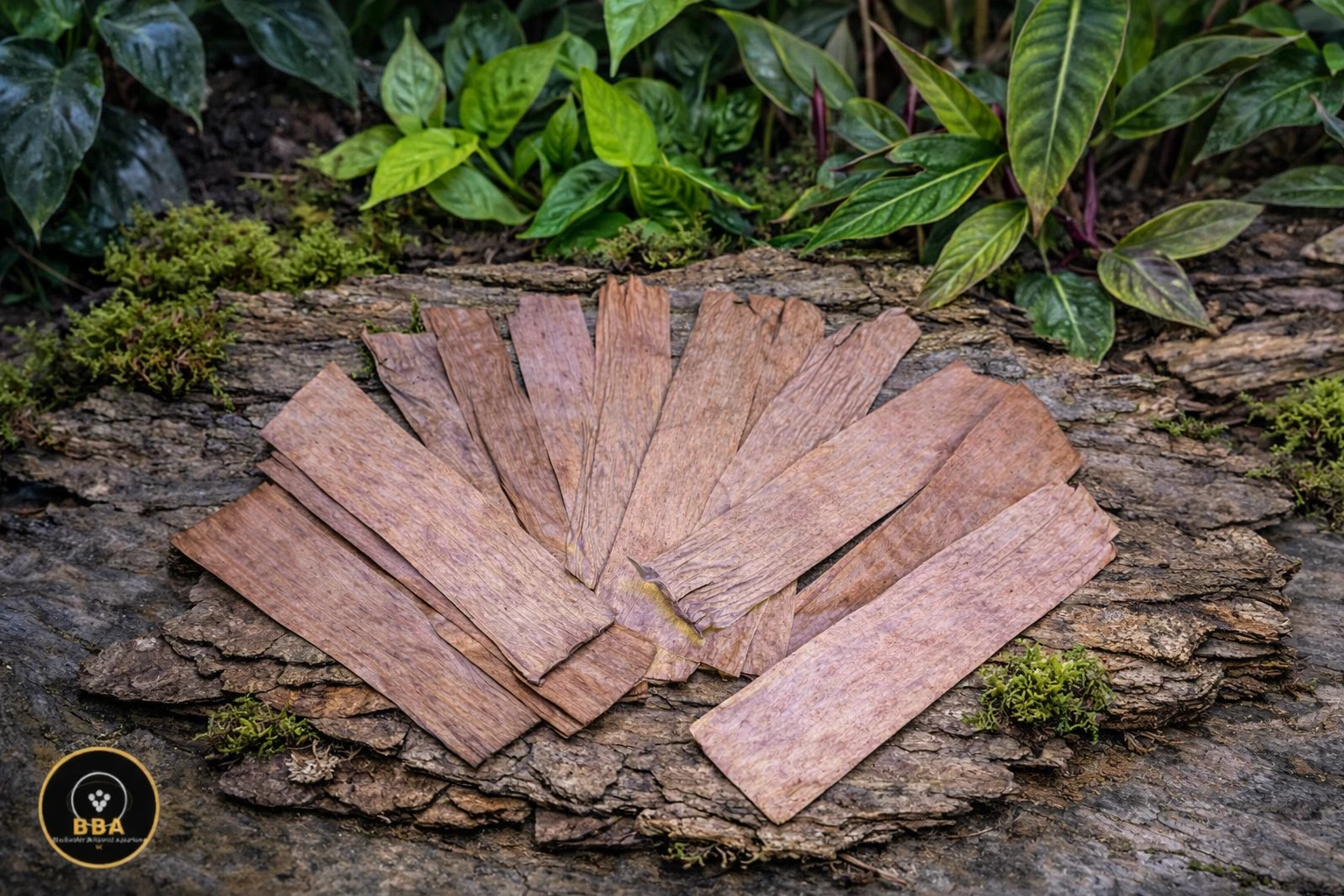
What it does
Creates textured surface, gentle cover and visible leaf-litter detail as the pieces hydrate and break down.
Slow down if
Reduce or remove pieces if uneaten material builds up, water clouds or livestock appear unsettled.
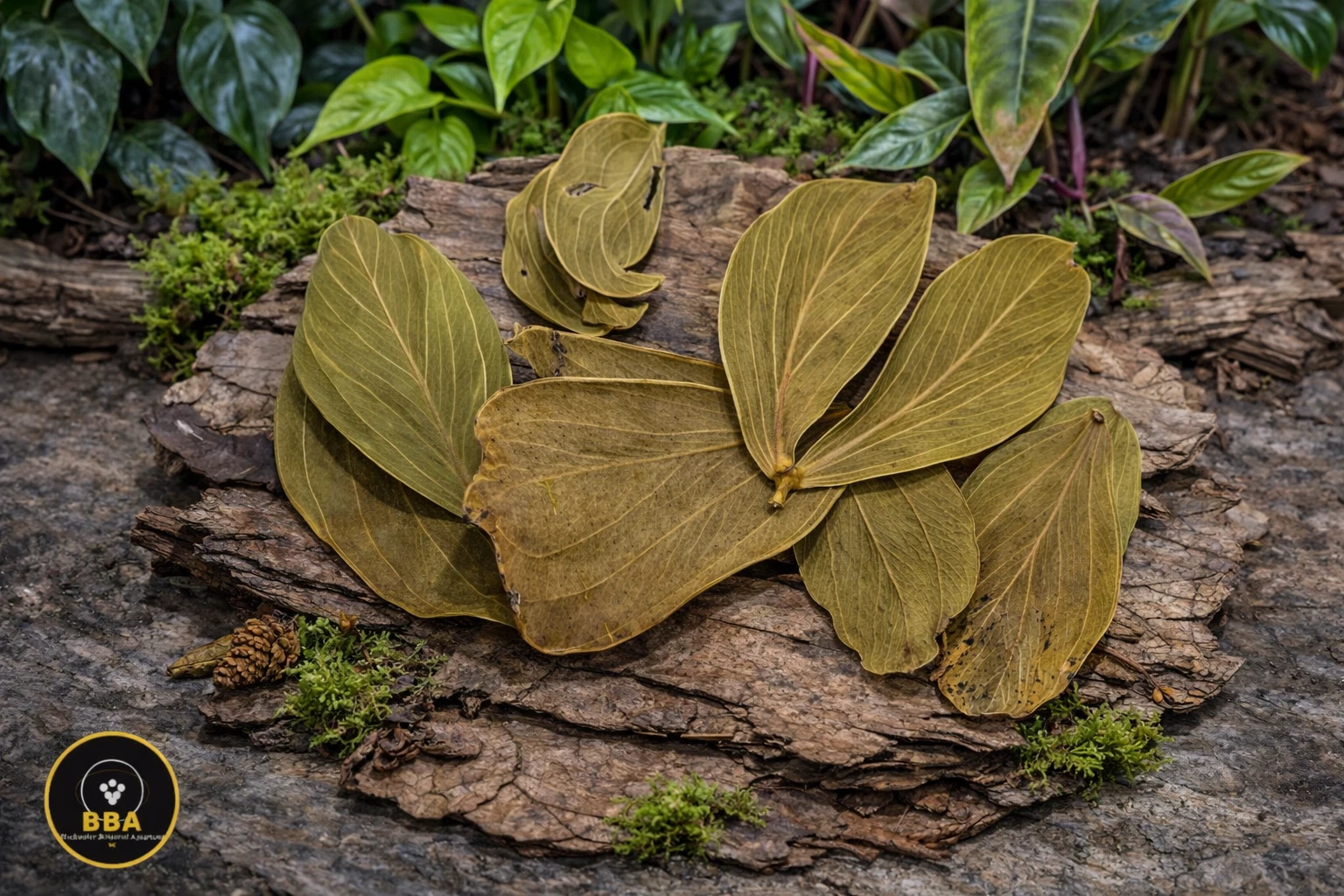
Banana leaves are useful when you want plenty of surface area for shrimp and snails to graze on, plus a richer natural forest-floor look without needing lots of different pods.
As the pieces soften, they can encourage biofilm and microfauna surfaces while adding gentle cover and shaded micro-zones for shrimp, fry and shy fish.
They work beautifully in shrimp tanks, natural community aquariums, blackwater layouts and established leaf-litter beds that need regular top-ups.
What you receive Dried Banana Leaf Pieces Approx. piece size: 15–25cm, with natural variation. You receive the pack size selected from the menu. Packed dry and sealed by Blackwater Botanical Aquariums.
Key benefits
1) Builds a natural leaf-litter zone Great for creating a deeper, more natural substrate layer in shrimp tanks and blackwater aquariums.
2) Biofilm and microfauna surfaces As the leaves soften, they can provide useful surfaces for biofilm development and natural grazing.
3) Natural cover and shaded zones Adds gentle shelter and shaded micro-zones that help shrimp, fry and shy fish feel more secure.
4) Gentle botanical / blackwater feel Can contribute to a warmer, more natural aquarium appearance when used gradually, especially alongside Catappa, cones and pods.
5) Great base leaf for regular top-ups Useful for scaping larger areas or maintaining an established leaf-litter bed over time.
How to use Rinse all leaves before use. Optional: pre-soak in hot water for 15–30 minutes to help them sink and soften faster. Add gradually over 1–3 weeks rather than all at once, especially in smaller tanks or soft water. For lighter tannins or multiple tanks, divide the pack into smaller portions and add each portion separately. Top up or replace every 4–6 weeks, depending on how quickly the leaves are consumed and how dense you want the leaf-litter bed.
Simple starting guide 20–40L tanks: start with 4–8 pieces, then top up as they soften. 60–120L tanks: start with 10–20 pieces depending on how heavy you want the leaf litter. Always observe livestock behaviour and water clarity before adding more.
What to expect Some pieces may float at first and sink later. A thin white biofilm on new botanicals is normal and usually harmless — shrimp and snails often love grazing on it. The water may develop a gentle tea tint depending on quantity, tank size and filtration. If you dislike the effect or feel there is too much organic load for your setup, simply remove some pieces and use less next time.
Important notes Natural products vary in size, shape, colour and texture. Effects vary depending on tank size, KH, pH, filtration and how much is used. Carbon, Purigen and some filtration media may reduce visible tannins and water colour. Botanicals are natural habitat and enrichment tools, not medicines. Not for human consumption.
Product story
Shrimp tanks and shrimp colonies, Caridina and Neocaridina shrimp
AQUARIUM PRODUCT STORY
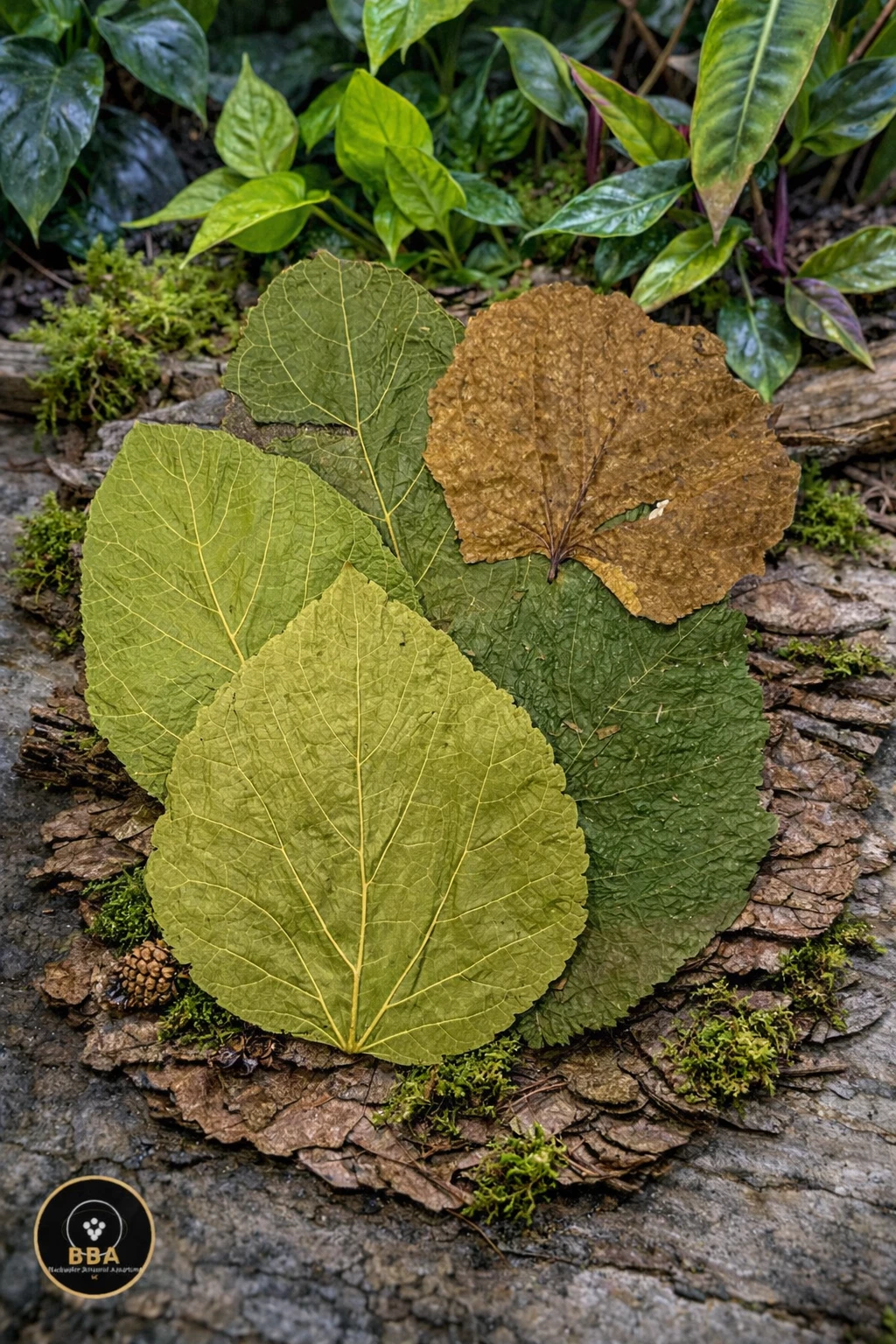
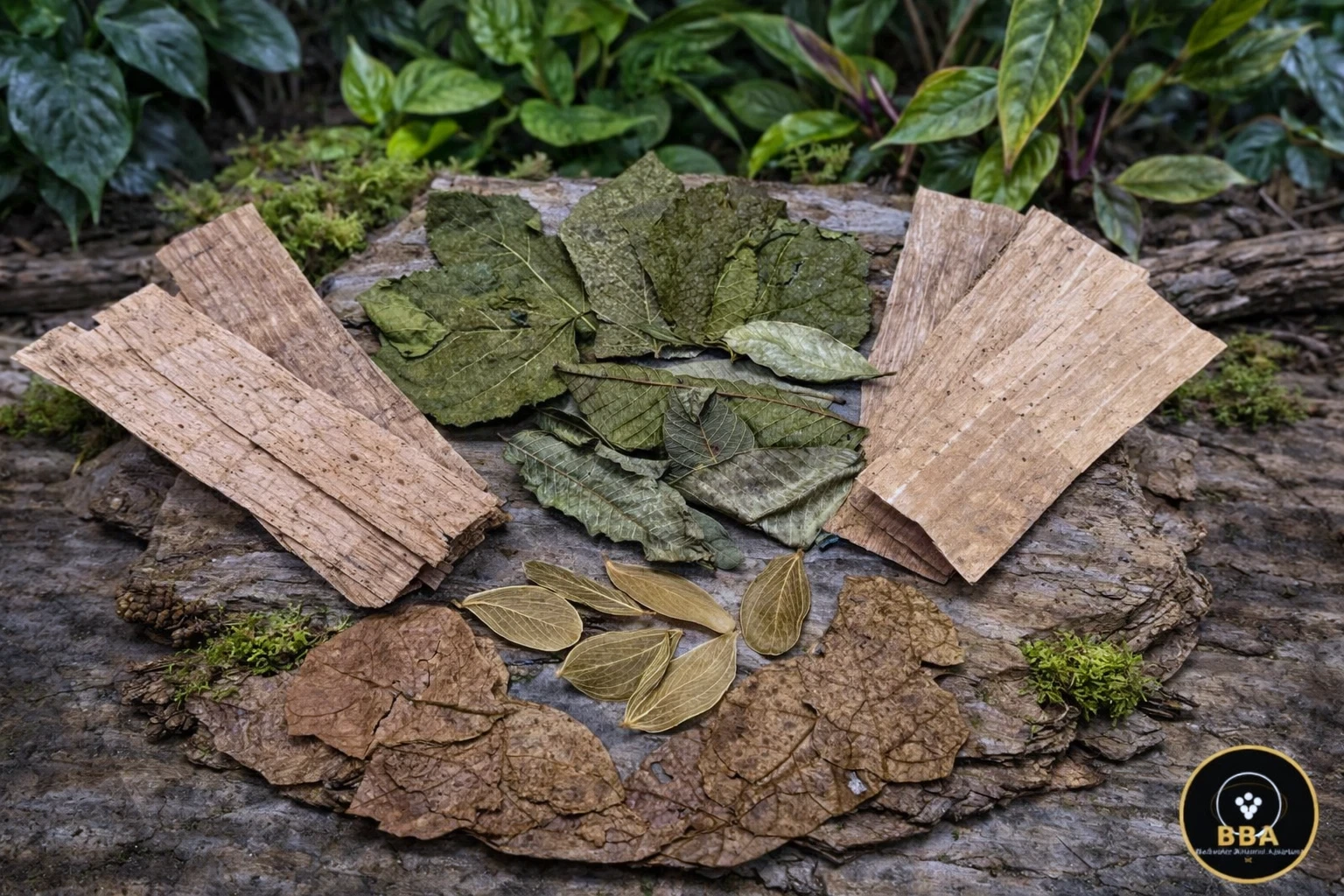
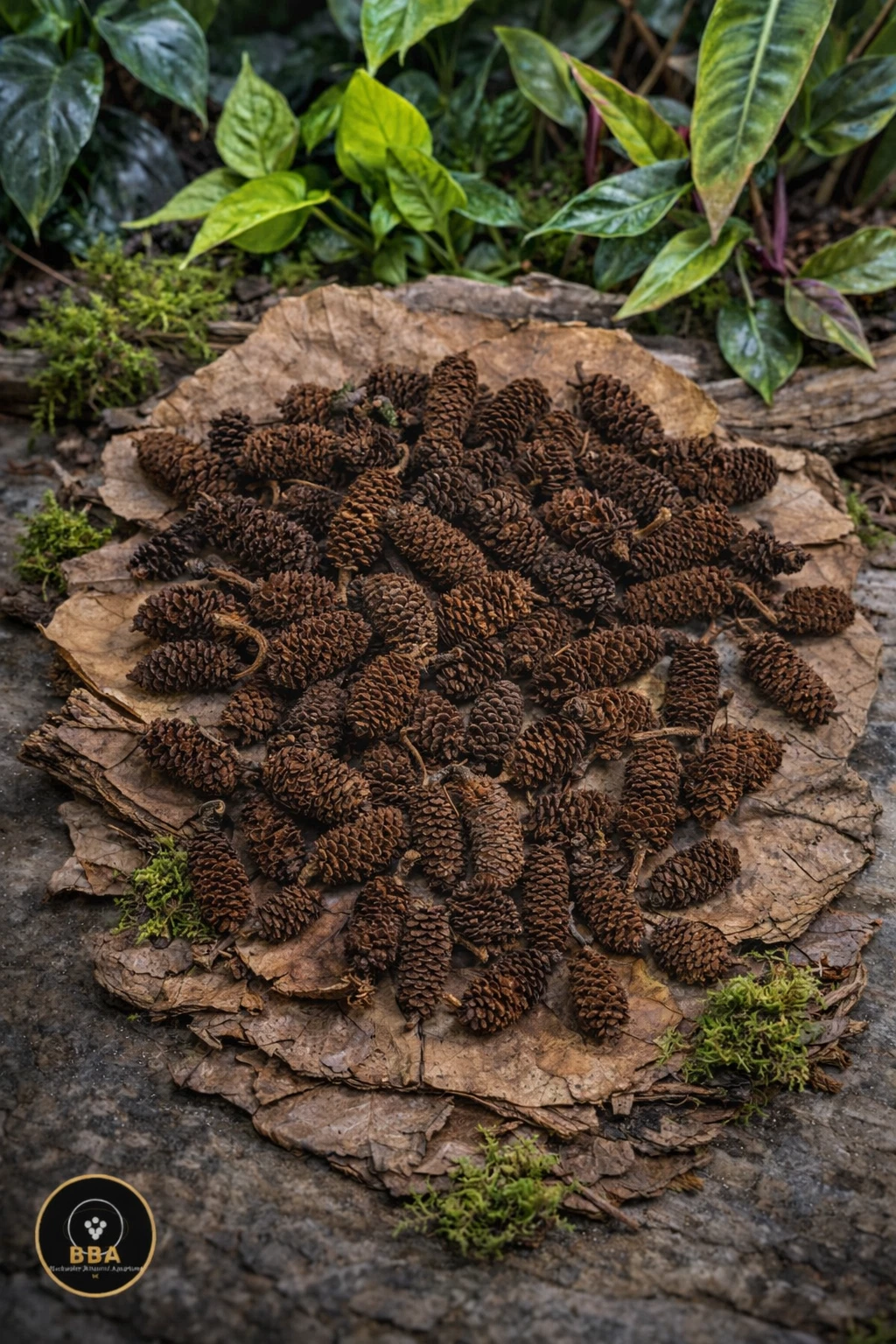
Illustrative BBA product-world scenes showing how this product can fit into a natural botanical aquarium route. Use them as context ideas, not as a promise that every tank will look the same.
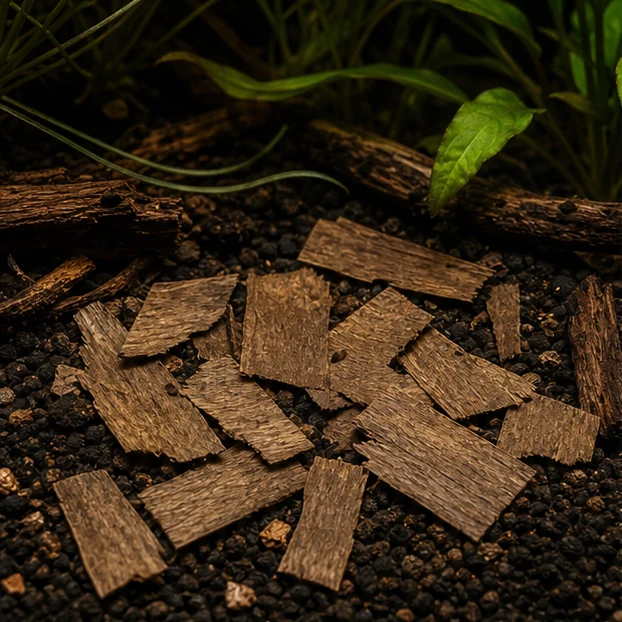
Illustrative product-world scene; real tanks and natural pieces will vary.
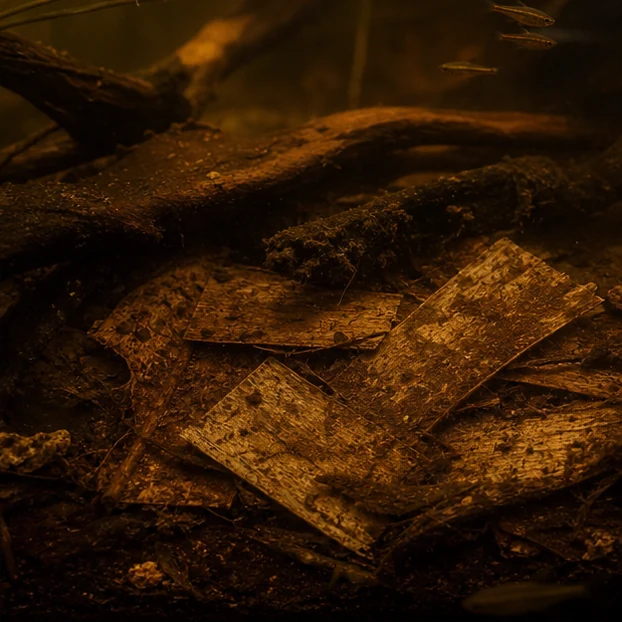
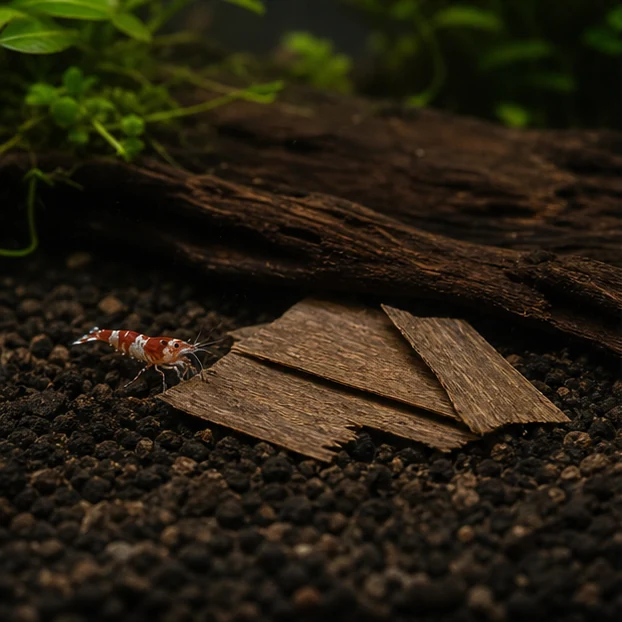
Illustrative route-planning scene; build the setup slowly and observe the tank.
OTHER CUSTOMER ROUTES
Beyond aquarium use, selected dry leaves, pods and woody pieces can also add natural structure, cover and surface complexity to suitable paludarium, vivarium and bioactive setups. Choose materials to suit the scale, moisture level and animals in the enclosure.
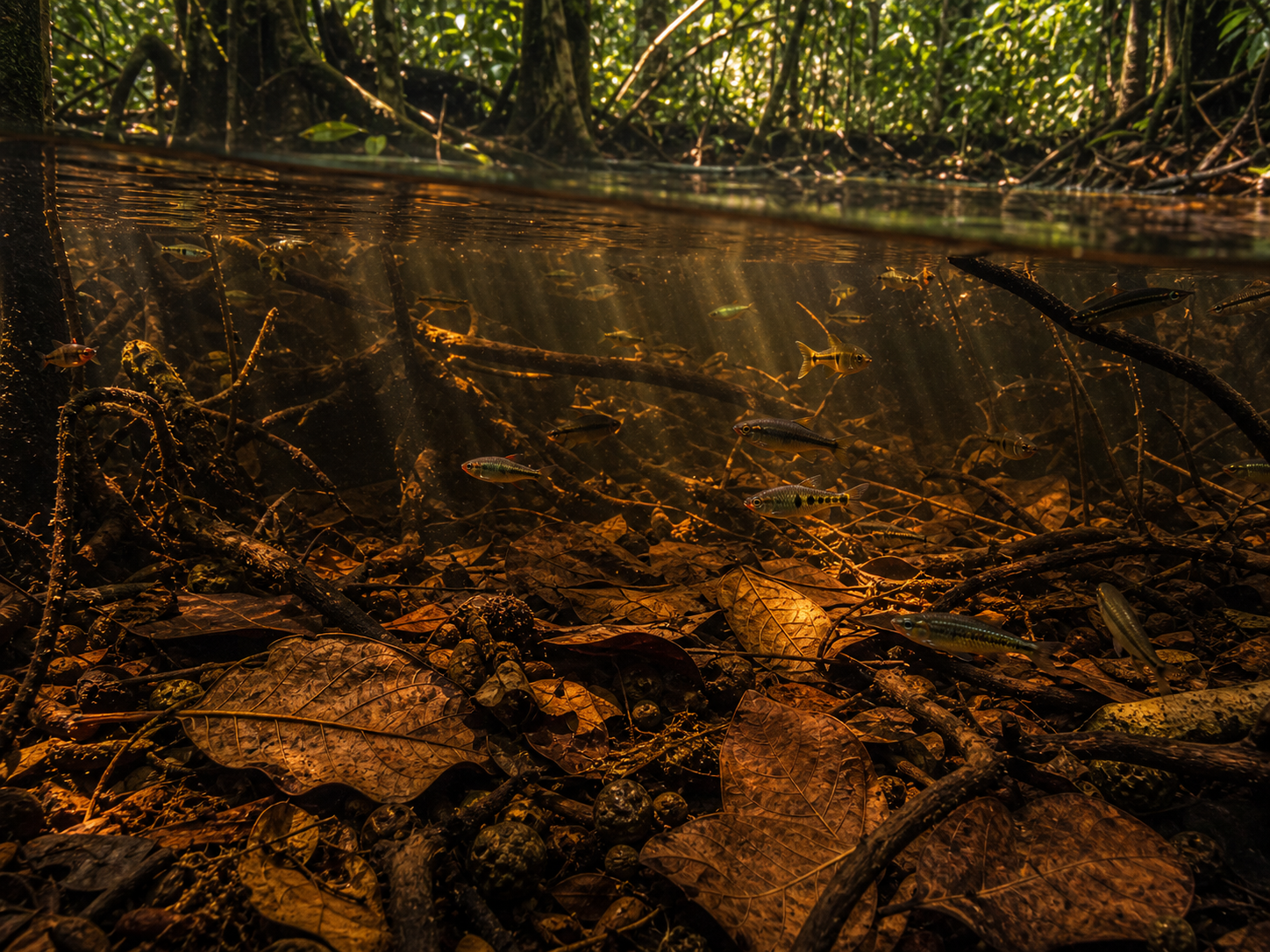
Use suitable leaves, pods and woody pieces through damp margins and transitional areas to connect the aquatic and terrestrial parts of a naturalistic layout.
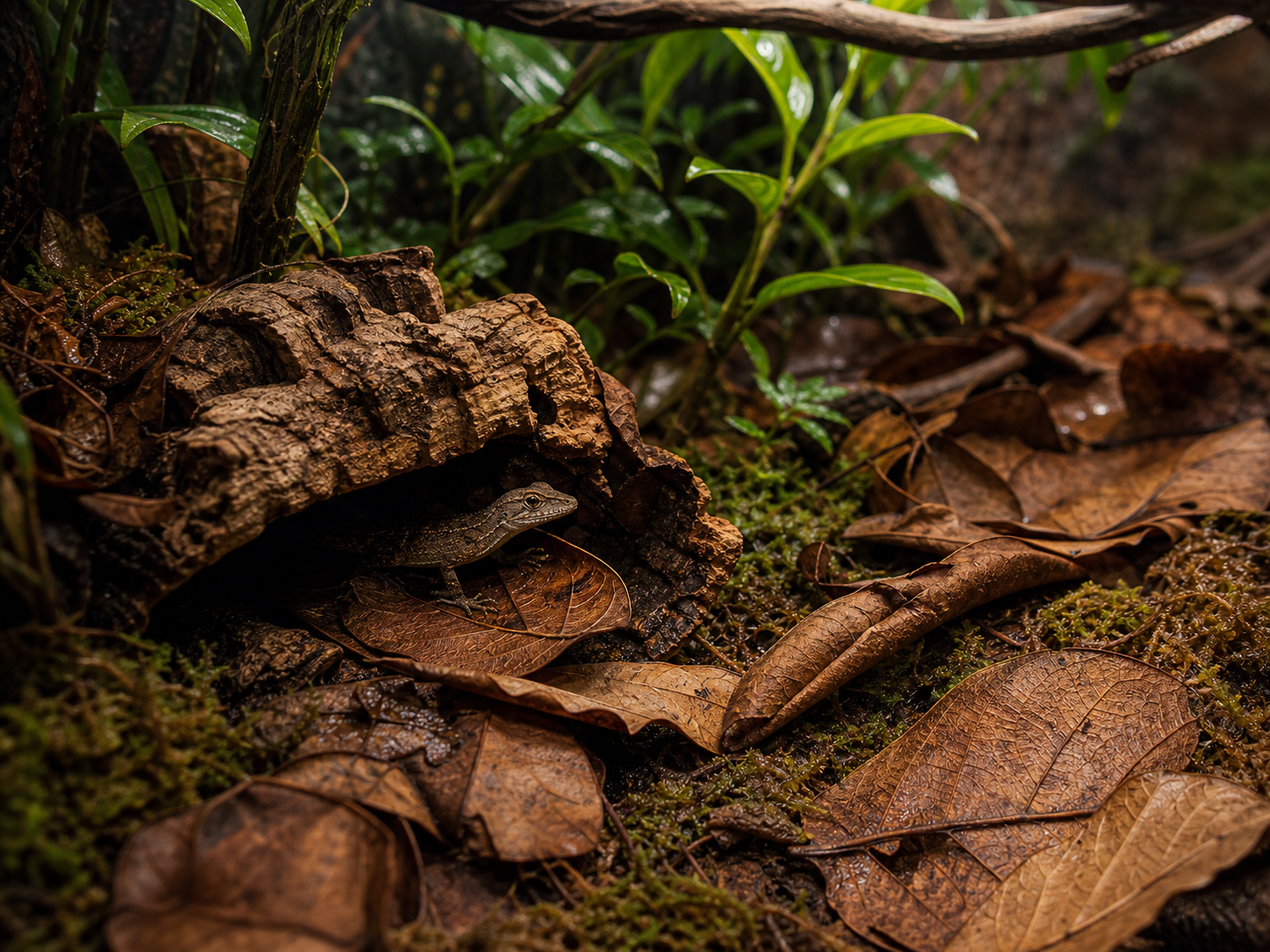
Leaves and suitable harder pieces can form part of the litter and structural layer used around an established bioactive substrate. They are not a complete substrate by themselves.
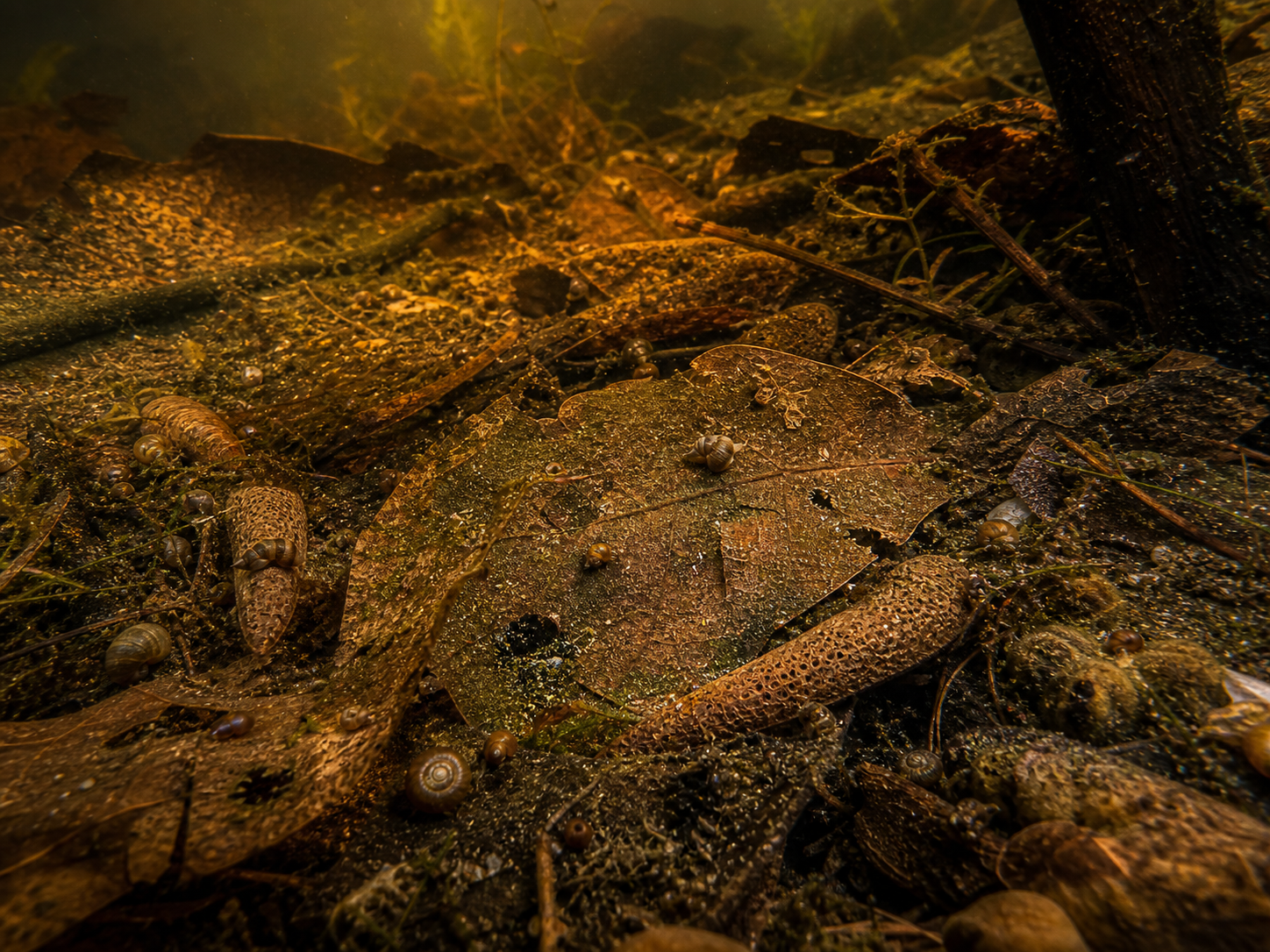
Suitable leaves and dry botanical pieces can provide cover, surface complexity and material that gradually becomes part of the decomposer environment.
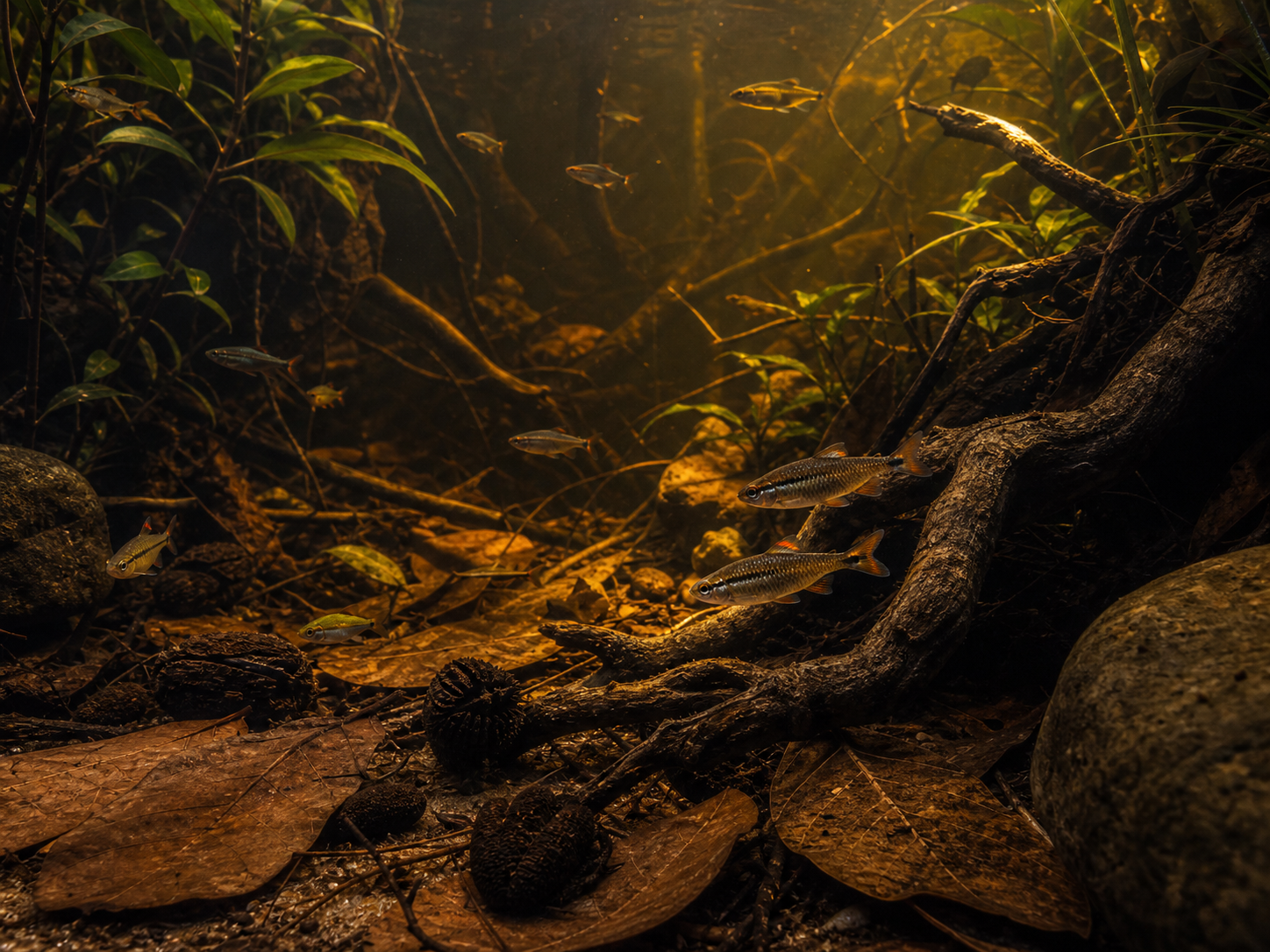
Use suitable pieces as additional cover and surface complexity within an established decomposer setup, not as a complete food or substrate system.
Best for
Shrimp, snail and natural leaf-litter layouts where smaller pieces are easier to position than whole leaves.
What it does not do
It does not guarantee nutrition, livestock health, colour improvement or instant water changes.
Pieces are easier to tuck into a layout and can create a smaller controlled patch of leaf-litter texture.
Breakdown varies by tank flow, livestock activity and water conditions, so watch the actual tank rather than the calendar alone.
Yes, but mixed botanicals should still be staged so you can see what the tank is responding to.
Remove material if it is trapping too much debris or if the aquarium looks overloaded.
LEARN BEFORE YOU ADD
COMPLETE THE ROUTE