Best use
Place where the surface texture can be seen and inspected.
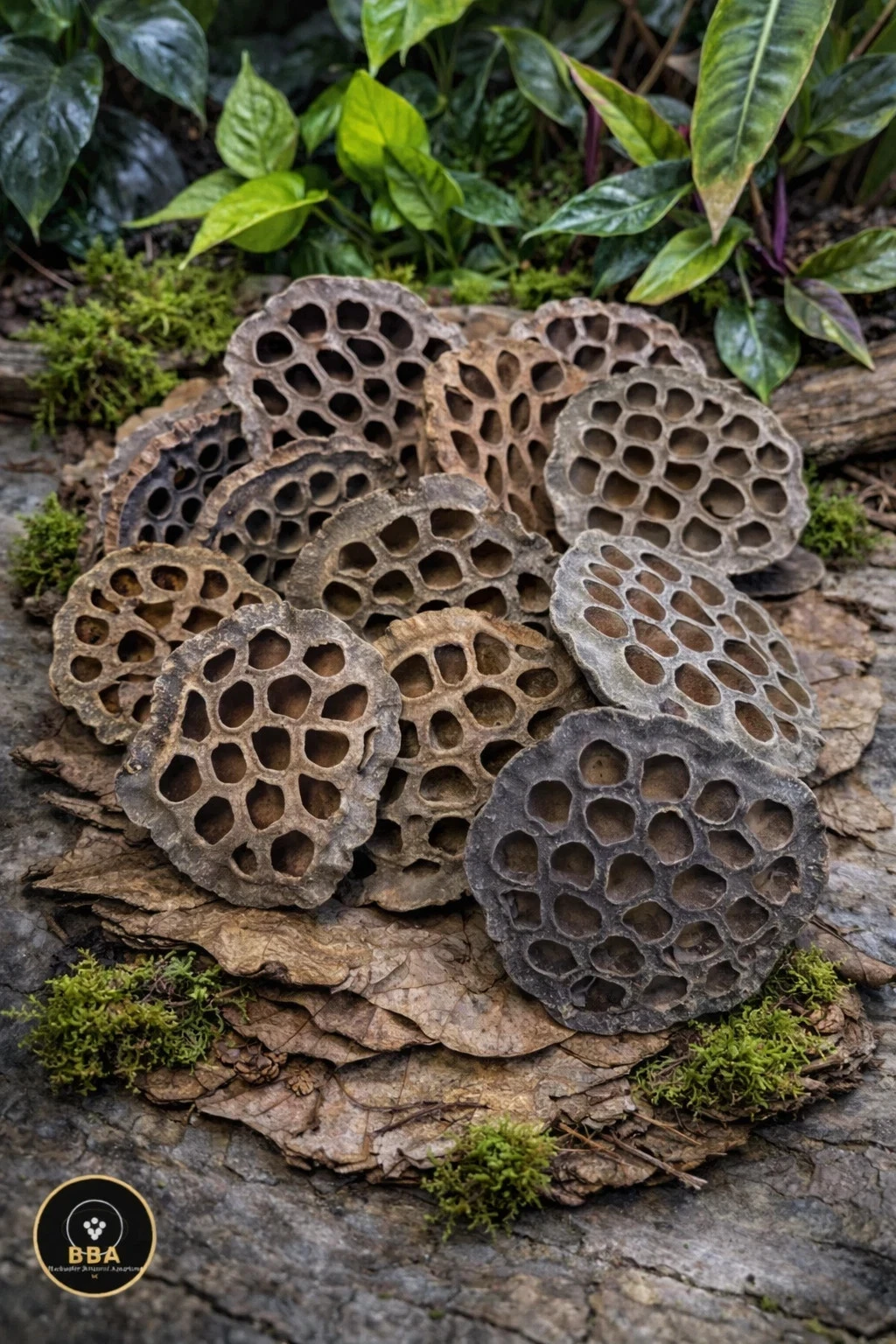
Best use
Place where the surface texture can be seen and inspected.
Visual role
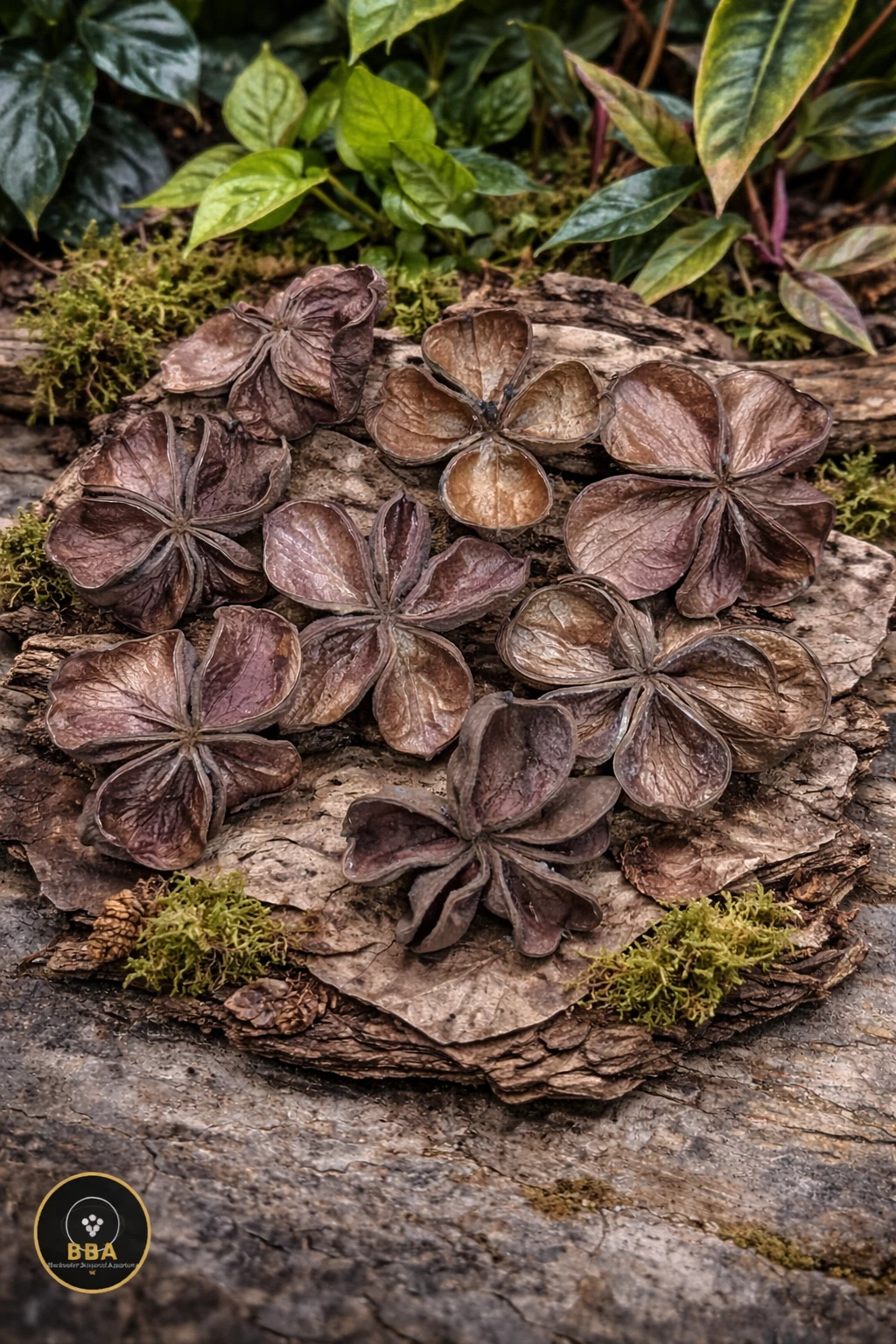
The pod pattern adds a very different texture from leaves or wood.
Safe route
Build the layout gradually and remove pieces if they deteriorate badly.
Overview
They add instant visual impact, natural shelter, grazing surfaces and micro-habitats. Over time, the pod surface can develop biofilm and micro-life that shrimp, snails and fry may graze on.
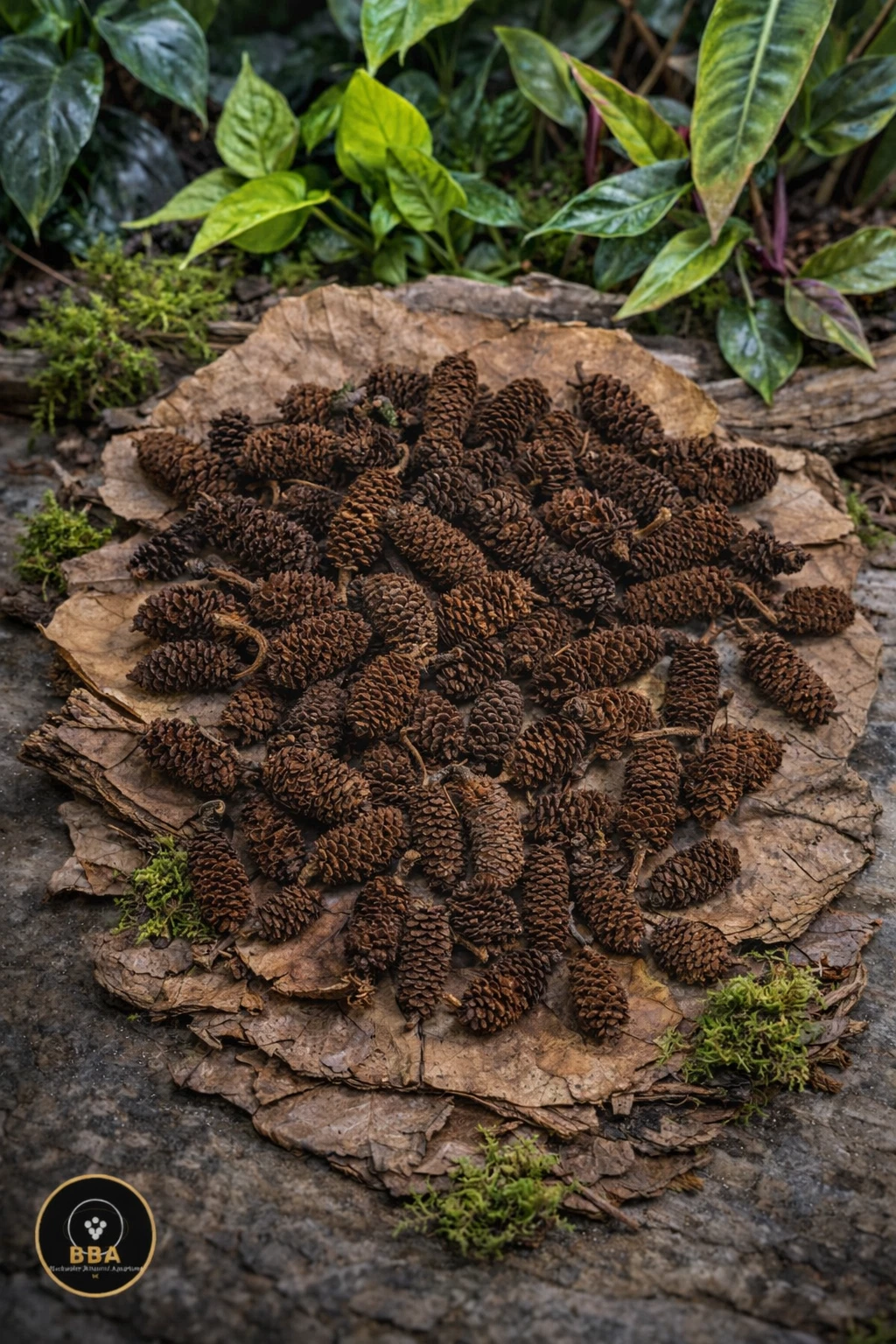
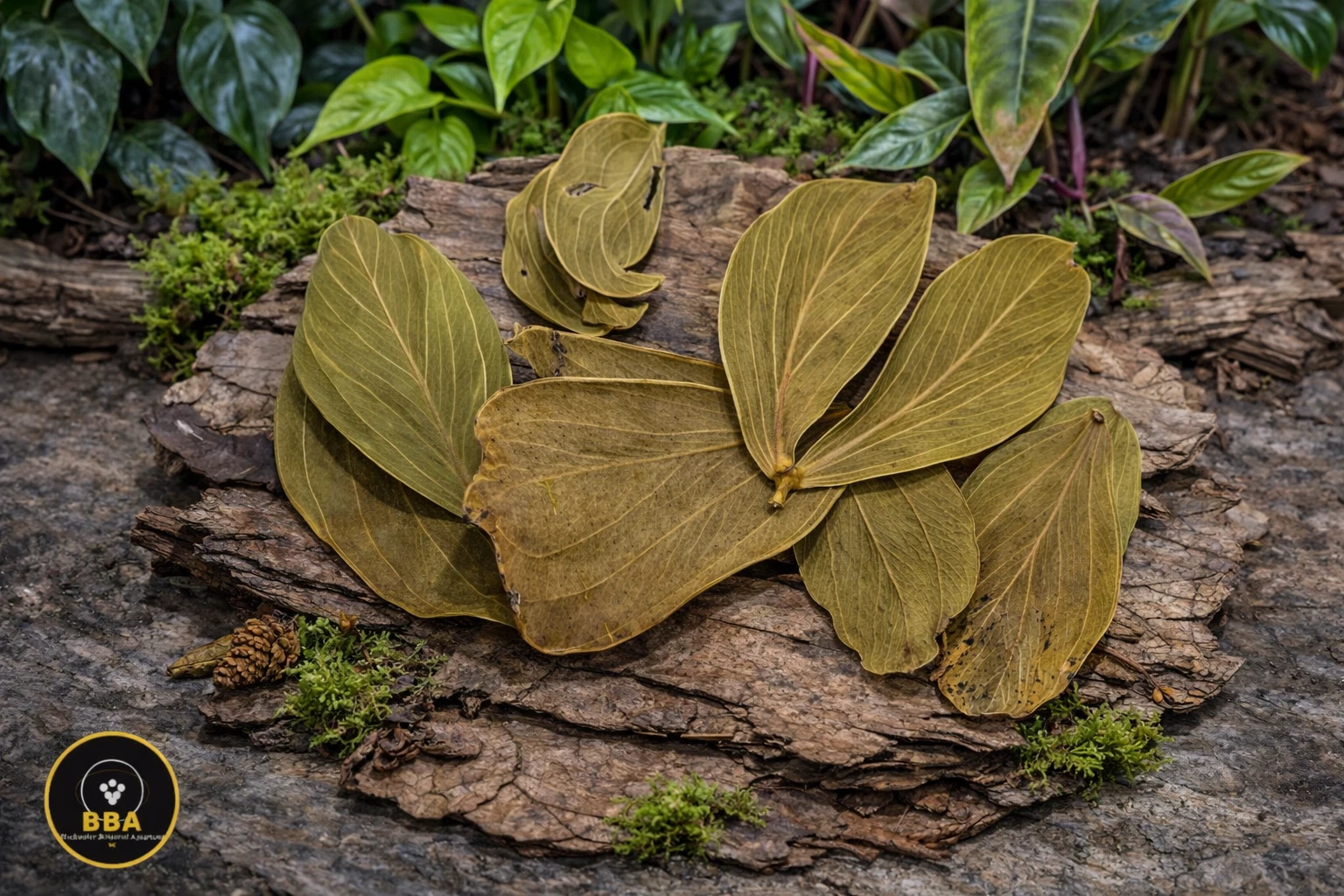
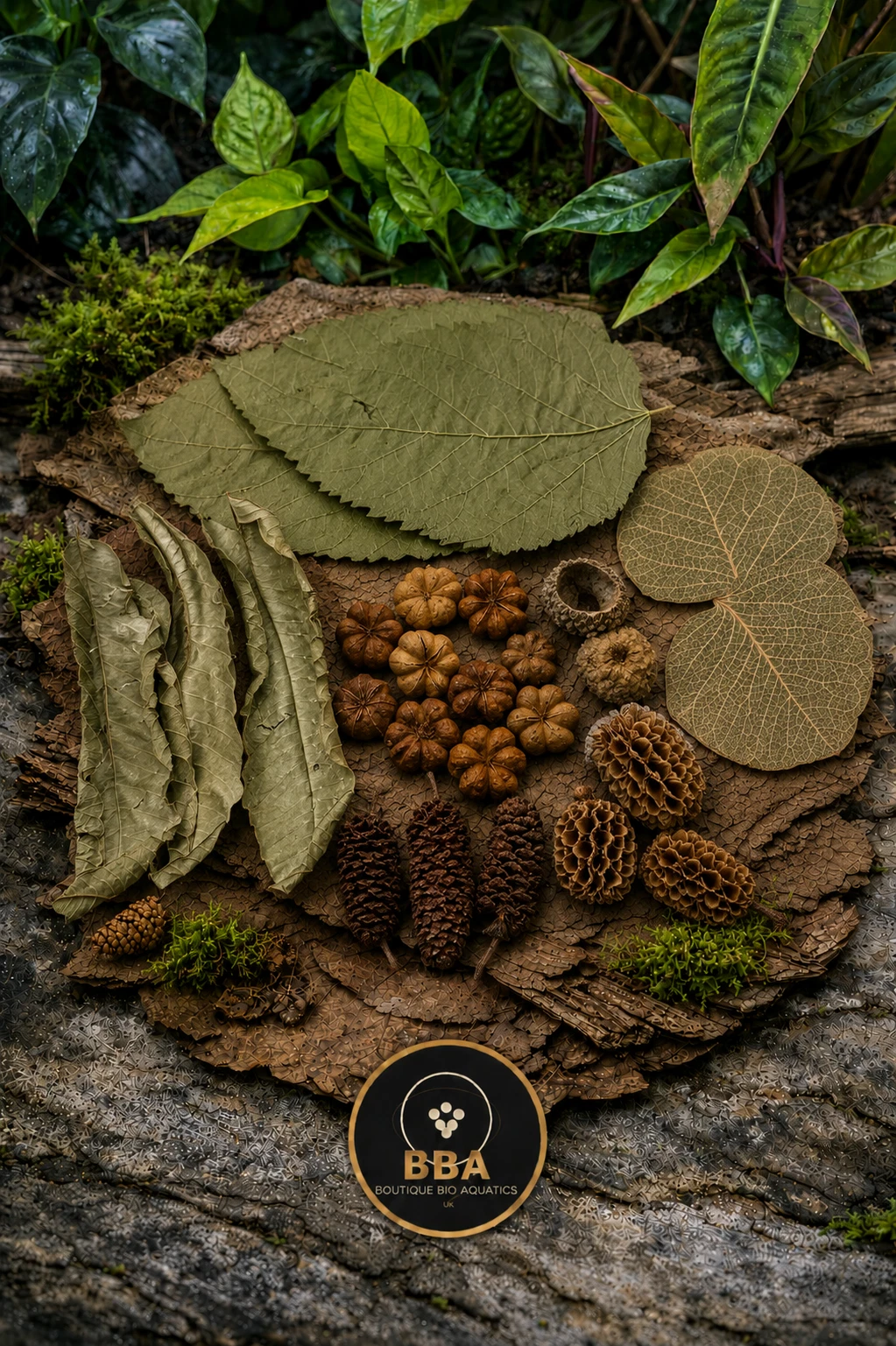
These pods work very well with leaves, cones, driftwood, roots, mosses and other botanicals to create a mature, natural forest-floor aquarium look.
Packed dry, small batch and labelled by Blackwater Botanical Aquariums.
Why aquarists use Lotus Seed Pods
1) Natural holes and hideouts The pod structure creates small chambers, openings and shelter zones that shrimp, fry and small fish can explore.
2) Excellent biofilm surface As the pod matures in the aquarium, the surface can become a grazing area for shrimp, snails and microfauna.
3) Strong botanical feature piece Lotus pods give instant visual structure and make a beautiful focal point in blackwater and botanical aquascapes.
4) Natural cover and line-of-sight break Useful for reducing open space and helping shy fish, fry and shrimp feel more secure.
5) Gentle blackwater character Like many botanicals, lotus pods may gradually contribute tannins and organic compounds, helping create a more natural aquarium environment when used gradually.
Product story
Shrimp tanks / Caridina and Neocaridina, Betta aquariums
AQUARIUM PRODUCT STORY
Illustrative BBA product-world scenes showing how this botanical can sit within a natural aquarium route. They are context ideas, not a review or result claim and not a promise that every tank will look the same.
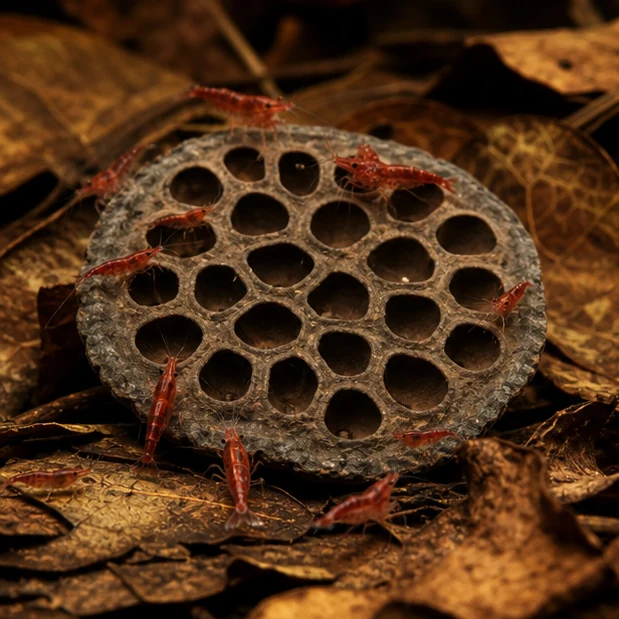
Shrimp grazing around seed holes
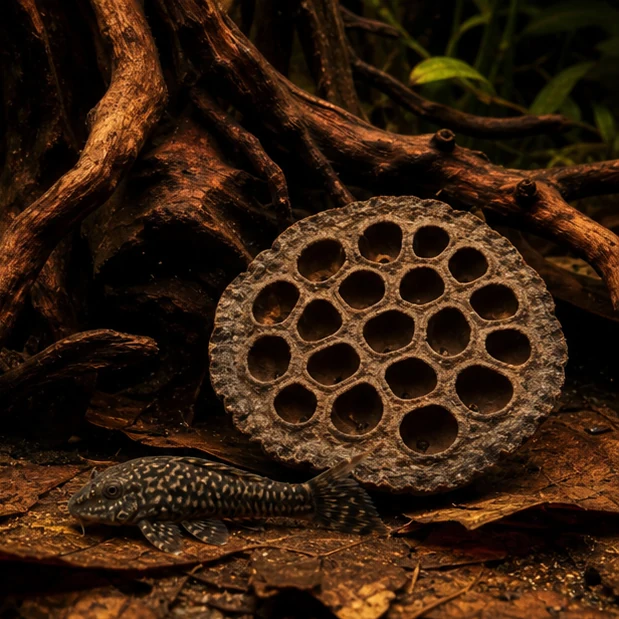
Root-side texture feature
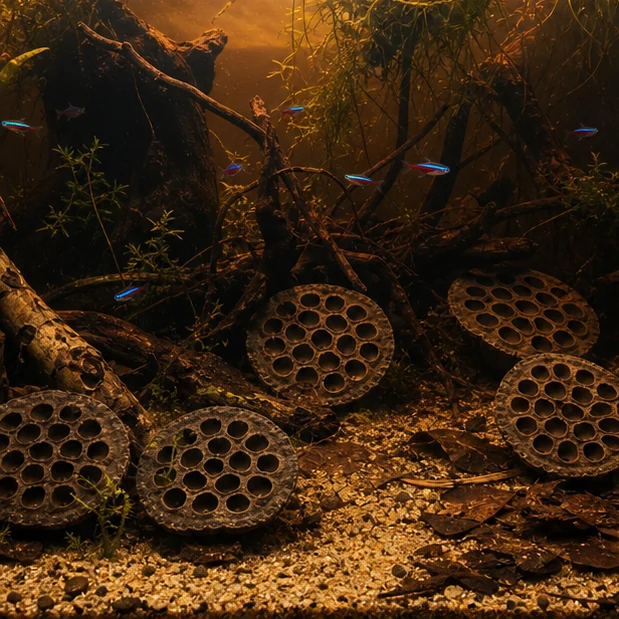
Wide blackwater seed-pod floor
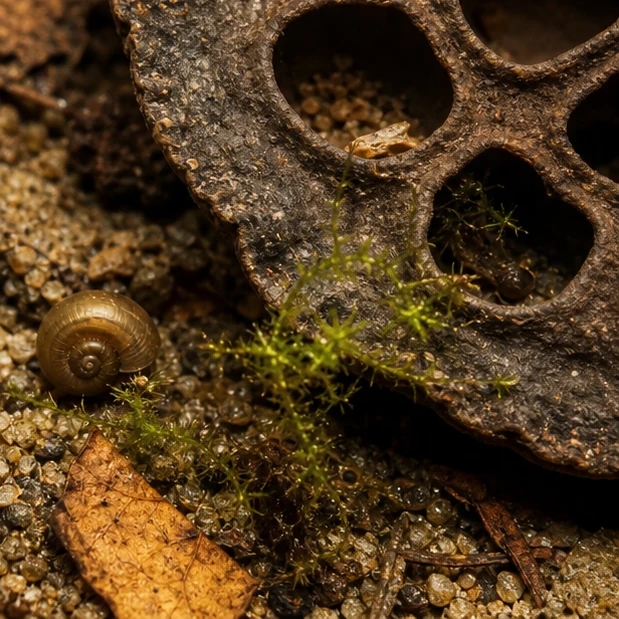
Macro seed-hole texture with snail
OTHER CUSTOMER ROUTES
Beyond aquarium use, selected dry leaves, pods and woody pieces can also add natural structure, cover and surface complexity to suitable paludarium, vivarium and bioactive setups. Choose materials to suit the scale, moisture level and animals in the enclosure.
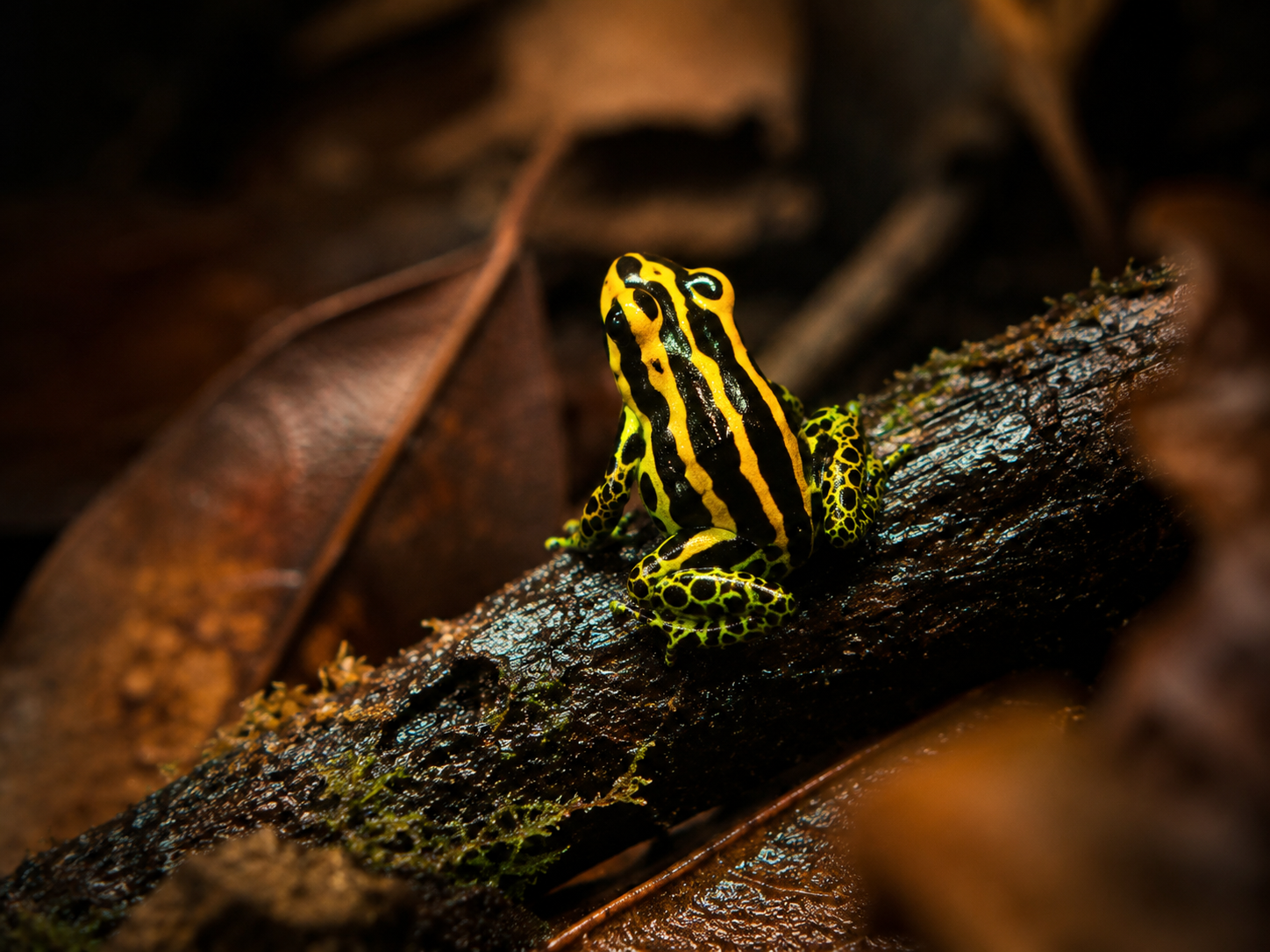
Use suitable leaves, pods and woody pieces through damp margins and transitional areas to connect the aquatic and terrestrial parts of a naturalistic layout.
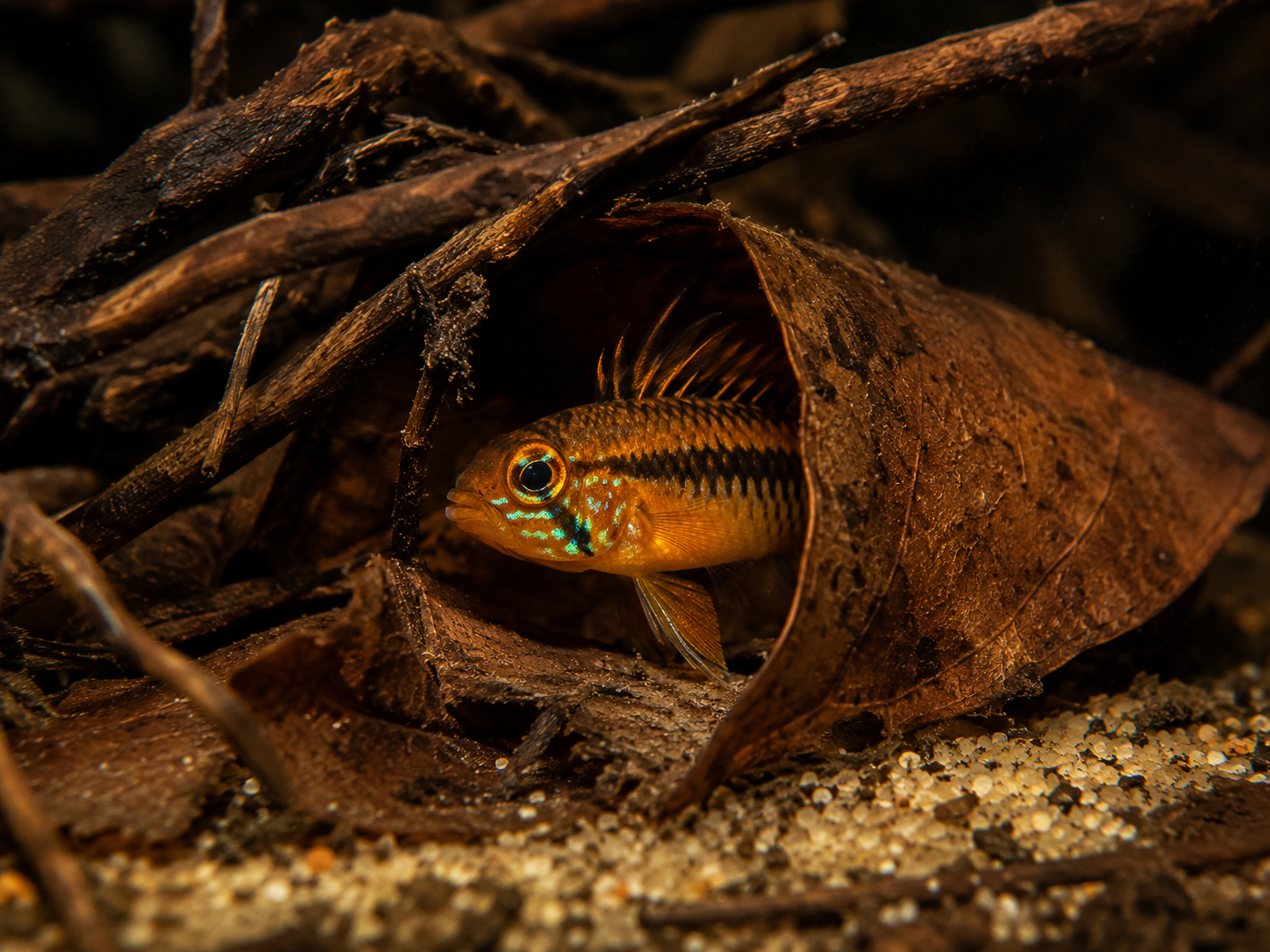
Selected dry botanicals can add natural floor texture, cover and visual variation around wood, roots and planted areas.
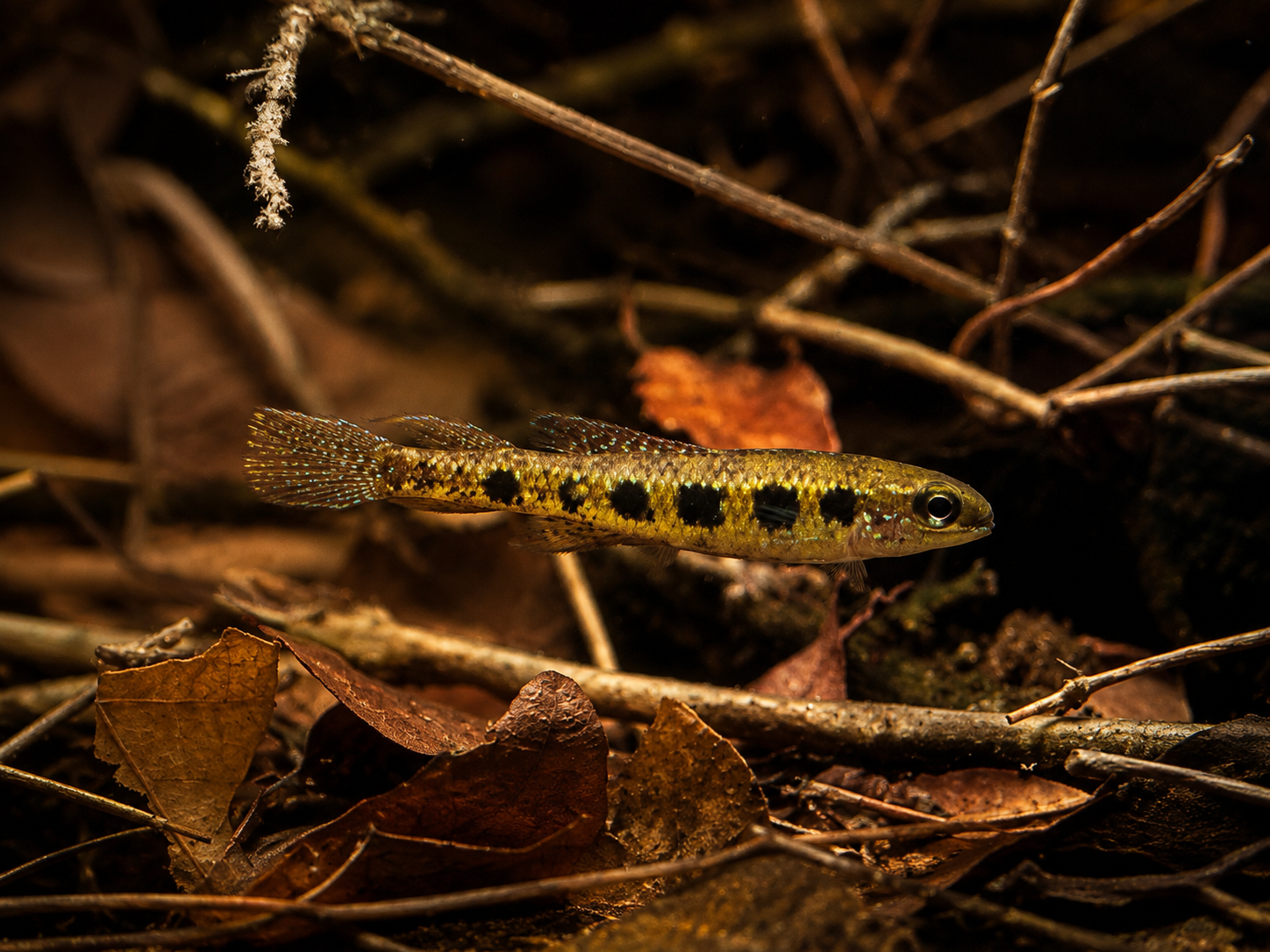
Suitable leaves and dry botanical pieces can provide cover, surface complexity and material that gradually becomes part of the decomposer environment.
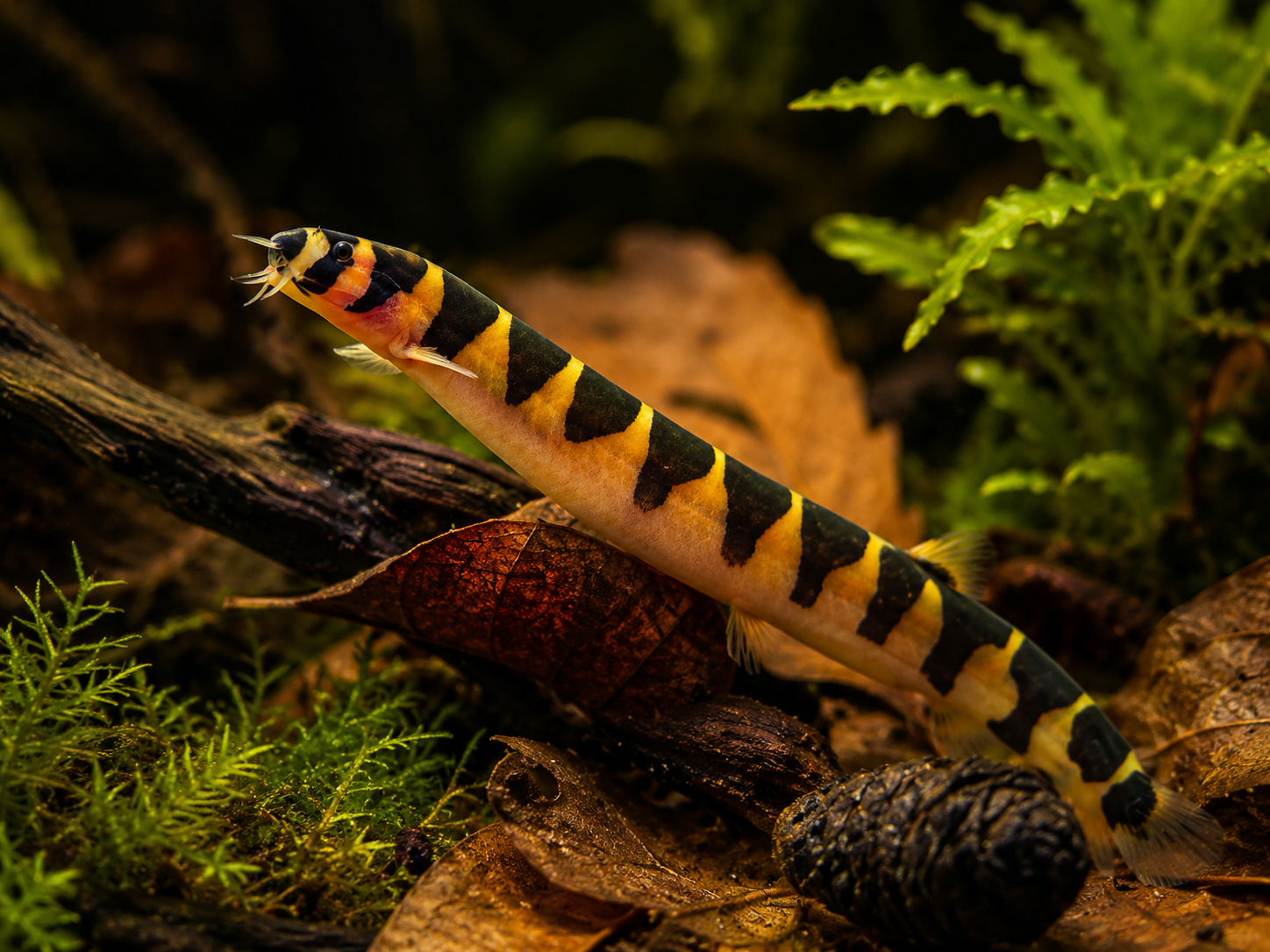
Use suitable pieces as additional cover and surface complexity within an established decomposer setup, not as a complete food or substrate system.
Good for
Good for Shrimp tanks / Caridina and Neocaridina Betta aquariums Fry and juvenile fish areas Snail tanks Blackwater and botanical aquariums Leaf-litter style setups Soft-water community tanks Natural aquascapes with wood, roots, leaves, cones and pods
LEARN BEFORE YOU ADD
COMPLETE THE ROUTE